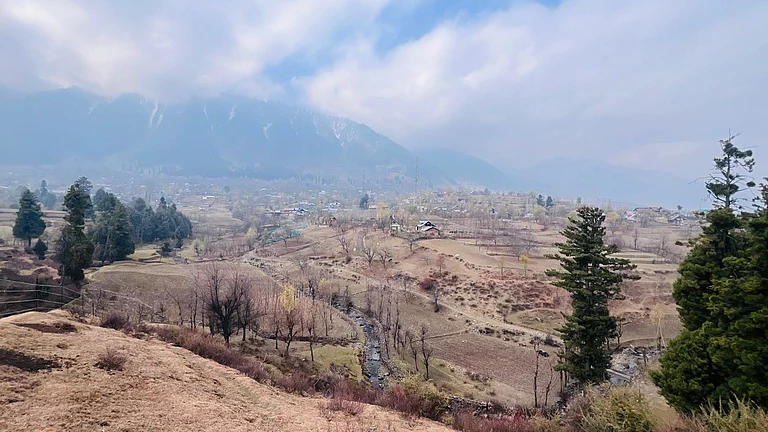


At a time when climate volatility, infrastructure expansion and ecological fragility are converging across the Himalayan belt, a new white paper is urging policymakers and practitioners to rethink how development in the region is approached.
Rethinking Development
Titled The Future of the Himalayas: Rethinking Development and Resilience, the report was launched on Tuesday by the CP Kukreja Foundation for Design Excellence at the India International Centre, in the presence of Hon’ble Chief Minister of Arunachal Pradesh, Pema Khandu. The document brings together insights from a multidisciplinary roundtable of experts across governance, infrastructure, ecology and social sciences, and positions Himalayan development as a systemic challenge rather than a series of isolated interventions.
Warning Signs in Data
The report highlights a 15–20 per cent increase in extreme rainfall events in the Indian Himalayan Region since the 1950s, alongside rising landslide risks and mounting pressure on infrastructure systems. These, it argues, are not standalone events but the result of a deeper misalignment between prevailing development models and the realities of fragile mountain ecosystems.
Calling for a shift from project-led approaches to system-level planning, the white paper recommends aligning development with watershed and basin-scale processes, integrating scientific data into decision-making, and adopting terrain-responsive infrastructure. It also underscores the need to treat ecological carrying capacity as a non-negotiable parameter in planning.
A panel discussion held alongside the launch brought sharper focus to the on-ground challenges shaping Himalayan development.
Speaking at the launch, Khandu emphasised the need for a “balanced” or “middle-path” approach to development in mountain states. He noted that while economic growth and connectivity remain priorities, they must be pursued alongside ecological preservation and community well-being. Drawing on Arunachal Pradesh’s own approach, he pointed to regulatory mechanisms such as Inner Line Permits (ILP) and Protected Area Permits (PAP), as well as the promotion of homestays and coordinated waste management efforts with the armed forces, as ways to manage tourism while protecting biodiversity.
A panel discussion including Anil Wadhwa, former Ambassador of India to Italy, Poland, Oman, and Thailand; Pradeep Sangwan, environmentalist and mountaineer, and Founder of the Healing Himalayas Foundation; Nar Bahadur Khatiwora, Regional Programme Head (Asia) at the International Solar Alliance; Virendra Kumar Paul, Director, School of Planning and Architecture, New Delhi; Siksha Swaroopa Kar, Senior Principal Scientist at CSIR–Central Road Research Institute and Associate Professor at the Academy of Scientific and Innovative Research; and Mili Majumdar, Senior Vice President, Innovation and Research at the U.S. Green Building Council and Managing Director of the Green Business Certification Institute, held alongside the launch, brought sharper focus to the on-ground challenges shaping Himalayan development.


Across the discussion, a clear pattern emerged. Development in the Himalayas, as several panellists suggested, continues to be driven by external demand—tourism, connectivity and rapid infrastructure expansion often without sufficient regard for local systems or ecological limits. This has resulted in mounting pressures on waste management, water resources and fragile slopes, alongside a growing disconnect between planning and ground realities.
There was broad agreement on the need to shift towards more decentralised and context-sensitive approaches. This includes localised waste management systems, distributed renewable energy solutions, and infrastructure that responds to terrain rather than replicating models from the plains. Tourism, too, was identified as an area requiring recalibration, with a move away from concentrated, high-volume destinations towards more dispersed and community-led models.
Nature’s Warning Signs
The urgency of these discussions is underscored by recent events across the Himalayan region. Landslides and flash floods in Uttarakhand and Himachal Pradesh, along with intense rainfall in the northeast that triggered flooding and stranded thousands in Sikkim, have highlighted the increasing frequency of climate-linked disruptions. These incidents, while often termed natural disasters, are increasingly understood as the result of compounded environmental and developmental pressures.

A Shift in Approach
The white paper stops short of prescribing fixed solutions. Instead, it calls for a shift in approach: planning that aligns with natural systems such as watersheds, infrastructure that is terrain-responsive, and governance that is more integrated and data-driven.
Its central message is clear. Development in the Himalayas is inevitable — but unless it is grounded in ecological limits, informed by local realities and approached as an interconnected system, it risks undermining the very foundations on which it depends.
In the mountains, those limits are not theoretical. They are already being tested.