

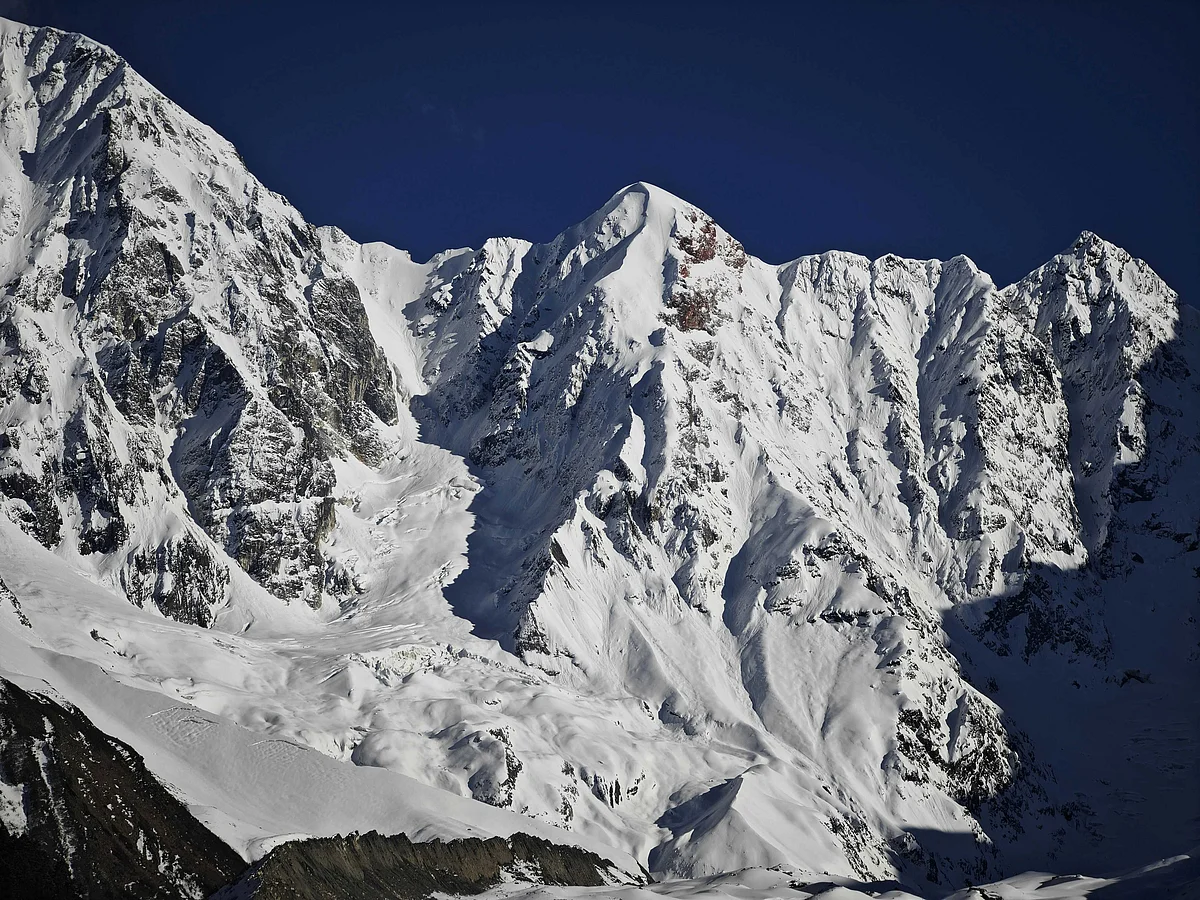
There are mountains that challenge human endurance, and then there are mountains that quietly refuse human ambition altogether. Gangkhar Puensum, rising to 7,570 metres in the remote eastern Himalayas, belongs firmly to the latter category. Draped in snow, hidden behind shifting clouds and standing somewhere along the contested frontier between Bhutan and Tibet, it is the highest unclimbed mountain in the world and very likely destined to remain that way.
In an age where mountaineering has become increasingly commercialised, where queues form beneath Everest’s summit and ultra-endurance travellers constantly search for the next frontier, Gangkhar Puensum feels almost mythical. No one has stood on its summit. No triumphant flag has been planted there. No summit selfie exists. The mountain remains untouched not because climbers lacked courage, but because Bhutan ultimately decided some places are not meant to be conquered.
The name itself hints at something larger than geography. In Dzongkha, Bhutan’s national language, Gangkhar Puensum translates to “White Peak of the Three Spiritual Brothers,” a reference to the mountain’s three distinct summits that appear aligned in descending order when viewed from certain valleys. To nearby Himalayan communities, these peaks are not merely dramatic landforms but sacred spaces inhabited by protective deities. In Bhutan’s deeply Buddhist worldview, mountains are living spiritual entities, capable of blessing or punishing the people below.
A Mountain Wrapped In Mystery
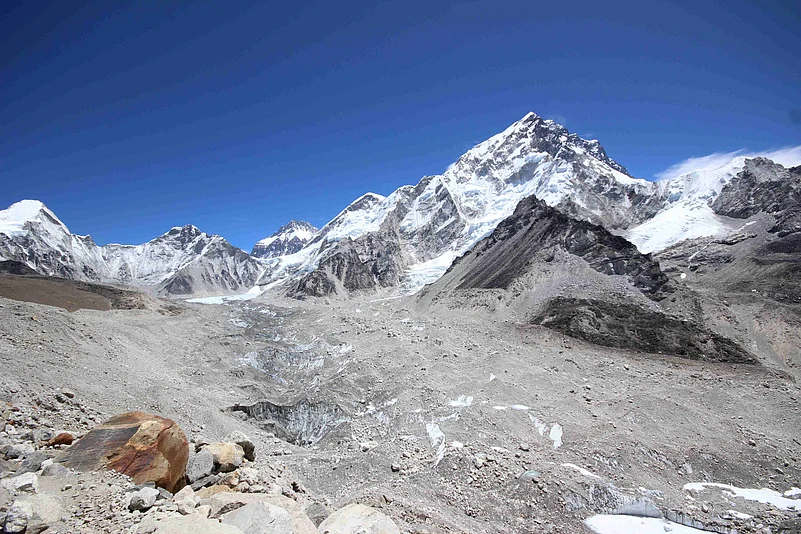

Part of Gangkhar Puensum’s intrigue lies in how little is truly known about it. The mountain was first measured in 1922, but for decades, inaccurate surveys and incomplete maps clouded understanding of the region. Early expeditions struggled not only against the terrain but against the basic problem of locating the correct routes. One of the first mountaineering teams reportedly failed to even identify the mountain properly because existing maps were so unreliable.
Even today, debates continue over the exact alignment of the Bhutan–China border around the peak. Some maps place parts of the massif within Tibet, while others show it entirely inside Bhutanese territory. Nearby summits such as Kula Kangri have often been confused with Gangkhar Puensum itself, adding another layer of cartographic uncertainty to the mountain’s reputation.
Yet perhaps that ambiguity only strengthens its mystique. Unlike Everest or Annapurna, whose ridgelines are etched into public imagination through photographs and documentaries, Gangkhar Puensum exists in relative obscurity. It remains distant, difficult to access, and almost deliberately hidden from the modern world.
Adding to the mountain’s aura are the legends that circulate through Bhutan’s highland communities. Local folklore speaks of spirits inhabiting the snowy ridges, while stories of the Migoi, the Bhutanese equivalent of the Yeti, continue to echo through the valleys of Lunana and Laya. Bhutan’s thunder dragon, the Druk that appears on the national flag, is also spiritually associated with these sacred Himalayan landscapes. Whether believed literally or symbolically, such narratives shape how the mountain is understood, not as an obstacle to overcome, but as a realm deserving reverence.
The Expeditions That Failed
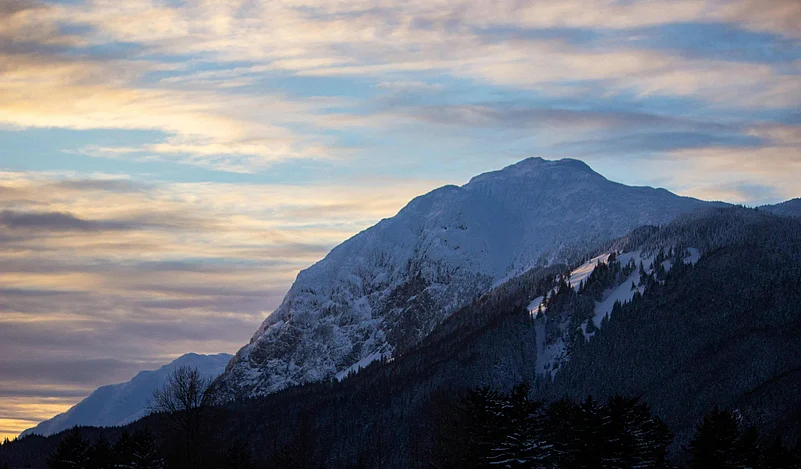
Ironically, the period when Gangkhar Puensum was most accessible to climbers lasted barely a decade. Bhutan only opened itself to international mountaineering in 1983, and during those years, a handful of ambitious expeditions attempted to reach the summit. None succeeded.
Japanese, Austrian, and British teams all tried their luck through the mid-1980s, battling avalanches, unstable snow conditions, severe winds, and the mountain’s notoriously unpredictable weather systems. Some expeditions reached elevations around 6,800 metres before retreating. Others endured relentless storms for weeks. Helicopter evacuations became necessary in certain cases as conditions deteriorated dangerously.
Mountaineers who attempted the climb described knife-edged ridges, avalanche-prone slopes and violent jet-stream winds that made progress nearly impossible. Unlike many major Himalayan peaks that gradually reveal established routes over repeated ascents, Gangkhar Puensum never allowed climbers enough familiarity to decode its terrain. Then, in 1994, Bhutan changed course entirely.
The government banned climbing on peaks above 6,000 metres, citing respect for local spiritual beliefs. Less than a decade later, in 2003, all mountaineering in Bhutan was prohibited altogether. The decision reflected both cultural values and practical concerns. Bhutan lacked extensive high-altitude rescue infrastructure, but more importantly, the country chose preservation over adventure tourism.
In Bhutan, mountains are not recreational assets. They are sacred landscapes tied to ecological balance, spiritual harmony and community wellbeing. Disturbing them is believed by many locals to risk misfortune, from failed harvests to violent storms. In a nation famous for prioritising Gross National Happiness over relentless development, the decision felt entirely in character.
The Summit That Almost Was
There was, however, one final near-attempt. In 1998, a Japanese expedition secured permission from Chinese authorities to approach Gangkhar Puensum from the Tibetan side. Political tensions with Bhutan ultimately resulted in the permit being revoked before the climb could proceed. Instead, the team redirected its efforts toward Liankang Kangri, a subsidiary peak connected to Gangkhar Puensum by a narrow ridge.
The climbers successfully summited Liankang Kangri in 1999, making it the closest humans have come to the untouched summit of Gangkhar Puensum itself. From there, the main peak reportedly appeared intimidating and deeply serious, an immense serrated ridge leading toward a summit still beyond reach. Since then, no further attempts have been made. And unless Bhutan radically changes its stance on mountaineering, none are likely in the future.
Getting Close To The Forbidden Peak
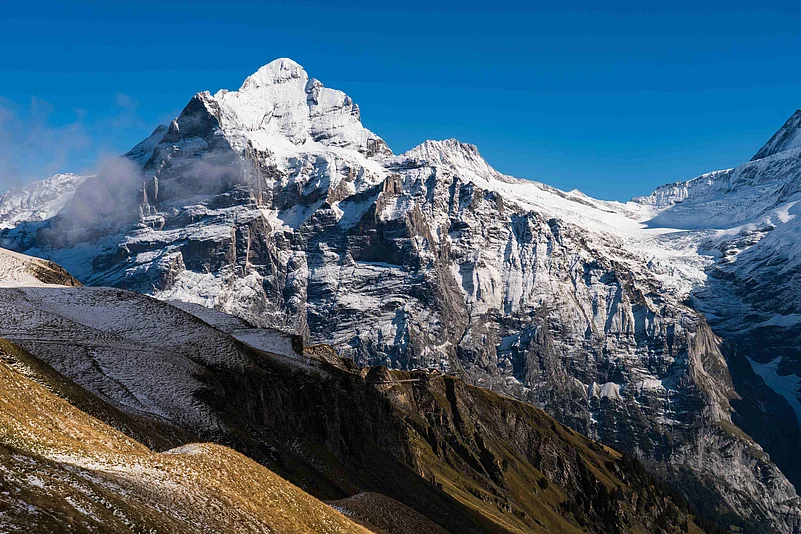
For travellers, that does not mean Gangkhar Puensum is entirely inaccessible. You simply cannot climb it. The closest most visitors can come is through the demanding Gangkhar Puensum Trek, a multi-week expedition through some of Bhutan’s most isolated terrain. Beginning in Gasa and passing through the remote region of Lunana, a landscape of yak pastures, glacial rivers and stone villages reachable only on foot, the trail gradually approaches the mountain’s base camp at around 4,970 metres.
The journey itself is as extraordinary as the destination. Trekkers move through ancient juniper forests, alpine meadows filled with blue poppies and high-altitude passes where weather changes in minutes. The silence is striking. So is the scale. Human settlements become sparse, roads disappear entirely, and the Himalayas begin to feel genuinely wild again.
More recently, exploratory trekking routes have opened vantage points offering rare panoramic views of all three summits together from a distance. These routes now connect sections of the famed Snowman Trek, often considered among the toughest treks in the world. And perhaps that is the closest relationship humans will ever have with Gangkhar Puensum, to witness it from afar.
In many ways, the mountain’s enduring power lies precisely in its inaccessibility. At a time when nearly every corner of the planet has been mapped, photographed, climbed or monetised, Gangkhar Puensum remains gloriously unresolved. It stands as a reminder that not every mystery needs solving, and not every summit needs footprints.
Some mountains are meant to stay sacred. Some are meant to stay wild. And some, like Gangkhar Puensum, continue to loom above the world precisely because humans never reached the top.
FAQs
1. What is Gangkhar Puensum famous for?
Gangkhar Puensum is known as the world’s highest unclimbed mountain, standing at 7,570 metres in Bhutan.
2. Why is Gangkhar Puensum still unclimbed?
The mountain remains unclimbed due to dangerous terrain, extreme weather and Bhutan’s ban on mountaineering.
3. What does Gangkhar Puensum mean?
In Dzongkha, Gangkhar Puensum means “White Peak of the Three Spiritual Brothers.”
4. When did Bhutan ban mountain climbing?
Bhutan banned climbing peaks above 6,000 metres in 1994 and prohibited all mountaineering in 2003.
5. Can tourists see Gangkhar Puensum?
Yes, trekkers can view the mountain through remote trekking routes in Bhutan’s Lunana region, though climbing is forbidden.