


Delhi’s largest protected forest is set to receive a major ecological upgrade. A new 10-year management plan for Asola Bhatti Wildlife Sanctuary outlines a wide range of measures to better protect wildlife, prevent forest fires, and regulate tourism in one of the capital’s most important green spaces.
Prepared by the Wildlife Institute of India (WII), the management plan will guide conservation efforts from 2024-25 to 2034-35. The document has already been approved by the Delhi forest department and is now in effect.
Spread across nearly 32 square kilometres along the southern ridge of Delhi and extending into parts of Haryana, the sanctuary is a critical habitat for mammals, birds, reptiles, and native vegetation in the ancient Aravalli Range.
Wildlife Survey Findings
One of the most significant findings in the plan is the confirmation of 23 mammal species living within the sanctuary. Researchers installed 23 camera traps throughout the protected area and documented a diverse range of wildlife, including elusive predators such as leopards and striped hyenas.
Among the most commonly recorded species were rhesus macaques, nilgai, and golden jackals, all of which were able to adapt to a variety of habitats. Other mammals captured on camera included wild boar, Indian hare, Indian crested porcupine, ruddy mongoose, common palm civet, and sambar deer.
The presence of leopards and hyenas, even in low numbers, is particularly important because it highlights the ecological health of the sanctuary. According to the plan, these predators were mainly detected in less disturbed areas with minimal human activity.
Core Zone And Conservation Areas To Strengthen Habitat Protection

To better safeguard wildlife, the management plan proposes dividing the sanctuary into multiple ecological zones.
At the centre will be a 9-square-kilometre core zone, identified as the most sensitive habitat and crucial for species such as leopards and jackals. Human activity in this zone will be tightly controlled to ensure minimal disturbance.
Surrounding the core will be a 24-square-kilometre conservation zone that will serve as a buffer for habitat restoration, species monitoring, and long-term research.
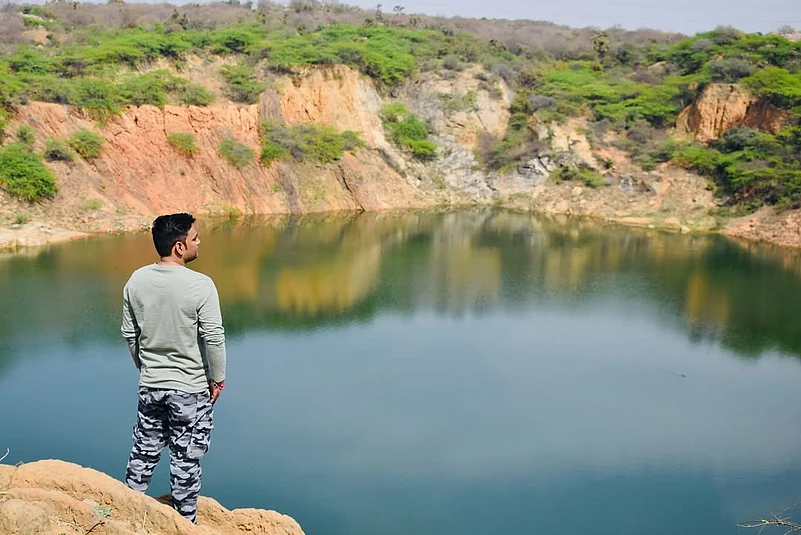
The plan also includes a tourism zone covering about 7.6 square kilometres from the main entrance to Neeli Jheel. This section will be designed to balance recreation with conservation.
In addition, a 5-square-kilometre interpretation and education zone will provide facilities such as a butterfly garden, nature trails, cycle tracks, nurseries, and a nature education centre to help visitors better understand the sanctuary’s biodiversity.
Forest Fires Identified As One Of The Biggest Ecological Threats
Forest fires have been identified as one of the most serious risks facing the sanctuary, especially in the dry and semi-arid areas of Asola and Bhatti.
The management plan notes that there is currently no official record of past fire incidents or clearly identified fire-prone areas, making it difficult to respond effectively.
To address this, authorities plan to establish three dedicated fire response units equipped with specialised gear and GPS-enabled teams. Existing beat boundary trails will be maintained as fire lines, which are cleared paths designed to stop the spread of flames while allowing staff to patrol vulnerable areas.
The plan states that human settlements along the fringes, grazing, fuelwood collection, and accidental fires significantly increase wildfire risk and threaten the sanctuary’s biodiversity.
Tourism and Visitor Guidelines
Recognising the sanctuary’s growing popularity among nature lovers and school groups, the plan recommends setting a scientific carrying capacity to determine how many visitors the ecosystem can safely accommodate at any given time.
Officials believe this will help reduce disturbance to wildlife while improving the visitor experience.
The plan also addresses the issue of rhesus macaque overpopulation. Authorities propose gradually ending the artificial feeding of monkeys and implementing humane sterilisation programmes to control numbers.
Beyond the sanctuary boundaries, an extended buffer zone has also been proposed to include nearby forest patches that remain understudied but play an important role in maintaining ecological connectivity.
Together, these measures mark one of the most comprehensive conservation efforts ever undertaken for Asola Bhatti Wildlife Sanctuary, reinforcing its importance as Delhi’s wild heart and a vital refuge for species ranging from jackals to leopards.
(With inputs from various sources)
FAQs
1. What is the new conservation plan for Asola Bhatti Wildlife Sanctuary?
It is a 10-year management plan prepared by the Wildlife Institute of India to guide habitat protection, fire prevention, tourism regulation, and wildlife monitoring from 2024–25 to 2034–35.
2. Which animals were recorded in Asola Bhatti Wildlife Sanctuary?
Researchers documented 23 mammal species, including leopards, striped hyenas, golden jackals, nilgai, wild boar, and sambar deer.
3. How will forest fires be managed in the sanctuary?
The plan proposes three specialised fire response units equipped with dedicated gear and GPS-enabled teams, along with maintained fire lines to contain wildfires.
4. Will tourism be restricted in Asola Bhatti?
Yes. Authorities plan to establish a scientific carrying capacity to regulate the number of visitors and minimise disturbance to wildlife.
5. What is the purpose of the core zone?
The 9-square-kilometre core zone will protect the sanctuary’s most sensitive habitats, particularly areas used by leopards and other predators.


