


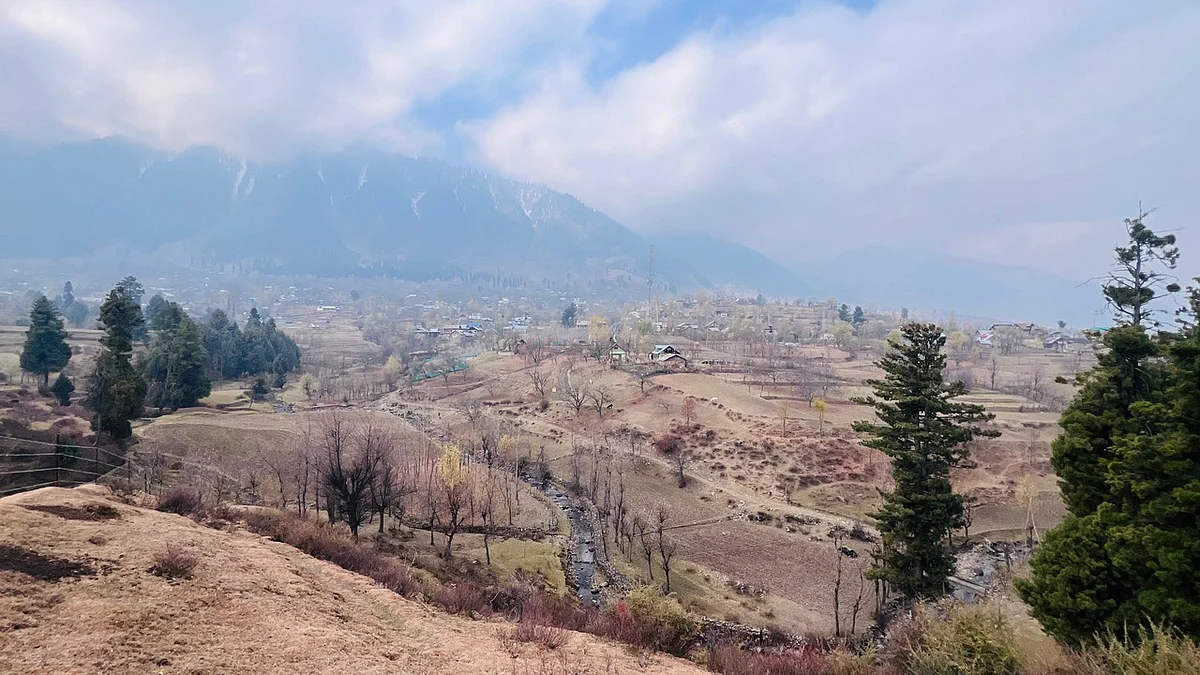
In early January, I returned to Kashmir expecting winter to meet me at the mountains’ edge. Instead, I found bare slopes, open water, and an unfamiliar warmth. Srinagar, cradled by the Himalayas and long defined by snow, stood almost entirely without it. For a visitor, the absence might seem unremarkable. For someone who grew up here, it felt like the land had forgotten itself.
When Winter Was Certain
January once meant Chil-e-Kalaan, the forty coldest days of the Kashmiri year. Snowfall of nearly two feet in Srinagar was routine. The Zabarwan hills rose white and silent, and Dal Lake froze so completely that people walked across it with confidence. Children played football and cricket on ice. Families gathered for winter picnics on a frozen lake that would become, briefly, solid ground.
Life adapted to this certainty. Houseboats were built with nearly flat roofs to withstand heavy snow and fierce winter winds. During peak winter, young men climbed onto these roofs several times a day, shovelling snow before its weight could cause collapse. Inside, families shared warmth over kehwa and coffee as temperatures dropped to minus ten degrees Celsius. Winter was severe, but it was predictable and that predictability shaped culture, architecture, and daily life.
This year, that winter never arrived.
Srinagar saw almost no snowfall. The surrounding hills remained bare. Even Gulmarg, one of the Himalayas’ most famous snow destinations, wore only a thin, uncertain layer of white. What once defined the region’s seasonal rhythm now feels fragile, as though winter itself were hesitating.
The Science Behind The Silence
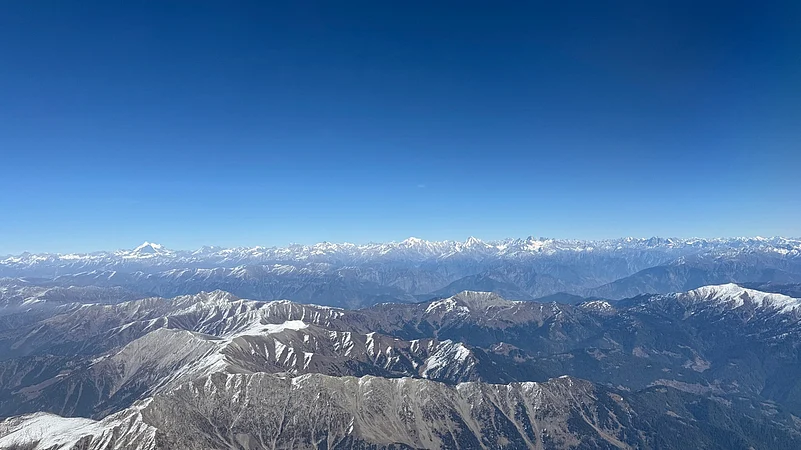

The change is not anecdotal. Scientific studies show that the Himalayan region is warming faster than the global average. Rising winter temperatures are reducing snowfall and increasing rainfall, disrupting a system that has regulated water, ecosystems, and livelihoods for centuries. Snowlines are retreating higher into the mountains, and snowpack, once a natural reservoir that released water gradually through spring and summer, is becoming thinner and less reliable.
In Kashmir, these shifts are visible beyond the mountains. Spring flowers now bloom weeks earlier than they once did, responding to warmer temperatures and altered seasonal cues. Farmers face growing uncertainty as traditional planting calendars lose relevance. Wildlife patterns are shifting. The freeze thaw cycles that stabilise soil and forests are weakening, increasing the risk of landslides and ecological stress.
The implications extend far beyond the valley. Himalayan snowmelt feeds major river systems that sustain hundreds of millions of people across South Asia. Changes here ripple outward, affecting water security, agriculture, and climate resilience far downstream.
Yet numbers alone cannot capture what is being lost.
More Than An Environmental Loss

In Kashmir, nature has long been understood not merely as landscape, but as meaning. In Sufi philosophy, deeply rooted in the region, mountains, lakes, and seasons are reflections of a divine order- amanah, a sacred trust. To live here was to live in a relationship with snow, cold, and silence. When those elements fade, the loss is not only environmental, but spiritual.
Kashmir is often called Paradise on Earth, a phrase that risks romanticism, yet carries truth. Its beauty has always been inseparable from its climate. Paradise, it turns out, is not immune to physics. It does not vanish in a single catastrophe. It recedes quietly, snowflake by snowflake, season by season, until it survives only in memory.
Kashmir’s vanishing winters are not just a local anomaly or a tourism concern. They are a message from the Himalayas, written in melting snow reminding us that climate change is no longer a distant future. It is already reshaping the world’s most fragile and revered landscapes, asking whether we are listening before the silence becomes permanent.
(The author is a hotelier and a resident of Srinagar.)


