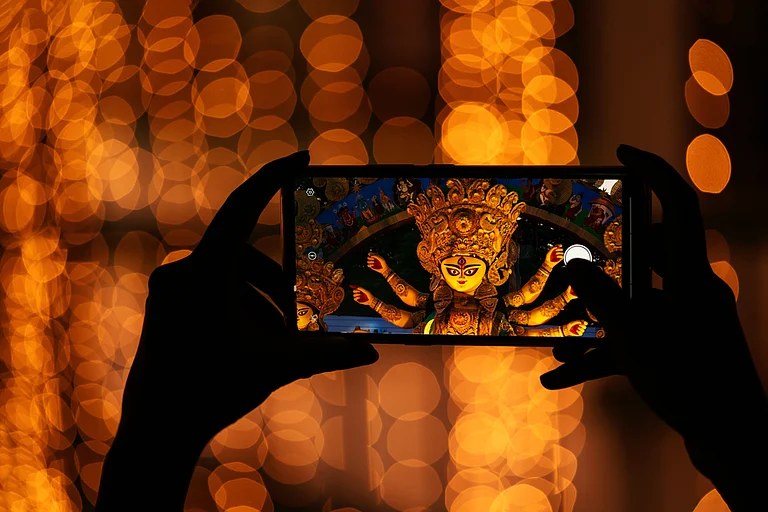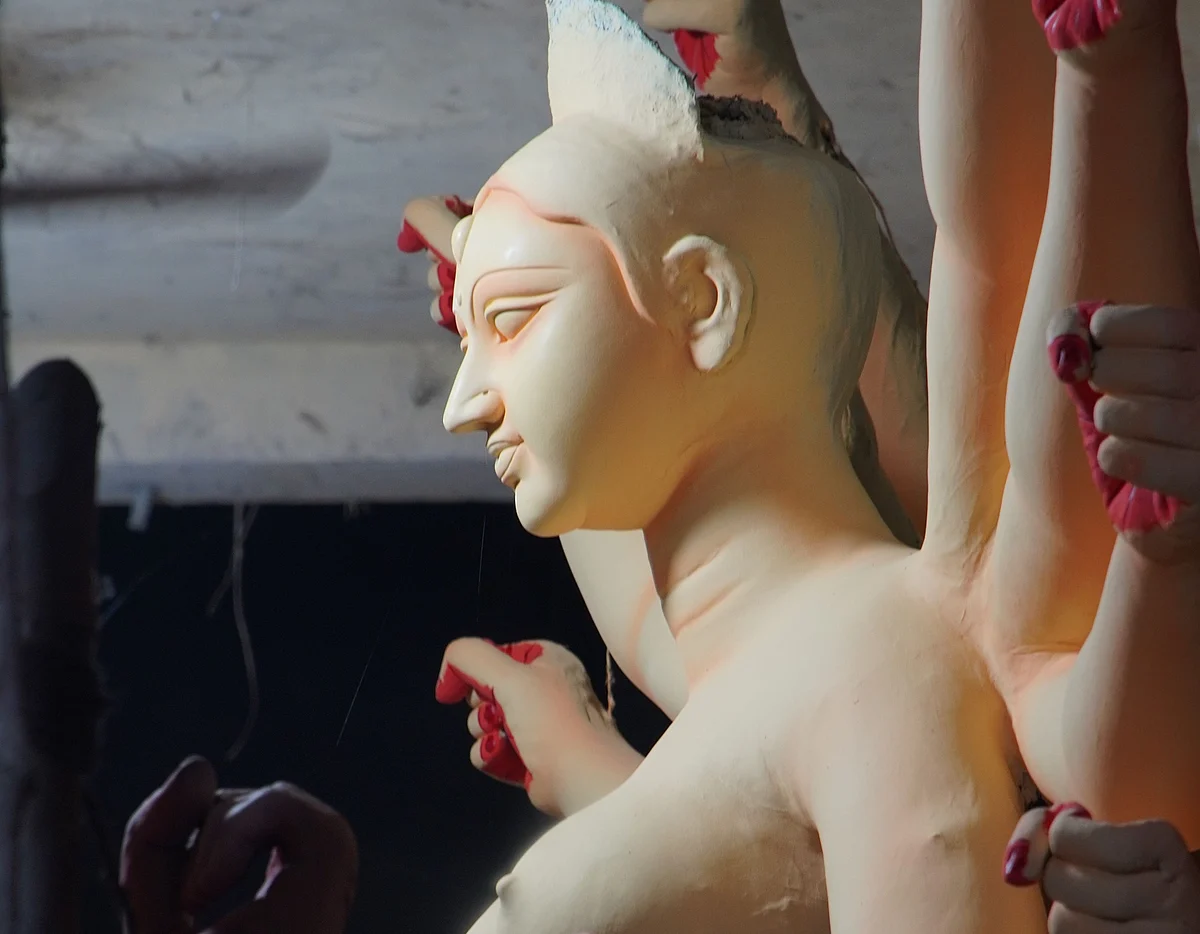
I remember how my mother used to lure me into waking up on Mahalaya morning by promising me a cup of chai. I would like to admit that I am mildly addicted to chai, so the prospect was enough to get me out of bed before sunrise. My didun (maternal grandmother) lived 15 minutes away, and we would listen to the radio broadcast before walking to her house, where my maasis (mother’s sisters) would gather for tea and conversations. Those mornings were as much about family as they were about welcoming Goddess Durga. I am a 90s kid who has witnessed the world on both sides of the internet, from radio broadcasts and television sets to smartphones and tablets. Yet, some memories remain stubbornly analogue. Mahalaya is one of them.
The Morning That Announced Durga Puja


For Bengalis, Mahalaya carries a significance that is difficult to explain to someone who has never grown up with it. Falling on the new moon day that marks the end of Pitru Paksha, the fortnight dedicated to honouring ancestors, it ushers in Devi Paksha, the period associated with the arrival of Goddess Durga. It is also when the countdown to Durga Puja begins to feel real.
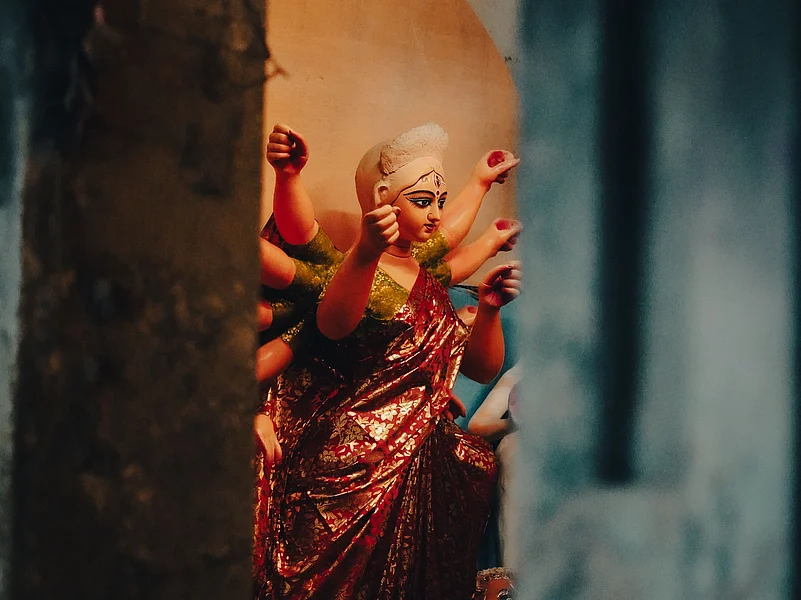
At the centre of this experience is Mahishasura Mardini, the iconic radio programme featuring Birendra Krishna Bhadra’s narration of the Chandi Path, accompanied by devotional songs and music. Traditionally broadcast by All India Radio at 4 am, his resonant voice has become inseparable from Mahalaya for generations of Bengalis. As the chants fill the early morning air, the feeling is unmistakable: Devi aashche, the Goddess is coming home.
My mother, Munmun Das, a homemaker, grew up with this ritual long before I did. Her earliest memories take her back to mornings when her father would wake her and her sisters at around 3 am. They would freshen up, have tea prepared by their mother, and listen to the broadcast after he offered dhoop-dhuna, fragrant incense and resin burned in a traditional incense burner.
For her generation, Mahalaya was an occasion that brought entire neighbourhoods together. Horn-shaped loudspeakers would carry the Chandi Path and devotional songs into the streets, while the fragrance of shiuli flowers, the night-flowering jasmine associated with autumn in Bengal, would signal the changing season.
Every verse and chant became part of a shared memory. As my mother recalls, the broadcast made the arrival of Durga Puja feel tangible. It was also the time when children began showing off their new clothes and talking excitedly about the festivities ahead.
From Radio Mornings To Mahananda Ghat
My own memories of Mahalaya are a little different, but they carry the same anticipation. The promise of chai was my mother's way of getting me out of bed, but the real reward was arriving at my didun's house. My maasis would be there, and the morning would unfold over cups of tea, conversations, and the familiar sounds of Mahishasura Mardini.
I did not fully understand the significance of waking up before dawn. At that age, I was more interested in the company, the tea, and the excitement of being somewhere everyone seemed to have gathered for the same reason. Looking back, I realise that these ordinary moments were part of how I learnt what Mahalaya meant.
My mother remembers taking me to my grandfather's house when I was about three. Her mother would already be awake, preparing tea because she knew we were coming. We would sit together, listen to the programme, and watch the neighbourhood begin to stir.
She remembers the broadcast lasting around two hours. When it ended, she would experience a strange sense of loss, as though something precious had come to an end. I did not have the words to understand that feeling then, but I recognise it now. There is a particular sadness in knowing that a moment you have anticipated all year has passed, even when the festivities are still ahead.
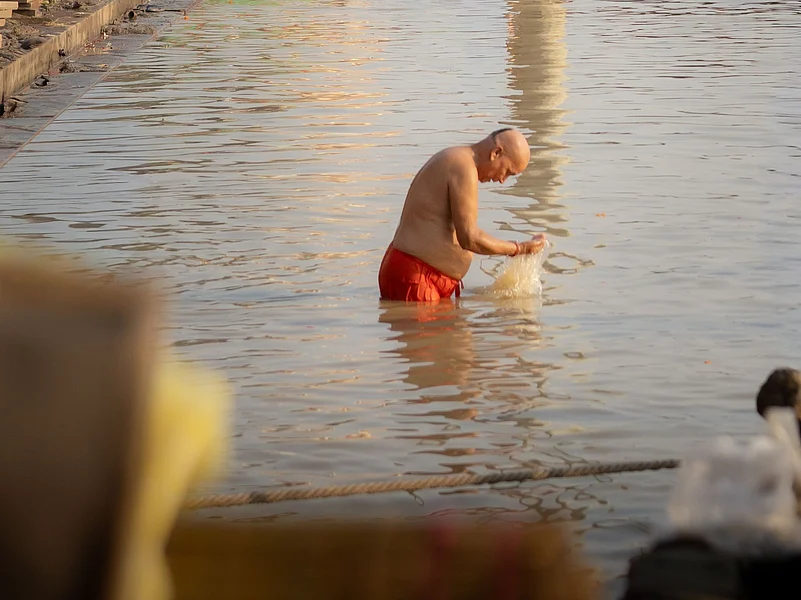
Another part of our Mahalaya mornings was visiting Mahananda Ghat, the riverfront closest to our home in Siliguri. People gathered there for Tarpan, a ritual performed on Mahalaya Amavasya to honour deceased ancestors and seek their blessings. The word comes from the Sanskrit root trup, meaning to satisfy or please. Traditionally, the ritual involves offering water, often with black sesame seeds and kusha grass, to the ancestors. Watching people gather by the river added another dimension to the day. Mahalaya was not only about anticipating Durga Puja; it was also a time to remember those who came before us. The morning held space for both remembrance and celebration, for the ancestors we honoured and the Goddess we awaited.
What We Have Lost, And What We Carry Forward
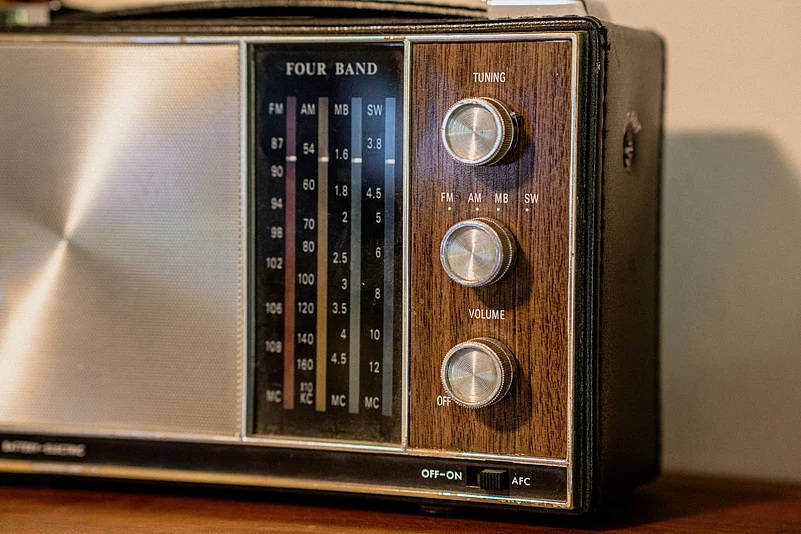
As a 90s kid, I have witnessed a remarkable shift in how we consume entertainment and experience everyday life. I remember when the radio was still a fixture in people's homes, when television was a shared attraction, and when computers were something we used at home or in school. Today, we move between laptops, tablets, and smartphones, with almost everything available at the touch of a screen.
Mahalaya has changed along with these habits. My mother remembers a time when only a handful of households in a neighbourhood owned televisions. People would visit one another's homes to watch programmes together, and Mahalaya mornings were often communal affairs. The broadcast travelled through open windows and across streets, drawing people into a shared experience.
As television became more accessible, those gatherings gradually diminished. People could listen to or watch the programme at home, without having to step outside. Now, with recordings and digital platforms, we can experience Mahishasura Mardini whenever we choose.
The convenience is undeniable, but my mother feels that something has been lost along the way. What was once a neighbourhood-wide ritual has become more individual. The sounds that once filled the streets are less common, and spontaneous gatherings are rarer.
I understand what she means. Technology has made it easier to stay connected to traditions, but it has also changed the way we participate in them. Listening to a broadcast alone on a phone is not quite the same as sitting with family before sunrise, sharing tea while familiar voices fill the room.
Yet, I do not think the tradition has disappeared. It has simply taken on different forms. Some people continue to wake up at 4 am, while others listen later in the day or stream the programme online. The medium may change, but the emotional connection remains.
My mother believes that understanding the history behind Mahishasura Mardini makes its significance even greater. She recalls hearing stories about Bhadra's devotion to the rituals associated with the broadcast. She also remembers the controversy surrounding the attempt to replace his narration with a version presented by actor Uttam Kumar in 1976. The alternative broadcast was poorly received, and Bhadra's familiar rendition returned the following year. The episode eventually became the subject of the Bengali film "Mahalaya."
For my mother, this history is a reminder that the programme's place in Bengali life was built over decades. Its continued relevance comes from the memories and emotions people attach to it, not merely from habit.
A Daughter Then, A Mother Now
The meaning of Mahalaya has also evolved for my mother as she has grown older. As a daughter, she remembers the excitement of buying new clothes, choosing accessories, and planning the days of Durga Puja. The cost of an outfit mattered less than the feeling of having something new to wear. Mahalaya was the starting point of all that anticipation.
As a mother, she has come to see the occasion through a different lens. There are more responsibilities, more people to think about, and more arrangements to make. In our family, several households have their own Durga Puja celebrations, and the festivities involve moving between them, sharing time and making sure everyone gets to participate.
Still, the excitement has endured. And perhaps that is what I find most comforting about the traditions my mother passed on to me.
I may not wake up every year with the same childhood excitement, and our mornings may no longer look exactly as they once did. But the first notes of Mahishasura Mardini still have the power to take me back to those early mornings, to the warmth of my family's company, and to the feeling that Durga Puja is finally within reach.
Perhaps that is what it means to inherit a tradition. You do not have to experience it exactly as your parents did. You only have to find a way to keep it alive, and perhaps pass a little of it on.
So, turn on the radio at 4 am tomorrow. Make yourself a cup of chai, wake someone you love, and let Birendra Krishna Bhadra's voice fill the morning. You might find that, somewhere between the chants and the familiar songs, a little piece of home is waiting for you.
FAQs
1. What is Mahalaya?
Mahalaya marks the end of Pitru Paksha and the beginning of Devi Paksha, heralding the arrival of Goddess Durga ahead of Durga Puja.
2. Why is Mahalaya significant for Bengalis?
It signals the beginning of the Durga Puja season and is associated with family traditions, devotional music, and ancestral remembrance.
3. What is Mahishasura Mardini?
It is a renowned radio programme featuring Birendra Krishna Bhadra's narration of the Chandi Path, accompanied by devotional songs.
4. Why do Bengalis listen to Mahishasura Mardini at 4 am?
The early morning broadcast has become a longstanding Mahalaya tradition, connecting generations of Bengali listeners through familiar chants and music.
5. What is Tarpan on Mahalaya?
Tarpan is a Hindu ritual performed to honour deceased ancestors through offerings, traditionally including water and black sesame seeds.