

As the first rays of the sun hit the thick Sal canopy, the forest erupts. It is a frenzied feeding exercise, a dance from branch to branch. Flocks of Long-tailed and Rosy Minivets, Yuhinias, the striking Blue-winged Minlas and Silver-eared Mesia, Ashy and Black Bulbuls, accompanied by an assortment of babblers and warblers, flit alongside the rhythmic tapping of Grey-headed, Yellow-naped and Fulvous-breasted Woodpeckers and the Chestnut-bellied and Velvet-fronted Nuthatches. Add to this the raucous Red-billed Blue Magpies, Grey Treepies and the brilliant Green Magpie, adding their voices to the morning choir. Recent surveys by naturalists, locals and visitors have notched up 375 bird species, over 200 species of moths from the tropical evergreen and moist deciduous forests of Rathuadhab, and it is likely that the actual diversity is many times higher.
A Forest Village At The Foothills


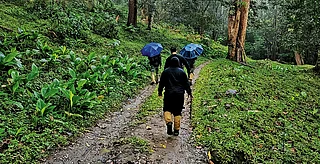
Placed near riverine and forest habitats with an envious checklist of birds, moths and butterflies, Rathuadhab offers luxurious views of the hills, thick Sal forests, and a river that flows by under a warm wintry sun. Situated at the foothills, at 700 m, this forest village in the Kalagarh Tiger Reserve offers the raw, rhythmic pulse of the Himalayan forest – and some things far more precious than seats of luxury. By the banks of the Manral River, the village is ideal for those looking for a slow-paced, quiet break from the humdrum of big-ticket hill destinations.
Community, Conservation And Eco-tourism

The Rathuadhab landscape lies on the northern fringes of Jim Corbett National Park, within the larger Kalagarh Tiger Reserve region. Unlike the mass tourism zones, this part of Jim Corbett National Park is quiet, forest-rich, and deeply connected to village life. A walk through the steep, narrow alleys of the village shows how this landscape has been shaped slowly through community-led eco-tourism initiatives. This is a model example of a remote forest-fringe village with limited infrastructure that actively uses birdwatching, nature walks and homestays as alternative livelihoods. Local youth, once purely agrarian, are now trained nature guides. The village has traded forest pressure for forest protection, using birdwatching and homestays as a sustainable way of life.
Local homestays such as The Corbett Rajae Homestay in Rathuadhab and Corbett Riverside Homestay in the nearby Dhotiyal village are playing important roles in promoting this region in a responsible way. These homestays ensure learning directly from the community. The aim is simple – to create livelihoods for local people while ensuring that forests, birds, rivers and village culture are protected.

It was the recently held “Nature Festival” that marked a new chapter for this village, signalling its readiness to welcome those who travel with a conscience. Whether it’s a stroll by the river or a focused birding session, the quietude here is profound. The Nature Festival by Chakuli and Jeevan Deep Samiti, local community organisations that collaborate with several partners, including the Uttarakhand Biodiversity Board, the State Forest Department and Titli Trust, showcased school-based awareness programmes and community-led tourism, aiming to embed conservation values in younger generations while reducing pressure on forests, illustrating how the village’s socio-economic trajectory is now tightly linked to conservation and eco-tourism policy.
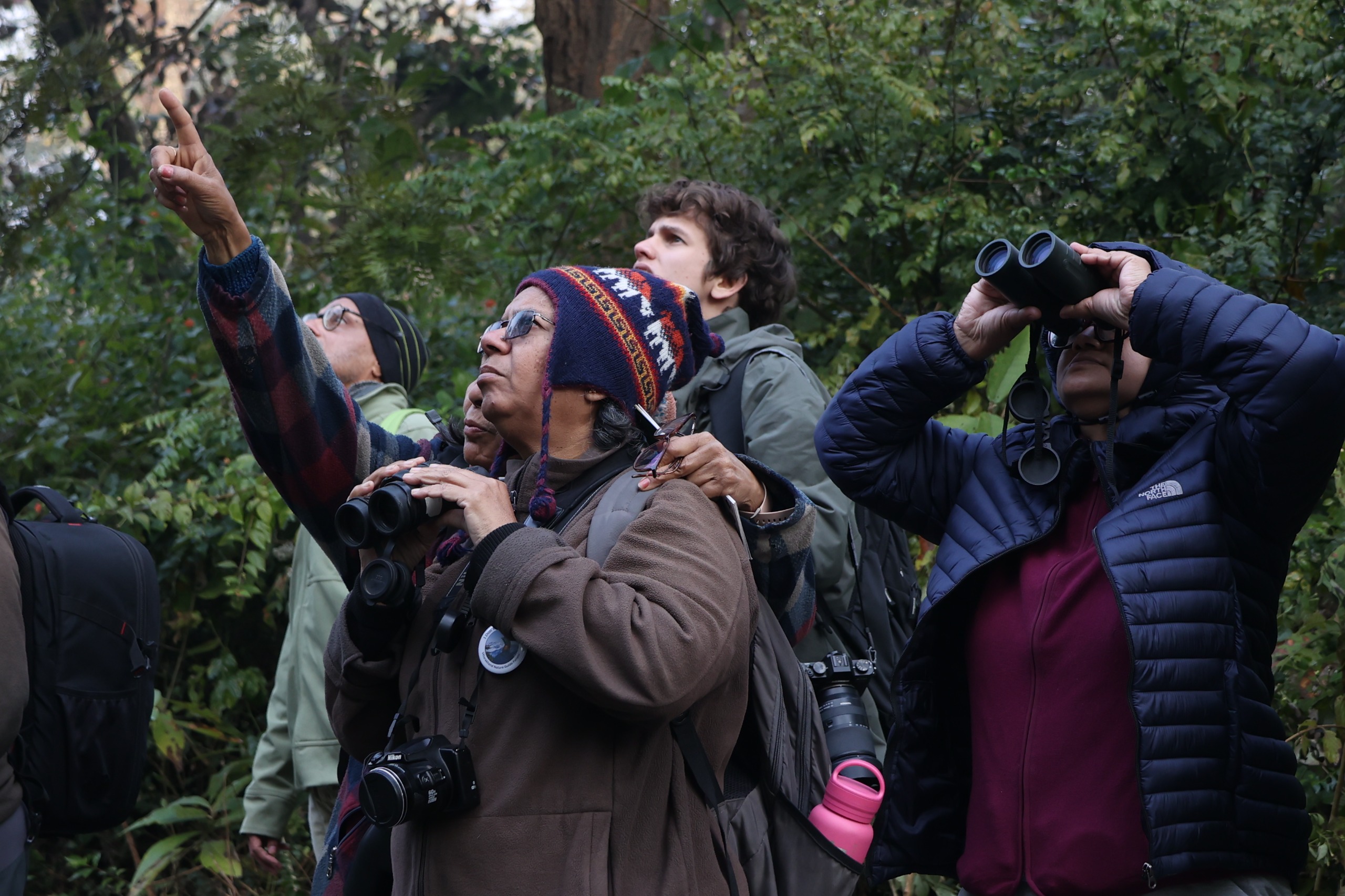
For birders, there are numerous trails through the forests and the village, and in a single day a birder can easily notch up 70 to 80 species. The amateur birder doesn’t even have to go deep into the forest; an envious bird checklist can be mustered in no time just along the village path or on the terrace of the homestay.
Rathuadhab is also home to 110 species of butterflies. The local hotspots for butterfly watching are Rathuadhab, Dhontiyal, Kartiya and Mundiapani. Some of the butterfly species recorded here include the Aberrant Oakblue, Spangled Plushblue, Variegated Plushblue, Common Gem, Redbreast Jezebel and Transparent Six-line Blue.
A slow, respectful approach is what makes this northern part of Corbett different and worth visiting. Here, the slow traveller and birdwatchers find a sanctuary where the humdrum of the world is replaced by constant birdsong from dawn to dusk.
The Information
Destination: Rathuadhab Village, Kalagarh Tiger Reserve (Pauri Garhwal)
Altitude: 700 metres
How to reach: Nearest Railway Station – Kotdwar; Nearest Airport – Jolly Grant Dehradun
Lodging: 2-3 Local homestays (well equipped)
Recommendations: Short walks in the lush green villages, long winding birding trails, sampling local dishes such as Bhatt ki Churkani
FAQs
1. Where is Rathuadhab located?
Rathuadhab is a forest village located in the Kalagarh Tiger Reserve region, on the northern fringes of Jim Corbett National Park in Pauri Garhwal, Uttarakhand.
2. Why is Rathuadhab popular among birdwatchers?
The village lies amid Sal forests and riverine habitats, with records of over 375 bird species, making it one of the most species-rich yet quiet birding destinations near Corbett.
3. What is the best time to visit Rathuadhab for birding?
The winter and early summer months are ideal, when migratory species arrive and forest trails remain accessible for long birding walks.
4. Are there accommodation options in Rathuadhab?
Yes, a small number of locally run homestays in Rathuadhab and nearby villages offer comfortable lodging while supporting community-led eco-tourism.
5. What makes Rathuadhab different from other Corbett tourism zones?
Unlike commercial safari zones, Rathuadhab focuses on slow travel, village life and conservation, with birdwatching and homestays replacing mass tourism models.