

Vietnam is often celebrated for its street food, motorbike-filled cities, and emerald rice terraces, but its UNESCO World Heritage Sites reveal a deeper story. Spread from the limestone islands of the north to the imperial cities and ancient temple complexes of central Vietnam, these places trace centuries of royal dynasties, maritime trade, spiritual traditions and extraordinary natural evolution. Some invite slow exploration aboard a wooden boat, others ask you to wander through old streets, climb ancient citadels or venture deep into cave systems that rank among the world's largest. Together, they capture the country's remarkable diversity, where cultural landmarks stand alongside landscapes shaped over millions of years.
With the recent addition of the Yen Tu-Vinh Nghiem-Con Son-Kiep Bac Complex to UNESCO's list, Vietnam now has nine World Heritage Sites, making it one of Southeast Asia's richest destinations for travellers looking to combine history, heritage and nature in a single journey.
Ha Long Bay–Cat Ba Archipelago
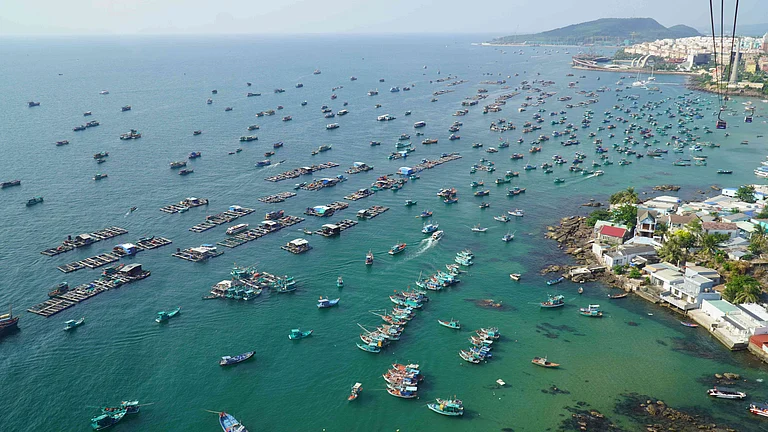
Few landscapes are as instantly recognisable as Ha Long Bay. More than 1,600 limestone islands and islets rise from emerald waters, creating one of Southeast Asia's most iconic seascapes. In 2023, UNESCO expanded the listing to include the neighbouring Cat Ba Archipelago, recognising the area's shared geological and ecological significance. While legends speak of dragons scattering jade into the sea to defend Vietnam, the real story lies in millions of years of limestone formation, hidden caves, floating fishing villages and biodiverse forests. Whether explored on a traditional junk boat, by kayak through secluded lagoons or during an overnight cruise, the bay rewards slow travel. Cat Ba National Park, home to the critically endangered Cat Ba langur, adds another dimension to this celebrated natural wonder.
Phong Nha-Ke Bang National Park
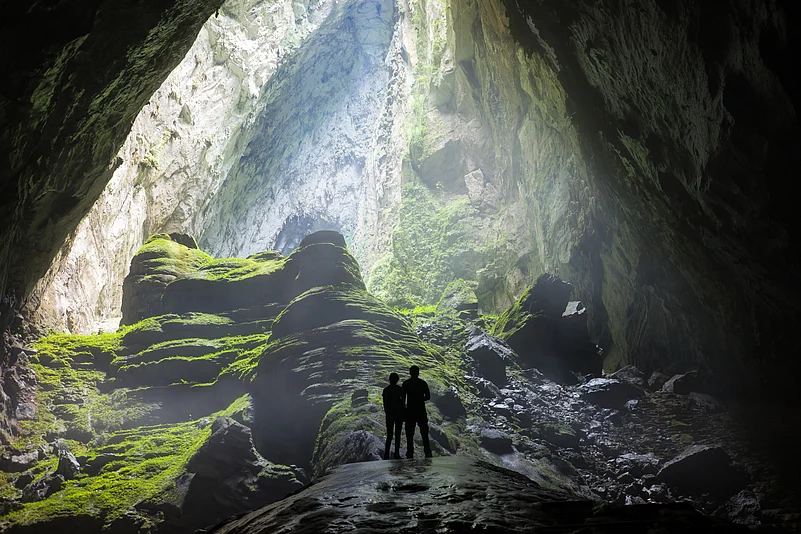

In Quang Binh Province lies one of the planet's oldest karst landscapes, where rivers disappear underground, and vast cave systems stretch beneath forested mountains. Phong Nha-Ke Bang National Park is best known for Son Doong, the world's largest cave, but that's only one chapter of its story. The park is home to hundreds of caves, underground rivers and remarkable biodiversity, earning UNESCO recognition for both its geology and ecosystems. In 2025, its listing was extended across the border to include Laos's Hin Nam No National Park, making it a shared transboundary World Heritage Site that reflects the continuous karst system running beneath both countries. Paradise Cave, Phong Nha Cave and Dark Cave are among the more accessible highlights, while multi-day expeditions take adventurous travellers into remote caverns and dense jungle. Above ground, winding rivers, limestone peaks and wildlife-rich forests make the national park just as rewarding to explore.
Complex Of Hue Monuments
For nearly 150 years, Hue served as the imperial capital of the Nguyen Dynasty, and its grand monuments continue to reflect that royal legacy. At its heart stands the Imperial City, enclosed by formidable walls and inspired by Beijing's Forbidden City, with palaces, ceremonial halls and ornate gates spread across a vast complex. Beyond the citadel, the Perfume River links many of Hue's defining landmarks, including the elegant Thien Mu Pagoda and a collection of elaborate royal tombs set amid pine forests and landscaped gardens. Each emperor left behind a distinct architectural signature, from Minh Mang's symmetry to Khai Dinh's striking blend of Vietnamese tradition and European influences, making Hue one of Vietnam's richest historical destinations.
Hoi An Ancient Town

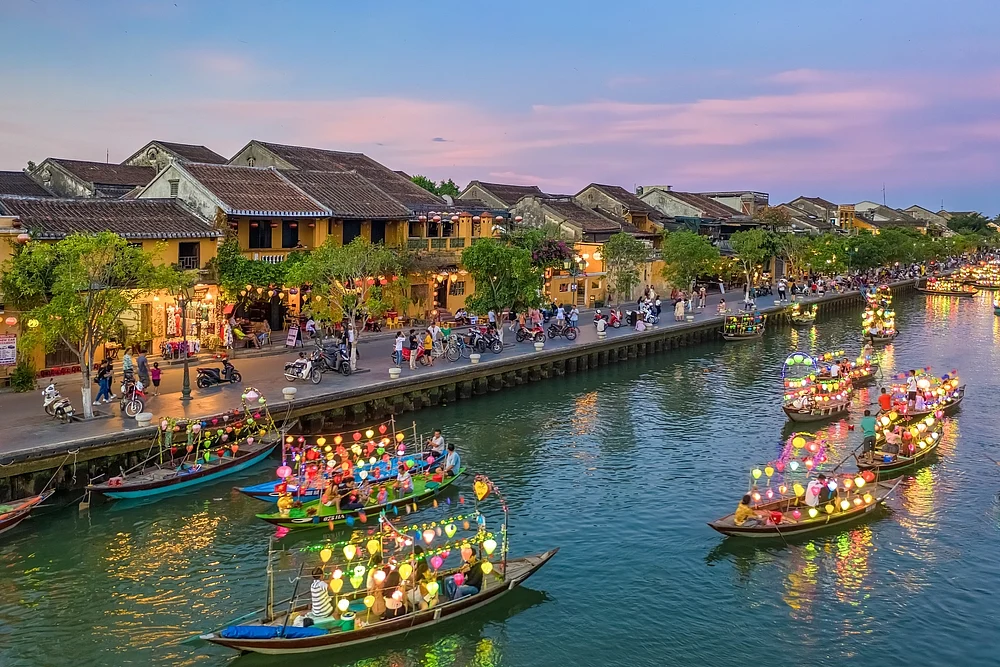
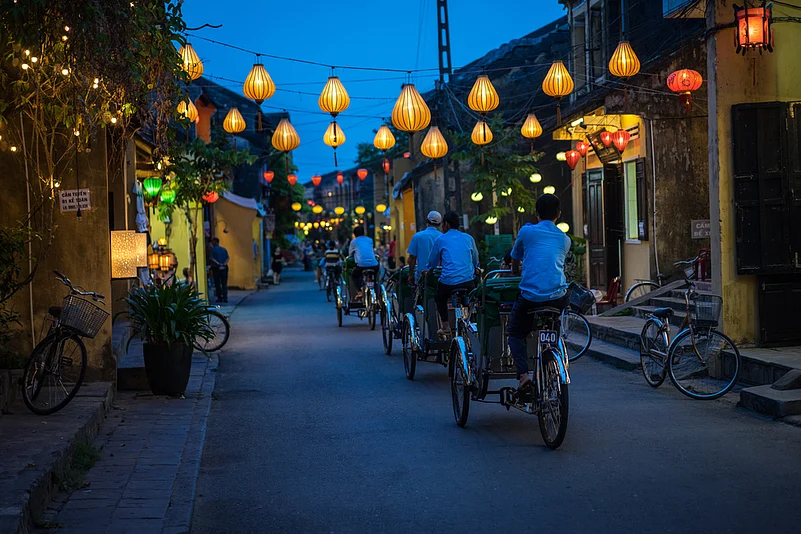
Few places balance heritage and everyday life as effortlessly as Hoi An. Once one of Southeast Asia's busiest trading ports, the town still preserves its centuries-old street plan, merchant houses, assembly halls and temples, shaped by Vietnamese, Chinese, Japanese, and European influences. Ochre-coloured buildings, lantern-lined streets and the iconic Japanese Covered Bridge give Hoi An its unmistakable character, but its appeal extends well beyond postcard views. Cafés occupy restored heritage homes, family-run tailors continue long-standing traditions and local markets remain central to daily life. Visiting early in the morning or after sunset offers a different rhythm, when the crowds thin and the old town settles into the atmosphere that earned it UNESCO recognition.
My Son Sanctuary
Hidden within a lush valley in Quang Nam Province, My Son Sanctuary preserves the spiritual heart of the ancient Champa Kingdom. Between the 4th and 13th centuries, this was an important Hindu religious centre where Cham rulers built brick temple towers dedicated primarily to Shiva. Although many structures were damaged over time, the intricate carvings, sculpted sandstone details and remarkably engineered brickwork still offer a glimpse into one of Southeast Asia's most fascinating civilisations. Surrounded by forested hills, the site feels worlds away from the beaches of nearby Da Nang and Hoi An. Arriving early in the morning allows visitors to explore before the heat sets in while appreciating the site's peaceful setting.
Trang An Landscape Complex

Often called the inland counterpart to Ha Long Bay, Trang An combines soaring limestone karsts with winding waterways, caves and centuries of human history. Located in Ninh Binh Province, it became Vietnam's first mixed UNESCO World Heritage Site, recognised for both its natural beauty and archaeological importance. The best way to experience Trang An is aboard a traditional rowing boat that glides through cave tunnels and tranquil rivers framed by towering cliffs. Beyond the waterways lie the ancient capital of Hoa Lu, cliffside pagodas and evidence of human settlement dating back more than 30,000 years. The result is a landscape where nature and history are deeply intertwined rather than existing as separate attractions.
Imperial Citadel Of Thang Long
In the centre of modern Hanoi stands a site that has witnessed more than 1,000 years of Vietnamese history. The Imperial Citadel of Thang Long was established during the Ly Dynasty in the 11th century and remained the country's political heart through successive dynasties. Much of the original complex was demolished during the French colonial period, but surviving structures, including the Flag Tower, North Gate and extensive archaeological excavations, continue to reveal layers of royal life beneath the capital. Excavated foundations, ceramics and palace remains provide valuable insight into Vietnam's evolving identity, while UNESCO recognition highlights the citadel's role as a cultural crossroads between China, Southeast Asia and the indigenous traditions of Dai Viet.
Ho Dynasty Citadel
Standing amid the rice fields of Thanh Hoa Province, the Ho Dynasty Citadel is one of Vietnam's most remarkable feats of medieval engineering. Built in 1397 by Ho Quy Ly, it became the capital of Vietnam for only a brief period, yet its influence has endured for more than six centuries. Massive limestone blocks, some weighing over 20 tonnes, were fitted together with extraordinary precision, creating one of the finest examples of large-scale stone architecture in Southeast Asia. Much of the original city has disappeared, but its imposing gates and sections of fortified walls remain remarkably well preserved. UNESCO recognised the citadel for its innovative construction techniques and its role in reflecting the political and philosophical ideas that shaped Vietnam at the turn of the 15th century.
Yen Tu-Vinh Nghiem-Con Son-Kiep Bac Complex
Vietnam's newest UNESCO World Heritage Site brings together a network of sacred mountains, temples, pagodas and monasteries spread across Quang Ninh, Bac Ninh and Hai Phong. Inscribed in 2025, the Yen Tu-Vinh Nghiem-Con Son-Kiep Bac Complex is the country's first serial cultural heritage chain, linking twelve component sites into a single listing, and celebrates the birthplace and development of Truc Lam Buddhism, a distinctly Vietnamese Zen tradition founded by Emperor Tran Nhan Tong in the 13th century. Pilgrims have travelled these forested hills for centuries, following routes that connect spiritual landmarks with serene natural landscapes. Visitors can ride a cable car or hike to the Bronze Pagoda atop Yen Tu Mountain, explore the historic Vinh Nghiem Pagoda, or visit the temples and relics of Con Son and Kiep Bac. Together, the sites offer a fascinating glimpse into Vietnam's enduring spiritual heritage.
FAQs
Q1. How many UNESCO World Heritage Sites does Vietnam have?
Vietnam currently has nine UNESCO World Heritage Sites.
Q2. Which is Vietnam's newest UNESCO World Heritage Site?
The Yen Tu-Vinh Nghiem-Con Son-Kiep Bac Complex was inscribed in 2025.
Q3. Which UNESCO World Heritage Site in Vietnam spans two countries?
Phong Nha-Ke Bang National Park and Laos' Hin Nam No National Park together form a transboundary UNESCO World Heritage Site.
Q4. Which UNESCO World Heritage Site in Vietnam is recognised for both natural and cultural significance?
Trang An Landscape Complex is Vietnam's first mixed UNESCO World Heritage Site.
Q5. Which UNESCO World Heritage Site in Vietnam spans multiple provinces?
Ha Long Bay-Cat Ba Archipelago and the Yen Tu-Vinh Nghiem-Con Son-Kiep Bac Complex are UNESCO sites that extend across multiple provinces in Vietnam.