

Prague may be the obvious starting point for a trip to the Czech Republic, but its UNESCO status is only the beginning. Across the country, historic towns, aristocratic estates, churches and even an exceptionally preserved village reveal how centuries of Bohemian and Moravian history have shaped the landscape. Czechia currently has 17 properties on the UNESCO World Heritage List, including historic urban centres, cultural landscapes, and architectural masterpieces.
For travellers interested in architecture and history, the country is particularly rewarding. You can move from the Gothic lanes of Český Krumlov to the silver-mining legacy of Kutná Hora, then trade grand castles for an almost storybook village or a carefully designed Baroque garden. These seven UNESCO sites are worth building individual excursions around, rather than treating them as quick stops between cities.
Walk Prague’s Medieval Heart From Old Town Square To Charles Bridge


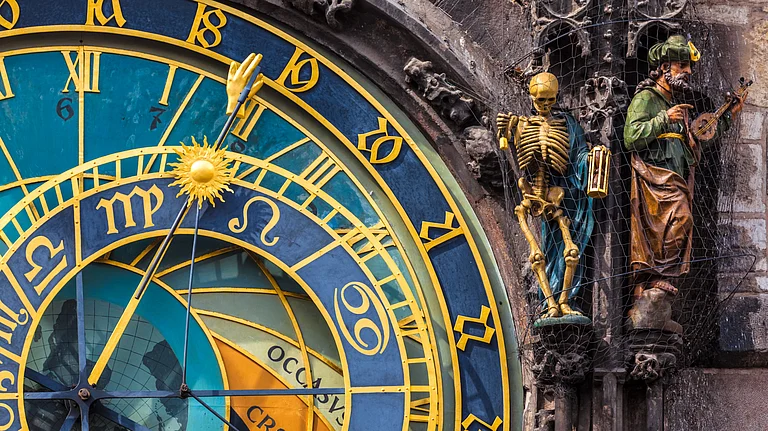
Prague’s UNESCO-listed historic centre is the natural place to begin. Inscribed in 1992, the property encompasses the historic core of the capital and Průhonice Park, southeast of the city. The urban centre developed over roughly 1,100 years, with the Old Town, Lesser Town and New Town preserving layers of Romanesque, Gothic, Baroque, and later architecture.
The city’s architectural landmarks tell that story almost street by street. Prague Castle and St Vitus Cathedral dominate Hradčany, while Charles Bridge connects the two banks of the Vltava. Around Old Town Square, Gothic and Romanesque structures sit alongside later Baroque buildings, while Josefov retains the Old-New Synagogue and other reminders of Prague’s Jewish history. The New Town, founded by Charles IV in the 14th century, represents one of medieval Europe’s most ambitious examples of planned urban development.
The UNESCO property covers more than 1,100 hectares, including Průhonice Park. That makes Prague’s heritage story considerably broader than its postcard landmarks.
Wander Český Krumlov’s Castle And Riverside Old Town

Wrapped inside a dramatic meander of the Vltava River, Český Krumlov is the kind of town where the geography is inseparable from its architecture. Its historic centre grew around a castle founded in the 13th century, with Gothic, Renaissance, and Baroque elements accumulated through successive periods of development. UNESCO inscribed it in 1992.
The castle occupies the rocky high ground above the town, while the historic streets curve around the river below. This unusual setting helped preserve the medieval urban structure and gives Český Krumlov its distinctive appearance. The historic centre contains aristocratic residences, churches, monasteries, and burgher houses, many retaining decorative details and Renaissance interiors, including carved wooden ceilings.
The 15th-century Church of St Vitus is another important part of the townscape, reflecting the religious importance the settlement acquired during the late Middle Ages. The castle complex itself grew considerably over time, incorporating architectural influences from different eras.
The result is an unusually intact example of a small Central European medieval town, with the river, castle, and surrounding landscape still defining its historic character.
Explore Kutná Hora’s Silver-Mining Legacy And St Barbara’s Church

Kutná Hora’s history is written in silver. The town grew rapidly after the discovery and exploitation of silver deposits, becoming an important royal city in the Middle Ages. By the 14th century, its wealth had funded an extraordinary collection of churches and civic buildings, giving the town the architectural character that survives today. UNESCO inscribed the historic centre in 1995.
The centrepiece is the Church of St Barbara, one of the great examples of late Gothic architecture in Central Europe. Its soaring interior, elaborate vaulting, and intricate decorative details reflect the prosperity of the mining town and the ambitions of its patrons. The church was built over several centuries, with construction beginning in the late 14th century.
A short distance away in Sedlec is the Cathedral of Our Lady at Sedlec, a former Cistercian monastery church that was remodelled in the Baroque period. Together, these monuments sit within a remarkably well-preserved medieval townscape of narrow streets, historic houses and former mining wealth.
Kutná Hora works particularly well as a day trip from Prague, but its architectural and industrial history merits more than a quick photograph outside St Barbara’s.
Cycle Through Castles, Gardens, And Ponds At Lednice-Valtice

Some UNESCO properties are individual monuments; Lednice-Valtice is an entire landscape designed on an aristocratic scale. Covering around 200 square kilometres, the estate in South Moravia was transformed by the Liechtenstein family between the 17th and 20th centuries into an elaborate combination of castles, gardens, woods, waterways, and architectural follies.
The two principal estates are Lednice and Valtice. Their architecture reflects several centuries of changing taste, from Baroque and Classical influences to the Neo-Gothic style associated with Lednice Castle. Yet the landscape itself is just as important as the buildings. Paths, gardens, ponds, wooded areas, and ornamental structures were deliberately arranged according to the principles of English Romantic landscape design.
The property also preserves traces of a much older past. At Pohansko, within the wider cultural landscape, archaeological remains include the site of an important Great Moravian hillfort dating to the 8th century, with substantial defensive ramparts still visible.
UNESCO describes Lednice-Valtice as one of Europe’s largest artificial landscapes. It is best understood as a vast piece of landscape architecture rather than simply a castle visit.
Walk Through Baroque Gardens At Kroměříž

Kroměříž brings together architecture, art and garden design in one exceptionally preserved Baroque ensemble. Located in Moravia, the complex comprises the Archbishop’s Castle, the adjacent Castle Garden and the Flower or Pleasure Garden, known as Květná zahrada. UNESCO added the property to the World Heritage List in 1998.
The castle is a four-winged building arranged around a central courtyard, with richly decorated interiors and important art collections. Its architecture reflects the influence of Italian Baroque design in Central Europe. Particularly striking is the connection between the castle and its garden through spacious ground-floor rooms and grottoes.
Then there is the 58-hectare Castle Garden, with mature trees, ornamental structures, water features, greenhouses and an aviary. The smaller Pleasure Garden is even more unusual. Created between 1665 and 1675, it retains much of its original Baroque layout, with geometric planting, water basins, sculpture and architectural features arranged around a central axis.
The gardens were influential beyond Kroměříž, helping shape Baroque garden design in Moravia and the wider Danube region.
Admire Telč’s Renaissance Houses Around Its Historic Square

Telč looks almost too carefully composed to have evolved organically, which is precisely what makes its history fascinating. The town lies near the historic border between Bohemia and Moravia and developed as a planned settlement in the 14th century. Its strategic position was reinforced by stone walls and a network of artificial ponds. UNESCO inscribed its historic centre in 1992.
At the heart of Telč is a distinctive triangular market square surrounded by Renaissance and Baroque houses. Their colourful façades are joined by a continuous arcade, creating one of the most harmonious historic townscapes in Czechia. Many of the buildings have medieval origins beneath their later Renaissance and Baroque exteriors.
The Renaissance castle occupies the centre of the town and retains elements of the earlier Gothic structure. Its interiors contain Italian-influenced decoration, while the surrounding fortifications and ponds reveal the defensive logic behind Telč’s original design.
The UNESCO property covers 36.18 hectares, with a much larger buffer zone protecting the historic setting.
Telč is particularly rewarding for travellers who enjoy architecture at street level: the square, arcades, façades, castle, and water-filled defensive landscape form one remarkably cohesive ensemble.
Step Into South Bohemian Folk Baroque At Holašovice

For a very different UNESCO experience, head to Holašovice, a small historic village in South Bohemia. Located about 17 kilometres west of České Budějovice and 24 kilometres north of Český Krumlov, the village preserves the traditional layout of a Central European rural settlement. UNESCO inscribed it in 1998.
The village is arranged around a large rectangular green and contains 23 farmsteads, along with the Chapel of St John of Nepomuk, a cross, a forge and a small pond. What makes Holašovice particularly distinctive is its collection of 18th- and 19th-century buildings in the regional style known as South Bohemian Folk Baroque.
The façades are richly decorated with ornamental stucco, curved gables and elaborate details, giving ordinary farm buildings an unexpectedly theatrical appearance. Behind those façades, however, the village retains the practical layout of traditional farmsteads.
The medieval plan of the settlement has survived remarkably well, as have its historic land divisions. The UNESCO property covers 11.4 hectares, surrounded by a 367.5-hectare buffer zone.
Holašovice is less about a single grand monument and more about seeing how architecture, agriculture, and community life once fitted together in a Central European village.
FAQs
1. How many UNESCO World Heritage Sites are there in Czechia?
Czechia currently has 17 properties on the UNESCO World Heritage List, including historic cities, cultural landscapes, castles, gardens, religious monuments and other heritage sites.
2. What are some of the best UNESCO sites to visit in Czechia?
Some of the best-known UNESCO sites include the Historic Centre of Prague, Český Krumlov, Kutná Hora, Telč, the Lednice-Valtice Cultural Landscape, Kroměříž and Holašovice.
3. Is Český Krumlov a UNESCO World Heritage Site?
Yes. The Historic Centre of Český Krumlov was inscribed on the UNESCO World Heritage List in 1992. Its medieval townscape, castle complex and riverside setting are central to the protected property.
4. Is Kutná Hora a UNESCO World Heritage Site?
Yes. Kutná Hora’s historic town centre, together with the Church of St Barbara and the Cathedral of Our Lady at Sedlec, was added to the UNESCO World Heritage List in 1995.
5. What is Holašovice famous for?
Holašovice is known for its exceptionally preserved South Bohemian Folk Baroque architecture and historic village layout. It was inscribed on the UNESCO World Heritage List in 1998.