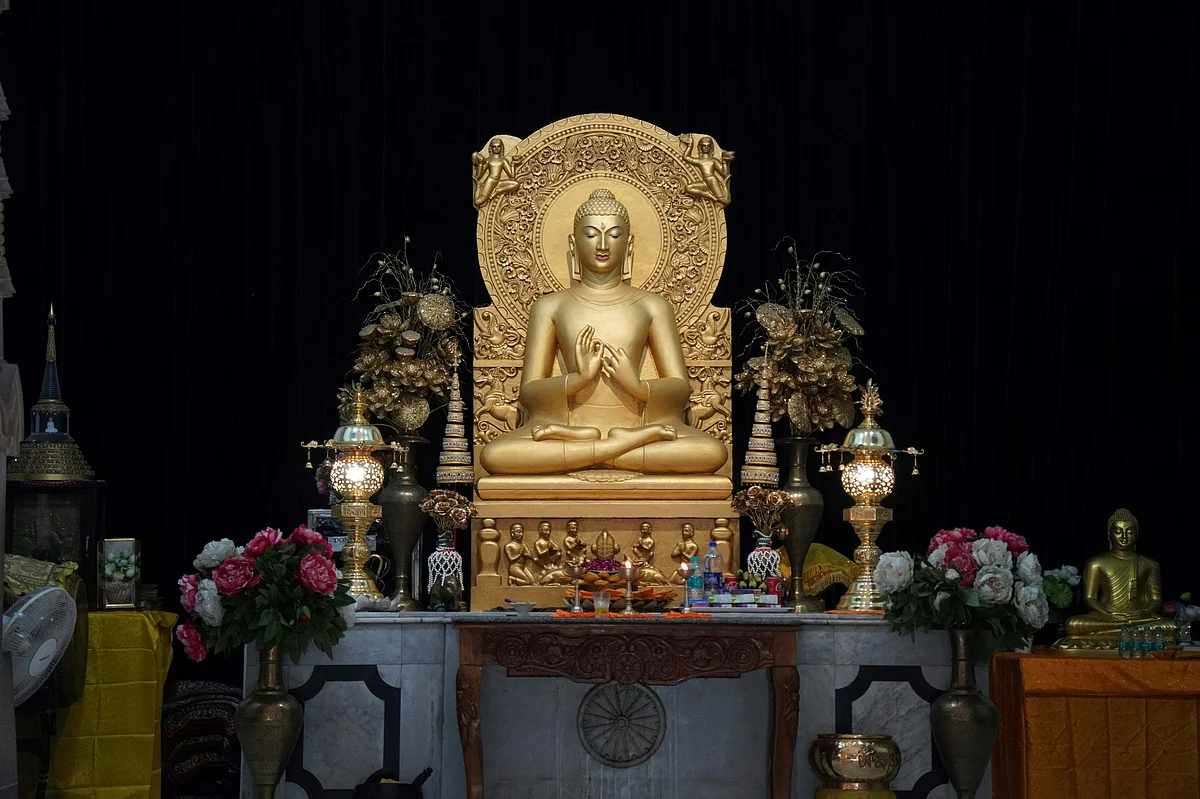
On July 25, 2026, during the 48th session of the UNESCO World Heritage Committee in Busan, South Korea, Sarnath was inscribed on the UNESCO World Heritage List as India's 45th World Heritage Site. The recognition honours the archaeological landscape where Gautama Buddha is believed to have delivered his first sermon after attaining enlightenment, acknowledging its outstanding universal value and its central role in the spread of Buddhism across Asia.
Located about 10 km from Varanasi, Sarnath has drawn pilgrims for more than 2,500 years. Known in ancient texts as Isipatana, or the Deer Park, it marks the beginning of the Buddha's public teaching and the formation of the Buddhist Sangha. Over the centuries, rulers including Emperor Ashoka, the Kushanas, and the Guptas transformed the sacred site into a flourishing centre of Buddhist learning, building monasteries, stupas, temples, and pillars whose remains still define the landscape. The Lion Capital that once crowned Ashoka's pillar, now India's National Emblem, remains one of Sarnath's most enduring legacies.
The UNESCO inscription is about far more than another landmark on the tourism map. It recognises one of the world's most significant religious landscapes while reinforcing the responsibility to preserve it. For travellers, the designation also shifts attention beyond Varanasi's iconic ghats to the quieter site where one of humanity's most influential philosophies first entered the public sphere.
Why Sarnath’s UNESCO Recognition Matters
UNESCO inscriptions are often celebrated for the tourism they generate, but Sarnath's significance extends far beyond visitor numbers. It is simultaneously an archaeological treasure, a living pilgrimage destination, and one of Buddhism's holiest sites. According to Buddhist tradition, it was here that the Buddha set the Dharmachakra, the Wheel of Dharma, in motion, delivering the sermon that laid the foundation of a philosophy that would shape civilisations across Asia.
The recognition also strengthens India's narrative as the cradle of Buddhism. Together with Bodh Gaya, Nalanda, Sanchi, and the Ajanta Caves, Sarnath completes a broader story of the religion's origins, evolution, and intellectual legacy. For travellers, it offers a richer understanding of Varanasi itself, revealing that one of the world's oldest living cities is inseparable from another site that profoundly influenced global religious history.

Inside Sarnath: Monuments, Monasteries, And Sacred Ruins
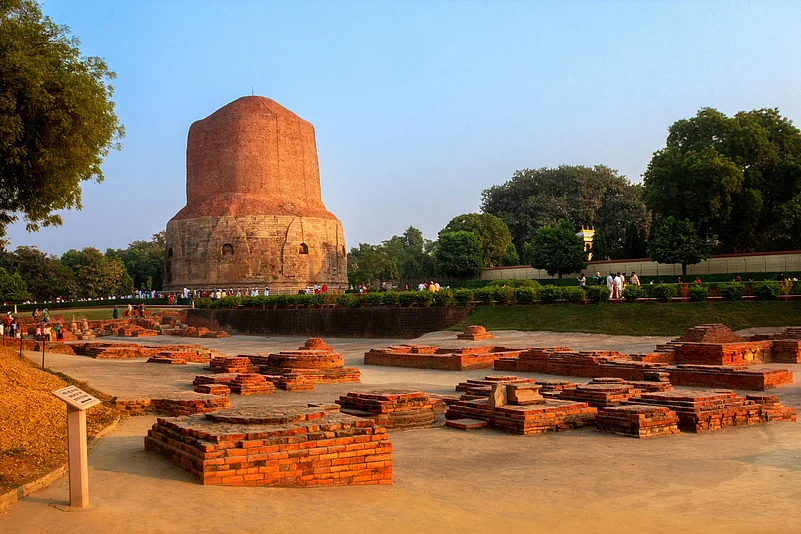
Rather than honouring a single monument, UNESCO has recognised an entire archaeological landscape. At its heart stands the towering Dhamekh Stupa, traditionally associated with the Buddha's first sermon. Nearby lie the remains of the Dharmarajika Stupa, commissioned by Emperor Ashoka, alongside the foundations of monasteries, shrines, and temples that once formed a thriving centre of learning.
The archaeological complex also includes the Chaukhandi Stupa, believed to commemorate the Buddha's reunion with his first disciples, as well as the remains of Ashoka's celebrated pillar. Its Lion Capital is now preserved in the Archaeological Museum, one of India's finest site museums, where visitors can also view exquisite Gupta-period sculptures recovered during excavations.
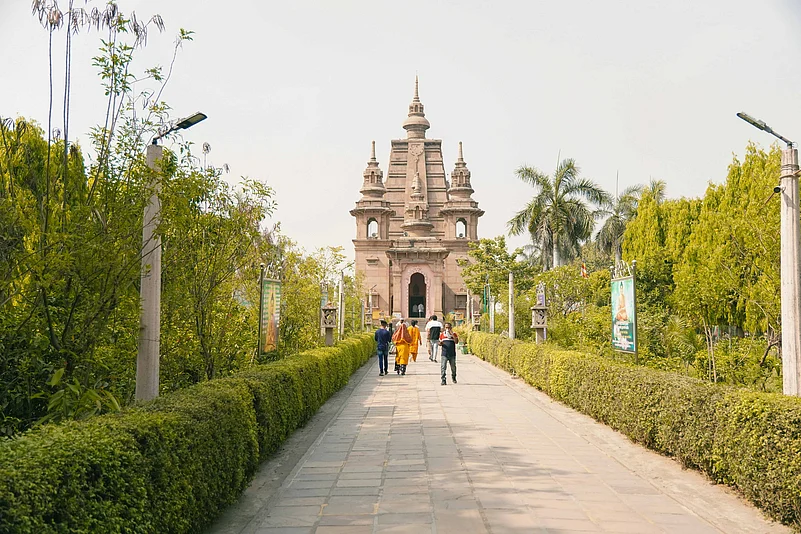
Sarnath is equally remarkable as a living centre of Buddhist devotion. The Mulagandha Kuti Vihara, together with monasteries established by Buddhist communities from Thailand, Japan, Myanmar, Tibet, and other countries, reflects the site's continuing spiritual importance. Ancient ruins and active monasteries exist side by side, making Sarnath one of the few places where archaeological heritage and living faith remain so closely intertwined.
Beyond The UNESCO Tag: What It Means For Conservation
A UNESCO inscription is as much a conservation commitment as it is an international honour. World Heritage Sites are expected to meet rigorous standards of protection, ensuring not only the preservation of monuments but also of the wider cultural landscape that gives them meaning.
For Sarnath, this means carefully balancing increased global visibility with responsible heritage management. Fragile archaeological remains will require stronger protection from excessive visitor pressure, while development around the site must be managed sensitively to preserve its historical and contemplative character. The designation could also encourage greater investment in conservation, museum interpretation, visitor facilities, and educational programmes, allowing travellers to engage more deeply with the site's history without compromising its integrity.
Why Sarnath Waited Nearly Three Decades For UNESCO Status
Despite its immense historical importance, Sarnath remained on UNESCO's Tentative List for nearly three decades after being proposed in 1998. The lengthy wait reflects the increasingly rigorous nature of UNESCO's nomination process rather than any doubt about the site's significance.
To secure inscription, countries must demonstrate not only exceptional universal value but also authenticity, integrity, legal protection, comprehensive conservation strategies, and long-term visitor management plans. India must also prioritise nominations among hundreds of potential heritage sites, while UNESCO seeks greater geographical balance across its World Heritage List. For an extensive archaeological landscape such as Sarnath, satisfying these requirements inevitably takes time.
What Does It Mean For Travellers?
The UNESCO designation is unlikely to transform Sarnath overnight, but it strengthens the Buddhist Circuit that links Bodh Gaya, Kushinagar, and Lumbini in Nepal. Pilgrims from Sri Lanka, Thailand, Japan, South Korea, Vietnam, and Myanmar have visited the site for generations; the inscription is likely to introduce it to a broader audience of heritage travellers seeking a deeper understanding of Buddhism's origins.
For Indian travellers, Sarnath offers a welcome counterpoint to the intensity of Varanasi. Wandering through monastery ruins, standing before the Dhamekh Stupa, exploring the Archaeological Museum, or watching monks chant beneath Bodhi trees creates a slower, more contemplative experience—one that invites reflection as much as sightseeing.
Ultimately, Sarnath's UNESCO inscription should be viewed not as a finish line but as the beginning of a new chapter. Greater international recognition will inevitably bring larger crowds, increased investment, and commercial interest. The challenge will be ensuring that these changes strengthen rather than diminish the qualities that have drawn pilgrims here for more than two millennia.
FAQs
1. Why has Sarnath been declared a UNESCO World Heritage Site?
Sarnath was inscribed on the UNESCO World Heritage List on July 25, 2026, because of its outstanding universal value as the site where Gautama Buddha is believed to have delivered his first sermon, marking the beginning of Buddhism's public teaching.
2. Why is Sarnath important in Buddhism?
Sarnath is considered one of Buddhism's holiest sites because it is where the Buddha is believed to have delivered the Dhammacakkappavattana Sutta (First Sermon) after attaining enlightenment and established the first Buddhist Sangha.
3. What are the main attractions to see in Sarnath?
Visitors can explore the Dhamekh Stupa, Chaukhandi Stupa, the ruins of ancient monasteries and temples, Ashoka's Pillar, the Archaeological Museum (home to the Lion Capital of Ashoka), and the Mulagandha Kuti Vihara.
4. How far is Sarnath from Varanasi, and can it be visited as a day trip?
Sarnath is located around 10 km from Varanasi and can easily be visited on a half-day or full-day trip, making it one of the most popular excursions from the city.
5. What does UNESCO status mean for travellers visiting Sarnath?
The UNESCO designation is expected to raise Sarnath's global profile, improve conservation efforts and visitor facilities, and attract more heritage and Buddhist pilgrims while encouraging sustainable tourism and better protection of the site's archaeological landscape.