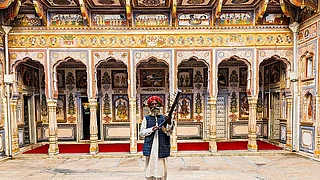


Sirpur, an archaeological landscape on the banks of the Mahanadi River in Chhattisgarh, has been added to UNESCO’s World Heritage Tentative List, placing the ancient settlement a step closer to potential international recognition. The announcement is part of the latest additions to India’s tentative list, which also includes two geological sites in the Andaman and Nicobar Islands. Sirpur is distinguished by the presence of Hindu temples, Buddhist monasteries and Jain religious structures within a single historic settlement, with archaeological remains dating from the 5th to the 12th centuries CE.
The inclusion brings renewed attention to a site that was once a capital of Dakshina Kosala and a centre of trade, religion and cultural exchange in central India. For Chhattisgarh, the development presents an opportunity to bring greater attention to its archaeological heritage while addressing the challenge of protecting and interpreting a complex historic landscape for visitors.
Sirpur: A Historic Settlement Shaped By Three Religious Traditions
Located in Mahasamund district, approximately 78 km from Raipur, Sirpur stands on the eastern bank of the Mahanadi, a river that played an important role in the region’s trade and settlement patterns. Known historically as Shripur or Sripura, the town developed under successive dynasties, including the Sharabhapuriya, Panduvamshi and Somavamshi rulers. Royal patronage, agricultural prosperity and its position along a riverine trade corridor helped it grow into an administrative, commercial and religious centre.
What distinguishes Sirpur is the way its archaeological remains bring together three major religious traditions. The site contains 22 Shiva temples, five Vaishnava temples, 10 Buddhist viharas and three Jain viharas. Their presence within a shared urban setting offers evidence of the different religious communities that formed part of the town’s historical development.
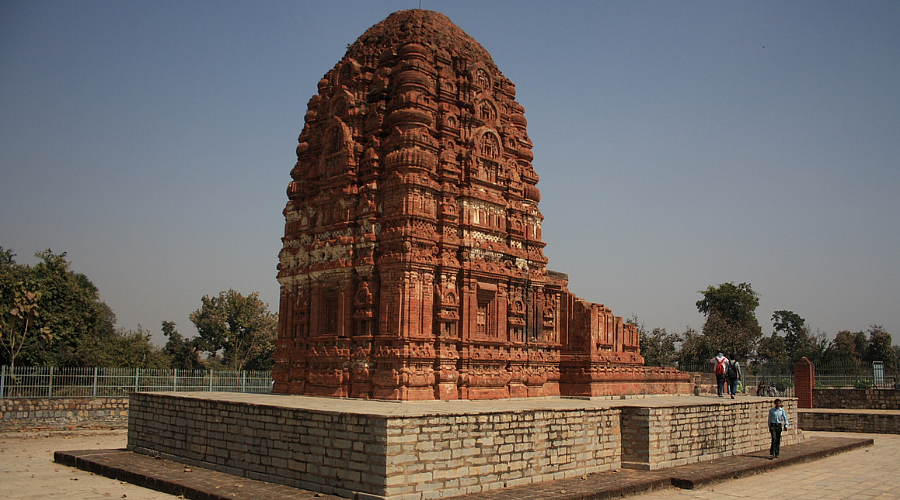
Among its best-known monuments is the Lakshmana Temple, dedicated to Lord Vishnu and built around the 7th century. Constructed primarily of brick, it is regarded as one of India’s finest surviving examples of early medieval brick temple architecture. Its architectural features, including its curvilinear superstructure and elaborate stone doorway, are important to the study of the development of temple architecture in the subcontinent.
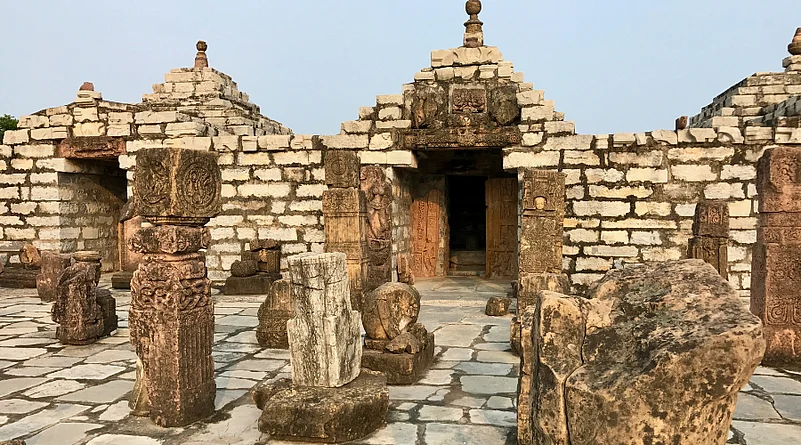

The remains, however, extend well beyond individual religious monuments. Archaeological evidence points to a settlement with residential quarters, palace complexes, market structures, learning centres, workshops, roads and water-management systems. Excavations have also revealed evidence of activities such as pottery-making, metalworking, gold work and bead-making.
Sirpur’s historical importance also rests on its connections with wider networks of movement and exchange. The Mahanadi served as a trade corridor linking the region with other parts of eastern and central India. The account of the Chinese Buddhist traveller Xuanzang, who visited the region in the 7th century, further contributes to the understanding of Sirpur as a centre of religious and intellectual activity.
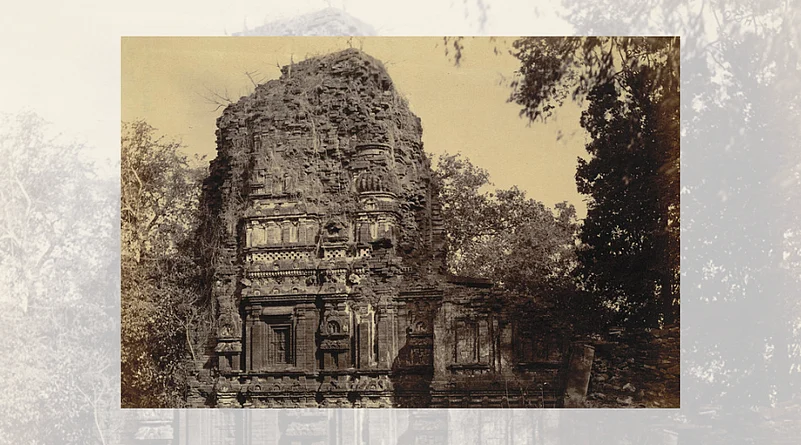
The settlement gradually receded from prominence and was documented by early archaeologists in the 19th century. Systematic excavations began in the 1950s, followed by further excavation campaigns between 1999 and 2012, which helped reveal the scale and complexity of the ancient town.
Why UNESCO Has Included Sirpur On Its Tentative List
UNESCO’s assessment of a potential World Heritage Site considers its Outstanding Universal Value (OUV): the significance that makes a place important beyond its national or regional context. Sirpur’s tentative-list documentation identifies two criteria under which its heritage value is being proposed.
The first, Criterion (ii), concerns the interchange of human values. Sirpur’s archaeological record reflects the interaction of religious, cultural, artistic and architectural traditions over several centuries. The coexistence of Hindu, Buddhist and Jain establishments, alongside shared construction techniques and artistic features, provides evidence of the circulation of ideas and skills between communities.
The second, Criterion (iv), concerns an outstanding example of a type of building, architectural or technological ensemble, or landscape illustrating a significant stage in human history. Sirpur’s remains demonstrate how an early medieval riverine capital brought together political administration, commercial activity, religious institutions and civic infrastructure. Its temples, monasteries, market remains, residential spaces and water-management systems collectively illustrate the organisation of an urban centre between the 5th and 12th centuries CE.
Thus, Sirpur is not being considered solely for the architectural merit of the Lakshmana Temple or the presence of several religious monuments. Its proposed significance lies in the relationship between these structures and the wider settlement in which they developed. Together, they preserve evidence of a historic landscape shaped by trade, governance, religious patronage and urban life.
What Could This Mean For Heritage Tourism In Chhattisgarh?
For Chhattisgarh, Sirpur’s inclusion offers a platform to bring a lesser-known archaeological destination to a wider audience. The site already has nationally protected monuments and an established historical profile, but its proposed World Heritage recognition could encourage more travellers to consider the state for heritage tourism rather than viewing it primarily through its natural landscapes and wildlife destinations.
Sirpur’s monuments are spread across a landscape that includes religious, civic and administrative remains, making interpretation and visitor access important to the overall experience. The Archaeological Survey of India and the state authorities have been working on improvements, including pathways linking monuments and the use of battery-operated vehicles within the premises.
The proposed visitor infrastructure is organised around four thematic clusters: Buddhist monastic remains, Hindu temples, civic and administrative structures, and the riverine sacred landscape. A primary pathway is intended to connect these clusters, with secondary routes providing access to individual monuments. Plans outlined by officials also include eco-friendly lawns, gardens, tree-lined avenues and the promotion of local arts, crafts and cultural performances.
These measures could help visitors understand Sirpur as a connected historic settlement rather than a collection of isolated monuments. They would also need to be balanced with the conservation of archaeological remains, particularly those that are less prominent or more vulnerable to weathering and the pressures of tourism.
The wider landscape adds another dimension to the destination. Sirpur remains a living settlement, with approximately 300 houses and a population of around 1,500 people. The surrounding buffer area includes communities such as the Gond and Baiga, while Barnawapara Wildlife Sanctuary contributes to the region’s ecological setting. Any tourism strategy will therefore need to consider the relationship between archaeological conservation, the lives of local residents and the natural environment.

The Other Two Indian Sites Added To UNESCO’s Tentative List
Alongside Sirpur, two geological sites in the Andaman and Nicobar Islands have been added to India’s World Heritage Tentative List. Both offer a different perspective on the country’s natural heritage.
Karst-Mud-Volcano Complex of Baratang, Andaman and Nicobar Islands
Baratang is known for its limestone caves and mud volcanoes, two geological features formed through very different processes. Limestone caves develop over time as water dissolves the rock, creating underground chambers and mineral formations. Mud volcanoes, by contrast, release mud, water and gases from beneath the Earth’s surface rather than molten lava.
The site is also of scientific interest. Formations in Mahadev Gupha cave have been studied for clues about India’s summer monsoon over several centuries. Baratang consequently offers an opportunity to understand geological processes and climate history, while presenting a less familiar side of the Andaman Islands beyond their beaches.
Andaman Subduction Volcanoes, Andaman and Nicobar Islands
This proposed site comprises Barren Island and Narcondam, two volcanic islands with distinct geological and ecological characteristics. Barren Island is home to India’s only confirmed active volcano, with recorded activity dating back to 1787. Its landscape has been shaped by repeated eruptions, while the surrounding waters are also known for marine life.
Narcondam, meanwhile, is a forested volcanic island that supports the Narcondam hornbill, a bird found nowhere else in the world. Access to the island is restricted, making it different from conventional tourist destinations. Together, the two islands are important for understanding volcanic activity and the ecosystems that develop in isolated environments.
FAQs
1. Why has Sirpur in Chhattisgarh been added to UNESCO’s World Heritage Tentative List?
Sirpur has been included for its archaeological significance, which reflects the interaction of Hindu, Buddhist and Jain traditions, alongside evidence of early medieval urban life, trade and architectural development.
2. Where is Sirpur located in Chhattisgarh?
Sirpur is located in Mahasamund district, approximately 78 kilometres from Raipur, on the eastern bank of the Mahanadi River.
3. What are the main historical attractions of Sirpur?
The key attractions include the Lakshmana Temple, dedicated to Lord Vishnu, the remains of Buddhist monasteries, Jain religious structures and archaeological evidence of residential areas, markets and water-management systems.
4. Does inclusion in UNESCO’s Tentative List mean Sirpur is a World Heritage Site?
No. Inclusion on the Tentative List is an initial step in the World Heritage process. The site must undergo further evaluation and meet UNESCO’s requirements before it can be inscribed on the World Heritage List.
5. Which other Indian sites have been added to UNESCO’s World Heritage Tentative List alongside Sirpur?
The other two sites are the Karst-Mud-Volcano Complex of Baratang and the Andaman Subduction Volcanoes, which comprise Barren Island and Narcondam in the Andaman and Nicobar Islands.