Booking a holiday today rarely takes more than a few minutes. A handful of taps on a phone, a confirmation email, and the countdown begins. But on El Hierro, the smallest and westernmost of Spain's Canary Islands, one extraordinary holiday home asks travellers to slow down before they even arrive. There is no booking engine to browse, no "reserve now" button to click, and no instant confirmation waiting in your inbox. Instead, anyone hoping to spend a night at El Elevador must begin with something many of us have almost forgotten how to do: write a handwritten letter.
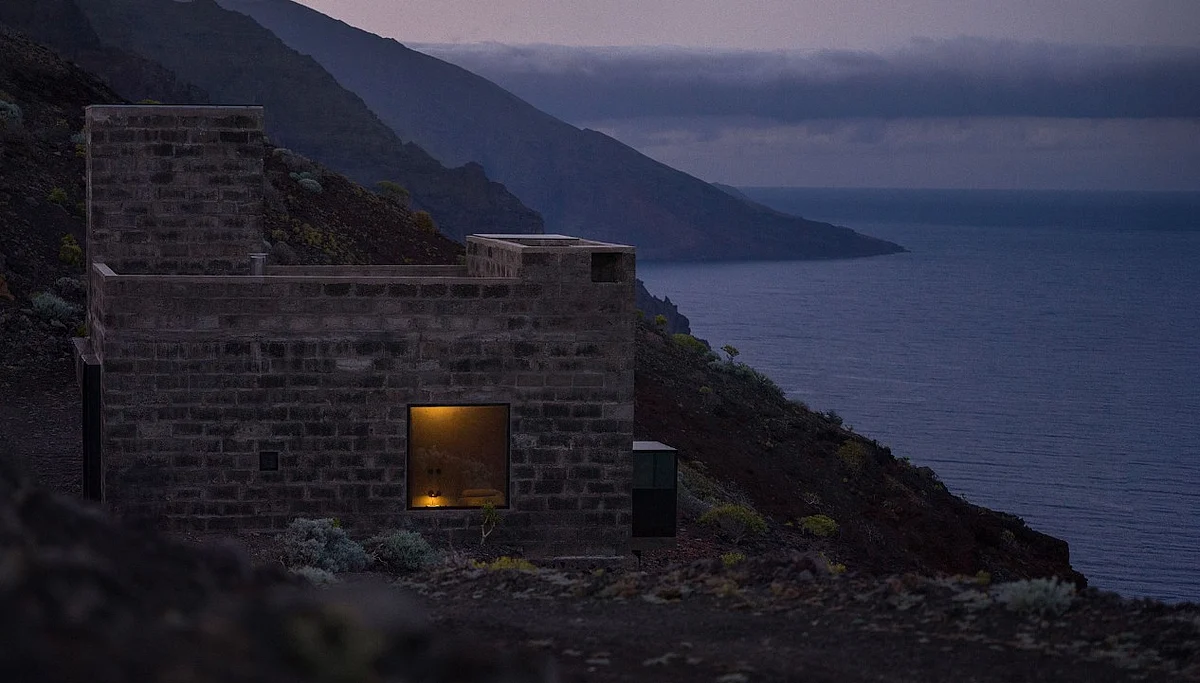
It is an unusual request in an age of instant everything, but it perfectly reflects the philosophy behind El Elevador. Perched on the edge of a volcanic cliff overlooking the Atlantic Ocean, this tiny retreat is less interested in offering another luxury stay and more invested in changing the pace at which guests experience both travel and themselves. Long before visitors step inside, the act of writing, posting and patiently waiting becomes part of the journey.
A Former Pumping Station Reimagined
El Elevador sits on the rugged island of El Hierro, a UNESCO Biosphere Reserve known for its volcanic landscapes, windswept cliffs and relatively untouched natural beauty. Compared to its larger Canary Islands neighbours, El Hierro attracts fewer visitors, making it an ideal destination for travellers seeking landscapes rather than crowds.
The accommodation itself has an equally compelling story. What now appears as a minimalist concrete retreat once served an entirely different purpose. Around 70 years ago, local resident Juan Casañas carved a precarious path into the cliffs to reach a hidden freshwater spring. The pumping station built here formed part of an ambitious effort to transport water uphill to nearby communities, an engineering project born out of necessity on an island where freshwater was once a precious resource.
Although the original hydraulic system eventually fell out of use, its legacy remains woven into the building. Instead of erasing its industrial past, the restoration preserves much of its original character while giving it an entirely new function.
Where Architecture Takes A Back Seat
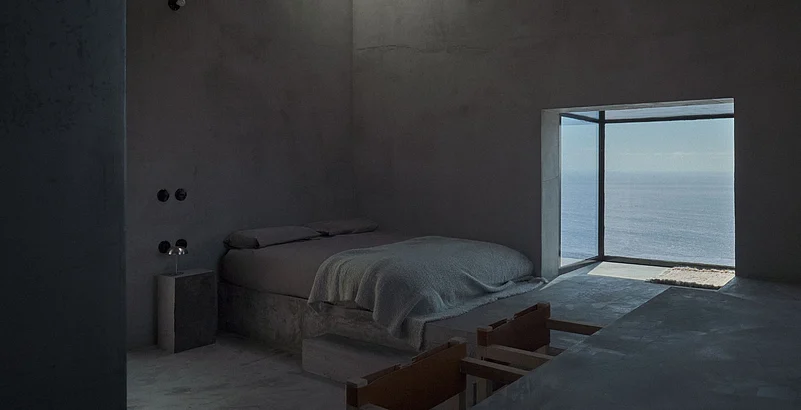

The transformation was led by Canary Islands architect Alejandro Beautell as part of a project developed by Be Tenerife. Rather than turning the structure into a conventional holiday rental, the design embraces restraint. Every architectural decision appears intended to draw attention outwards—to the landscape, the sea, and the passage of time—rather than inwards towards decorative luxury.
The accommodation spans only about 60 square metres and is designed for one or two guests. Inside, an open-plan layout combines the living area, bedroom and kitchen within a space defined by exposed concrete, steel, and natural materials. The interiors are intentionally pared back, allowing changing light, weather, and views to become the focal points.
One of the property's most striking features is its bathroom. The former electrical transformer tower has been converted into a six-metre-high bathing space, naturally illuminated from above. Standing beneath the shower, visitors look directly towards the open sky—a reminder that the building's relationship with its surroundings extends well beyond its windows.
The restoration also retains weathered concrete walls and original construction elements shaped over decades by sea air, salt and wind. Rather than concealing age, the project celebrates it, preserving the textures that connect the building to its history.
A Landscape Shaped By Fire
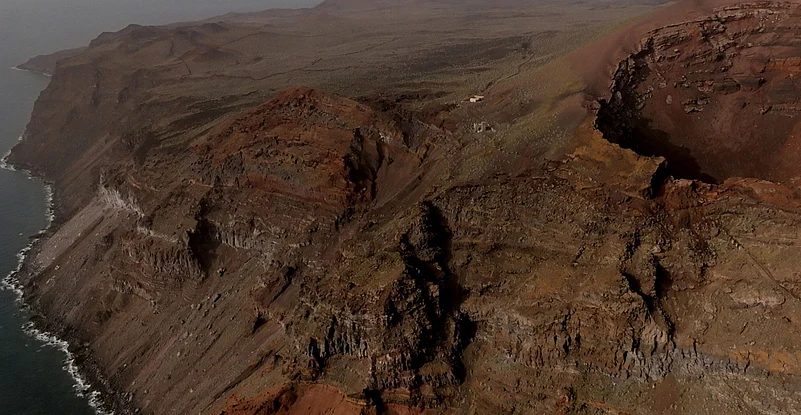
El Elevador's setting is every bit as compelling as the building itself. The retreat stands amid ancient pahoehoe basalt flows created by volcanic eruptions more than 15,000 years ago. These distinctive lava formations, now cooled into rippling black rock, surround the property and stretch towards towering cliffs that plunge into the Atlantic Ocean below.
The location offers uninterrupted views across the sea, while constantly changing weather, shifting sunlight and ocean winds create an environment that feels different throughout the day. Visitors are encouraged to spend time observing these subtle changes rather than filling every hour with activities or sightseeing.
That slower rhythm is central to the experience. There is no Wi-Fi, no television and, perhaps most remarkably in today's connected world, no reliable mobile phone signal. Without digital distractions, guests are left with little more than the sound of waves, volcanic landscapes and uninterrupted time. Rather than treating disconnection as an inconvenience, El Elevador presents it as one of its greatest luxuries.
The Letter Comes First
The booking process is perhaps the most talked-about aspect of El Elevador, and it is far more than a novelty. Prospective guests must first write a handwritten letter explaining why they wish to stay there and what draws them to the island. The letter is then posted physically rather than submitted online. Each one is read individually before the owners respond with their own handwritten reply. Only after this exchange do guests receive a private booking link to select available dates and complete payment digitally. That final online step is the only digital element of the reservation process.
The handwritten correspondence is designed to make travellers pause before committing to the trip. Instead of treating accommodation as another commodity to book instantly, the process encourages reflection, intention and patience—qualities that have become increasingly rare in modern travel. It also establishes the tone for the visit itself. By the time guests arrive, they have already experienced the slower pace that defines the retreat.
More Than Just A Place To Stay
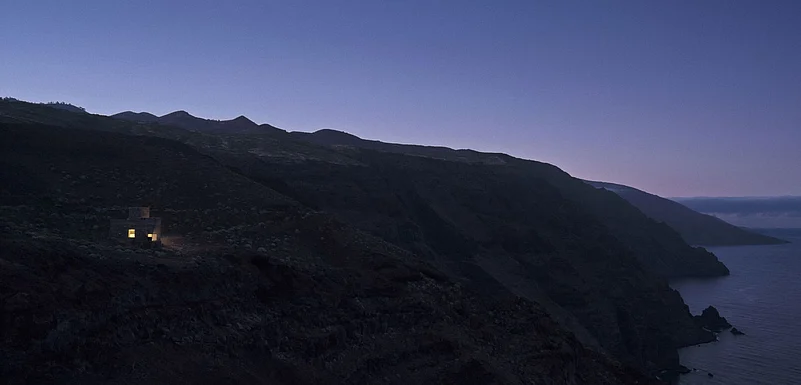
El Elevador is not designed for packed itineraries or endless checklists of attractions. It is a destination where architecture, history and landscape work together to reshape how visitors spend their time.
The building honours an important chapter in El Hierro's history while demonstrating how adaptive reuse can preserve cultural heritage without freezing it in time. Its minimalist architecture resists competing with the surrounding landscape, instead creating space for visitors to engage more deeply with it.
In an era when hospitality increasingly revolves around convenience, speed and constant connectivity, El Elevador offers something refreshingly different. Even before guests arrive, the handwritten letter serves as a gentle reminder that some journeys are worth slowing down for.
Perhaps that is precisely the point. The experience begins not with a booking confirmation, but with pen, paper and the willingness to wait.
FAQs
Q1. Where is El Elevador located?
El Elevador is located on the island of El Hierro, the smallest and westernmost of Spain's Canary Islands.
Q2. Why do guests need to write a handwritten letter to book El Elevador?
The handwritten letter is part of the retreat's philosophy of encouraging mindful, intentional travel and slowing down before the journey begins.
Q3. What makes El Elevador different from other holiday homes?
It is a restored former water pumping station set on a volcanic cliff, offering a minimalist, off-grid stay with no Wi-Fi, television or mobile phone signal.
Q4. How does the booking process work?
Guests first post a handwritten letter explaining why they want to stay. If accepted, they receive a handwritten reply followed by a private online link to complete the reservation.
Q5. Who is El Elevador best suited for?
It is ideal for travellers seeking solitude, digital detox, nature and a unique architectural stay in the Canary Islands.