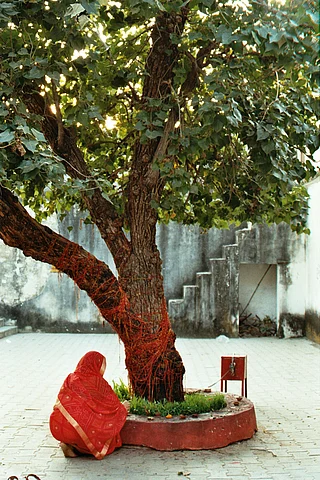



Samir MC keeps returning to one number when he talks about why Rae by Tamara exists—four million. That's roughly how many people in India set out on a faith journey on any given day, not over a year, a single day. "Who is truly designing hospitality around the pilgrim?" he asks, and the question sits there for a second, because the honest answer, even now, is barely anyone.
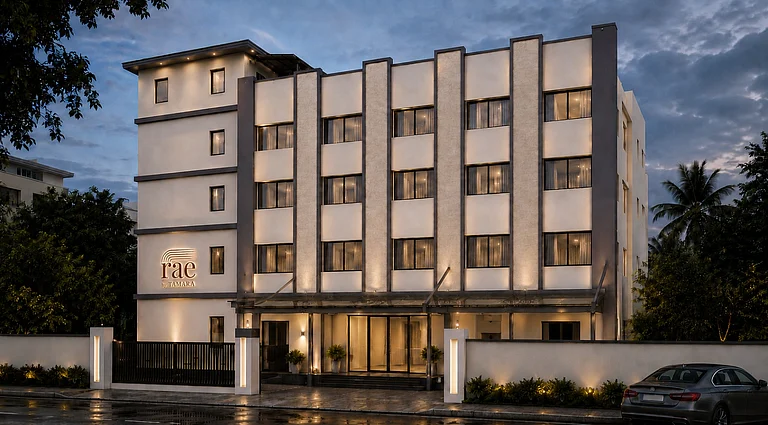
Samir is the CEO of Tamara Leisure Experiences, the company behind Tamara Resorts, O by Tamara, Lilac by Tamara, and Amal Tamara, its Ayurveda hospital. Rae is its newest and, in some ways, its most personal bet, a hospitality brand built specifically for India's pilgrim economy, starting with three temple towns in the south.
A Market Hiding In Plain Sight
The numbers Samir rattles off aren't small. India logged close to 2.8 billion domestic trips last year, with well over half of them faith-driven. The spiritual tourism economy is projected to reach INR 5 lakh crore by 2028. And yet, when Tamara looked closely at what existed for this traveller, the picture was strangely thin, dharamshalas on one end, sincere but limited in comfort; branded international hotels on the other, comfortable but running on the same playbook whether they're in Mumbai or the Maldives. "Not always attuned to why the guest has come to that specific place," is how Samir puts it.
That gap—between the sheer scale of spiritual travel in India and how little sophistication has gone into serving it—is what Rae is built to close. "The pilgrim is travelling with purpose," he says. "They carry an emotional intentionality that most hospitality frameworks simply aren't built to honour."
Starting Where They Already Know The Ground

Rae's first three properties aren't a random scatter on a map. Guruvayur and Kumbakonam are towns Tamara already operates in, which meant years of quietly absorbing how the pilgrim moves, what time their day starts, what they eat, what they need that no brand manual accounts for. Velankanni, the third, does something more deliberate: it puts a major Christian pilgrimage site beside two Hindu ones, on day one, as a statement. "Rae is not a brand for one tradition," Samir says. "It is a brand for every journey of faith."
It's a small thing that says a lot, that diversity wasn't an afterthought bolted on once the brand had proven itself, but baked into the very first three addresses.
Service That Begins When The Shrine Wakes
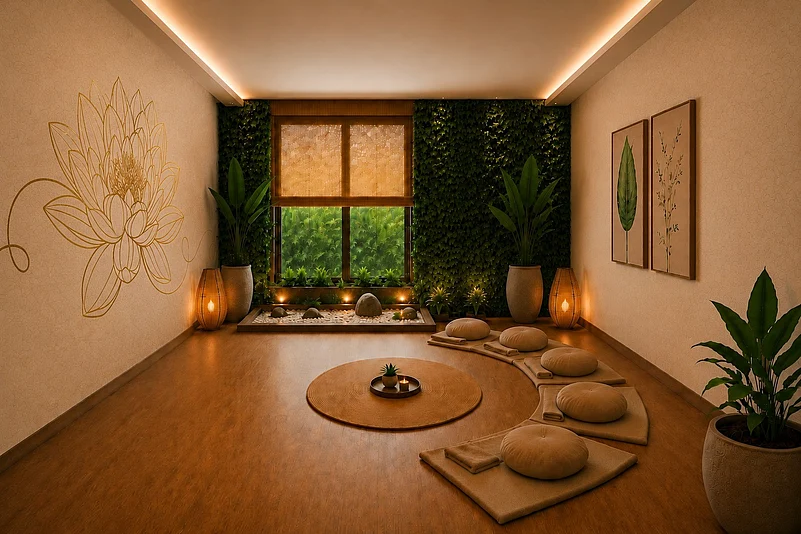
Ask Samir what actually separates a Rae stay from a regular hotel near a temple, and he doesn't talk about thread counts or check-in lounges. He talks about hot water before a 4 AM darshan. About kitchens certified by the religious traditions they're feeding into, rather than just labelled "vegetarian" and left at that. About something called the Astitva Space, a quiet room to reflect that asks nothing of the guest and holds whatever they bring into it.
Then there's the Rae Mitra—what the brand is calling India's first Shrine Naturalist. Not a concierge, but someone who knows a temple town the way "a naturalist knows a forest, its history, seasonal ritual, and the story most pilgrims miss." It's an unusual role for a hotel to invent, and that's rather the point. "The role of hospitality," Samir says, "is not to perform spirituality, but to prepare the guest for it."
The Pilgrim Isn't Who You Think
One of the more interesting things Samir says is that the faith traveller has quietly stopped looking like one demographic. Yes, there's still the older generation completing a sankalp made decades ago. But increasingly, there's the young NRI walking into a shrine she's heard about her whole life and never actually seen. The "spiritual explorer" who wouldn't call themselves religious but wants the depth and the story. The nine-person family is doing their first Char Dham together, with a grandparent who needs an accessible bathroom and a seven-year-old who needs to stay entertained.
That spread of needs under one roof is, by Samir's own admission, "genuinely complex" to design for—and most pilgrimage accommodation has never been tried.
Premium Without Performance
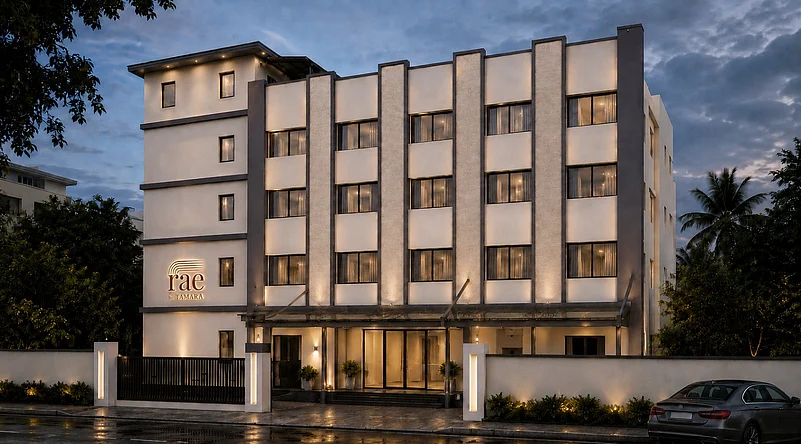
The line Samir keeps drawing, again and again, is between premium and performance. Rae isn't trying to package something sacred and sell it back at a markup. "We are not here to perform spirituality," he says. "Premium at Rae means dignity, not luxury." His example: a woman who's travelled 800 kilometres to keep a promise made forty years ago deserves a room that supports her body, food that respects her faith, and a bed that gets her up in time for the next morning's darshan. That's the whole brief.
It's also why roughly 40-50 per cent of hiring at each property is meant to come from the local community, priests, artisans, families who've lived around the shrine for generations, brought in not as a CSR line item but because, as Samir puts it, authenticity here "is only credible if it comes from people who are a part of that culture."
Growing Without Owning Everything
Rae's three flagship properties are owned outright. Samir calls them "the standard-bearers," the places meant to prove the model works before anyone else is asked to license it. But the long-term plan leans heavily on an asset-light structure, partnering with local owners in pilgrimage towns where Tamara doesn't already have a foothold. It's a practical call as much as a philosophical one: faith tourism destinations are already running 65-70 per cent occupancy in stabilised years, which makes the business case fairly easy to put in front of a property owner. But Samir also frames it as the only honest way to scale a brand whose entire credibility rests on being embedded, not parachuted in.
What 2030 Is Supposed To Look Like

By 2030, Tamara expects around 25 Rae properties to be signed or under construction, stretching from Tirupati and Velankanni in the south to Varanasi, Ayodhya, and Amritsar in the north, and Shirdi and Nasik in the west, with the east still to come. The name itself is meant to travel across every one of these—Rae means a ray of light, chosen deliberately because light is the one image that shows up in every faith tradition practised in India: Jyoti, Noor, Ek Onkar, Lux Mundi, Bodhi, Keval Jnana.
But Samir is fairly clear that property count isn't the scoreboard he actually cares about. He'd rather a pilgrim who's stayed at the Guruvayur property feel instantly at home arriving in Velankanni. He'd rather the communities around these shrines feel Rae made their town better, not just busier. "That a faith-intelligent hospitality brand has raised expectations industry-wide," he says, "and created better outcomes for the millions of pilgrims who travel India's spiritual circuits every day. That, to us, is what success looks like."
It's an ambitious request from a hotel brand. But then, hardly anyone else seems to be asking the question Rae is built around in the first place: who's actually taking care of the pilgrim.
FAQs
Q1. What is Rae by Tamara?
Rae by Tamara is a hospitality brand by Tamara Leisure Experiences designed specifically for pilgrims, combining comfortable stays with faith-sensitive services and local cultural experiences.
Q2. Where are Rae's first properties located?
The first three Rae properties are in Guruvayur, Kumbakonam, and Velankanni, serving both Hindu and Christian pilgrimage destinations.
Q3. What makes Rae different from other hotels?
Rae offers faith-intelligent hospitality with features like early morning guest support, tradition-certified kitchens, Astitva reflection spaces, and Shrine Naturalists who help guests understand the destination.
Q4. Who is Rae designed for?
Rae caters to a wide range of faith travellers, including families, senior pilgrims, young NRIs, and spiritual explorers seeking meaningful journeys.
Q5. What are Tamara's expansion plans for Rae?
Tamara aims to have around 25 Rae properties signed or under development by 2030 across major pilgrimage destinations including Tirupati, Varanasi, Ayodhya, Amritsar, Shirdi, and Nasik.