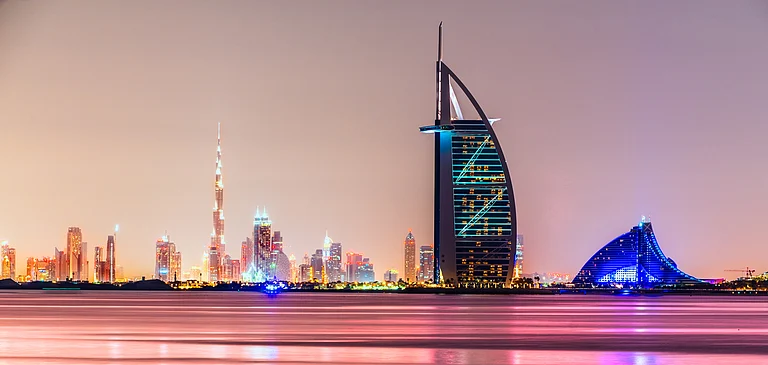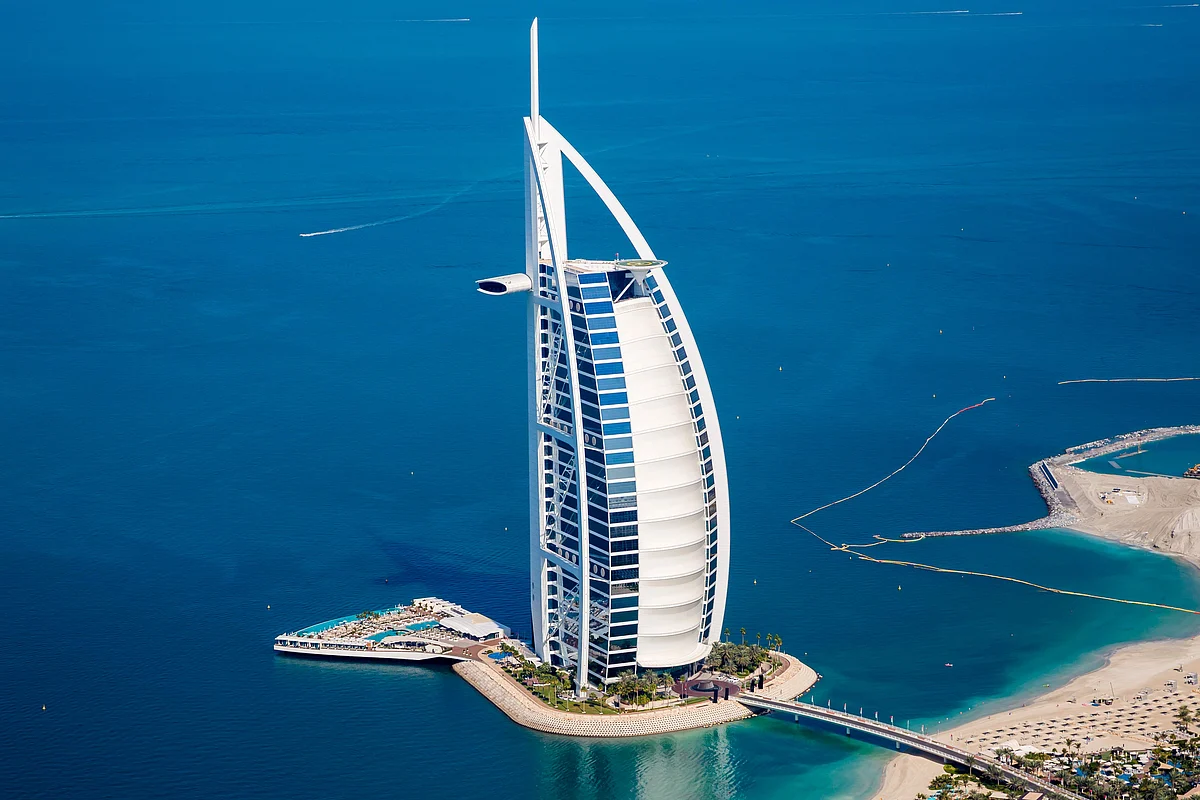
Dubai’s most iconic luxury hotel, the sail-shaped Burj Al Arab, will undergo its first comprehensive restoration after more than 25 years. The announcement, made by Jumeirah Group on April 15, signals a carefully planned transition, an ambitious effort to not only preserve its identity but also to update it for a new era of travellers.
Thomas B. Meier, CEO of Jumeirah, said, "This restoration programme marks a new chapter in the story of Jumeirah Burj Al Arab, one that will carefully preserve the heritage of what is currently the sole property in our Jumeirah limited-edition collection of iconic landmark addresses defined by design distinction and prestige."
For a hotel that embodies Dubai’s global luxury narrative, the stakes are high. It must evolve without losing what made it iconic. As restoration work approaches, balancing heritage and innovation is paramount.
The restoration will take about 18 months and occur in phases, according to Jumeirah Group, a part of Dubai Holding.
While the company has not formally announced a full closure, reports suggest the hotel is not hosting guests during parts of the renovation. Alternate stays are arranged at nearby Jumeirah properties. The duration of these closures may change as work progresses.
This phased approach is intended to protect the building’s structure and ensure that upgrades are introduced with minimal disruption to its original design framework.
Interiors To Be Refined, Not Reimagined
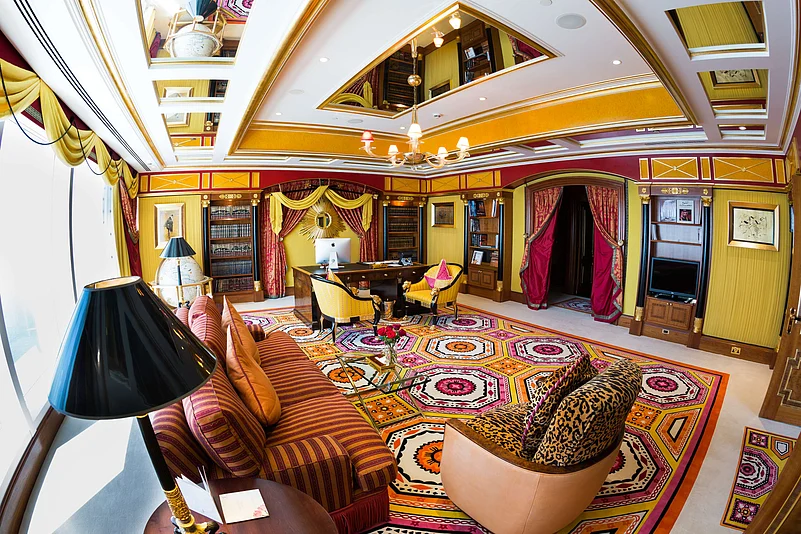

Unlike a conventional refurbishment, this project is a conservation-led restoration. The emphasis is on enhancing what exists rather than replacing it.
Jumeirah has compared the process to restoring a piece of art, suggesting that the goal is precision, not transformation.
Expected upgrades include:
Careful restoration of signature interiors and colour schemes
Introduction of new, custom-designed materials and finishes
Subtle integration of updated technology and guest amenities
Continued focus on bespoke craftsmanship and detailing
The hotel’s defining visual language, including bold colours, dramatic scale, and layered opulence, will remain intact. Features like the towering atrium, cascading water, marine aquariums, and duplex suites will be refined, not redesigned.
Tristan Auer To Lead The Project
French interior architect Tristan Auer has been appointed to lead the project following what Jumeirah described as a rigorous selection process.
Auer, known for restoring heritage properties such as Hôtel de Crillon in Paris, brings a design philosophy rooted in restraint and contextual sensitivity, qualities that align with the project’s goals.
“Being entrusted with the very first restoration of a property of this calibre in Dubai is a profound privilege,” Auer told a UAE-based English-language daily newspaper.
Jumeirah has reportedly described him as a designer whose work balances heritage with contemporary refinement.
In an interview with a media outlet, Auer underscored the importance of continuity over change, saying, "You have to be respectful… I don’t want to change that.”
His role will involve not just updating spaces, but developing entirely bespoke design elements, from fabrics to finishes, created exclusively for the property.
About Jumeirah Burj Al Arab

Since 1999, Burj Al Arab has shaped Dubai’s global luxury profile. Built on an artificial island and rising 321 metres above the Arabian Gulf, its sail-inspired form is a landmark of modern architecture. Its scale and materiality inside continue to set it apart:
198 duplex suites designed with theatrical layouts
Extensive use of 24-carat gold leaf across interiors
Tens of thousands of Swarovski crystals are embedded in design features
Wide use of premium marble varieties throughout the property
A soaring atrium that ranks among the tallest in the world
Often referred to as a “seven-star hotel," an unofficial but enduring label, the property has consistently positioned itself at the extreme end of luxury hospitality.
Restoration Comes Amid Shifting Travel Trends
The project’s timing coincides with a softer tourism shift in the Gulf region, partly due to geopolitical tensions and travel disruptions.
While some luxury operators have flagged declining demand and operational pressures, Jumeirah has not linked the restoration to current market conditions. Instead, it presents the move as a long-term investment in the brand’s future.
The hotel briefly drew attention earlier this year after debris from an intercepted drone caused minor damage to its exterior.
According to AFP, Dubai authorities confirmed that a small fire broke out on the façade on March 1, 2026, but was quickly contained, causing no injuries.
Sources indicate that the restoration had already been in planning for over two years and is unrelated to the incident.
(With inputs from various sources)
FAQs
1. Why is the Burj Al Arab undergoing restoration now?
The restoration marks the hotel’s first major upgrade since its opening in 1999. After more than two decades, the project aims to preserve its architectural and design legacy while updating facilities to meet evolving luxury travel expectations.
2. How long will the Burj Al Arab restoration take?
The restoration is expected to take approximately 18 months and will be carried out in phases. This approach allows structural integrity to be maintained while minimising disruption to the building’s iconic design.
3. Will the hotel close during the renovation?
While there is no official confirmation of a full closure, reports suggest that guest stays may be temporarily paused during certain phases. Alternative accommodations are being arranged at nearby Jumeirah properties.
4. What changes can guests expect after the restoration?
The project focuses on refinement rather than redesign. Updates will include restored interiors, new materials and finishes, improved technology, and enhanced guest amenities while maintaining the hotel’s signature opulence and layout.
5. Who is leading the design for the restoration?
French interior architect Tristan Auer has been appointed to lead the project. Known for restoring heritage properties, his approach emphasises preserving original design elements while introducing subtle contemporary enhancements.