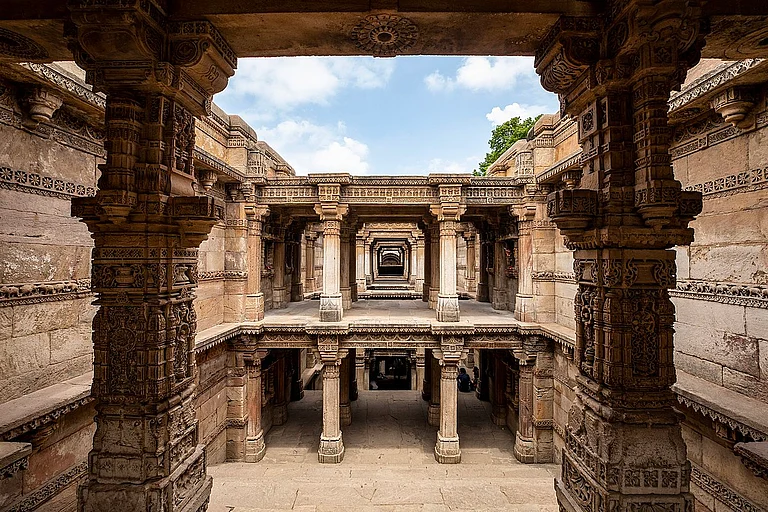


Markets are the nerves of civilisation. During times of turmoil, they’re deserted. Festivals become a time when it seems as if everyone has been evicted from their homes and has come out onto the streets. A public space so humbly accepted by people as their own, markets are the pulse of any city. You can define markets as places of commercial exchange, but there is a certain coldness in that phrase which makes it an inadequate description. They’re living, breathing spaces which have been socially and culturally vibrant hubs ever since their inception. India has a rich heritage. Many civilisations have risen and fallen, and each has left its mark. Nowhere is this imprint so clearly visible in the present as in market spaces. They become areas where history simulates itself in the present.
So, let your mind and body wander freely through these 4 marketplaces listed below. You might just end up walking in the same place where a sultan had set foot some 200 years ago!
Chandni Chowk, New Delhi
A water channel runs through the bazaar. It collects in a half-crescent pool in the centre. Trees flank it on both sides; it sits in the midst of hundreds selling flowers, kebabs, ittars, rubies, emeralds, huqqas, and so much more. The sound of mushairas echoes all around; the nahar glistens as the moonlight touches its surface. As the ‘chandni’ lights up every crevice of the market, Chandni Chowk never sleeps.
“The wanderer who enters its courts will be restored in body and soul, and my name will never be forgotten.” Jahanara’s words hold weight almost three centuries later, for the market pulls towards Ghalib’s Dilli anyone who enters New Delhi. When skyscrapers give way to havelis, cars to tuk-tuks and pizzas to parathas, know that you’ve left the capital city of the 21st century and entered instead, 17th-century Shahjanabad.
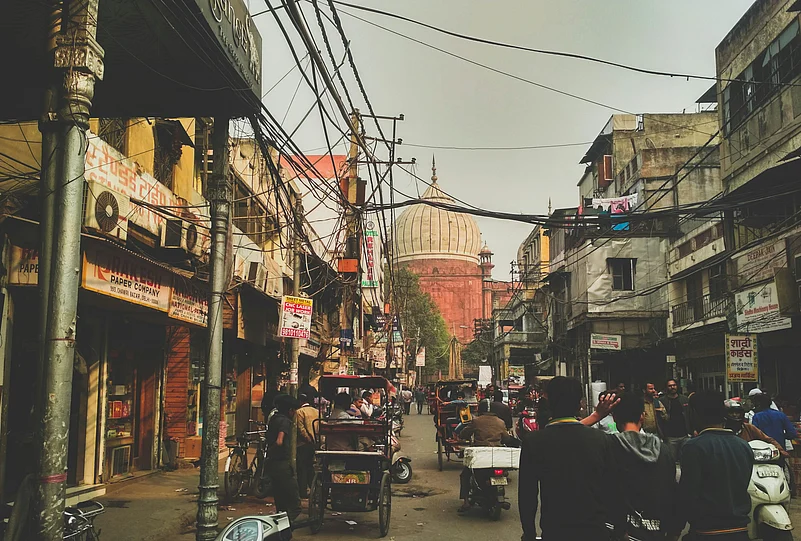

The narrow lanes of Chandi Chowk perhaps don’t exemplify grace and beauty anymore. The canal, covered up by the British, is alive with the horns of rickshaws and motorcycles. Dilapidated remnants of once-glorious buildings follow you around as the cacophony drowns out any potential for serenity. That is the charm of the market. History knocks at every turn, every standing ‘darwaza’, every voice which contributes to the ‘shor’, every smell which makes itself known as you walk past a working kadhai. At every alley, the past intrudes into the present. That is the charm of Chandni Chowk.
A charming walk may very well poke a hole in your pocket, though. Because Chandni Chowk has a lot to offer. A lot. Khari Baoli is a street devoted solely to spices. From dried mulberries, amla, red chillies, and mustard to herbs and dry fruits, there’s nothing you cannot find here. Let black pepper and cinnamon draw you to this street the way they drew the British to India.
Indulge yourself in the Paranthewali Gali and relish the flavours of Jalebi, Daulat ki Chaat, and more. Adorn yourself in clothes embroidered with zari and lace. Kinari Bazaar flaunts the rich heritage of zardozi embroidery, the tradition of the craft flourishing since the time of Akbar. The market has long held the reputation of having bangle shops lined up in every gully. Affordable and absolutely beautiful, your wrists will thank you for this purchase. And you must have heard it in the movies: want to find a designer lehenga? Off to Chandni Chowk!
Ima Market, Imphal
The 16th-century kingdom of Kangleipak shaped the present-day Ima Market. It might be a little hard to digest how an imperial power which was decimated centuries ago has come to shape contemporary space in the city of Imphal. But the bustling marketspace serves as a brilliant reminder of the interconnectedness of the past and present.
The Imperial Kingdom of Manipur never had the kind of standing army we have today. Its soldiers were forcefully conscripted. All men were required to leave their homes to go fight in the strategic wars, which were commonplace. Plus, the labour system of the 16th century was such that the men also left their homes to go cultivate far-off lands. This created a vacuum. Naturally, women filled a lot of these spaces and engaged in commercial activity. This is how the Ima Market or Mother’s Market was born.
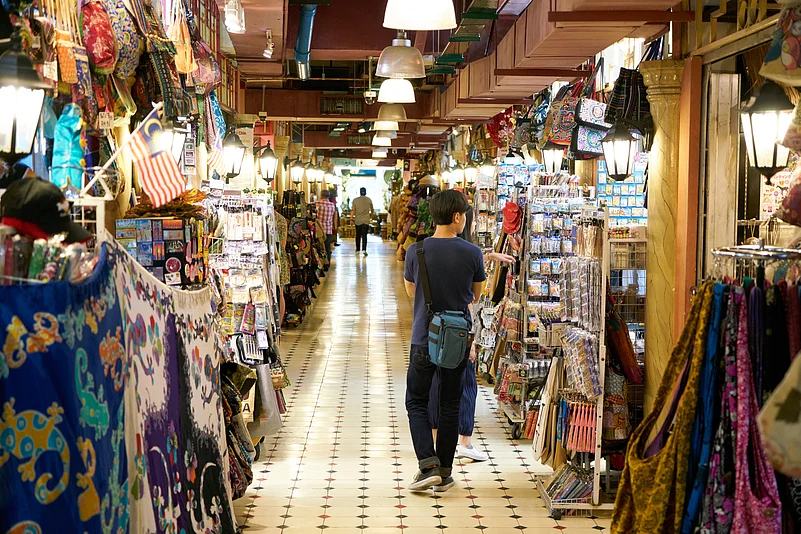
Over time, the market run solely by women has become a symbol of Meitei culture. It has also become an instrument through which women have been afforded a more tangible presence at the grassroots levels. Since the colonial era, the market has facilitated women acting as pressure groups and influencing policy decisions.
Spread over three large structures, Nupi Keithal or Ima Market has all that may be required in a traditional Meitei household. There are stalls lined up with colourful textiles and handicrafts of the indigenous Manipuri communities. You can purchase a wide variety of fish and other items staple to the local cuisine. For a deeper dive into local culture, consider visiting the small shrine which the market houses. You’ll find vendors selling religious products who would be happy to give anecdotes. A product of Manipuri history and representation of societal dynamics, this market unsettles established notions of a traditional public bazaar. In many ways, it's a living example of the ways in which imperial policy shaped social life and gender dynamics.
The Ima Market is more than just a bazaar today. It's a point of resistance, a statement of memory. With the state fractured along community lines and embroiled in tension, old Manipur, with its plurality, appears at Nupi Keithal every morning without fail. The division that came with the ethnic strife percolated into the market space as well. The Kuki women who brought in bamboo and herbs were halted due to geographical restrictions. However, the soul and spirit of the market, one where the women operated as a community irrespective of their tribal identity, has retained itself in essence. The market vendors have voiced concern for those afflicted by the conflict. Such strength lies in the bonds which were nurtured over centuries, that fragmentation is not easy.
Laad Bazaar, Hyderabad
1591. Quli Qutb Shah, the founder of Hyderabad city, wants to source a bridal trousseau for his daughter. So, he establishes a market next to Charminar, where women can shop securely. This is the narrative popularised in folklore. Laad Bazaar, situated in the old city, functions as a site where bridal wear, bangles, ittar and jewellery can be found. The Sultan’s love for his daughter shines through in the hustle and bustle of the market, where families scour the market to find clothes fit for a wedding.
Hyderabad is famous for its lacquer bangles; these colour the streets of Laad Bazaar. Such is the refinement of the craft in the market that many believe the bazaar gets its name from ‘lac’, the local word for lacquer. An age-old craft tradition, families are often employed in the production process, generation after generation. These bright bangles are produced where they are sold. Tucked away in the narrow alleys are karakhanas or workshops where artisans embellish lac dough with stones, glass beads and mirror work. If you’re wandering around Charminar, you might just find children learning the ancestral craft from their families in the Talab Katta area.
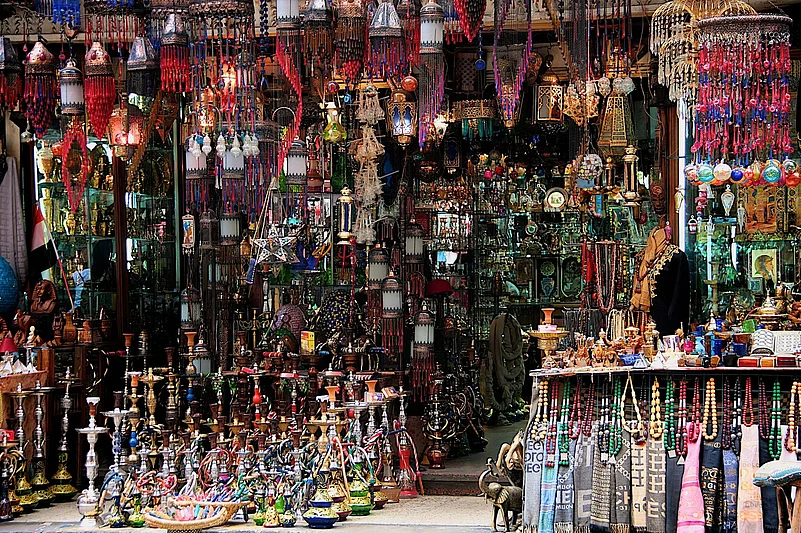
Browsing through the Meena Bazaar, you may find beautifully embroidered fabrics. Located in the Bilal Market area, this area also has an extensive collection of ittar shops where you can find a new signature fragrance which suits your preference. You can take your time with it because there will be a wide range to choose from!
For a truly authentic Hyderabad shopping spree, visit the Joda Bazaar area. This section of Laad Bazaar has shops which sell the famous Khara dupatta dresses. Khara Dupatta is a 400-year-old royal bridal ensemble which was worn by Hyderabadi muslim women during weddings. Tracing its roots to the Mughal era, this garment piece has extensive embroidery of zardozi, dabka and gota. Crafted from fabrics like tissue, it gives a regal look. Honour the sultan’s legacy and consider wedding shopping at this historic market!
Burrabazar, Kolkata
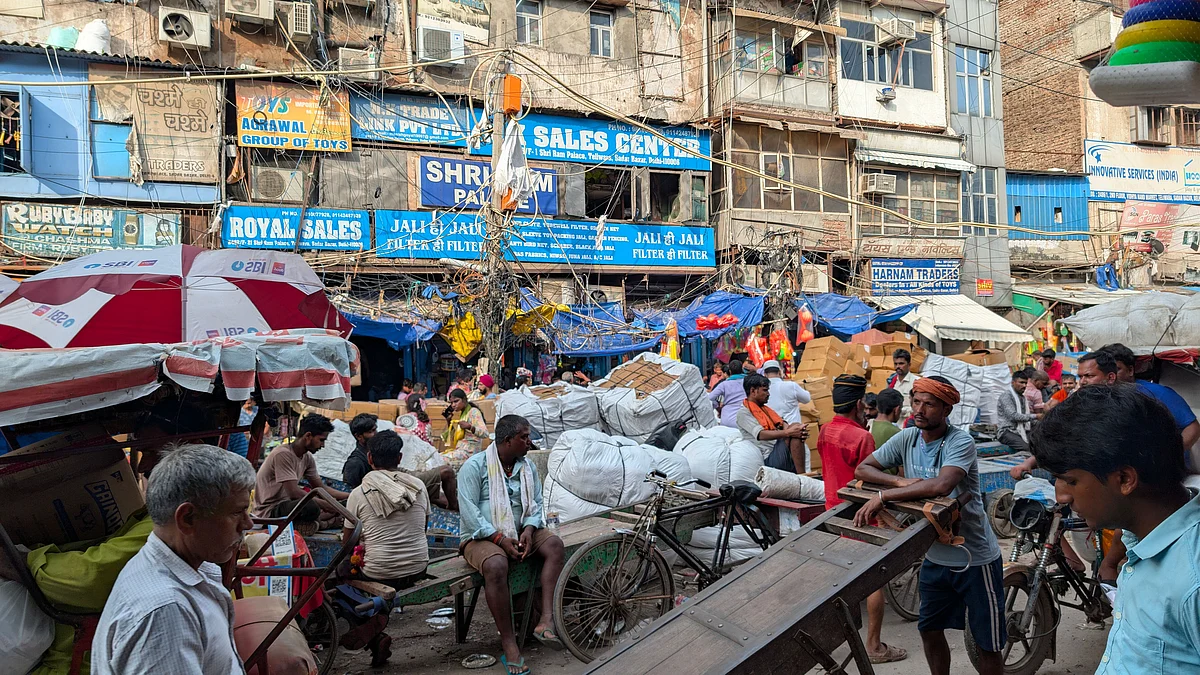
“Esho, Esho!” or “Come here, Come here” is going to be a constant ringing in your ears as you navigate your way through the streets of this Bengali market. The name translates to large market, a perfect representation of the magnanimity of this space. With crowds constantly rushing to find what they're looking for and vendors vying for their attention, this oldest and largest wholesale market of India is a bubble of chaos. You can get whatever you want at whatever price you want if you look hard enough!
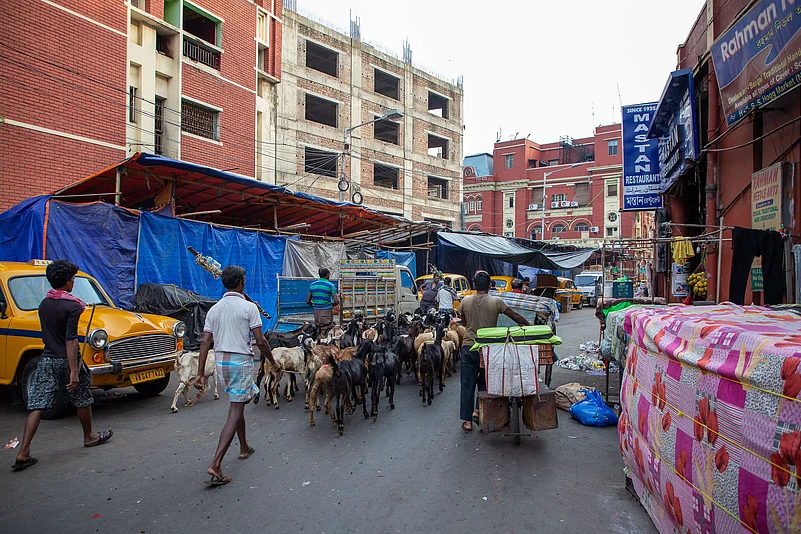
Originally under robber baron-like Bengalis, the Battle of Plassey brought a lot of change. The market opened up to merchants of different states, including the Gujaratis and Marwaris. The small yarn and textile market exploded and became one of the busiest markets. You can get everything here, from jewellery and clothing to household items and electric appliances. For those who like to intersperse their shopping with food breaks, this place is paradise. Depending on what you’re craving, you can get kachoris, Gujarati thalis, boondi, kebab, halwa, and so much more.
As you’re dilly-dallying on the streets, you may just catch a glimpse of the Hooghly River here and there. The mosques, minarets and warehouses take you through different phases of history that Calcutta has seen. The architectural style transitions from Fatehpur Sikri’s building design to colonial artistic techniques in the blink of an eye. Decorated with churches, synagogues and Chinese temples, you get to see the multicultural side of Calcutta. Not only do these structures hint at the resilience of certain historic traditions, but they also generate hope for continuity into a pluralistic future.
FAQs
Q1. Which is the oldest surviving marketplace in India?
Among the oldest surviving marketplaces in India are Chandni Chowk in Delhi, Ima Market (Nupi Keithel) in Imphal, Laad Bazaar in Hyderabad, and Burrabazar in Kolkata. Each has been an important commercial and cultural hub for centuries.
Q2. What is Chandni Chowk famous for?
Chandni Chowk is known for its historic streets, street food, wholesale spice market at Khari Baoli, wedding shopping, jewellery, textiles, bangles, perfumes, and traditional Indian sweets.
Q3. Why is Ima Market unique?
Ima Market, also known as Nupi Keithel or the Mother's Market, is one of the world's largest markets run entirely by women. Located in Imphal, it has been a symbol of women's economic participation and Manipuri culture for centuries.
Q4. What can you buy at Laad Bazaar in Hyderabad?
Laad Bazaar is famous for its handcrafted lacquer bangles, bridal jewellery, traditional Hyderabadi attire, Khara Dupatta ensembles, pearls, embroidered fabrics, and attar (traditional perfumes).
Q5. What is Burrabazar known for?
Burrabazar is India's largest wholesale market and offers everything from textiles, jewellery, stationery, electronics, spices, and household goods to delicious Bengali, Marwari, and Gujarati street food.