“Madam ji, kuch samay baad shayad oonth sirf ameer logon ke farms par dikhenge, jaise ghode dikhte hain (Madam, after some time, camels may only be seen on the farms of wealthy people, the way horses are kept today),” said Manohar Ram Raika, a camel breeder from western Rajasthan. “Oonth hi hamari pehchan hai. Agar oonth hi nahi rahe, toh hum apne gyaan ka kya karenge? (Camels are our identity. If camels disappear, what will we do with the knowledge we carry?)
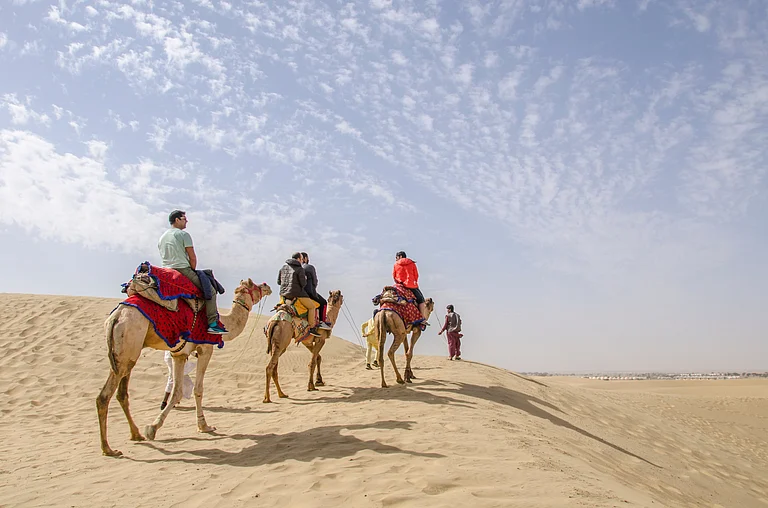
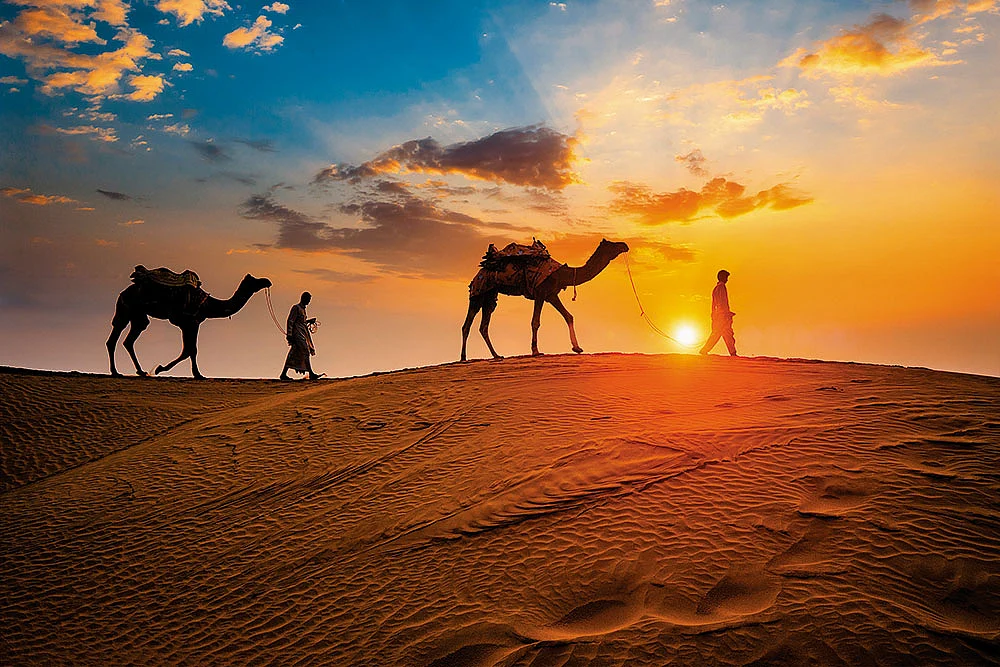
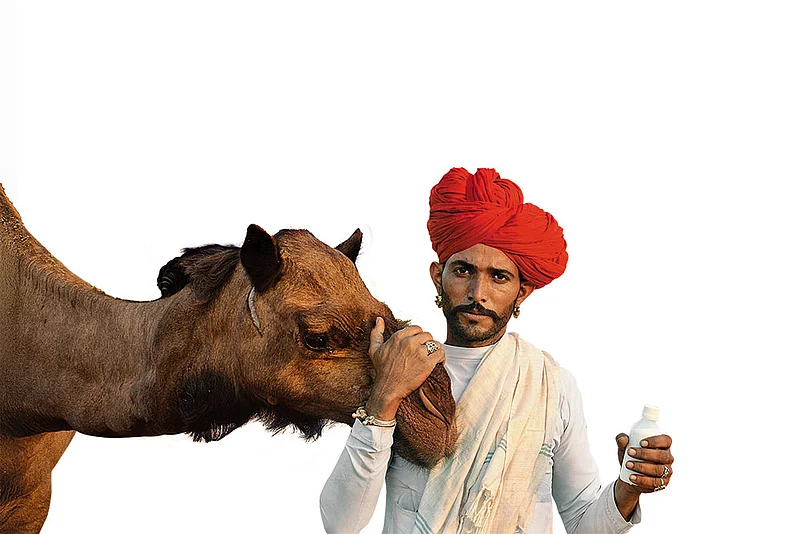
For generations, the Raika pastoralists of Rajasthan moved with their camel herds across the dry landscapes of the Thar desert. Their lives followed seasonal grazing routes across village commons and scrubland, where camels once played an essential role in transport, agriculture and trade. Among pastoral communities in India, the Raikas became known as traditional camel breeders and keepers, maintaining herds of dozens of camels.
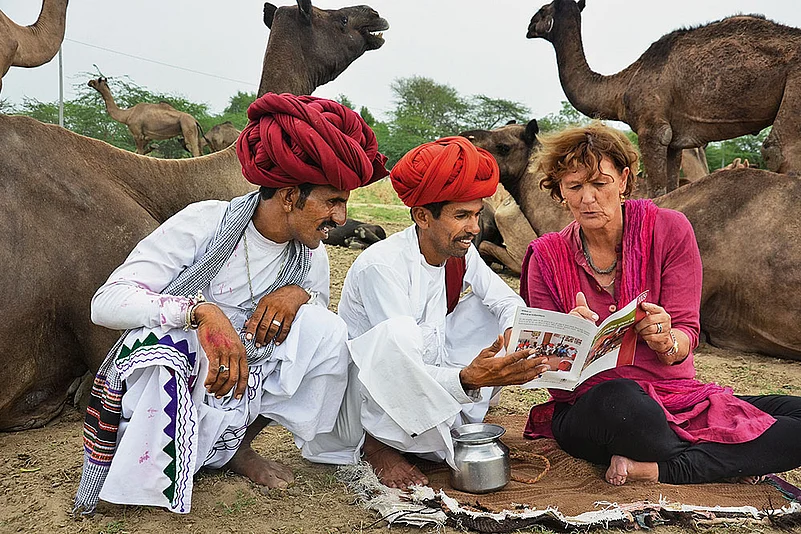
For more than three decades, two individuals have worked closely with Raika pastoralists to understand and support this relationship between people and animals. Dr Ilse Köhler-Rollefson, a veterinarian and author who has studied pastoral cultures in Rajasthan since the early 1990s, later joined Hanwant Singh Rathore of Lokhit Pashu-Palak Sansthan (LPPS) to co-found Camel Charisma, an initiative that works with camel breeders to create markets around camel products.
“The relationship between Raikas and their camels is unlike anything I have seen anywhere in the world,” Rathore said. “They care for the animals like their own children.”
When Köhler-Rollefson first began documenting pastoral traditions, many elders spoke of an origin story linking their community to the camel.
“Many Raikas believed their community had been created by Lord Shiva to take care of the first camel shaped by Parvati,” she said. “It was considered their divine duty to look after the animal.”

Shrinking Herds
Across Rajasthan’s desert districts, herders said camel numbers had been declining for decades. Government data reflects the shift. According to India’s 20th Livestock Census released in 2019, camel numbers in Rajasthan fell from about 3.26 lakh in 2012 to around 2.13 lakh in 2019. Earlier estimates suggest the state had more than 7.5 lakh camels in the early 1980s.
Rajasthan still accounts for roughly 84 per cent of India’s camel population, yet the animal’s role in the rural economy has steadily changed. Tractors and motor vehicles replaced animal power in farming and transport, while expanding agriculture and fencing reduced open grazing routes.
“If there is no income, why will people keep camels?” Rathore said. “Grazing land is shrinking, and policies have made it difficult to sell animals.”
“The camel economy has basically disappeared,” Köhler-Rollefson said. “Earlier, the Raika sold camels as work animals at Pushkar and had a reasonable income. When that demand disappeared, and export restrictions came in, there was suddenly no market for male camels.”
The shift is visible even at the Pushkar Camel Fair, once among the region's largest livestock markets.
“When I first went to Pushkar, there were around 70,000 camels at the fair,” Rathore said. “Today, only a few hundred arrive.”
New Markets
As the traditional camel economy weakened, organisations working with pastoral communities began exploring ways to rebuild income around the animals. Near Sadri in Rajasthan’s Pali district, LPPS and Camel Charisma began experimenting with new uses for camels.
“The idea was simple,” Rathore said. “Instead of only talking about saving camels, we needed to make them economically useful again.”
Early experiments with camel wool, textiles and products made from camel dung struggled to become self-sustaining. Camel milk has shown the most promise. Camel Charisma buys milk from pastoralists and processes it into dairy products.
“We pay around Rs 60 per litre,” Köhler-Rollefson said. “If a herder supplies about 10 litres a day, that can mean Rs 18,000 a month.”
Private companies have also entered the sector. Hitesh Rathi, co-founder of Aadvik Foods, said value-added products are essential for building a viable camel milk market. The company produces camel milk powder, chocolates, and skincare products and pays pastoralists by volume rather than by fat content, often helping farmers earn two to three times as much as they previously did from local buyers.
Another company, Bahula Naturals, works with pastoral communities across Bikaner, Jaisalmer and Jodhpur and has installed solar-powered milk-chilling units. The network now supports more than 2,500 camel herders and provides care for around 45,000 camels.
For herders like Bikat Ram Raika, the calculation remains simple.
“Hamare bachche sheher jaa rahe hain kaam ke liye… Agar oonth se rozi milegi toh log oonth rakhenge. Agar rozi nahi milegi, toh dheere dheere sab khatam ho jayega (Our children are going to the cities for work. If camels provide a livelihood, people will keep them. If not, slowly everything will disappear).”
Looking for more such exciting and meaningful stories? Grab our latest issue on Amazon.