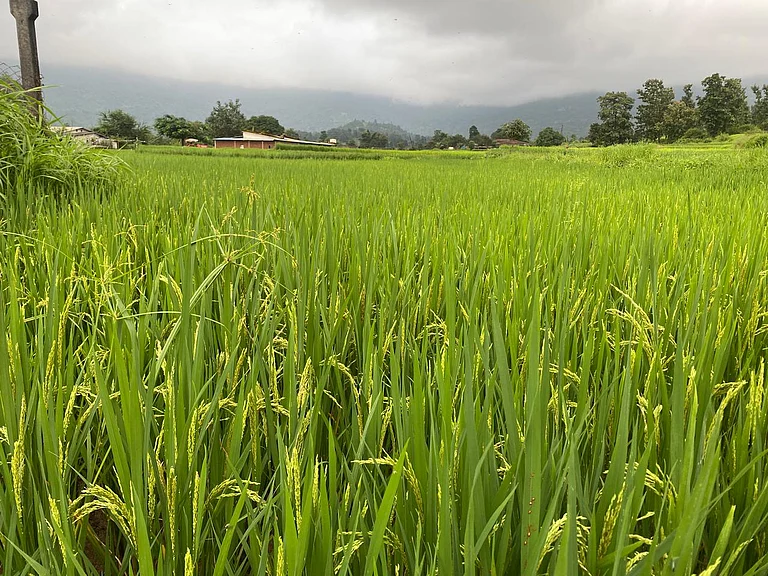
At first glance, Barkul feels like an unlikely place for a museum. The small settlement sits along the edge of Chilika Lake, where fishing boats drift past reeds and migratory birds skim the water in winter. Most travellers stop here for the lake, for the flamingos, or for the boat ride to Kalijai Temple. Few expect to find one of eastern India’s most ambitious cultural archives tucked into this landscape. Yet that is precisely what makes the ODI Art Centre so compelling.
Set against the vast, shifting blues of Asia’s largest brackish water lagoon, the ODI Art Centre does not feel like a conventional museum. It feels more like an extension of the landscape around it—an art sanctuary where Odisha’s folk traditions, tribal memory, and disappearing craft practices are being gathered before they slip into history. In a world where heritage often gets flattened into souvenir-shop aesthetics, this five-acre cultural complex attempts something more meaningful: preserving not just objects, but the living stories behind them.
A Museum Rooted In Place

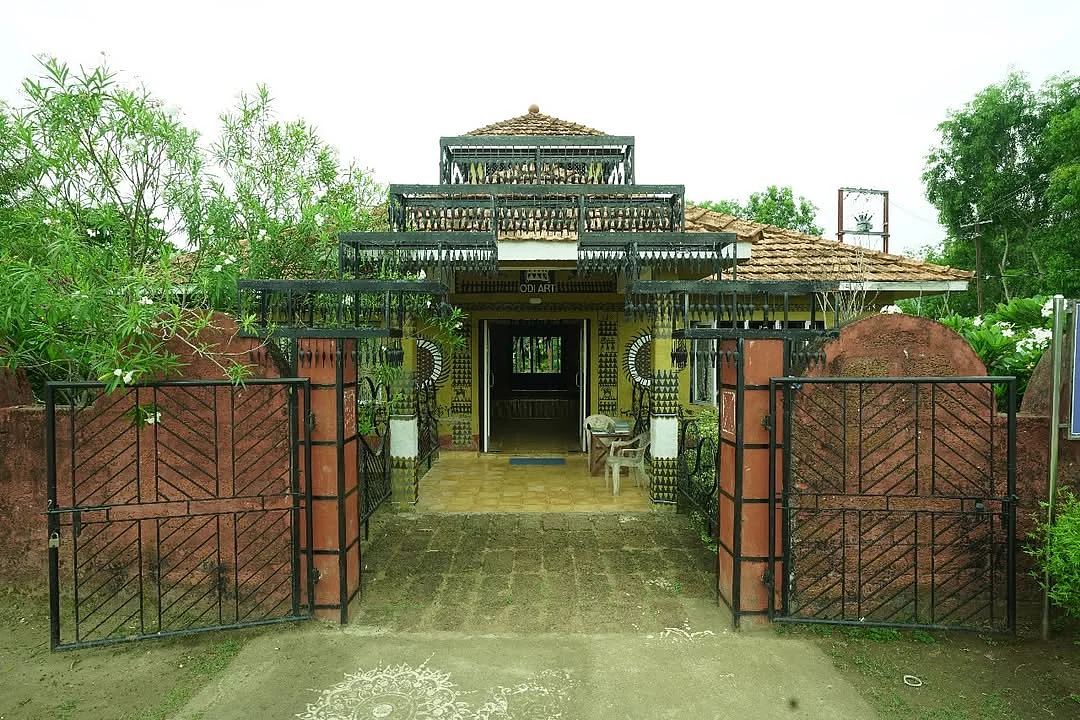
The Purvasha Folk and Tribal Art Museum forms the heart of the ODI Art Centre. Developed by the Society for the Development of Rural Literature, a non-profit cultural organisation, the centre was conceived as a space where Odisha’s traditional arts could be documented and experienced within a setting that still feels connected to their origins. Financial support from the Ministry of Culture and the Odisha government helped bring the project to life, and the museum opened its doors in 2017.
Its location matters as much as its collection. Museums in India are often urban institutions, removed from the communities that produced the works they display. Here, the setting offers a different perspective. Surrounded by rural Odisha, the museum creates a dialogue between the artefacts inside and the cultural landscapes they came from. Visitors are not simply looking at heritage under glass; they are encountering it in a region where many of these traditions still survive, however precariously.
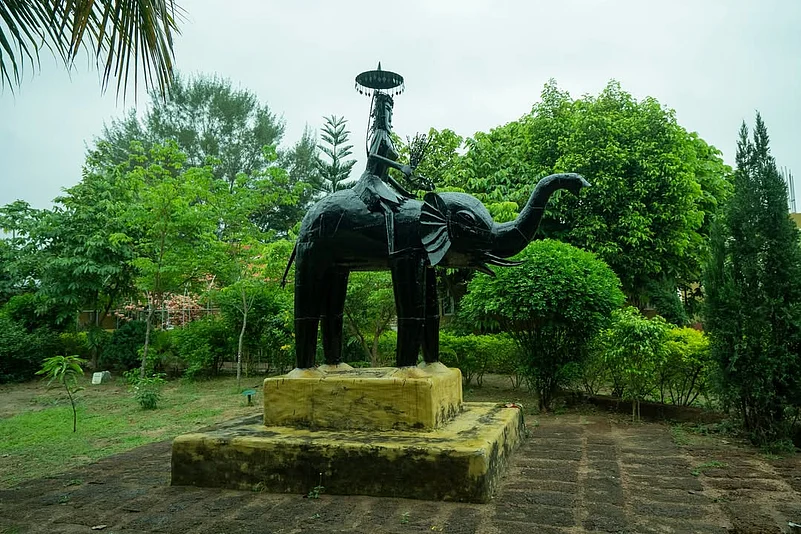
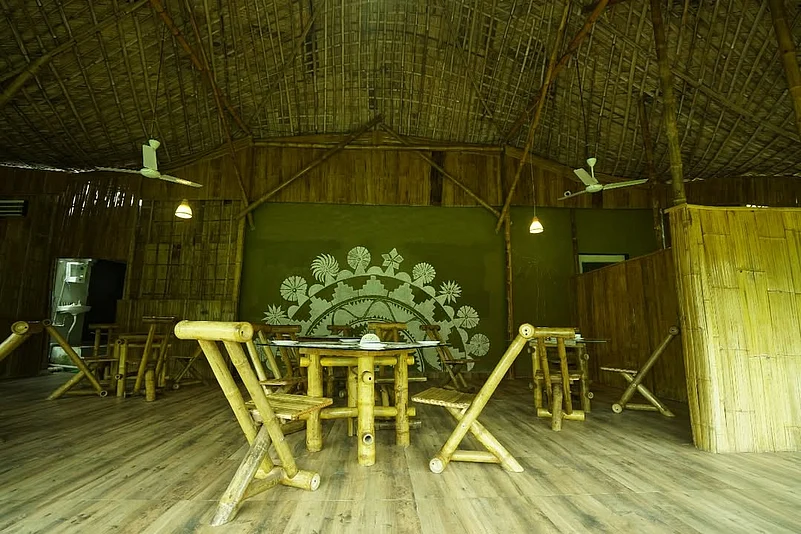
The architecture reflects that intention. Built with earthy textures and local materials, the complex avoids the sterile formality of many gallery spaces. Instead, it unfolds through courtyards, galleries, performance spaces, and open-air installations that feel closer to a cultural village than a museum in the traditional sense.
The Stories Hidden In Objects
Inside, the museum’s collection moves far beyond the expected pattachitra paintings and tribal jewellery that often represent Odisha in travel brochures. More than 30 galleries explore a wide range of folk and tribal traditions, many of them from communities rarely represented in mainstream cultural institutions.
One of the most striking sections is devoted to carved wooden doors from tribal regions of Odisha. These are not simply architectural fragments but narratives in wood—doors etched with scenes of village life, forest animals, fertility symbols, and deities. Some once stood at the entrance of homes in Koraput and Malkangiri, carrying both decorative and spiritual significance. Their presence here reveals how even the most functional objects once carried artistic intention.
Nearby, galleries of Dhokra metalwork display brass figurines, ritual objects, oil lamps, and household tools shaped through the ancient lost-wax casting technique. In city homes, such pieces often appear as stylish decor. Here, presented within their cultural context, they become something else entirely: evidence of a metalworking tradition passed through generations of artisan communities in Odisha and neighbouring Chhattisgarh.
The museum also houses intricate palm-leaf engravings, terracotta figures, shadow puppets, tribal masks, musical instruments, and ceremonial objects that reveal how deeply art has been woven into everyday life across the region. Even something as simple as a wooden cowbell becomes a study in design—crafted not only for utility, but with a careful understanding of sound, form, and local material.
Beyond Odisha
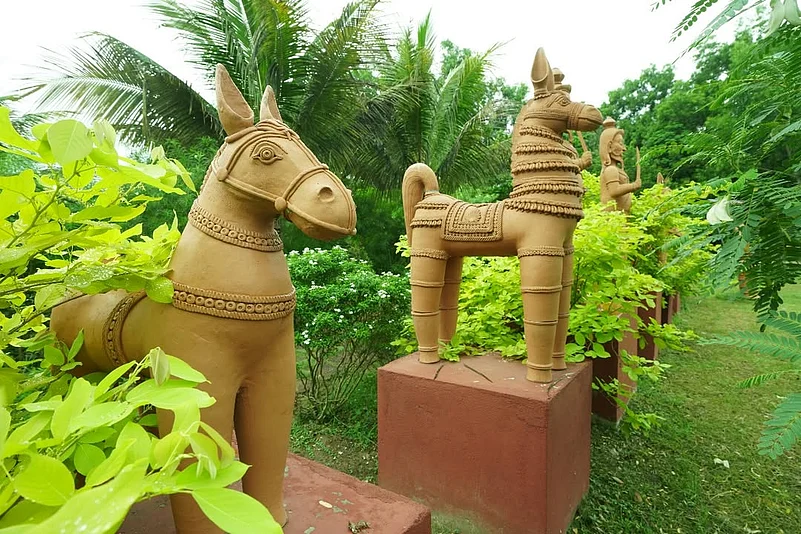
What gives the ODI Art Centre an unusual dimension is that it does not confine itself to Odisha alone. The museum places local traditions in conversation with folk cultures from elsewhere in India and beyond. Artefacts from Asia and Africa sit alongside Odia masks and ritual objects, drawing subtle connections between distant communities.
There are carved figures from Madagascar, tribal masks from African nations, and musical instruments that reveal unexpected parallels across cultures. Some visitors are surprised to discover how certain percussion instruments from Korea share visual similarities with traditional drums from Odisha. These comparisons are not accidental. They reflect the centre’s broader ambition—to position regional folk traditions within a larger global conversation about indigenous knowledge and artistic memory.
Rather than treating Odisha’s heritage as isolated, the museum shows how local cultures have always been part of wider human exchanges. It is a rare approach, especially in a regional museum, and one that gives the collection greater depth.
More Than A Museum
The ODI Art Centre is not only a place to observe. It was designed as an active cultural space. Across the campus are amphitheatres, artist kiosks, a research library, and areas for workshops and performances. Folk artists are invited to demonstrate traditional painting, mask-making, and palm-leaf engraving, allowing visitors to see techniques that might otherwise remain hidden behind finished objects.
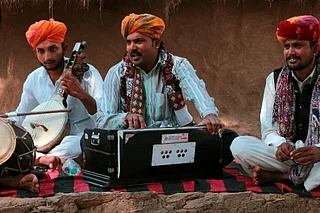
This living dimension becomes especially visible during the Chilika Shelduck International Folk Carnival, the centre’s annual cultural festival. Over several days, the grounds come alive with music, dance, storytelling, crafts, and regional cuisine. Performers from different parts of India and other Asian countries gather here, turning the museum into a temporary meeting ground for traditions that rarely share the same stage.
The festival has gradually become one of the centre’s most important public faces, drawing attention not just to Odisha’s heritage but to the urgent need to support the communities that sustain it. In that sense, the museum functions as both archive and platform—a place where preservation and participation can coexist.
Holding On To Fragile Traditions
For all its ambition, the ODI Art Centre also reflects the challenges facing cultural preservation in India. Folk museums outside major cities often struggle with visibility, funding, and long-term conservation. Artefacts made from wood, palm leaf, cloth, and metal require constant care, particularly in humid climates like Chilika’s. Digitising collections, supporting researchers, and paying staff remain ongoing concerns.
Yet perhaps that fragility is what makes the place worth visiting. The ODI Art Centre is not polished into a tourist spectacle. It still feels like a work in progress—part museum, part cultural experiment, part act of faith. And that gives it a rare sincerity.
In Barkul, beside a lake better known for birds than museums, Odisha’s living heritage has found an unexpected home. The ODI Art Centre may not yet be on every traveller’s itinerary, but for those willing to look beyond the usual routes, it offers something increasingly rare: a chance to encounter culture not as nostalgia, but as something still breathing.
FAQs
1. Where is ODI Art Centre located?
ODI Art Centre is located in Barkul on the banks of Chilika Lake in Odisha, about two hours from Bhubaneswar.
2. What is the ODI Art Centre known for?
It is known for preserving Odisha’s folk, tribal and traditional art through galleries, performances and research.
3. What can visitors see at the museum?
Visitors can explore Dhokra art, pattachitra, wooden carvings, masks, musical instruments and global folk artefacts.
4. Is ODI Art Centre only about Odisha’s art?
No, it also showcases folk objects and cultural connections from other Indian states and international regions.
5. Why is ODI Art Centre worth visiting?
It offers a rare cultural experience where Odisha’s heritage is presented in a setting close to its roots.