

At first glance, it looks like solid ground. Grasses sway, deer step lightly, and birds skim the surface. But beneath your feet, the earth moves. In Keibul Lamjao National Park, land is not land at all. It floats. This is the only national park in the world that rests on water, a living, breathing ecosystem that shifts with the seasons and challenges everything we think we know about landscapes.
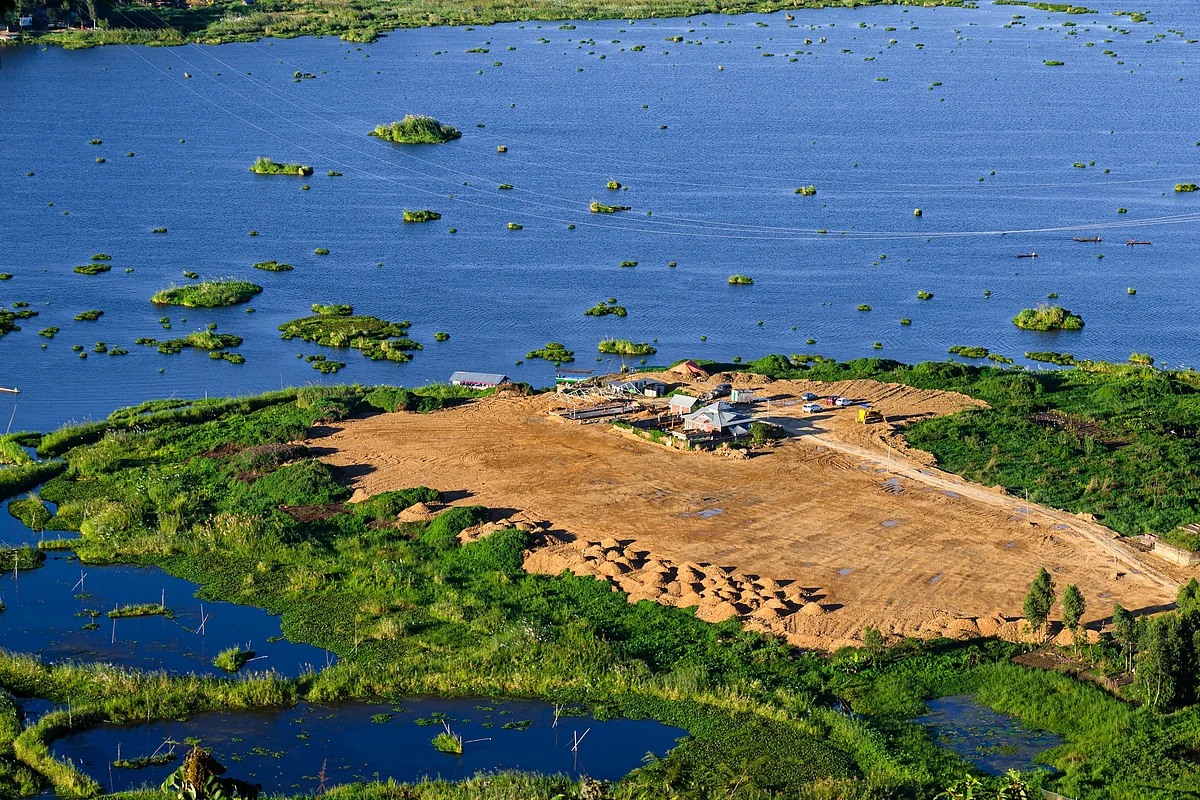
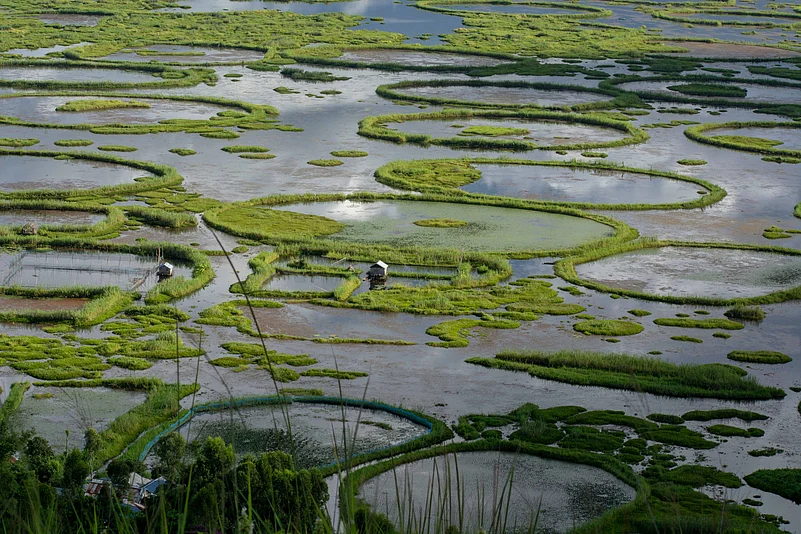
Keibul Lamjao National Park sits on the southern edge of Loktak Lake, Northeast India’s largest freshwater lake. What makes it extraordinary are phumdis, thick, spongy masses of vegetation, soil and organic matter that float on the lake’s surface.
These floating islands are not static. During the monsoon, rising water lifts them upward. In the dry months, they sink and touch the lakebed, absorbing nutrients before rising again when the rains return.
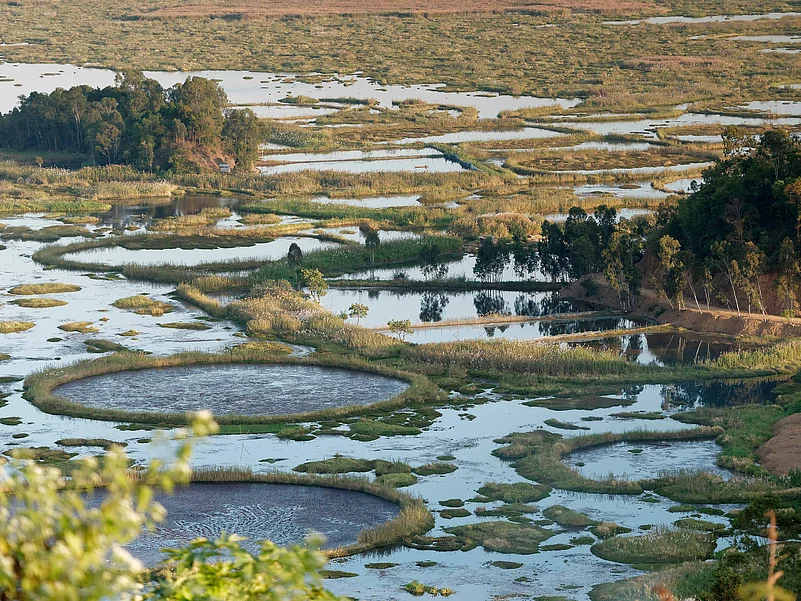

This natural cycle gives the park its unusual character. The ground feels soft and springy, almost like a waterbed. In some places, the phumdis are thick enough to support large animals, even deer. In others, they thin out and break apart, creating channels of open water.
The park covers roughly 40 square kilometres and exists in a delicate balance between land and lake. It is too shallow to be a true lake and too fluid to be a conventional forest.
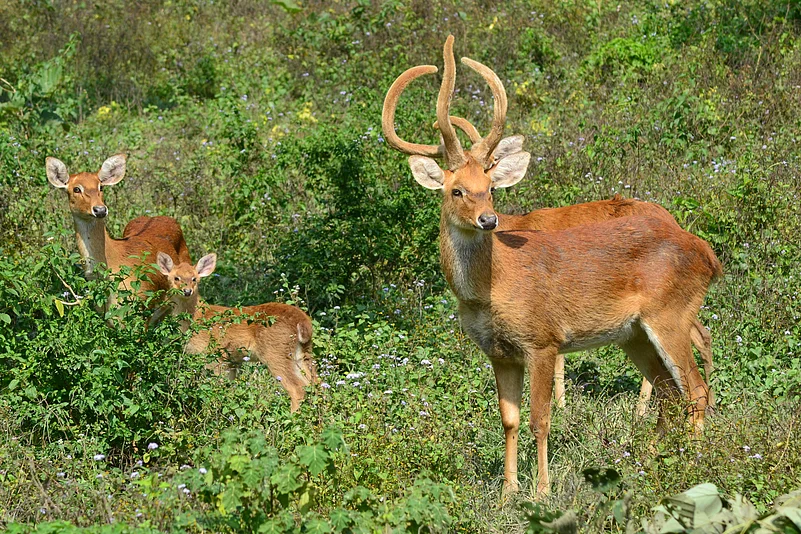
The Dancing Deer And A Living Ecosystem
Keibul Lamjao is the last natural refuge of this species. Without these floating meadows, the Sangai would likely disappear.
But the park is more than just one animal. It holds a mix of aquatic, wetland and terrestrial life. Tall reeds, wild rice, lotus and grasses dominate the landscape, forming dense green carpets across the phumdis.
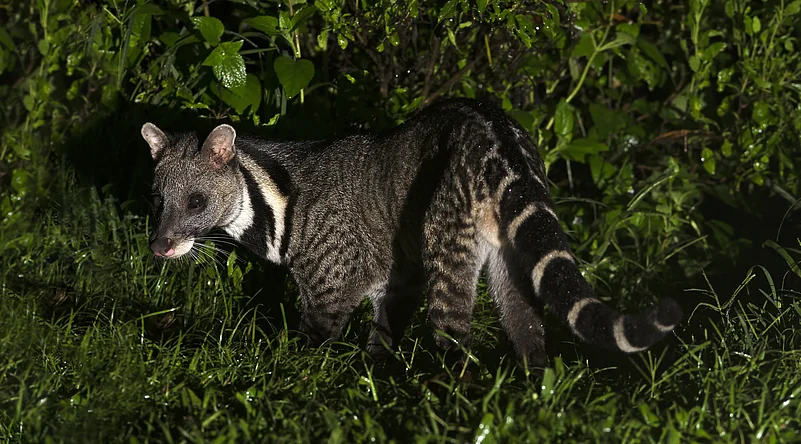
Among the grasses move hog deer, wild boar, otters, and jungle cats. Overhead, birds circle and settle among the reeds. Beneath the surface, fish thrive in the nutrient-rich waters.
This blend of ecosystems makes the park unusually rich in biodiversity. Scientists have recorded hundreds of plant species adapted to survive both in water and on floating ground.
Fragility, Change, And The Journey There
Despite its beauty, the park is under stress. The construction of the Ithai Barrage as part of the Loktak hydropower project changed the lake’s natural water cycle. Water levels now remain high for longer periods, preventing phumdis from sinking and regenerating nutrients.
Over time, this weakens the floating masses. If they thin out too much, they may no longer support wildlife like the Sangai. Pollution, human settlement and fishing pressures add to the strain.
Yet people continue to live alongside this ecosystem. Villages dot the edges of the lake, and some communities even build floating huts on phumdis. The lake supports livelihoods through fishing and agriculture, making conservation a complex balancing act.
For travellers, reaching the park is part of the experience. The nearest city is Imphal, about 40 kilometres away. From there, roads lead to Moirang, the gateway to Loktak. Visitors often explore the park by boat, gliding past floating islands and watching the landscape shift with the light.
The best time to visit is between November and March, when the weather is cooler and visibility is clear. Summers can be warm, while monsoons transform the park into a vast, water-heavy expanse.
In Keibul Lamjao National Park, nothing is fixed. The ground rises and falls. The horizon changes shape. Even the idea of land feels temporary.
And yet, life here persists. Grasses grow, deer walk, people adapt. This is not just a rare ecosystem. It is a reminder that nature does not always follow the rules we expect. Sometimes, it floats.
FAQs
1. What makes Keibul Lamjao National Park unique?
It is the world’s only floating national park, built on phumdis—thick, floating masses of vegetation on Loktak Lake.
2. Where is Keibul Lamjao National Park located?
It is located in Manipur, in northeast India, on the southern edge of Loktak Lake.
3. What is the Sangai deer?
The Sangai, or Manipur brow-antlered deer, is an endangered species found only in Keibul Lamjao National Park.
4. What are phumdis?
Phumdis are floating islands made of vegetation, soil and organic matter that rise and sink with the lake’s water levels.
5. When is the best time to visit Keibul Lamjao National Park?
The best time to visit is between November and March, when the weather is cooler and visibility is better.