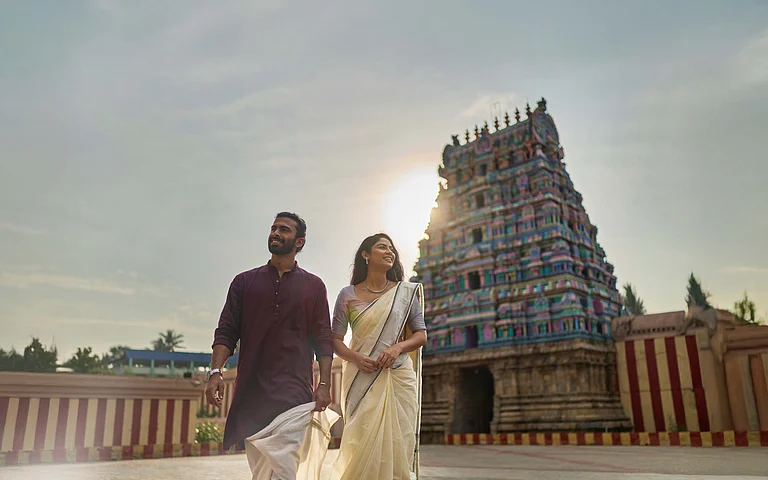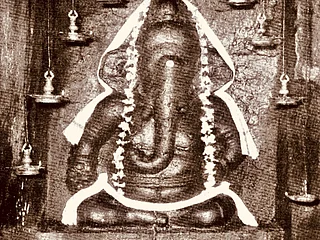
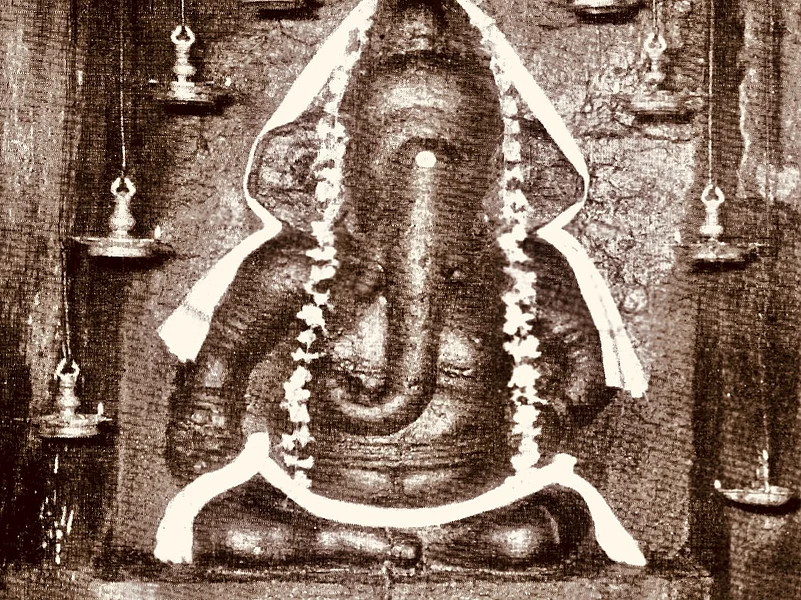
In the Chettinad countryside, where ornate mansions and temple towns tell stories of a mercantile community that travelled far beyond Tamil Nadu, a different kind of landmark waits in the village of Pillayarpatti. Here, inside a rock-cut cave, a six-foot Ganesha has been carved into the living stone. He is not a freestanding idol placed within the shrine. He is part of the hill itself.
Known as Karpaga Vinayagar, this ancient deity is one of the most distinctive forms of Ganesha in Tamil Nadu. Seated within the cave, with a right-curving trunk and just two arms, he has been worshipped for centuries. For the Nattukottai Chettiar, or Nagarathar, community, the temple is more than an important pilgrimage site. It is one of their nine clan temples and the only one among them where Ganesha is the principal deity.
For travellers exploring Chettinad, Pillayarpatti offers an encounter with Tamil Nadu's religious history that feels remarkably tangible. The temple brings together rock-cut architecture, ancient inscriptions, living traditions and the everyday rhythms of devotion, all within a single complex.
A Ganesha Unlike Any Other

Step into the cave shrine and Karpaga Vinayagar immediately commands attention. The approximately six-foot-high bas-relief was sculpted directly into the granite, making the deity inseparable from the rock around him. His iconography is equally unusual.
Unlike the four-armed form commonly encountered across India, Karpaga Vinayagar has two arms. His trunk bends towards the right, earning him the name Valampuri Vinayagar, a form considered particularly auspicious by devotees. He is seated in a posture described as Ardha Padmasana, and one of his hands holds a Shiva lingam rather than the modak more commonly associated with Ganesha.
The deity faces north, another distinctive feature of the shrine. Together, these elements make the Pillayarpatti Ganesha an especially rare example of early Ganesha iconography. The name Karpaga Vinayagar refers to the mythical Karpaga tree, believed to fulfil wishes, reflecting the enduring faith that sincere prayers offered here can bear fruit.
The cave contains other important carvings too, including a rock-cut Shiva lingam known as Thiruveesar and sculptural representations associated with Shaivite traditions. The presence of Ganesha alongside these older forms gives the shrine a fascinating religious character, rooted in the history of Tamil Saivism.
A Shrine Written Into Stone
The origins of Pillayarpatti stretch back more than a millennium, with the rock-cut core generally attributed to the early Pandya period. Dating the shrine precisely is complicated by inscriptions and layers of additions made over centuries, but the cave and its sculptures are widely regarded as among the oldest surviving temple features in the region.
Perhaps the most remarkable historical detail is the name of the sculptor. An inscription near the Ganesha image identifies Ekkatur Poon Peruparanan, whose signature survives in an early form of Tamil script. Artist signatures from such an early period are uncommon, making this small inscription an important window into the people behind the monumental work.
Other inscriptions found around the temple record its changing history and refer to the settlement by earlier names, including Ekkattoor and Maruthangudi. They also provide clues about donations, land grants and the patronage that helped sustain the shrine.
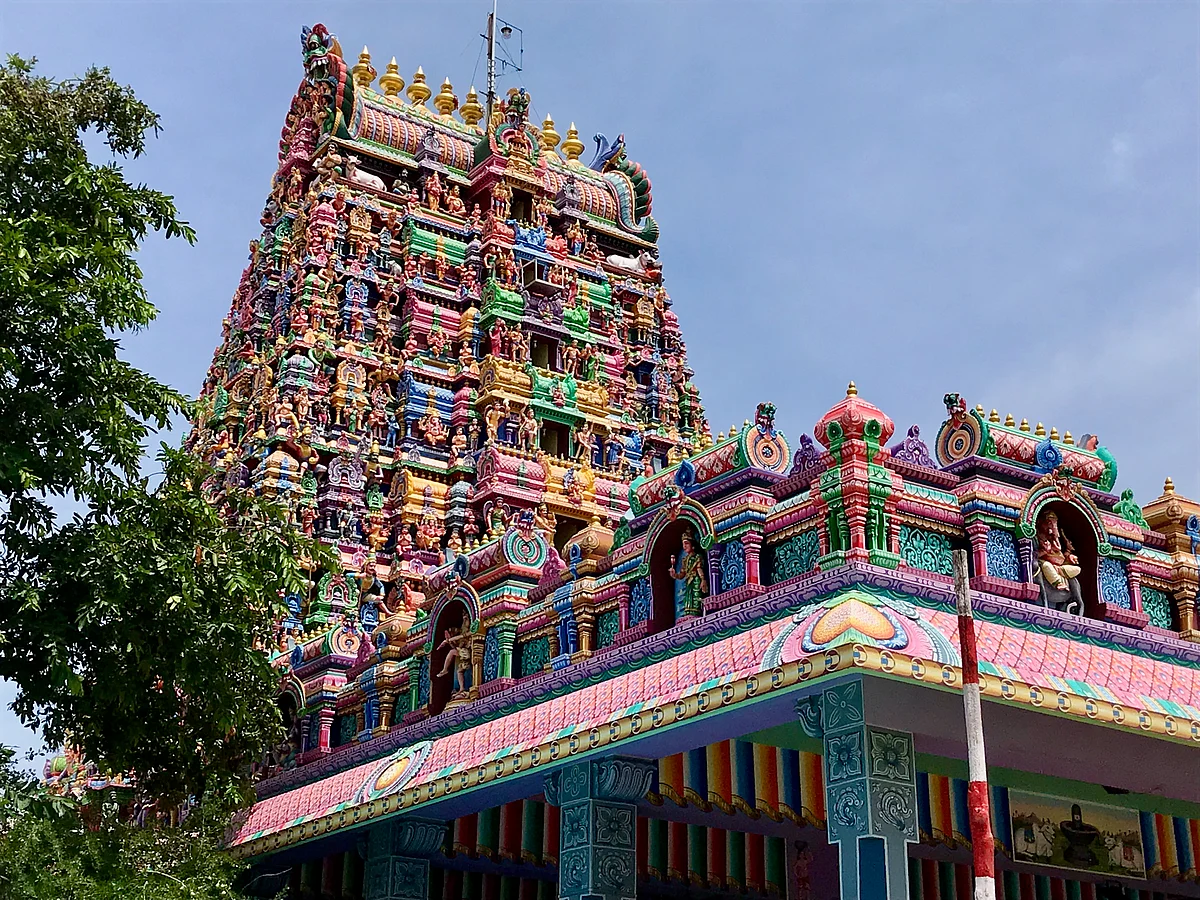
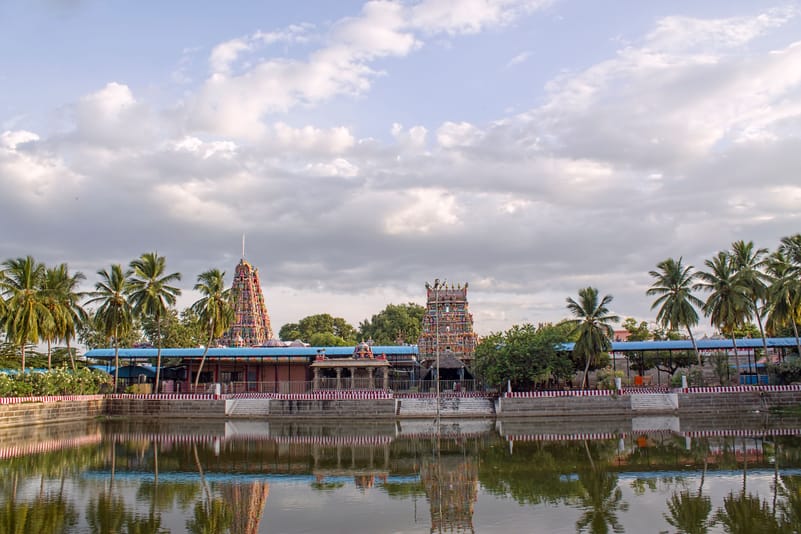
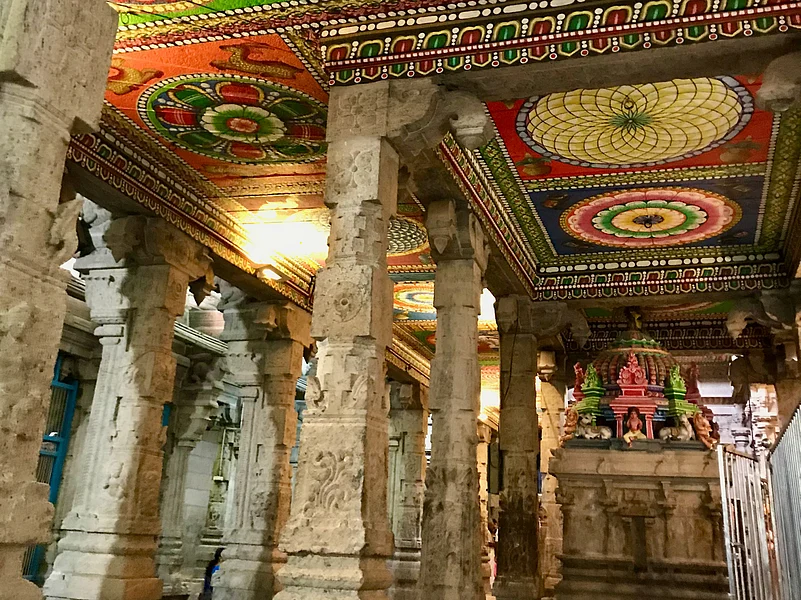
The original cave was eventually surrounded by a much larger structural temple. Additions such as the Rajagopuram, mandapams and other halls emerged through different periods, particularly under the patronage of the Nagarathars. Yet the ancient cave remains the spiritual centre of the complex, preserving the relationship between the deity and the rock from which he was born.
The Nagarathars And Their Sacred Nine
Pillayarpatti occupies a special place in the religious landscape of Chettinad because of its connection with the Nattukottai Chettiar community. The Nagarathars traditionally recognise nine clan temples, each carrying deep ancestral and familial significance.
Pillayarpatti stands apart because Karpaga Vinayagar is its presiding deity, while the other clan temples are principally associated with Shiva. The Nagarathars have been closely involved with the temple's custodianship and development for centuries, helping transform the ancient cave shrine into the expansive temple complex visitors see today.
That connection remains visible in the way the temple functions. For many families, a visit to Pillayarpatti is woven into significant moments such as weddings, new ventures and other auspicious occasions. The temple is not preserved as a relic of the past; it continues to be used, maintained and celebrated as part of everyday religious life.
When Pillayarpatti Comes Alive
The temple's biggest annual celebration is Vinayagar Chaturthi, observed through a ten-day festival during the Tamil month of Avani, usually falling in August or September. The festivities combine elaborate rituals with processions in which Karpaga Vinayagar is taken around the temple on different vahanams, or ceremonial vehicles.
Each day brings a different form of procession, from the silver mouse associated with Ganesha to the lion, bull, peacock and other vahanams. One of the most distinctive rituals takes place towards the end of the celebrations, when the deity receives Chandana Kaapu, an elaborate covering of sandalwood paste.
The festival concludes with an enormous offering of modhagam, the sweet dumpling traditionally associated with Ganesha. The preparation at Pillayarpatti weighs more than 27 kilograms and is made using around 18 measures of rice before being ceremonially distributed as prasadam.
The temple's calendar extends well beyond the annual festival. Sankatahara Chaturthi, observed each month, brings its own procession and prayers, while Karthigai Deepam, Navaratri, Pongal and Deepavali add further layers to the temple's ritual life.
Visiting Pillayarpatti
Pillayarpatti is around 14 kilometres from Karaikudi, making it an easy addition to a Chettinad itinerary. Karaikudi Junction, roughly 17 kilometres away, is the nearest railway station, while Madurai is the closest major airport, around 75-85 kilometres away depending on the route.
The temple generally opens from 6am to 1pm and again from 4pm to 8.30pm. The early morning is a good time to visit, particularly for those who want to experience the temple before the larger crowds arrive. The main shrine does not charge an entry fee, although devotees can purchase tickets for specific rituals and abhishekams.
Visitors should dress modestly and remember that traditional temple customs apply within the complex. Photography is permitted in parts of the premises but is restricted inside the sanctum. As with other Hindu temples, footwear must be removed before entering the sacred areas.
Pillayarpatti also works well as a starting point for exploring the wider Chettinad region. Karaikudi's grand merchant mansions, Kanadukathan's heritage homes, Thirumayam Fort and its cave temples, and the Jain caves and paintings at Sittanavasal can all be incorporated into a longer itinerary.
But the reason to make the journey to Pillayarpatti remains remarkably simple. Beneath the layers of history, inscriptions and architecture is a Ganesha who has remained part of the landscape for centuries. Carved into the same stone that surrounds him, Karpaga Vinayagar turns an ancient cave into something more than an archaeological site. He makes it a living place of worship, where history is not behind glass but embedded in the rituals, festivals and prayers that continue to this day.
FAQs
1. Where is Pillayarpatti Temple located?
Pillayarpatti is in Sivaganga district, around 14 kilometres from Karaikudi in Tamil Nadu.
2. What is special about Pillayarpatti Ganesha?
Karpaga Vinayagar is a six-foot rock-cut Ganesha with two arms, a right-curving trunk and a north-facing orientation.
3. How old is Pillayarpatti Temple?
The rock-cut shrine is generally associated with the early Pandya period and is believed to be more than 1,000 years old.
4. What are the Pillayarpatti Temple timings?
The temple is generally open from 6am to 1pm and 4pm to 8.30pm daily.
5. When is Vinayagar Chaturthi celebrated at Pillayarpatti?
The temple observes a 10-day Vinayagar Chaturthi festival during the Tamil month of Avani, usually in August or September.