Mahatma Gandhi’s story in India cannot be confined to ashrams and memorials. Long before Sabarmati became synonymous with his name, Gandhi was moving through cities, villages and railway stations, meeting people, and testing ideas that would eventually shape his politics and personal philosophy. From the haveli in Porbandar where he was born to the streets of Ahmedabad where he built his early political base, and from Varanasi’s temples to the fields of Champaran, these places offer a more textured way of understanding the man behind the familiar photographs. Some were sites of political action; others challenged his ideas about food, religion, caste, and rural life. Together, they trace a journey through India that was as much about observing the country as it was about changing it.
Porbandar, Gujarat


Gandhi’s Indian story begins in Porbandar, where Mohandas Karamchand Gandhi was born on October 2, 1869. His childhood home, now part of the Kirti Mandir complex, offers a more intimate starting point than the grander memorials associated with his later life. The three-storeyed haveli has small staircases, green windows, and ornate niches, giving visitors a sense of the family environment in which Gandhi spent his early years. The coastal town also puts his later travels into perspective: the sea was a constant presence in his childhood, even as Gandhi would eventually cross it to study in London and later build his political career in South Africa.
How to reach: Porbandar has an airport and railway station, with rail and road connections to major Gujarat cities.
Where to stay: Choose a centrally located hotel or a sea-facing property near the town centre.
Nearby attractions: Kirti Mandir, Sudama Mandir, Porbandar beach, and the old port area.
Rajkot, Gujarat
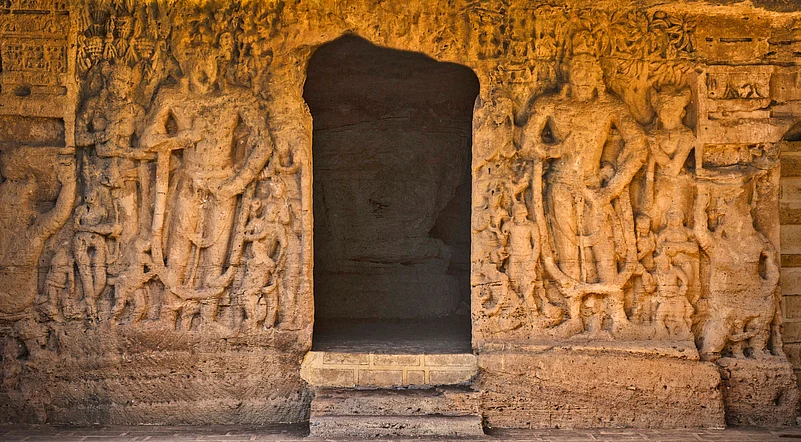
If Porbandar introduces Gandhi the child, Rajkot offers a glimpse of the adolescent who was still finding his way. Gandhi spent part of his youth here while his father served as Diwan to the ruler of Rajkot. Kaba Gandhi No Delo, the family home, is now a museum dedicated to his early life. Walking through its rooms offers an unusually domestic perspective on a figure who is otherwise remembered through political speeches, marches, and public photographs. Rajkot also makes sense as the next stop on a Gandhi trail because the journey between here and Porbandar can be made by train, echoing the railway travels that became such an important part of Gandhi’s relationship with India.
How to reach: Rajkot is well connected by air, rail, and road to Ahmedabad and other Gujarat cities.
Where to stay: Stay around the city centre for easy access to Kaba Gandhi No Delo.
Nearby attractions: Kaba Gandhi No Delo, Watson Museum, Rotary Midtown Dolls Museum, and Jubilee Garden.
Ahmedabad, Gujarat

Ahmedabad became one of the most important cities in Gandhi’s Indian years. After returning from South Africa in 1915, he established ashrams here, first at Kochrab and later at Sabarmati, while building relationships with the city’s industrial and mercantile communities. Ahmedabad was also where Gandhi developed ideas around self-discipline, food, manual work and social reform. Beyond the ashram, the old city provides another way into this history. Its pols, community structures, and traditional neighbourhoods offer a glimpse of the social divisions and relationships that Gandhi was trying to understand and challenge. A walk through the old city, followed by a visit to Sabarmati Ashram, makes for a fuller picture of his years here.
How to reach: Ahmedabad has an international airport and extensive rail and road connections.
Where to stay: The old city or central Ahmedabad works well for combining heritage walks with Gandhi-related sites.
Nearby attractions: Sabarmati Ashram, Kochrab Ashram, Calico Museum of Textiles, and Ahmedabad’s historic pols.
Mumbai, Maharashtra

Mumbai was central to Gandhi’s political life, particularly during the Rowlatt Satyagraha of 1919 and the Quit India movement of 1942. At Mani Bhavan in Girgaon, his former base in the city, photographs, letters, and personal objects trace the years when Mumbai became an important platform for his political work. The building also gives the story a human scale: this was a working residence rather than a formal monument. Gandhi’s relationship with the city extended beyond one address. Mumbai’s merchants helped finance his movements, while ordinary citizens participated in campaigns and went to prison as part of the freedom struggle. The city therefore provides an important counterpoint to Gandhi’s better-known association with rural India.
How to reach: Mumbai is connected by air, rail, and road to cities across India.
Where to stay: South Mumbai is convenient for exploring Mani Bhavan and other historic sites.
Nearby attractions: Mani Bhavan, August Kranti Maidan, Chhatrapati Shivaji Maharaj Terminus, and Gateway of India.
Pune, Maharashtra

Pune occupies an important place in Gandhi’s later political journey. In September 1932, he undertook one of his most significant fasts while imprisoned at Yerawada Jail, protesting the proposed separate electorates for the Depressed Classes. The episode eventually led to the Poona Pact between leaders representing different communities. Gandhi’s connection with Pune went beyond this single event, with the city remaining an important centre of political and social activity. Today, visitors can explore sites associated with the period while also seeing another side of Maharashtra’s history through its old neighbourhoods, museums, and colonial-era institutions. For anyone tracing the evolution of Gandhi’s ideas on caste and social reform, Pune adds essential context to the journey.
How to reach: Pune is well connected by air, rail, and road from Mumbai and other major cities.
Where to stay: Central Pune or Koregaon Park provides convenient access to the city’s historic areas.
Nearby attractions: Aga Khan Palace, Yerawada area, Shaniwar Wada, and Pataleshwar Cave Temple.
Varanasi, Uttar Pradesh
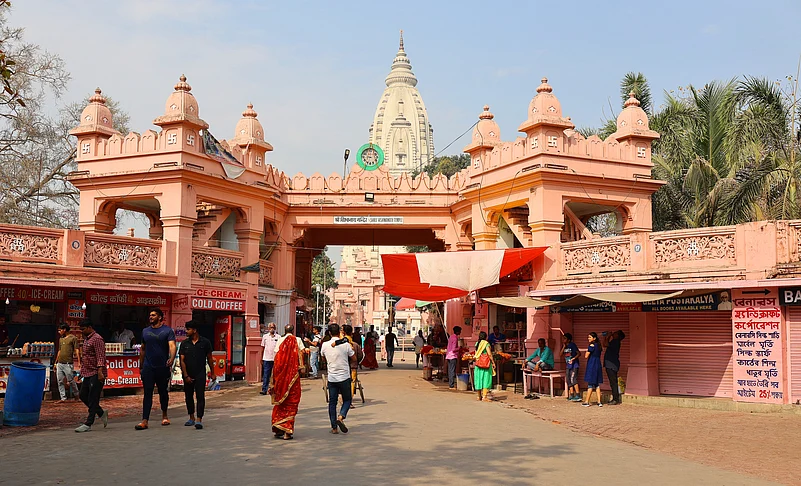
Gandhi’s relationship with Varanasi was marked by both fascination and criticism. During his visit to the Kashi Vishwanath Temple in 1915, he questioned the emphasis on elaborate ritual and outward display over inner reflection. A century later, the city still offers the same collision of faith, ritual, and everyday life that Gandhi encountered. The ghats, temples, and riverfront provide a chance to consider his complicated relationship with religion rather than reducing it to a single philosophy. Varanasi also became one of the stops on a journey through India that allowed Gandhi to observe ordinary life at close quarters. Today, walking along the Ganga and through the old city remains one of the most direct ways to engage with that history.
How to reach: Varanasi has an international airport and major railway connections.
Where to stay: Choose a hotel in the old city for access to the ghats, or stay closer to the cantonment for easier transport.
Nearby attractions: Kashi Vishwanath Temple, Dashashwamedh Ghat, Tulsi Ghat, and Sarnath.
Champaran, Bihar

In the fields of Champaran, Gandhi’s politics moved decisively towards the concerns of India’s rural population. His 1917 agitation supported indigo farmers facing oppressive cultivation arrangements under colonial rule and became one of the defining episodes of his early political career in India. Motihari and Bettiah are closely associated with this chapter, while memorials and local sites keep the story alive beyond the better-known national monuments. Travelling through the region also changes the scale of the Gandhi story. Here, the focus shifts from speeches and political gatherings to farmers, agricultural land, and the everyday realities that shaped his understanding of rural India. It is an essential stop for understanding how Gandhi’s methods developed on the ground.
How to reach: Motihari is accessible by rail and road, with connections from Patna and other Bihar cities.
Where to stay: Stay in Motihari or Bettiah for easier access to Champaran-related sites.
Nearby attractions: Gandhi Memorial, Motihari, Bettiah and Champaran’s rural landscapes.
Sevagram, Maharashtra
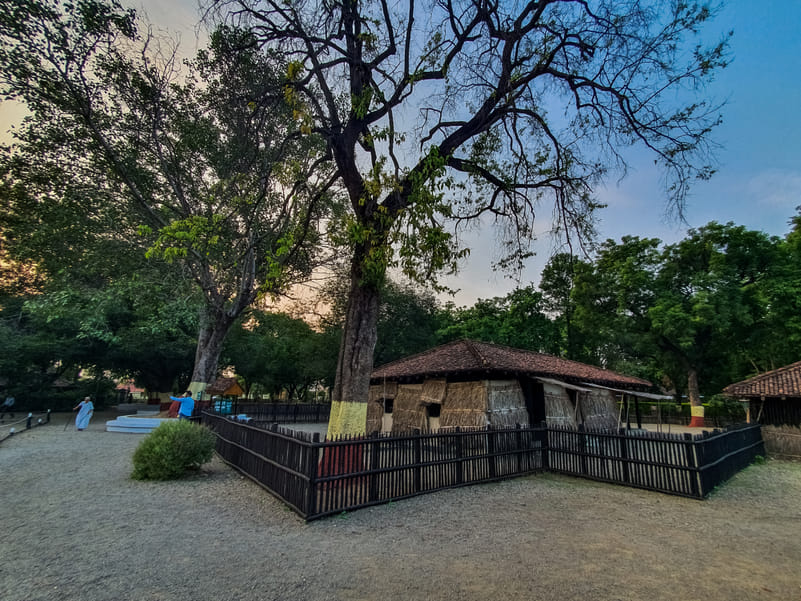
For a deeper look at Gandhi’s later experiments with rural living, head to Sevagram near Wardha. Gandhi established the settlement in the 1930s, naming it the Village of Service, and spent considerable time here working on his ideas around self-reliance, village industries, and social reform. Its location is significant, too. Gandhi had long spoken about the importance of India’s villages, and Sevagram allowed him to live closer to the rural society he believed should remain central to the country’s future. The settlement offers a different experience from Sabarmati: less about the beginnings of his political career and more about the practical application of his philosophy in everyday life.
How to reach: Wardha is the nearest major railway station; Nagpur airport is the closest major airport.
Where to stay: Wardha has several hotels and guesthouses, with Sevagram easily reached by road.
Nearby attractions: Sevagram Ashram, Magan Sangrahalaya, and Wardha’s Gandhi-related sites.
Kolkata, West Bengal

Kolkata became one of the most consequential cities in Gandhi’s final years. In 1947, as communal violence tore through the newly independent country, Gandhi travelled to Bengal and undertook a fast in the city. His presence there was part of an effort to encourage peace between communities at a moment of extraordinary upheaval. The city would remain connected to Gandhi until the end of his life, and his ashes were later immersed in the Hooghly at Gandhi Ghat in Barrackpore. Visiting the memorial today provides a quieter way to understand his final engagement with Bengal. Kolkata also closes the geographical arc of his journey across India, from his birthplace on the western coast to the east.
How to reach: Kolkata is well connected by air, rail, and road, with Barrackpore accessible by suburban rail and road.
Where to stay: Central Kolkata works well for combining Gandhi-related sites with the city’s heritage districts.
Nearby attractions: Gandhi Ghat, Barrackpore, Victoria Memorial, Indian Museum, and Marble Palace.
Delhi

Gandhi’s final chapter belongs to Delhi. He spent his last 144 days at Birla House, now Gandhi Smriti, where the museum preserves the room in which he lived and the route he took towards his final prayer meeting. On January 30, 1948, he was assassinated while walking to the meeting. A short distance away, Raj Ghat marks the site of his cremation and has since become one of the country’s most significant memorials. Yet Delhi’s connection with Gandhi was not limited to his final months. He had visited the city repeatedly, met political leaders, and worked here during periods of communal tension. Together, Gandhi Smriti, and Raj Ghat offer a fitting conclusion to a journey through his Indian years.
How to reach: Delhi is connected to the rest of India by air, rail and road, with both sites accessible from central Delhi.
Where to stay: Central Delhi provides convenient access to Gandhi Smriti, Raj Ghat, and other historic landmarks.
Nearby attractions: Gandhi Smriti, Raj Ghat, National Gandhi Museum, and Birla Mandir.
A More Meaningful Gandhi Trail
Taken together, these places make the Gandhi story considerably more layered than a circuit of memorials. Porbandar and Rajkot explain where he came from; Ahmedabad and Mumbai trace his emergence as a political figure; Pune and Champaran show how his campaigns engaged with questions of caste, farmers, and social reform; Varanasi reveals his complicated relationship with religion; and Sevagram shows his attempt to translate ideas about rural India into daily practice. Kolkata and Delhi, meanwhile, bring the journey to its final chapters. Travelling through them today is less about retracing a single route than seeing how different parts of India shaped the man who, in turn, left his imprint on them.
FAQs
1. Which places in India are associated with Gandhi’s early life?
Porbandar and Rajkot are closely associated with Gandhi’s childhood and adolescence.
2. Why is Champaran important in Gandhi’s life?
Champaran was the site of Gandhi’s 1917 campaign in support of indigo farmers.
3. What is Gandhi’s connection with Varanasi?
Gandhi visited Varanasi in 1915 and reflected critically on religious ritual and outward displays of faith.
4. Where did Gandhi spend his final days?
Gandhi spent his final 144 days at Birla House, now Gandhi Smriti, in Delhi.
5. Which places can travellers visit to learn about Gandhi?
Kirti Mandir in Porbandar, Kaba Gandhi No Delo in Rajkot, Sabarmati Ashram in Ahmedabad, Mani Bhavan in Mumbai, Sevagram, and Gandhi Smriti are among the key sites.