

Every year, millions of travellers trace Rajasthan’s most familiar routes. Jaipur for its forts, Udaipur for its lakes, Jodhpur for its blue-washed streets. These destinations remain iconic for good reason, but beyond them lies a quieter Rajasthan, one where the landscape still dictates the rhythm of travel and discovery feels genuinely possible.
Ajabgarh belongs to that Rajasthan.
Located in the Alwar district, the village occupies a unique position between two of the state's most compelling landmarks: the historic ruins of Bhangarh and the forests of the Sariska Tiger Reserve. The result is a destination where folklore, history and wilderness intersect, offering an experience that feels markedly different from Rajasthan's established tourism circuit.
A Kingdom Between Kingdoms
Ajabgarh was founded in 1635 AD by Ajab Singh Rajawat, grandson of Madho Singh, the chief of Bhangarh. Historical records suggest that Ajab Singh established a new settlement in the valley, constructing a fortified wall that separated his kingdom from the older Bhangarh settlement.
Today, the remains of Ajabgarh Fort continue to overlook the valley and surrounding Aravallis. Nearby, an ancient baori bears inscriptions that local historians associate with a halt by the Mughal emperor Akbar during one of his journeys through the region.
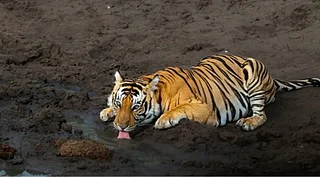
To the east lies Bhangarh, one of Rajasthan's most discussed archaeological sites, known as much for its legends as its architecture. To the west stretches the Sariska Tiger Reserve, home to tigers, leopards, striped hyenas, sambhar deer and more than 200 species of birds.
Ajabgarh exists between these worlds. Between royal history and wilderness, between folklore and landscape.
Experiencing The Aravallis Up Close
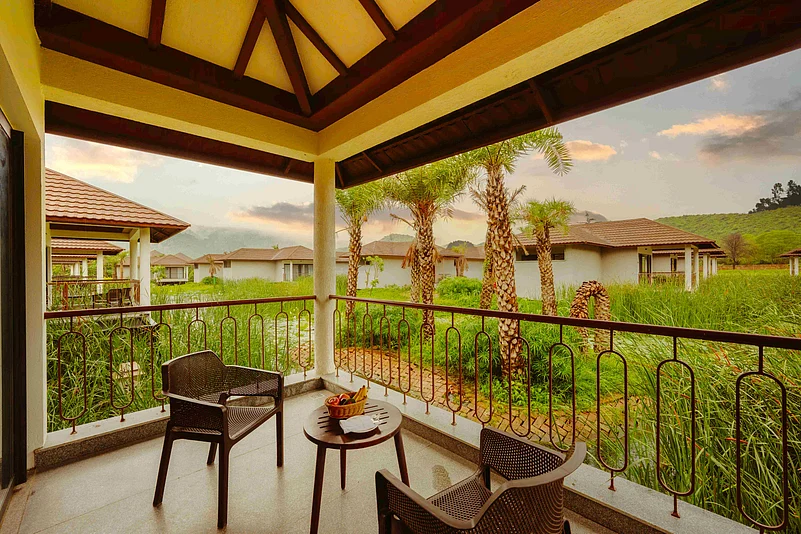

The Aravallis define the character of the region. Here, the mountain range feels rugged, intimate and ever-present, creating a landscape that shifts dramatically through the seasons.
Monsoon brings a surprising flush of green to the hills. Winter casts the terrain in shades of gold and amber, while summer reveals the stark beauty of exposed stone and scrub forests. The changing light across the mountains often becomes as memorable as the monuments themselves.
For travellers accustomed to Rajasthan's palace hotels and urban heritage stays, Ajabgarh offers something different: a closer connection to the state's natural geography.
A Resort Designed Around The Landscape
Set within this environment is Ananta Spa & Resort Ajabgarh, a 30-acre property that takes much of its inspiration from the surrounding terrain.
Rather than imposing itself upon the landscape, the resort has been designed to work with it. Eta Gold limestone, used extensively throughout the property, mirrors the tones of the surrounding hills, while the layout follows the natural contours of the land. Courtyards open towards the Aravallis, and many sightlines are intentionally directed towards forests, mountains and open skies.
The property features 135 villas and suites, organised around four design themes inspired by natural elements.
The Fire Villas draw from the energy and warmth of the surrounding terrain, incorporating open layouts and earthy palettes. The Earth Suites take a more restrained approach, using natural materials and understated design to reflect the stillness of the foothills.

The Bamboo Villas reference resilience and simplicity through organic textures and clean architectural lines, while the Lagoon Villas overlook water features and are designed to evoke a slower pace, drawing inspiration from Rajasthan's historic lakes and stepwells.
While each category offers a distinct atmosphere, the overall design language remains rooted in the landscape, creating a sense of continuity throughout the property.
Between Wildlife And Heritage
One of Ajabgarh's greatest advantages is its proximity to Sariska Tiger Reserve. The reserve remains one of India's most important tiger habitats and offers opportunities for wildlife safaris, birdwatching excursions and naturalist-led explorations. Guests at Ananta can move from their villa to the edge of a national park in minutes, making it one of the rare properties where wildlife is a daily possibility rather than a day trip.
The surrounding landscape frequently hosts peacocks, langurs and a variety of birdlife, making encounters with nature part of the everyday experience rather than a separate activity.
At the same time, heritage attractions remain within easy reach. Visitors can explore Ajabgarh Fort, the temples and ruins of Bhangarh, historic stepwells and lesser-known archaeological sites scattered throughout the region.
This combination of wildlife and history allows travellers to experience two very different sides of Rajasthan within a single journey.
Beyond The Familiar Rajasthan Circuit
Despite being accessible from Jaipur, Delhi and Agra, Ajabgarh feels removed from the pace and crowds of the Golden Triangle. As the roads narrow and the Aravallis begin to dominate the horizon, the landscape takes over.
It is this sense of discovery that increasingly draws travellers to the region. Some come for Sariska's wildlife. Others arrive because of Bhangarh's history and legends. Many are simply looking for a side of Rajasthan that feels less familiar.
Ajabgarh rewards all three.
For those who have already experienced Rajasthan's iconic cities, it offers an opportunity to engage with the state through a different lens, one shaped by mountains, forests, forgotten kingdoms and stories that remain closely tied to the land itself.
The Information
Stay: Ananta Spa & Resort Ajabgarh
For more information, visit Ananta Hotels & Resorts