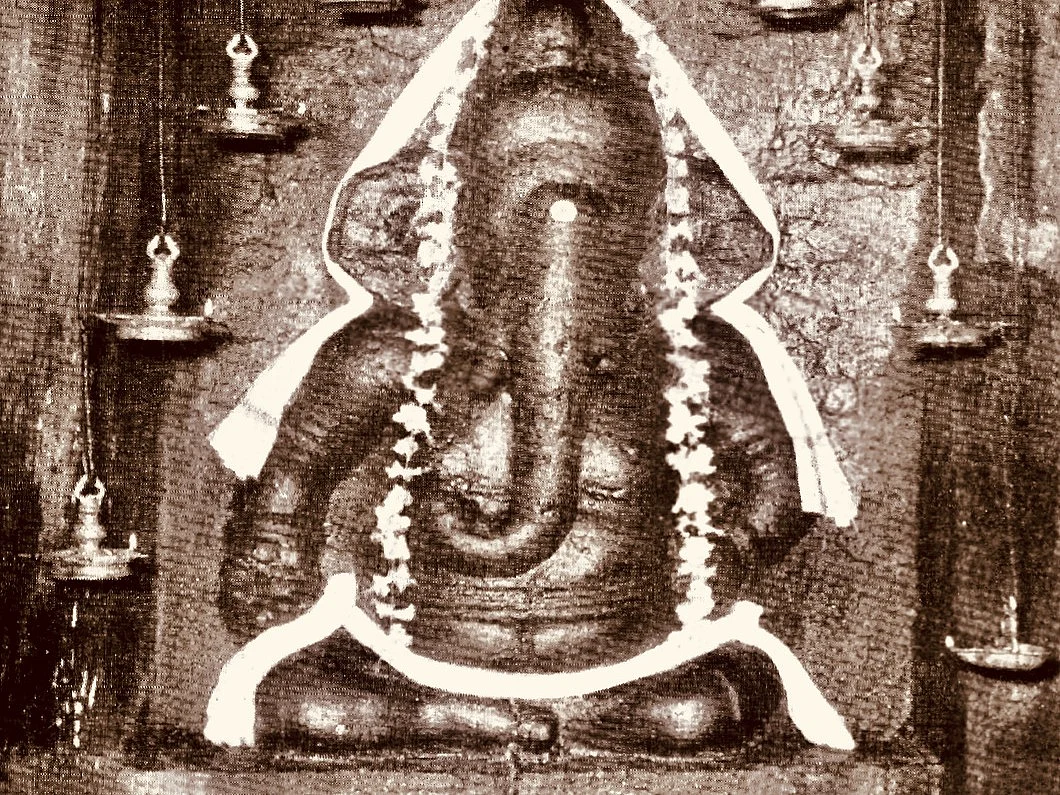
From a centuries-old fort in Rajasthan to rock-cut caves in Maharashtra and Madhya Pradesh, some of India’s most fascinating Ganesha shrines are found in settings steeped in history. These places bring together pilgrimage, mythology and architecture, often making the journey to the deity part of the experience. At Ranthambore, devotees climb through a historic fort to reach a three-eyed Ganesha believed to be self-manifested. In Maharashtra, an Ashtavinayak shrine occupies an ancient Buddhist cave. Further south, an early Ganesha sculpture at Udayagiri offers a glimpse into the deity’s evolving iconography. And in the Himalayas, a natural cave in Mana is linked to the writing of the Mahabharata. If you are looking to explore India beyond its better-known temples, these four Ganesha sites make for compelling stops.
Trinetra Ganesh Temple, Ranthambore Fort, Rajasthan


Perched inside the historic Ranthambore Fort in Sawai Madhopur, the Trinetra Ganesh Temple is perhaps India’s best-known Ganesha shrine within a fort. The temple is home to a three-eyed, or Trinetra, image of Ganesha, traditionally considered svayambhu, or self-manifested. Unusually, the deity is worshipped along with his family: wives Riddhi and Siddhi, and sons Shubha and Labha. The temple is believed to date to around 1299-1300 AD, when King Hammir Dev is said to have built it during a siege by Ala-ud-din Khilji after an image of Ganesha appeared on the fort wall. Today, devotees also send wedding invitations, letters and first-prayer cards here seeking blessings for new beginnings.
Girijatmaj Temple, Lenyadri Caves, Maharashtra
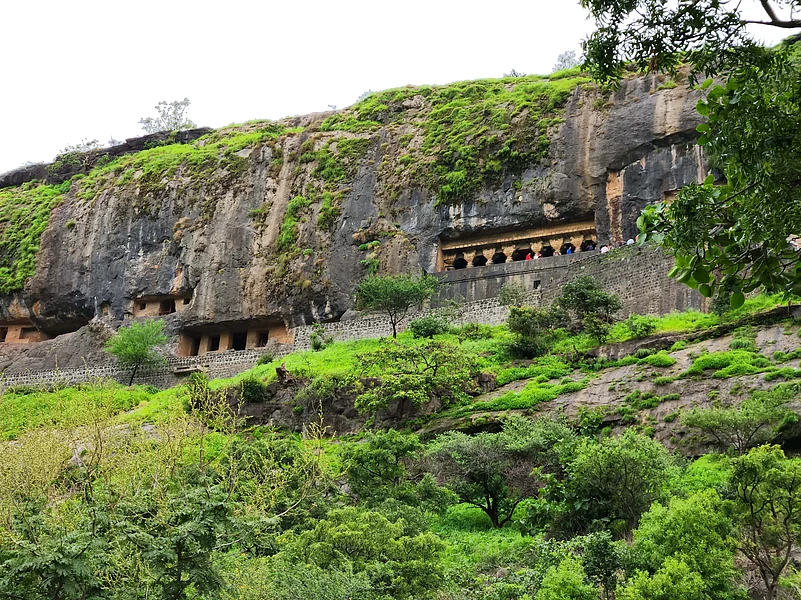
The journey to Girijatmaj Temple involves around 283 to 300 stone steps, but the climb takes you towards one of the most distinctive Ganesha shrines in Maharashtra. Located in Cave 7 of the Lenyadri Buddhist cave complex near Junnar, this is the only Ashtavinayak shrine situated entirely inside a mountain cave. The large, unpillared hall was excavated between the first and third centuries CE. Hindu tradition associates the site with Ganesha’s childhood and his birth to Goddess Parvati, or Girija. The setting also makes Lenyadri unusual from an architectural perspective, as the temple occupies a rock-cut space originally created as part of an ancient Buddhist cave complex.
Ganesha, Udayagiri Caves, Madhya Pradesh

Near Vidisha in Madhya Pradesh, the Udayagiri Caves offer an important glimpse into the early history of Ganesha imagery. Cave 6 contains a seated Ganesha relief that historians consider among the earliest firmly datable rock-cut representations of the deity in India. An inscription at the site dates the monument to 401 CE, during the reign of Gupta ruler Chandragupta II. The sculpture shows an early form of Ganesha, recognisable by his elephant head, rounded belly and broken tusk. Rather than being a standalone temple, the image forms part of the larger Udayagiri cave complex, making a visit particularly interesting for travellers keen to understand how religious art and iconography developed in early India.
Ganesh Gufa, Mana, Uttarakhand
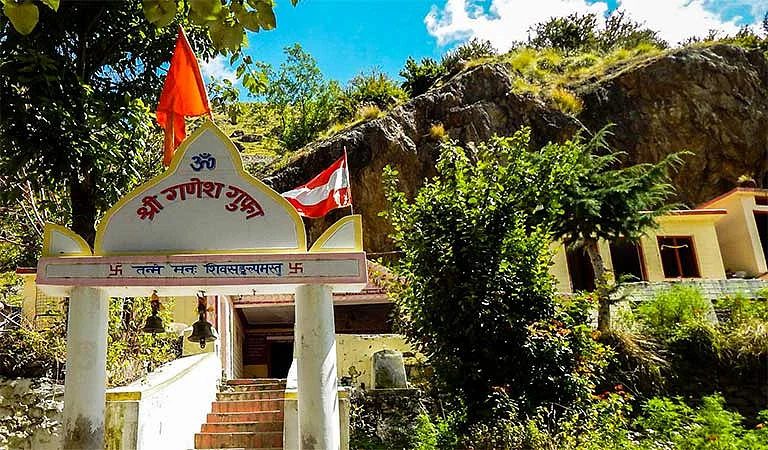
Close to Mana village near Badrinath, Ganesh Gufa is a small natural cave with a connection to one of Hinduism’s most important epics. According to Hindu tradition, this is where Lord Ganesha sat as the scribe while Sage Ved Vyas dictated the Mahabharata. The story adds a literary dimension to this otherwise modest cave, which is located a short walk from Mana, near the Indo-China border. The village is known as one of the last inhabited settlements on the Indian side of the border and is visited by travellers exploring the Badrinath region. The cave is best accessed between May and October, when the high-altitude region is more accessible.
FAQs
1. Which is the most famous Ganesha temple inside a fort?
The Trinetra Ganesh Temple inside Ranthambore Fort in Rajasthan is among the most prominent.
2. Which Ashtavinayak temple is located inside a cave?
The Girijatmaj Temple at Lenyadri is the only Ashtavinayak shrine located entirely inside a mountain cave.
3. Where is one of India’s earliest datable Ganesha sculptures?
A Ganesha relief in Cave 6 at the Udayagiri Caves in Madhya Pradesh dates to the early fifth century CE.
4. Which Ganesha cave is associated with the Mahabharata?
Ganesh Gufa near Mana in Uttarakhand is traditionally associated with Ganesha writing the Mahabharata as Ved Vyas dictated it.
5. How many steps are there to the Lenyadri Ganesha temple?
Visitors climb approximately 283 to 300 stone steps to reach the Girijatmaj Temple.