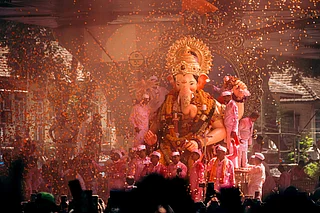
You can find Ganesha carved into an ancient Khmer temple in Cambodia, worshipped as Kangiten in Japan and celebrated with processions in Mauritius. In Thailand, his statues attract students, artists and business owners seeking success, while in Bali, the elephant-headed god has been part of a Hindu-Buddhist landscape for centuries.
Ganesha’s journey beyond India is a story of trade, migration, and religious exchange, with each destination giving the deity a place within its own traditions. Some of these connections date back more than a thousand years; others took shape through the Indian diaspora.
Here are seven countries where that journey remains visible today.
Bali, Indonesia
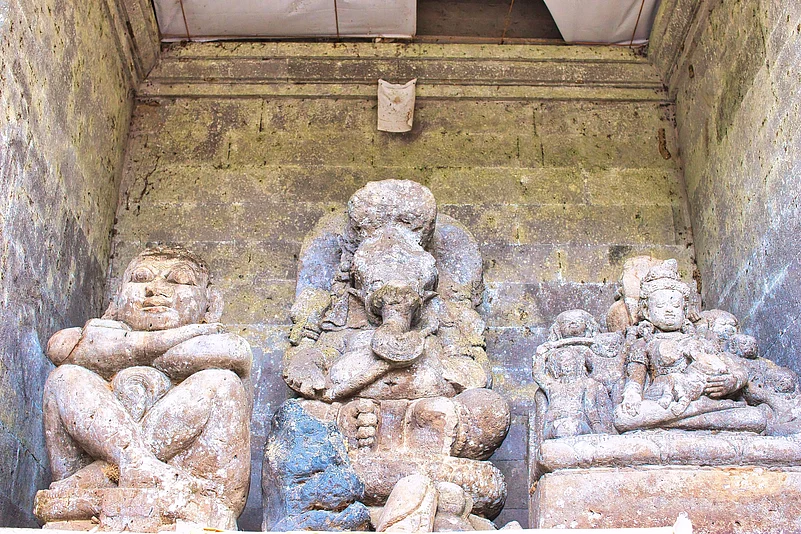

Bali presents one of the most distinctive forms of Ganesha worship outside India. Although Indonesia is predominantly Muslim, Bali remains predominantly Hindu, and Ganesha appears across temples, shrines, and cultural spaces as a deity associated with knowledge, wisdom, and protection. One of the best places to encounter his older presence is Goa Gajah, or the Elephant Cave, near Ubud, an archaeological complex dating to around the 11th century. The cave contains a Ganesha image alongside Shaivite symbols, while Buddhist stupas elsewhere in the complex point to the interaction between Hindu and Buddhist traditions. Goa Gajah remains a sacred site as well as a major archaeological attraction, making it a rare place where an ancient representation of Ganesha remains part of a living religious landscape. Visitors can explore the complex today, although temple etiquette and appropriate dress apply.
Bangkok And Chachoengsao, Thailand

In Thailand, Ganesha is widely known as Phra Phikanet or Phra Phikanes and is associated with success, knowledge, the arts and professional achievement. His worship reached Southeast Asia through Hindu-Brahmanical traditions and developed alongside Buddhism and local beliefs. In Bangkok, a prominent Ganesha shrine outside CentralWorld draws students, artists and business owners seeking success. For a more dramatic encounter, head to Khlong Khuean in Chachoengsao, where a giant bronze Ganesha rises about 39 metres and was assembled from 854 bronze pieces. The statue depicts the deity in a standing form associated with granting success. Both sites demonstrate how Ganesha has moved beyond his Indian origins to become part of contemporary Thai devotional culture, with shrines attracting worshippers alongside tourists.
Osaka And Tokyo, Japan

Japan’s Ganesha tradition arrived through esoteric Buddhism, travelling from India through China before reaching Japan around the eighth or ninth centuries. Known as Kangiten, Ganabachi, or Shoten, Ganesha became part of Japanese Buddhist practice and is associated with prosperity, happiness, and success. His representation can be strikingly different from the familiar Indian form: some images show two elephant-headed figures embracing, symbolising the union of male and female energies. As Kangiten worship is esoteric, many images are kept concealed and revealed only during particular ceremonies. Hozanji Temple on Mount Ikoma near Osaka is one of the best-known centres of Kangiten worship, while Matsuchiyama Shoden in Tokyo’s Asakusa district is another important site. The tradition offers a fascinating example of how Ganesha changed as he moved between religious cultures while retaining his association with fortune and auspicious beginnings.
Koh Ker, Cambodia

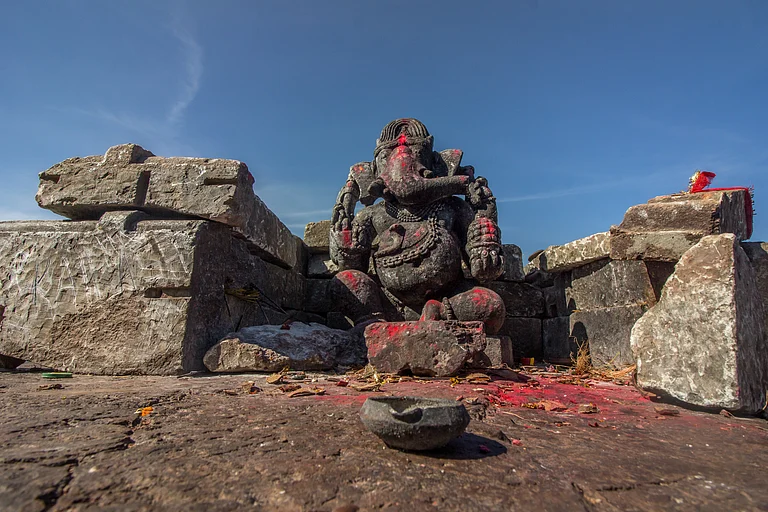
Cambodia’s Ganesha connection dates to the Khmer period, when Hinduism and Buddhism profoundly influenced the region's religious architecture and art. At Koh Ker, the 10th-century capital of the Khmer Empire, Prasat Bak was built as a temple dedicated specifically to Ganesha. The sanctuary is considered an important Ganesha monument in Southeast Asia and was once home to a large monolithic sandstone sculpture of the seated deity. The statue was later damaged and looted and is no longer at the temple, with fragments of its pedestal remaining at the site. Today, Prasat Bak is largely a ruined archaeological monument rather than a busy pilgrimage shrine. That distinction makes the site particularly significant: its weathered remains provide evidence of how firmly Ganesha had entered Khmer religious culture more than a thousand years ago.
Mauritius

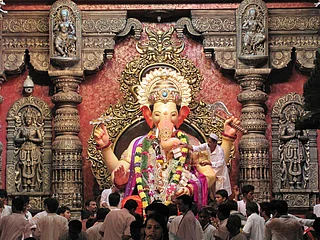
Mauritius offers one of the clearest examples of Ganesha worship travelling with Indian communities and becoming part of a country’s wider cultural life. Ganesh Chaturthi is observed as a public holiday on the island, where the festival has roots going back to the late 19th century. Early celebrations were particularly associated with Marathi families before spreading to temples and wider communities. Today, the festival features prayers, music, processions and the carrying of Ganesha idols towards beaches and rivers for immersion. The sea plays a particularly visible role in the celebrations, echoing the immersion traditions practised across India. Mauritius' government continues to recognise Ganesh Chaturthi among the island's major religious occasions, making the festival an important part of its multicultural calendar. For travellers, the celebrations show how a tradition carried overseas by Indian migrants has developed its own place within Mauritian public life.
Singapore

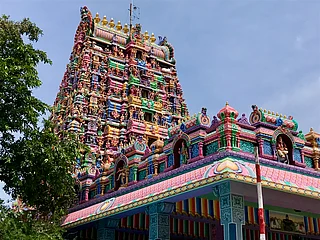
Ganesha, worshipped as Vinayagar, has a strong presence in Singapore’s Tamil Hindu community. His worship grew with the arrival of Indian migrants during the colonial period, who established temples and community institutions. Today, Ganesha shrines can be found at several Hindu temples, including the Sri Senpaga Vinayagar Temple, one of Singapore’s best-known Ganesha temples. Ganesh Chaturthi is marked with prayers and community celebrations, keeping the tradition firmly rooted in the city-state’s Hindu religious life.
Malaysia
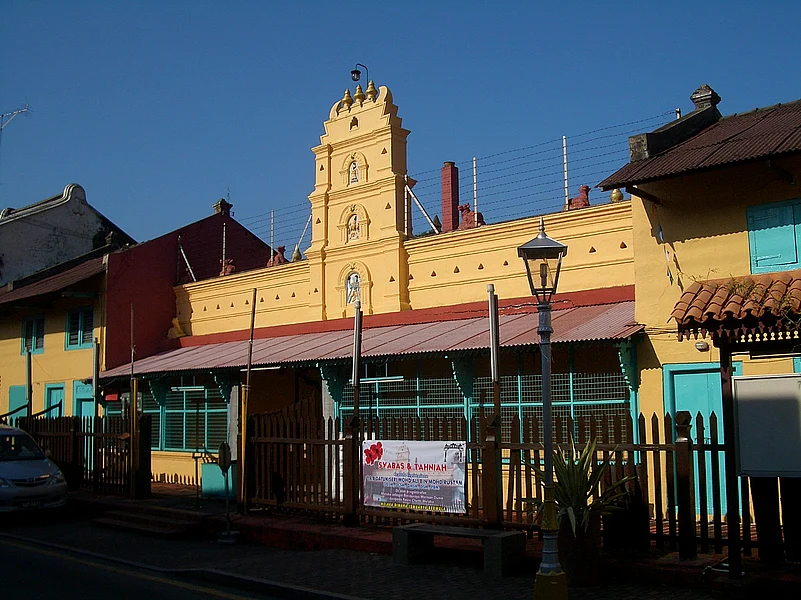
Malaysia’s Ganesha tradition is closely linked to its large Tamil Hindu community, which grew during the British colonial period. Known locally as Vinayagar or Pillaiyar, Ganesha is worshipped as the remover of obstacles and invoked before auspicious occasions. Temples across the country celebrate Ganesh Chaturthi with prayers, processions and cultural programmes. Sri Poyatha Moorthi Temple in Malacca is Malaysia’s oldest surviving Hindu temple and one of the oldest functioning Hindu temples in Maritime Southeast Asia. It is also among the country’s few surviving Chitty temples.
FAQs
1. In which countries is Ganesha worshipped outside India?
Ganesha is worshipped or revered in countries including Indonesia, Thailand, Japan, Cambodia, Mauritius, Singapore and Malaysia.
2. How did Ganesha worship spread outside India?
Ganesha traditions travelled through ancient trade and religious exchange across Asia, while later migration and the Indian diaspora carried his worship to places such as Mauritius, Singapore and Malaysia.
3. What is Ganesha called in Japan?
In Japan, Ganesha is known primarily as Kangiten, a figure associated with prosperity, happiness and success within esoteric Buddhist traditions.
4. Where can you see ancient Ganesha monuments in Southeast Asia?
Goa Gajah in Bali and Prasat Bak at Koh Ker in Cambodia are significant sites with historical connections to Ganesha worship.
5. Is Ganesh Chaturthi celebrated outside India?
Yes. Mauritius, Singapore and Malaysia are among the countries where Hindu communities celebrate Ganesh Chaturthi with prayers, processions and other cultural activities.