Bangkok's temples define much of its skyline and the tourist map. If you are planning your next trip to Bangkok, we suggest you follow the temple trail with the changing light of the day. A dawn silhouette, a cool marble hall at noon, or a hilltop view at the golden hour—let the interplay of sunlight and historic settings determine your temple trail.
While many temples, including Wat Arun, trace their origins to the earlier Ayutthaya Kingdom, the sacred landscape of the city started taking shape after 1782. This is when King Rama I founded the Chakri dynasty and established Bangkok as the new capital. Over the next two centuries, Bangkok's wats, or temples, evolved from monastic retreats into grand royal monuments. These temples not only chart the city's religious life, but also the changing ambitions of the Thai monarchy.
Before Sunrise: The Temple Named For Dawn
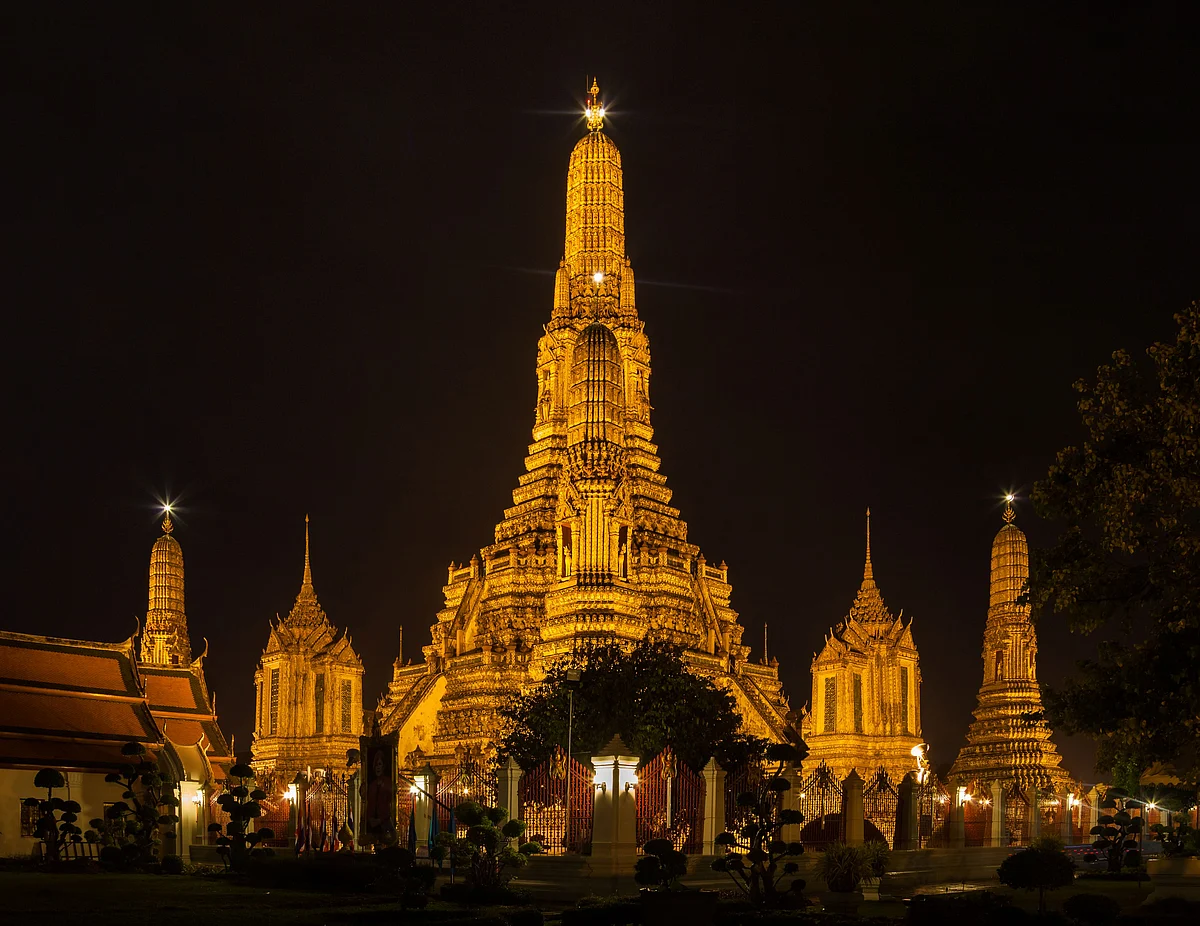
Watch Wat Arun wake up as you start your journey on the Thonburi side of the Chao Phraya River before sunrise. Its tall tower is studded with tens of thousands of pieces of Chinese porcelain. As the sky lightens, the mosaic catches the shifting colourscape, creating a vivid display of colour. Aruna is named after the Hindu god of dawn, and legend has it that King Taksin arrived here at sunrise in 1768 when his new capital was being built. The name has stuck to the temple built on the site of the older Wat Chaeng.
Cross back towards Banglamphu to witness Wat Bowon Niwet, the royal monastery where every king of the Chakri dynasty has spent time as a monk. Listen to the soft morning chants here, which are not very crowded at this hour of the day. The monks' voices carry through the T-shaped hall, in front of the Buddha image cast during the Sukhothai period.

Wat Arun
Address: 158 Thanon Wang Doem, Wat Arun, Bangkok Yai
Timings: 8 AM – 6 PM
Entry: 200 THB (free for Thai nationals with ID)
Wat Bowon Niwet
Address: 248 Phra Sumen Road, Banglamphu
Timings 8 AM - 5 PM
Entry: Free
A Quiet Room To Contemplate At Wat Mahathat
Between the dawn temples closing their quiet hours and the Grand Palace opening its gates, there is some time to spare. Wat Mahathat makes an ideal stop. This is one of the oldest temples in Bangkok, located between the Grand Palace and the National Museum. It predates the city itself and is a major centre of the country's largest monastic order, along with a working Vipassana meditation centre. You can sit in on a session, even without prior experience.
Address: 3 Maharat Road, Rattanakosin
Timings: 8 AM – 5 PM; meditation sessions from 7 AM
Entry: Free, donations are accepted
Time For The Grand Palace Or Wat Phra Kaew
Wat Phra Kaew houses the Emerald Buddha, carved from a single block of jade; the "emerald" in its name refers to the deep green colour of the stone, rather than the gemstone itself. The Buddha is dressed in seasonal robes, changed by the king three times a year, a tradition dating back to the reign of King Rama I. The surrounding cloister carries mural panels depicting scenes from the Ramakien (the Thai version of the Ramayana). If you arrive right at the opening, you will be able to explore the temple before it gets too crowded.
Address: Na Phra Lan Road, Phra Nakhon
Timings: 8:30 AM - 3:30 PM
Entry: 500 THB
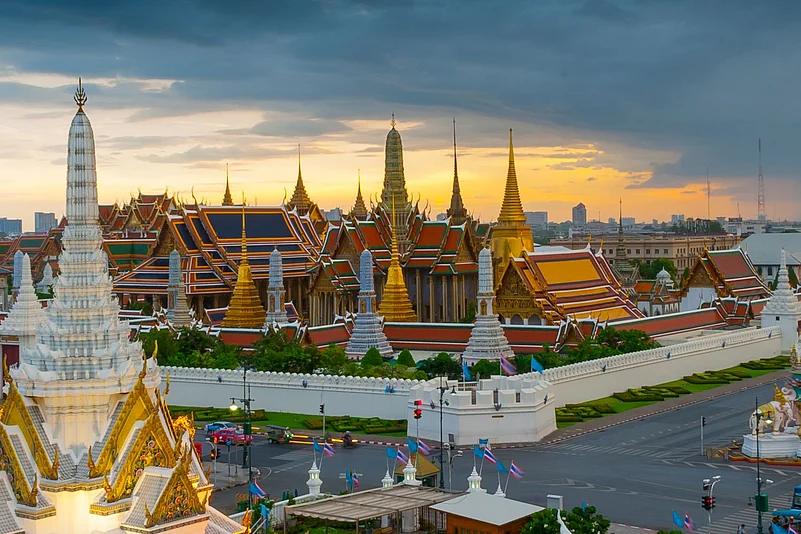
Marvel At The Reclining Buddha Of Wat Pho
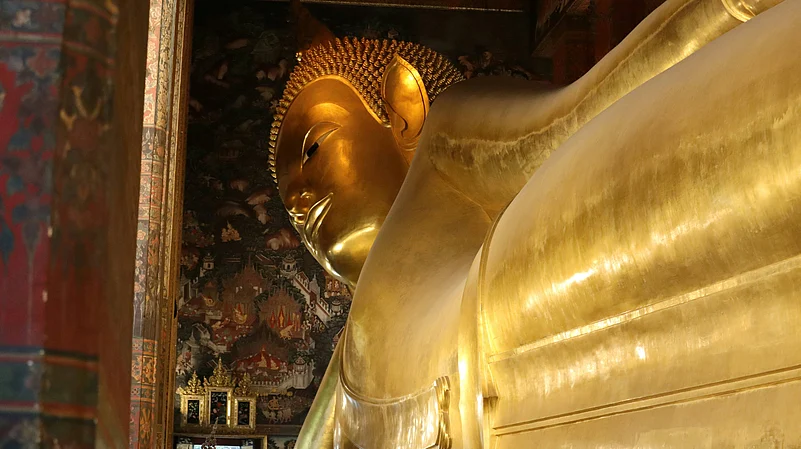
A fifteen-minute walk from the Grand Palace will lead you to Wat Pho, another of Bangkok's oldest and largest temple complexes. This was established before the city itself was expanded under Rama I. Here the 46-metre reclining Buddha dominates the hall, its feet inlaid with 108 mother-of-pearl designs. This is widely regarded as the country's first public education centre. Its stone inscriptions on medicine and astrology are recognised by UNESCO, and it is home to one of Thailand’s leading traditional Thai massage schools.
Address: 2 Sanam Chai Road, Phra Nakhon
Timings: 8:00 AM - 6:30 PM
Entry: 300 THB
Spend The Noon Where Everyone Walks Past
Many itineraries cover the river temples but do not make it further into the city. However, consider visiting two other temples: Wat Suthat and Wat Ratchanatdaram.
Wat Suthat, founded by Rama I in 1807, boasts one of the tallest main halls in Bangkok and a Sukhothai-period Buddha image relocated here when the capital shifted. On the front stands the Giant Swing — a 21-metre red teak structure once used in a Brahmin ceremony, where participants swung to catch bags of gold coins, a tradition discontinued in 1932.
A short ride from there is the Loha Prasat, or Metal Castle, of Wat Ratchanatdaram, built in 1846 by Rama III. This is the last intact building of its kind on Earth. Thirty-seven black metal spires rise across three tiers, each representing one of the thirty-seven virtues on the path to enlightenment. It sits directly across from the Golden Mount, giving you a preview of your late-afternoon climb.
Wat Suthat
Address: 146 Bamrung Mueang Road, Phra Nakhon
Timings: 8:30 AM - 8:00 PM
Entry: 100 THB
Wat Ratchanatdaram (Loha Prasat)
Address: 2 Maha Chai Road, Phra Nakhon
Timings: 8 AM – 5 PM
Entry: Free, 20 THB donation customary
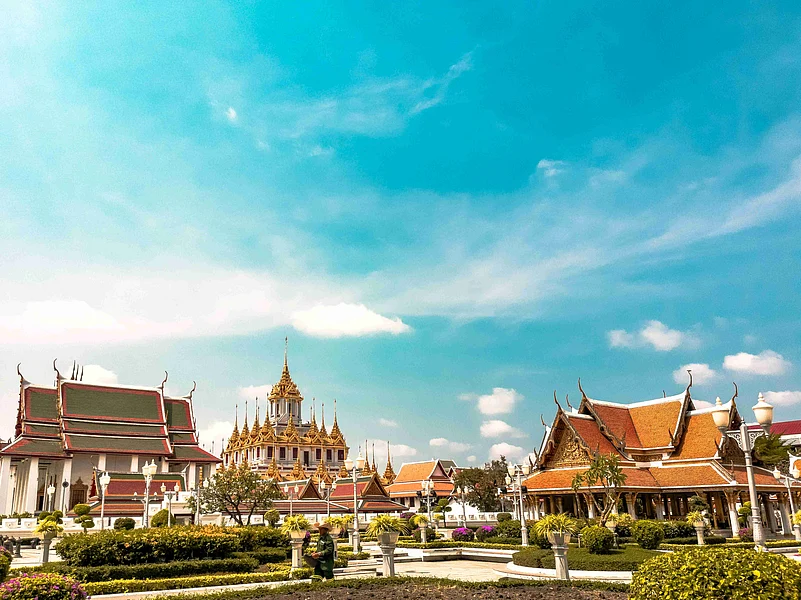
A Marble Retreat In The Afternoon
As the afternoon heat rises, spend some time at Wat Benchamabophit, or the Marble Temple. This was built in 1899 using imported Italian Carrara marble and was commissioned by Rama V. Fifty-two Buddha images from across Asia line its gallery, each shown in a different posture.
Follow it with a visit to the air-conditioned Wat Traimit, specifically built to house the world's largest solid gold Buddha statue. At 5.5 tonnes, it was valued at around USD 250 million.
Wat Benchamabophit
Address: 69 Rama V Road, Dusit
Timings: 8 AM – 6 PM
Entry: 100 THB
Wat Traimit:
Address: Chinatown
Timings: 8:30 AM – 5 PM
Entry: 100 THB
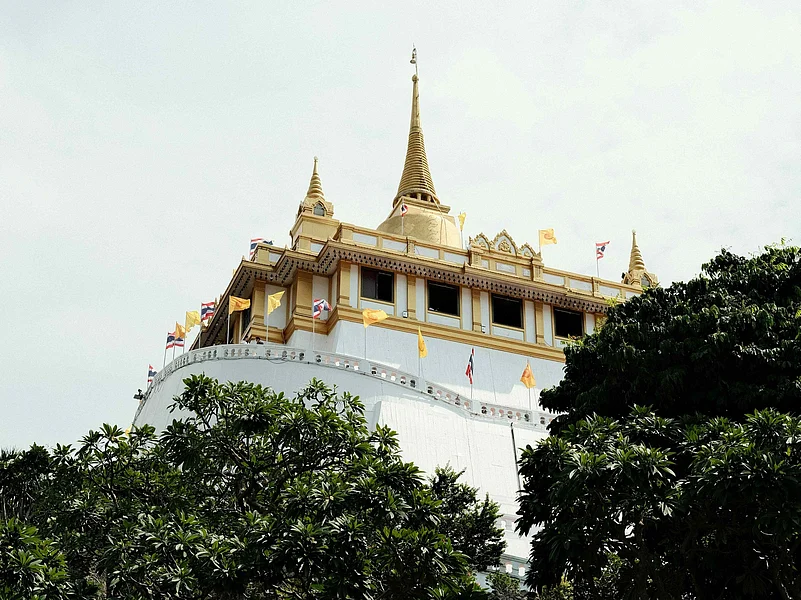
Climb The Golden Mount At Sunset
Wat Saket, or the Golden Mount, offers 300 steps to climb and a sunset to behold. The staircase winds past small bells, trees, and waterfalls as the sounds of traffic gradually fade. The climb ends in a panoramic view of the evening skyline.
Wat Saket
Address: 344 Chakkraphatdi Phong Road
Timings: 7:00 AM to 7:00 PM
Entry: 100 THB
A Final Journey To The River
If Wat Arun was a silhouette in the morning, it becomes illuminated after dusk in the evening. You can choose to end your day here, to catch the glow of the evening sun. Seeing this twice serves as a reminder that the temples are seldom the same, they change with the light and the hour of the day.
FAQs
Q1. What is the best time to visit Bangkok's temples?
The best time is early morning, when temperatures are cooler and popular temples like Wat Arun and Wat Phra Kaew are less crowded. Sunset is ideal for visiting Wat Saket (Golden Mount) and returning to Wat Arun for its illuminated evening views.
Q2. Can you visit Bangkok's major temples in one day?
Yes. With an early start and a well-planned route, it is possible to visit Bangkok's key temples in a single day. Many of the major sites are located within the historic Rattanakosin district and are connected by ferries, tuk-tuks, or short taxi rides.
Q3. What should I wear when visiting Bangkok's temples?
Visitors should dress modestly by covering their shoulders and knees. Avoid sleeveless tops, short skirts, shorts, and revealing clothing. Comfortable shoes that are easy to remove are recommended, as footwear must be taken off before entering temple buildings.
Q4. Which Bangkok temple is famous for the Emerald Buddha?
Wat Phra Kaew, located within the Grand Palace complex, houses the Emerald Buddha, Thailand's most revered Buddha image. The statue's ceremonial robes are changed by the King of Thailand three times a year to mark the changing seasons.
Q5. Which Bangkok temple offers the best sunset views?
Wat Saket (the Golden Mount) is one of the city's best sunset viewpoints. After climbing around 300 steps, visitors are rewarded with panoramic views of Bangkok's skyline. Wat Arun is another excellent choice after dusk, when its porcelain-covered spires are beautifully illuminated.