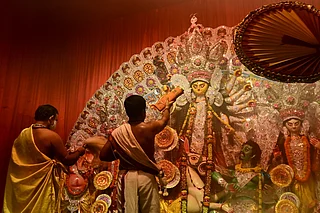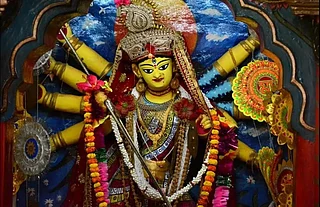


As dusk settles over Kolkata on the night of Diwali, the city prepares to welcome a different manifestation of the Divine Mother. Earthen lamps illuminate balconies, neighbourhoods fill with the fragrance of incense, and elaborately crafted idols of Maa Kali take their place in community pandals and ancestral homes. While much of India turns to Goddess Lakshmi for blessings of prosperity, Bengal observes the occasion through the worship of Kali, the formidable goddess associated with strength, protection, and the destruction of evil. Known as Shyama Puja, Kali Puja is among West Bengal’s most significant religious celebrations, with Kolkata at its heart. Rooted in Shakta traditions, the festival brings together centuries-old rituals, family customs, temple worship, and community celebrations, offering an insight into Bengal’s distinctive relationship with its mother goddess.
Why Kali Puja Holds A Special Place In Bengal


The prominence of Kali Puja in Bengal is closely connected to the region’s long-standing association with Shaktism, a Hindu tradition that regards the Divine Feminine, or Shakti, as the supreme cosmic power. Goddess Kali represents this energy in its most formidable form. Her fierce appearance, dark complexion, garland of skulls, and weapons are associated with the destruction of ignorance, ego, and malevolent forces. Yet, for her devotees, she is equally Maa, a protective mother who watches over her children and offers refuge during difficult times.
Kali Puja is observed on Kartik Amavasya, the new moon night of the Hindu lunar month of Kartik, which generally coincides with Diwali. Unlike the evening Lakshmi Puja commonly observed in several other parts of India, the principal worship of Kali takes place at night, often around Nishita Kaal, the auspicious midnight period. While Goddess Kali remains the central deity, many Bengali households also observe Lakshmi Puja and other Diwali traditions according to their family customs.
From Tantric Traditions To Community Celebrations
Kali worship has deep historical roots in eastern India, particularly Bengal, where Shakta and Tantric practices developed over several centuries. The goddess was traditionally worshipped by spiritual practitioners through specialised rituals, mantras, and forms of meditation. Her association with cremation grounds and the transformative aspects of existence also made her an important figure in Tantric traditions.
Kali Puja gradually became more prominent as a public festival in Bengal during the 18th century. Raja Krishnachandra of Nadia is widely associated with popularising the public observance of Kali Puja on Diwali night. Over time, her worship spread across households and neighbourhoods, becoming an important part of Bengal's religious calendar.
The spiritual influence of Sri Ramakrishna Paramahamsa, who was deeply devoted to Goddess Kali at Dakshineswar, further shaped how devotees related to the goddess. His teachings emphasised her maternal and compassionate nature, allowing people to look beyond her fearsome iconography and connect with her as a loving mother.
The Midnight Rituals Of Maa Kali

The central observance of Kali Puja begins after sunset and continues into the night. Homes, temples, and community pandals prepare for the worship by installing idols of the goddess, arranging flowers, and decorating the prayer spaces with lamps and lights. Priests conduct rituals involving mantras, offerings, and devotional prayers, with midnight considered particularly auspicious for the main puja.

Red hibiscus flowers hold a special place in Kali worship, owing to their association with the goddess. Devotees also offer fruits, sweets, rice, and other food items, with certain temples and households following specific Shakta traditions that may include fish or meat offerings. Practices differ across communities, and animal sacrifice, historically associated with some forms of worship, is not followed everywhere.
After the rituals, devotees receive prasad, with food offerings varying according to local and family traditions. Some households also observe night-long prayers and meditation. The festival concludes with the immersion of Kali idols in rivers or other designated water bodies, marking the end of the worship.
Exploring Kolkata's Famous Kali Puja Pandals And Temples
Kolkata's Kali Puja celebrations extend from neighbourhood pandals to some of its most revered religious institutions. Community organisers create elaborate installations, with idols representing different manifestations of the goddess. Some pandals follow traditional iconography, while others experiment with artistic interpretations, making pandal-hopping an important part of the celebrations.
The city's two best-known centres of Kali worship are Kalighat Kali Temple and Dakshineswar Kali Temple. Kalighat, regarded as one of the 51 Shakti Peethas in Hindu tradition, attracts devotees throughout the year. Its presiding deity, Dakshina Kali, is worshipped as a powerful manifestation of the Divine Mother. The temple is particularly significant during Amavasya, when devotees gather to offer prayers.
Further north, Dakshineswar Kali Temple is closely associated with Rani Rashmoni, who established the temple complex in 1855. The presiding deity, Bhavatarini Kali, is also closely connected with the spiritual legacy of Sri Ramakrishna, who served as a priest at the temple. During Kali Puja, the temple draws large numbers of devotees who come to participate in the special worship and seek the goddess's blessings.
Beyond these prominent temples, neighbourhoods such as Chetla, Kalighat, and Harish Chatterjee Street are known for their community celebrations. Several clubs commission distinctive Kali idols, including representations of Chamunda Kali, Dakshina Kali, and other manifestations of the goddess. Barasat, Naihati, and Krishnanagar, too, are known for their large-scale Kali Puja celebrations.
Bonedi Barir Kali Puja: A Glimpse Into Bengal's Ancestral Traditions

While public pandals attract large crowds, some of Kolkata's most fascinating Kali Puja traditions are preserved within its old aristocratic households, popularly known as bonedi baris. Several families have maintained their ancestral worship for generations, retaining distinctive rituals, family deities, and traditional architectural settings.
Chorbagan Mitra Bari on Muktaram Babu Street, for instance, has been associated with Kali Puja for more than three centuries. The goddess is worshipped as Shyama, and the family is also known for its distinctive Mithai Kali tradition, featuring an idol accompanied by an elaborate arrangement of sweets.
At Pal Bari on S.N. Banerjee Road, Kali Puja dates back to 1785, with worship conducted according to Shakta traditions. Tarak Pramanik's household, meanwhile, preserves a century-old brass chalchitra, an ornamental backdrop placed behind the idol. Pramanik Bari on Tarak Pramanik Road has a history of more than four centuries of Kali worship, with the idol traditionally prepared within the family premises.
These household celebrations offer an intimate understanding of how religious practices have been carried across generations. From traditional thakurdalans and inherited idols to specific offerings and ceremonial lamps, each family preserves customs that contribute to Kolkata's diverse Kali Puja heritage.
Bhoot Chaturdashi: The Bengali Traditions Before Kali Puja

The celebrations begin a day before Kali Puja with Bhoot Chaturdashi, observed on the 14th lunar day of the dark fortnight. One of its best-known customs is choddoprodeep, the lighting of 14 earthen lamps in and around the house. Traditionally, these lamps are associated with remembering ancestors and warding off negative influences.
Another distinctive practice is preparing choddo shaak, a dish made using 14 varieties of leafy greens. The selection varies according to seasonal availability and family traditions. Together, these customs reflect Bengal's connection with ancestral remembrance, household rituals, and seasonal food practices.
As the lamps burn through the night and the city gathers around its many forms of Maa Kali, the festival becomes an expression of Bengal's enduring devotion to the Divine Mother. For visitors, it offers an opportunity to understand a regional celebration through its temples, ancestral homes, neighbourhood pandals, and family customs. For devotees, however, the significance runs deeper: Kali is the mother who confronts darkness, protects her children, and reminds them that strength and compassion can exist in the same divine form.
FAQs
1. When is Kali Puja 2026 celebrated?
Kali Puja 2026 falls on Sunday, November 8, coinciding with Diwali.
2. Why is Kali Puja celebrated on Diwali in Bengal?
Kali Puja is observed on Kartik Amavasya, the same new moon night as Diwali, to worship Goddess Kali as the destroyer of evil and protector of devotees.
3. What is the significance of midnight worship during Kali Puja?
The main rituals are traditionally performed during Nishita Kaal, the auspicious midnight period associated with the worship of Goddess Kali.
4. Which are the most famous Kali temples in Kolkata?
Kalighat Kali Temple and Dakshineswar Kali Temple are among the city's most prominent centres of Kali worship.
5. What is Bhoot Chaturdashi in Bengal?
Observed a day before Kali Puja, Bhoot Chaturdashi involves lighting 14 earthen lamps and preparing choddo shaak, a dish made with 14 varieties of leafy greens.