


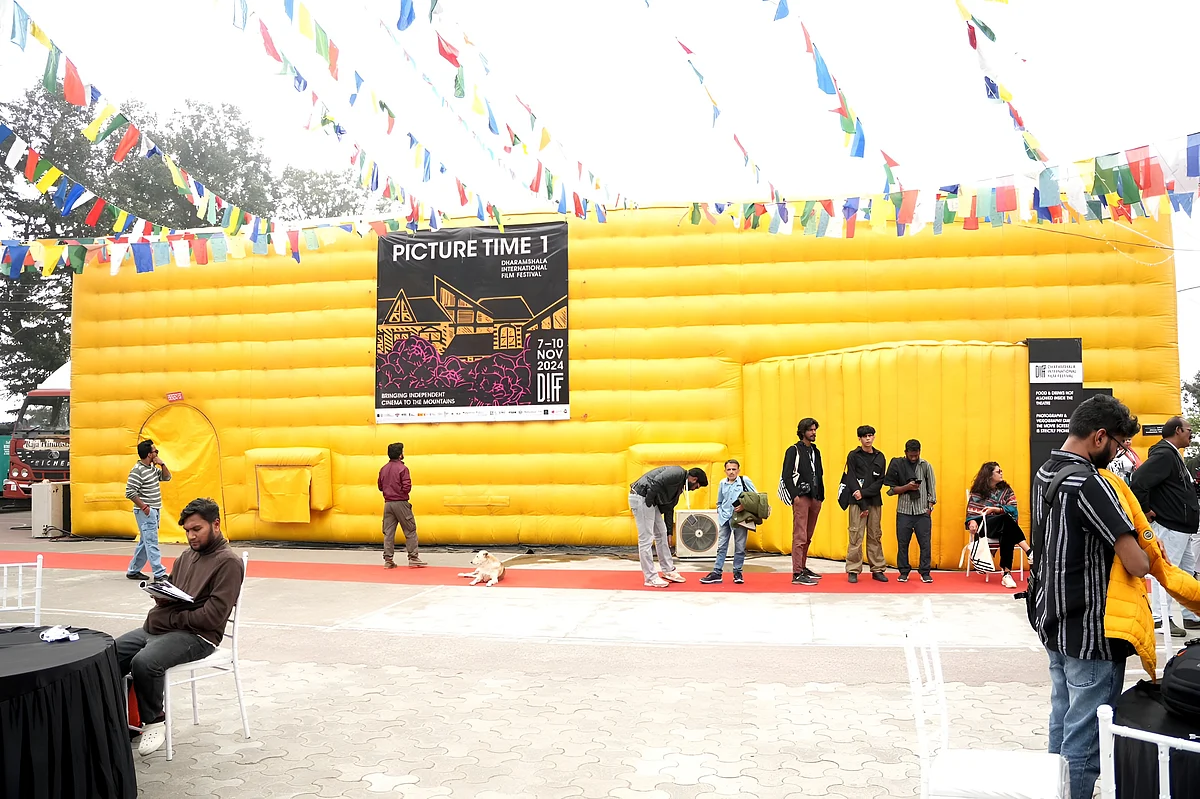
If you have ever attended the Dharamshala International Film Festival (DIFF), you will know that watching a film here is about more than what appears on the screen. There is something special about sitting in a room full of people, away from the usual distractions, and watching a film unfold against the backdrop of the mountains.
But getting a cinema to work in the hills is not as simple as setting up a projector and arranging a few chairs. The roads are difficult, the weather can be unpredictable, and the infrastructure required for a professional screening is not always available. Yet, every year, DIFF brings filmmakers and audiences together in Dharamshala, with technology playing an important role in making it happen.
Much of this work happens behind the scenes. PictureTime, founded by Sushil Chaudhary, has been bringing portable inflatable cinemas to the festival since 2018. The idea is simple and straightforward: instead of waiting for a conventional theatre to come up in a remote location, take the theatre to the people.
As DIFF returns for its 15th anniversary edition from October 29 to November 1, 2026, at the Tibetan Children's Village in Upper Dharamshala, Outlook Traveller spoke to Chaudhary, Founder and CEO of PictureTime, about the technology behind these portable cinemas, the challenges of operating in the mountains, and why access to the big screen still matters.
Taking The Cinema To The People

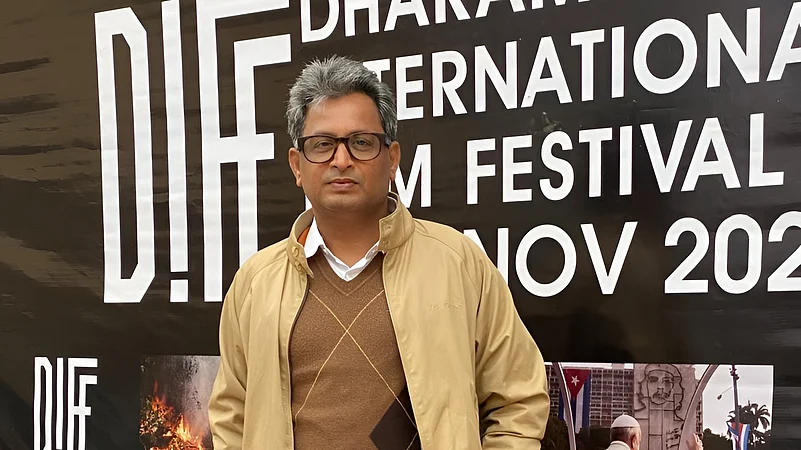
India has a deep love for films, but access to a cinema has not always been equal. According to Chaudhary, India once had around 21,000 cinema screens, a number that has since fallen to approximately 9,500. Much of this decline has affected smaller towns, where traditional single-screen theatres have shut down.
"The problem was never a lack of love for films; it was a lack of infrastructure," he said.
Building a conventional cinema requires considerable investment, and the costs can be difficult to recover in smaller-population areas. Transporting construction material and maintaining the necessary facilities in remote regions can also be challenging.
PictureTime's approach is to rethink the traditional cinema model. Inspired by India's travelling tambu talkies, the company developed portable inflatable theatres equipped with digital projection, sound systems and seating.
"A child or family in a Himalayan village, or in India's remote interiors, deserves the same cinematic experience as someone in Mumbai," Chaudhary noted. The aim is to create a space where people can experience films on a large screen without having to travel to another town.
How Does An Inflatable Cinema Work?
The first thing to understand about an inflatable cinema is that it is much more than a temporary enclosure with a screen inside. PictureTime has developed a proprietary, patented structure designed to accommodate the equipment and facilities required for a professional cinema experience.
"We did our market research, designed the product, and now this product is patented," Chaudhary explained.
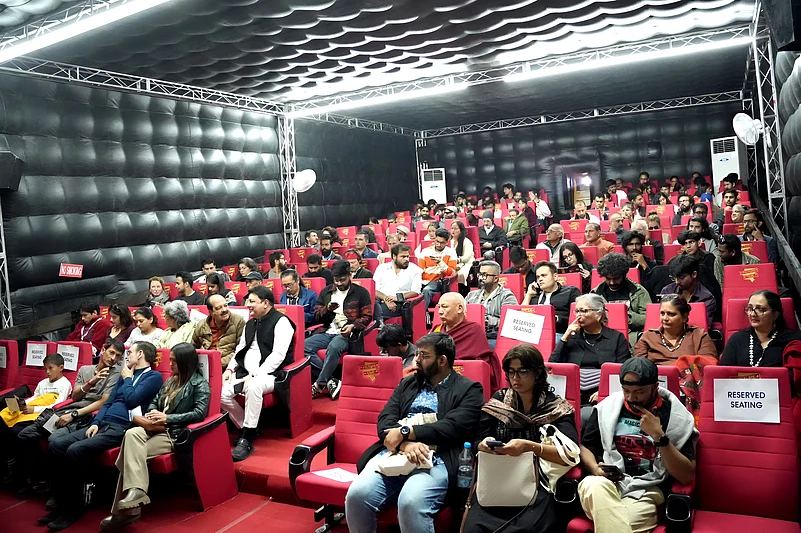
The enclosure, which the company calls the AEI, is designed to meet the relevant e-cinema or BCI requirements. Inside, audiences find a raised platform with seating, an air-conditioned environment and a Dolby surround sound system. The structure is portable and can be installed at a location in a few hours, rather than the weeks or months that conventional construction might require.
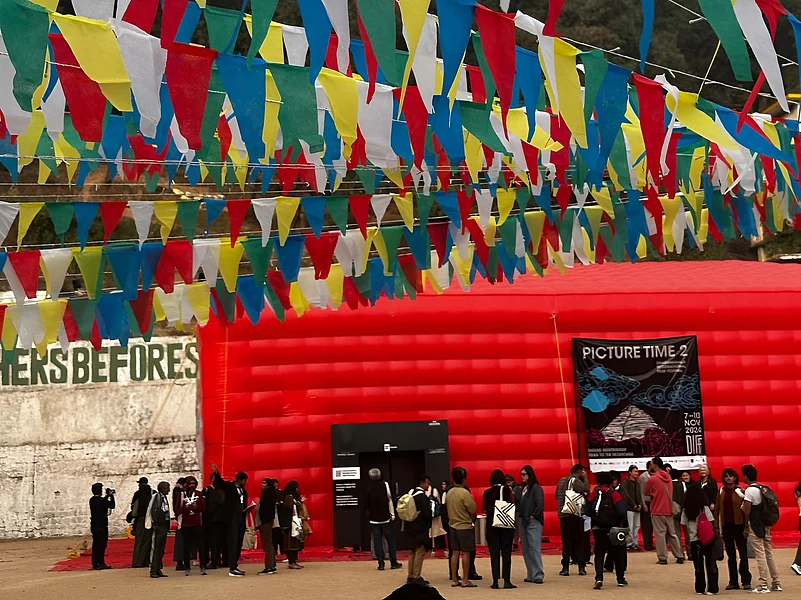
A standard PictureTime theatre can accommodate around 140 to 200 people, although the size can be customised depending on the requirements of a location or event.
The real advantage is flexibility. A cinema can be set up at a film festival, in a small town or in a remote region where constructing a permanent building may not be practical. Once installed, the aim is to make the experience feel like a regular theatre rather than a temporary arrangement.
The Challenges Of Screening Films In The Mountains
PictureTime first came to DIFF in 2018. The task was to deliver professional digital cinema screenings in a mountainous setting, where even transporting equipment required careful planning.
"Moving the equipment was only part of it. We had to build a full cinema ecosystem where none existed," Chaudhary recalled.
Mountain roads, limited unloading space, uneven ground, unpredictable weather and access to electricity all had to be considered. The team also needed to meet the technical requirements of independent filmmakers, whose films often arrive as Digital Cinema Packages, or DCPs. These files require compatible projection equipment and reliable playback systems.
Over time, the company has developed a more systematic approach to these challenges. Advance site surveys, detailed logistics planning, improved equipment packing, weather management and standardised installation procedures now form part of the process.
Currently, PictureTime operates three inflatable theatres at DIFF, alongside additional screens and audiovisual setups. "In 2018, we were proving the concept works. Today, we are showing it can be repeated," Chaudhary shared.
Built For Extreme Weather
Operating a cinema in the Himalayas presents a different set of engineering challenges from running one inside a shopping mall. The equipment and structure must withstand conditions that can change considerably over the course of a day.
Chaudhary notes that PictureTime's proprietary enclosure uses weather-resistant materials and an inflatable structural frame. The theatres are designed to operate at temperatures as low as -28 degrees Celsius. The company has used this technology to operate what it describes as the world's highest theatre in Leh, at an altitude of approximately 12,000 feet.
Before every deployment, the team assesses wind conditions, ground stability, temperature, drainage and electrical safety. The structure is operated within assessed safety limits, rather than on the assumption that it can withstand every possible weather condition.
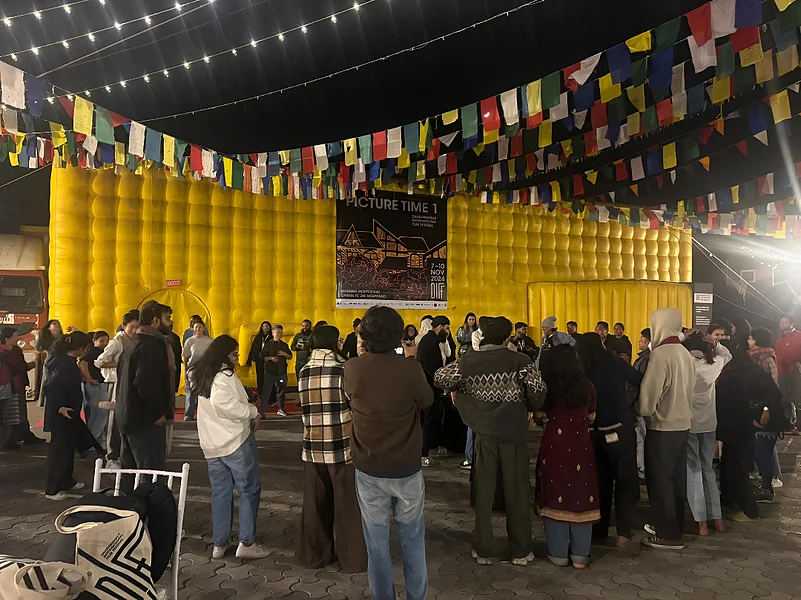
Climate control is another important consideration. Temperature and humidity can affect both the enclosure and the equipment, requiring the team to monitor conditions and recalibrate systems when necessary.
Picture and sound quality are equally important. PictureTime uses 2K DCI-compliant projection where required, alongside Dolby 5.1 or 7.1 surround sound. The positioning of speakers, the shape of the enclosure and the acoustics are all considered to ensure clear dialogue and balanced sound.
For Chaudhary, the ultimate goal is to ensure that audiences forget they are sitting inside a portable structure in the mountains and focus entirely on the film.
Protecting Films And Delivering New Releases
A portable cinema must also meet the security requirements expected of a professional screening venue. Films arrive as encrypted DCPs, and each screening requires a digital key linked to the relevant server and an authorised time window.
These keys can be loaded in advance, allowing films to be screened without a continuous internet connection. This is particularly useful in remote locations, where connectivity may be unreliable. Staff also monitor the screening environment to discourage unauthorised recording.
The system allows PictureTime to work with distributors and screen new releases and festival premieres. At DIFF, this includes films that have won recognition at international festivals such as Cannes and Sundance.
Can This Model Work Across India?
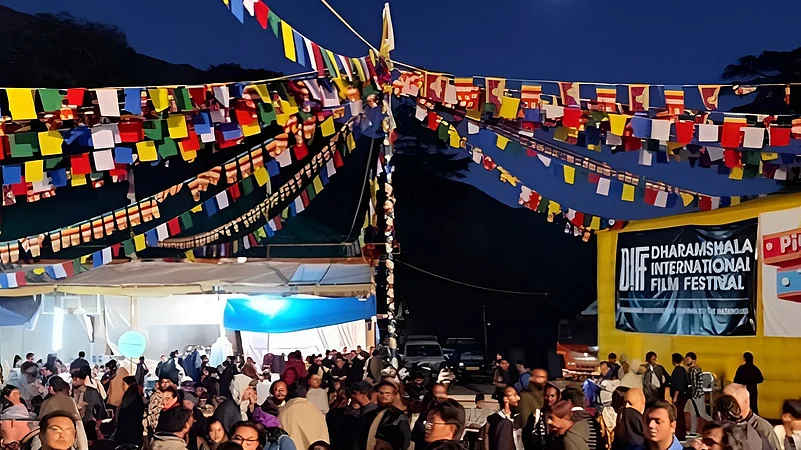
PictureTime has operated in more than 650 locations across more than 18 states. Its recent theatre in Chatra, Jharkhand, is another example of how the model can bring cinema to communities outside major urban centres.
Scaling up, however, comes with challenges. New sites require capital investment, suitable land and dependable electricity. The company is working with distribution partners to make operations more viable, while keeping its costs lower than those associated with conventional multiplexes.
The commercial opportunity lies in reaching towns where a permanent multiplex may not be financially feasible, but where there is an audience for films. Lower infrastructure costs, affordable ticket prices and access to new releases can help make these theatres sustainable.
PictureTime is also exploring ways to reduce energy requirements through more efficient equipment, solar power and battery-based solutions. The broader goal is to make mobile cinemas increasingly practical in locations where reliable electricity remains a challenge.
A Cinema Closer To Home
PictureTime's longer-term vision is to build a national network of FamilyPlex sites, allowing more people to experience films on a big screen without travelling long distances. Chaudhary hopes that digital distribution will eventually make it possible for a new film to reach a remote screen on its release day, much as it would in a city.
At DIFF 2026, the inflatable theatres will once again be part of the infrastructure that brings filmmakers and audiences together in Dharamshala. The equipment, logistics and technical planning may be complicated, but the purpose behind it is easy to understand.
The Information
Event Dates: October 29 – November 1, 2026 (with an online program running November 2–9, 2026).
Venue: Tibetan Children's Village (TCV), Upper Dharamshala, McLeod Ganj, Himachal Pradesh.
Timings: Opens at 9:00 AM daily; first screenings start at 10:00 AM and last screenings end around 9:00 PM.
Tickets & Passes: Tickets for DIFF 2026 are currently sold out. Follow the official DIFF website and its social media channels for any updates on ticket availability and festival announcements.
Website: diff.co.in
FAQs
1. What is the Dharamshala International Film Festival (DIFF) 2026?
The Dharamshala International Film Festival returns for its 15th anniversary edition from October 29 to November 1, 2026, at the Tibetan Children’s Village in Upper Dharamshala.
2. What is PictureTime?
PictureTime is a company founded by Sushil Chaudhary that develops portable inflatable cinemas designed to bring professional film screenings to locations where conventional cinema infrastructure may be difficult to establish.
3. How does an inflatable cinema work?
An inflatable cinema uses a portable enclosure equipped with digital projection, a sound system, seating and other facilities needed for film screenings. According to Chaudhary, PictureTime’s structures can be installed within a few hours, depending on site conditions and requirements.
4. How many people can a PictureTime inflatable cinema accommodate?
A standard PictureTime theatre can accommodate approximately 140 to 200 people, although the size can be customised for different locations and events.
5. What are the challenges of operating a cinema in the mountains?
Mountain cinemas must account for difficult road access, unpredictable weather, uneven ground, electricity supply, temperature fluctuations and the technical requirements of professional film screenings.