

Visiting places marked by conflict can make history feel less distant, because it is still visible in the landscape itself. In Croatia, the legacy of the 1991–1995 war is not confined to museums or textbooks; it appears in the built environment and, at times, in the gaps where destruction once occurred. What stands out is the contrast between restored spaces and the traces that remain. Cities such as Dubrovnik and Vukovar, both heavily damaged during the conflict, continue to reflect that past in different ways, even after reconstruction. Other sites—like the Vukovar water tower, nearby memorials, or the abandoned Yugoslav-era tunnels on islands such as Vis—bring that time into sharper focus.
Dubrovnik Old Town
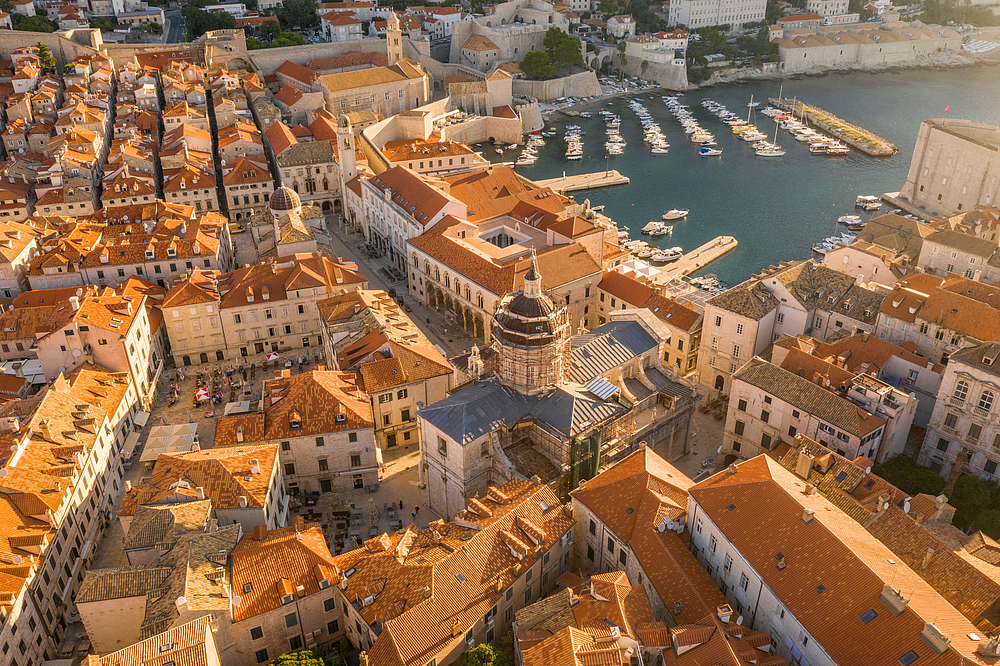
One of the most striking places to encounter the legacy of the war is the Old Town of Dubrovnik. Although it has been carefully restored, the effects of the 1991–1992 siege by the Yugoslav People’s Army are still visible if you look closely. Over two-thirds of the historic buildings were damaged during the conflict, and the restoration that followed has left subtle traces—new roof tiles that stand out in colour against older ones, and repaired stone façades that interrupt the uniformity of the streets. Walking along the City Walls or through the Stradun, these details become part of the experience of the place itself.
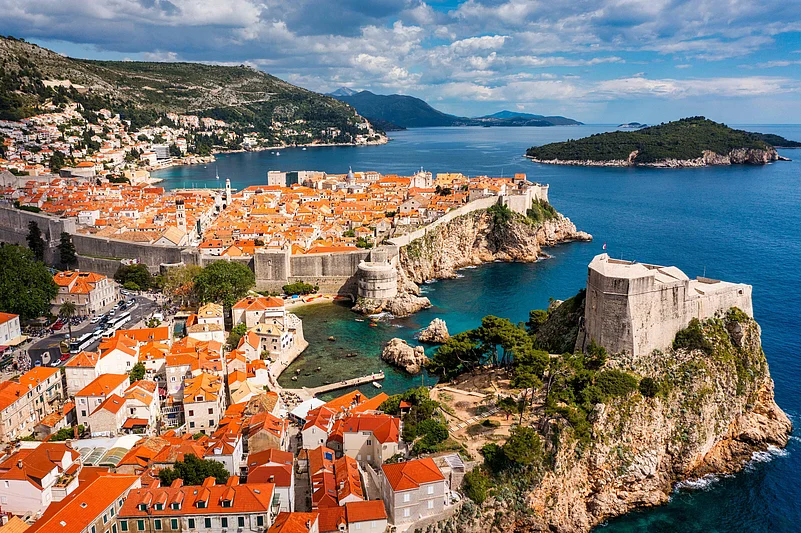

To get a clearer sense of what happened during the siege, there are a few places in the city that help fill in the context. War Photo Limited shows photographic work from the Yugoslav Wars and situates Dubrovnik’s experience within the wider conflict. A short walk away, the Memorial Room of the Defenders inside Sponza Palace remembers those who were killed during the 1991–1992 siege in a more direct and personal way. Above the city, Fort Imperial offers a different angle altogether; it was an active defensive position during the war and now contains a small museum that helps explain how the city was protected and what the fighting looked like from that vantage point.
Vukovar
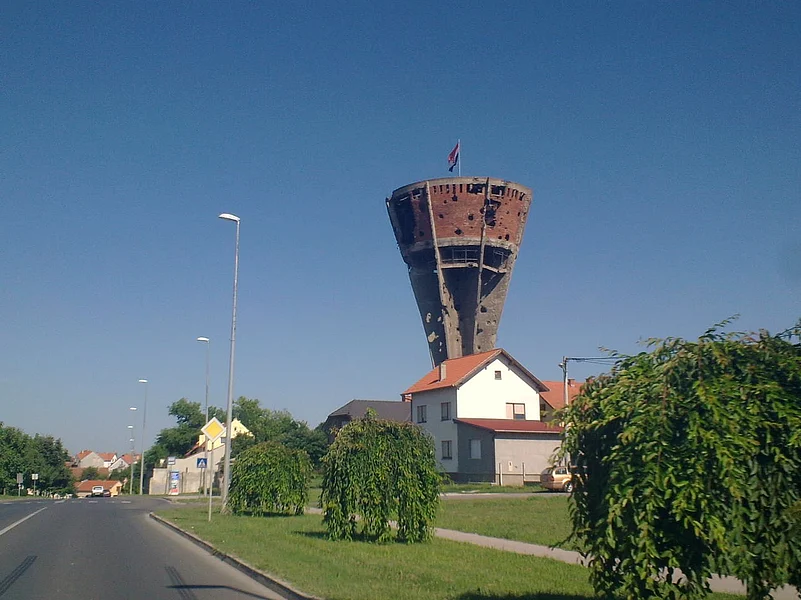
Another important place for understanding the war is Vukovar in Croatia. The 1991 siege left the city almost completely destroyed and that history is still hard to separate from what you see today. The Vukovar water tower, still left in its damaged state, stands out immediately—it was kept as it is on purpose, as a reminder of both the fighting and the endurance of the city. Not far away, the Memorial Cemetery of the Homeland War victims, with its long rows of white crosses, quietly reflects how many lives were lost.
Outside the centre, the Ovčara Memorial Centre marks a particularly painful site, where wounded soldiers and civilians were taken after the hospital and killed in 1991. Alongside the hospital memorial rooms, these places make Vukovar feel less like a fully “recovered” city and more like one where the memory of the siege still sits very close to the surface.
Karlovac (Turanj)
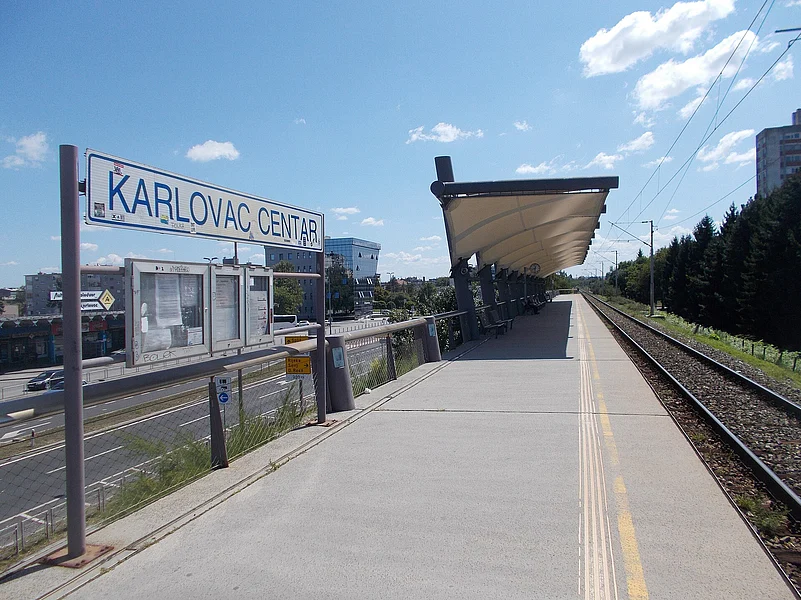
Insight into the war is also found at the Museum of the Homeland War in Karlovac, located in the Turanj suburb, which once marked a frontline during the conflict. The museum sits within a former barracks building known locally as “Hotel California,” which still bears visible damage from the fighting and has been preserved rather than fully restored. Outside, there is a large open-air display of military vehicles and equipment—tanks, armoured personnel carriers, and artillery—that helps convey how intense the fighting around the city once was.
Inside the building, the exhibition brings together maps, photographs, and multimedia material that explain the defence of Karlovac and its wider strategic importance during the Croatian War of Independence. Rather than focusing only on objects, it also situates the city within the broader conflict in the Kordun region. Taken together, the site functions as both a memorial and an educational space, grounding the history of the war in the specific landscape where much of the fighting actually took place.
Abandoned Naval Tunnels (Vis Island)
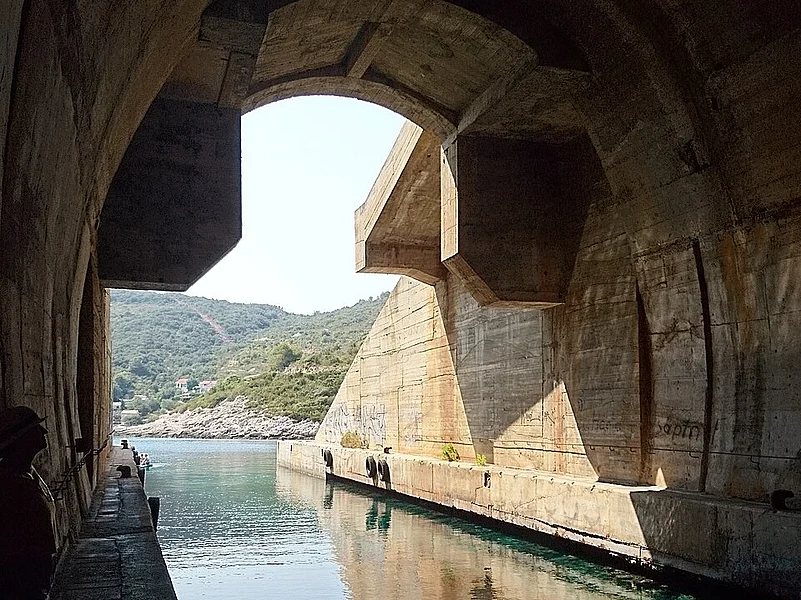
A striking example of how the military landscape of the war extends beyond the mainland can be found on Vis. For much of the Yugoslav period, the island was heavily restricted and closed to foreigners, which means its military infrastructure remains unusually well preserved. Scattered across the island are more than thirty abandoned Yugoslav bases, including the submarine shelter known as Tunnel “Jastog” (Lobster) near Parja Bay, originally built to conceal naval vessels, and the Stupišće missile complex near Komiža, with its network of bunkers and reinforced concrete structures overlooking the sea.
Most of these bases were built in the final years of Yugoslavia, but they were simply left behind when the army pulled out in the early 1990s. Nothing was really repurposed afterwards, so they sit in the landscape in a kind of suspended state. Places like the Vela Glava command centre, the Stupišće missile site, and the positions near Cape Cerklje are still there, slowly decaying, partly hidden by vegetation now. Rather than feeling like formal heritage sites, they come across more as leftover infrastructure from a system that stopped existing almost overnight.
Plitvice Lakes Area

The Plitvice area is tied to the early stages of the war because of the “Bloody Easter” clash on March 31, 1991, in Plitvice Lakes National Park. It is often marked as one of the first armed confrontations, and the death of Josip Jović is still remembered in local memorials.
Not far from the park is the Željava Underground Airbase, a vast abandoned military complex near the border with Bosnia and Herzegovina. It is mostly empty now, but the scale of it is still visible from the outside. In villages such as Ličko Petrovo Selo, there are signs of damage alongside rebuilt houses, though nothing is really uniform. Small roadside memorials appear along the main routes, often easy to miss unless you are looking for them.
Taken together, the area sits between tourist landscape and conflict history, without fully separating the two.
FAQs
What was the Croatian War of Independence?
It was a conflict from 1991 to 1995 following Croatia’s move to independence from Yugoslavia.
Why is Vukovar important in the war?
Vukovar endured a prolonged siege in 1991 and became a key symbol of destruction and resistance.
Can you still see war damage in Croatia today?
Yes, in some places like Vukovar and former frontline areas, traces of damage and memorials remain visible.
What is the significance of Dubrovnik in the war?
Dubrovnik was heavily shelled during the 1991–1992 siege, with some damage still visible despite restoration.
What is the Željava airbase?
It is an abandoned Yugoslav military underground airbase near Plitvice Lakes, now a remnant of Cold War infrastructure.
Why are memorial sites important in Croatia?
They preserve the memory of the conflict and help explain the impact of the war on local communities.
What is meant by “war landscape”?
It refers to places where the physical environment still reflects traces of conflict, such as ruins, memorials, or abandoned military sites.