Croatia’s forgotten “nowhere” railways are largely relics of the Habsburg Monarchy, the Second World War, or infrastructure from the Yugoslav era that was damaged during the conflicts of the 1990s and never rebuilt due to limited funding and fragmented post-war borders. Abandoned lines—such as sections of the former Dalmatian Railway—now remain as quiet walking paths, disused tunnels, and crumbling bridges slowly being reclaimed by vegetation.
In Croatia, many “forgotten” railway lines have found a new purpose. In cities like Zagreb, Rijeka, Osijek and Vinkovci, old rail corridors are being reused as pedestrian routes and green urban links, quietly reshaping how people move through the city.
Head towards the Adriatic coast, especially around Dubrovnik, and the story changes. Here, some narrow-gauge lines have been left to decay, with only fragments remaining—short stretches of track, embankments and scattered ruins from the 1930s, fading back into the landscape.

The Parenzana Line, Istria
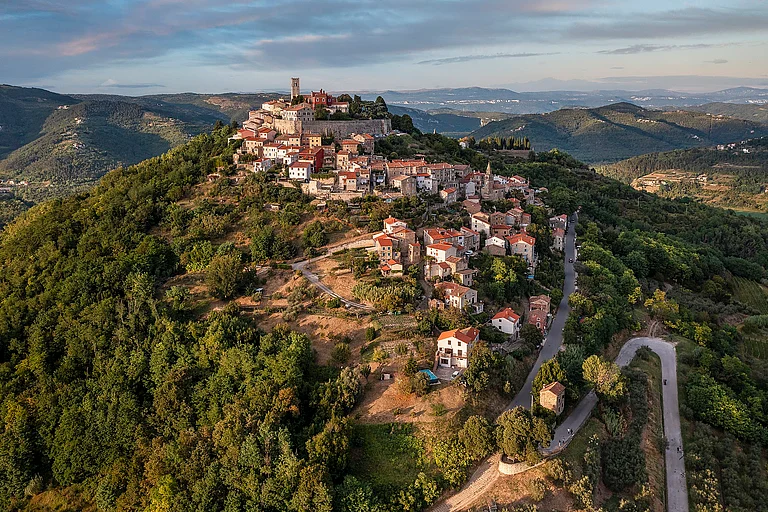
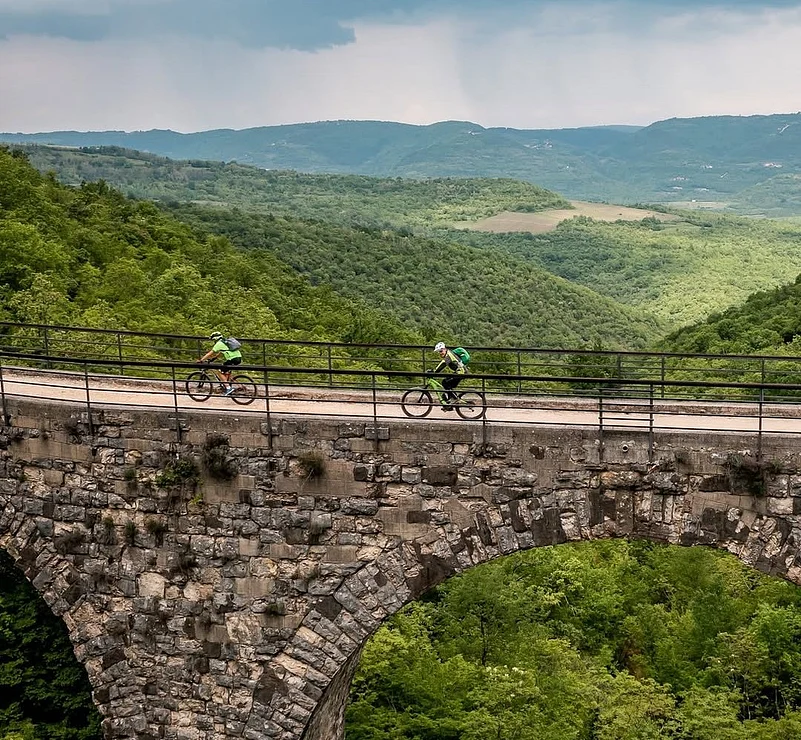
The Parenzana Line in Istria is one of the most compelling ways to trace a forgotten railway back to life. Once known as the “Istrian Railway,” this narrow-gauge line connected Trieste and Poreč between 1902 and 1935. Today, it has been reborn as the Parenzana Trail—a 123 km cycling and hiking route that threads through Croatia, Slovenia and Italy.
Follow it and the old railway reveals itself in fragments—cool tunnels carved through stone, weathered viaducts over quiet valleys, and long stretches running through olive groves and vineyards. It threads through some 33 Istrian towns, climbing inland to its highest point near Grožnjan at 293 metres.
Traveller Tips
The route is well signposted and generally easy to follow, with added infrastructure such as safety fencing, bike racks, repair points and resting benches.
Expect dramatic moments on high viaducts, especially around Oprtalj, where the views open out across the Istrian hills.
Best time to go is spring or autumn, when temperatures are milder and the trail is more comfortable for cycling or walking.
Carry a bike light or torch—many tunnels are lit, but not all sections are evenly illuminated.
The Grožnjan to Livade stretch is widely regarded as the most scenic, with a dense run of tunnels and viaducts.
The Livade to Motovun section is shorter and quieter, passing through vineyards and gentle inland landscapes.
Plan time for stops in small villages along the way, known for truffles, olive oil and local wine.
The "Drunk" Railway, Kršan/Plomin
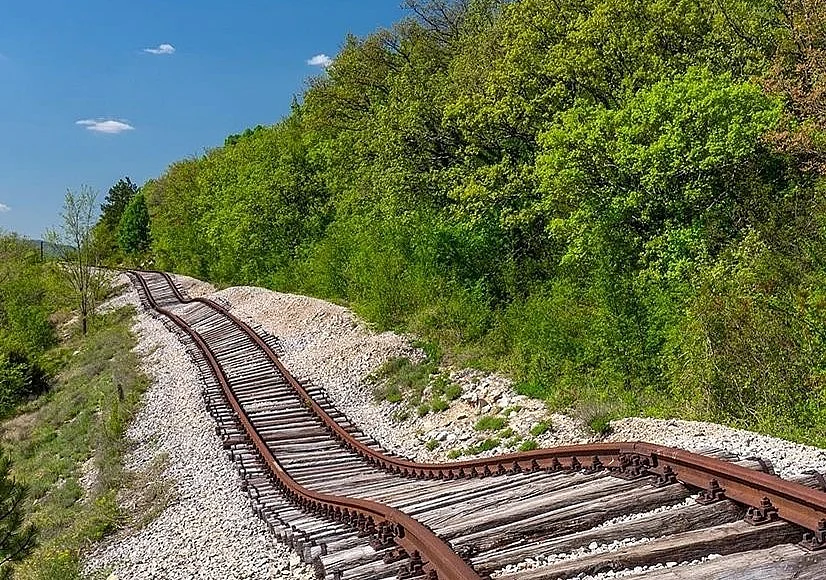
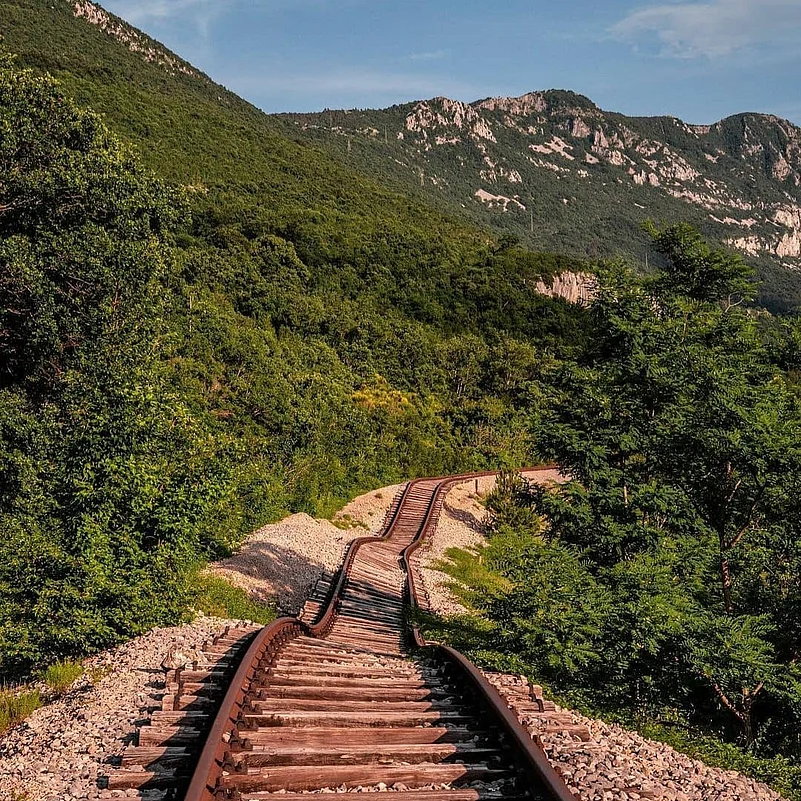
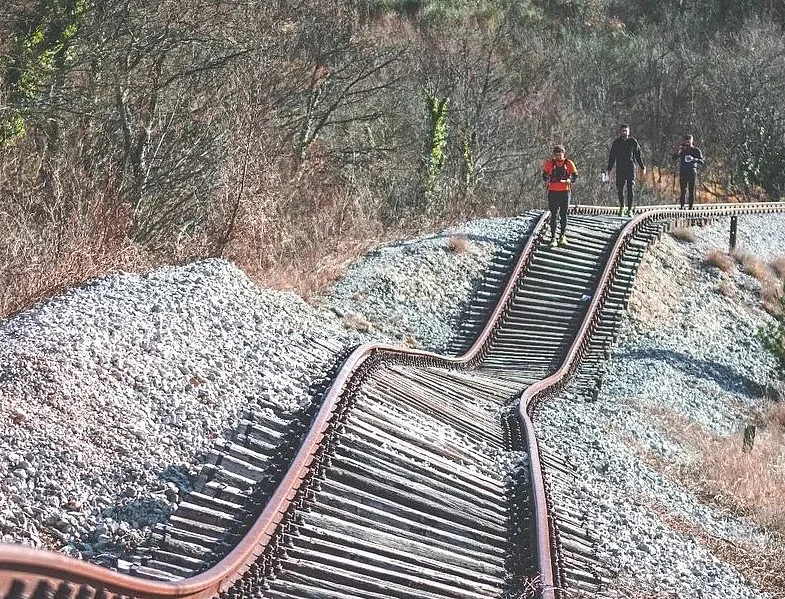
Near Kršan and Plomin in Istria lies one of Croatia’s most unusual abandoned rail fragments. Known locally as the “Drunk Railway” (Pijana pruga), this short 500-metre section of track has been dramatically warped by shifting ground and erosion. What remains is a surreal stretch of railway where the rails twist, dip and rise unpredictably across the landscape, as if the line itself has lost its balance.
Built in the post-war period between 1948 and 1951, the Lupoglav–Raša line once carried coal, bauxite and agricultural goods from the region. It fell out of use in the modern era, with the final trains passing through in 2009, leaving this distorted section as its most striking remnant.
Traveller Tips
The warped section is part of a wider hiking route near Kršan, often walked as a 7.7 km loop taking around 2.5–3 hours.
The most unusual section allows you to walk right up to the bent rails—at points you can stand beside, sit on, or even pass underneath them.
Expect wide views across Čepićko polje and the surrounding hills, especially clear on brighter days.
The route is accessible year-round and is popular with hikers, runners and birdwatchers.
Wear proper walking shoes, as sections can be uneven and exposed.
If you want to stay nearby, there are small local accommodation options in the Kršan and Kožljak area, including stays close to the railway itself.
Dalmatian Coast Railway Legacy
Along the Dalmatian coast, the old narrow-gauge railway survives only in fragments. It was built in the early 1900s to link coastal settlements, but today it appears as broken embankments, tunnel mouths and stone bridges scattered through olive groves and limestone hills.
Walk it and the line keeps appearing and disappearing—through scrub, into cool tunnels, out onto short runs of exposed track with the Adriatic somewhere beyond the trees. It no longer functions as a route, but you can still trace it step by step through the landscape.
Traveller Tips
Look out for surviving railway features such as stone bridges, tunnel entrances and former station buildings along coastal and inland stretches.
Many sections are now informal hiking or cycling routes, often unmarked but still traceable on the ground.
Tunnels can be long and unlit—carry a torch or bike light if you plan to explore them.
The scenery shifts quickly between olive groves, karst hills and coastal viewpoints, making even short walks varied and atmospheric.
Some of the best-preserved fragments are found away from main roads, where the old lines feel more intact and less altered.
Bring sturdy footwear, as paths can be uneven, overgrown or partially collapsed in places.
Abandoned Railway Stations – Gračac & Zadar
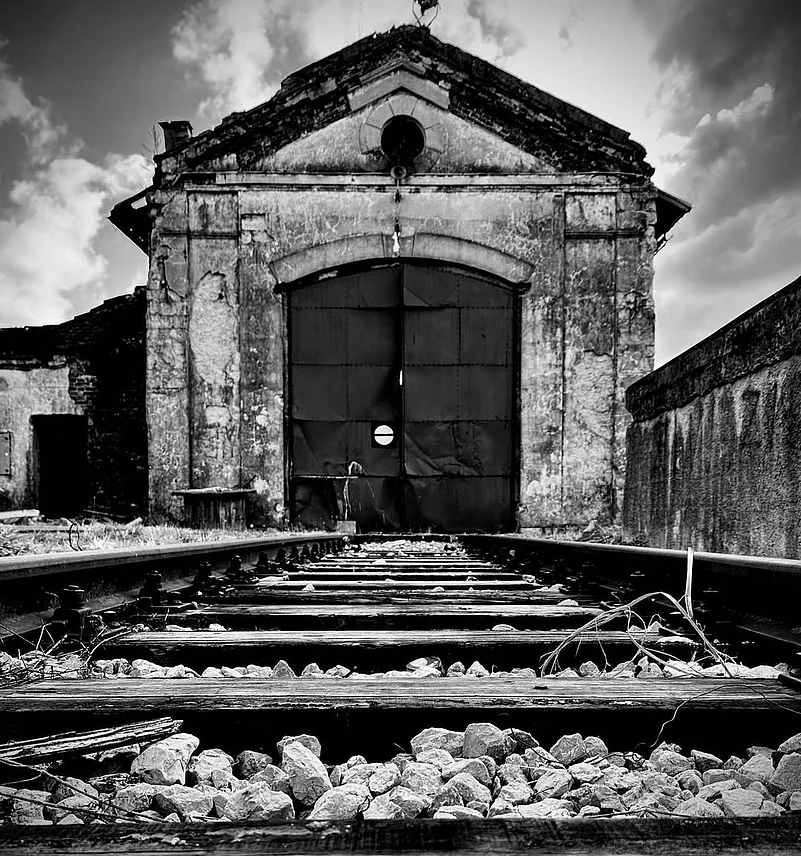
Scattered across Croatia are railway stations that no longer serve their original purpose, but still hold on to their structures. In places like Gračac, in the mountainous Lika region between the coast and inland Croatia, entire station complexes sit in quiet decay. Old warehouses, maintenance pits and rusting wagons remain where trains once passed through this junction point. Nearby, a stationary steam locomotive—JŽ 62-084—still stands by the roadside, a fixed reminder of the line’s industrial past.
Further south in Zadar, the story shifts to the edge of the city itself. The former central station, close to the main bus terminal, has been out of passenger use since around 2014. What remains is a disused stretch of urban rail: rusted tracks, faded platforms and graffiti-covered structures slowly fading into the background of everyday city life.
Traveller Tips
Gračac is a raw, abandoned industrial site—expect uneven ground, old wagons and derelict buildings.
Wear sturdy shoes and avoid entering unstable structures.
The stationary steam locomotive near Željeznička Street is an easy landmark to find.
The setting feels remote, framed by Lika’s mountain landscape.
In Zadar, the old station sits near the bus terminal and is reachable on foot. The area is open, graffiti-covered and largely unused, best seen in daylight.
FAQs
Can you actually walk along the old tracks?
Yes, in many places you can. Some routes are formal trails, while others are informal paths through overgrown or ruined sections.
Are the abandoned sites safe to visit?
Generally, yes during daylight, but conditions vary. Some areas are maintained trails, others are decayed industrial sites that require caution.
Do you need special equipment?
For most trails, good walking shoes are enough. A torch is useful for tunnels and older railway sections.
What is the best-known route?
The Parenzana Trail is the most developed and accessible, running through Istria with tunnels, viaducts and villages along the way.
Why were the railways abandoned?
Many were damaged in wars, bypassed by road transport, or left unsupported after economic and political changes in the 20th century.
What makes them worth visiting today?
They offer a rare mix of history and landscape—old engineering slowly being reclaimed by nature, often in striking coastal or mountain settings.