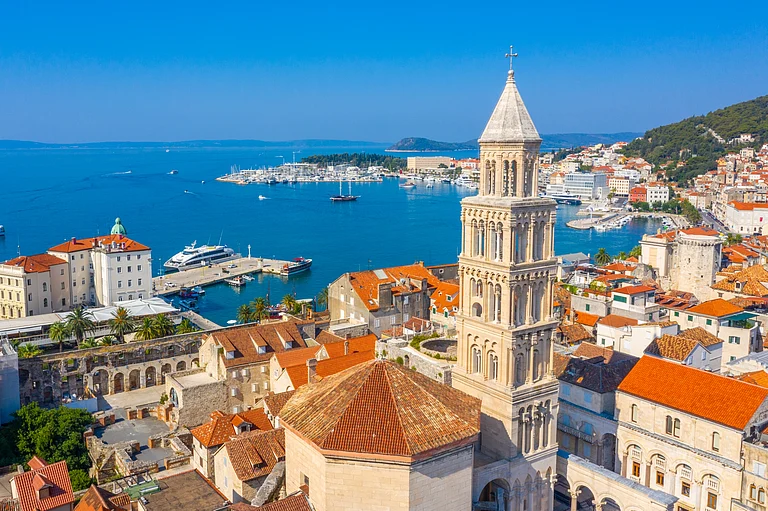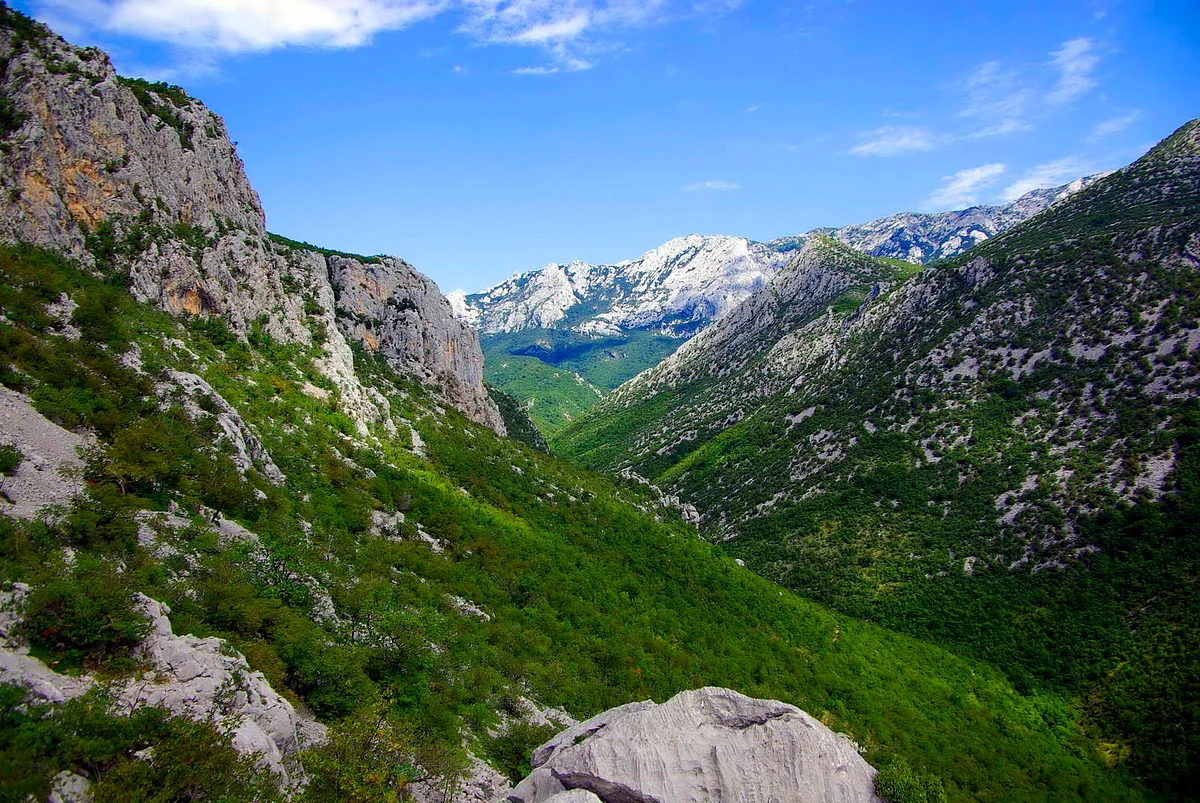
Croatia is a great place for nature lovers, with eight national parks and eleven nature parks all within a small area. The scenery changes fast, from bright waterfalls and green lakes to rocky mountains and islands along the coast. Plitvice Lakes, a UNESCO World Heritage Site, is the best known. Krka is easier to reach if you want to see waterfalls, and Paklenica is popular with hikers for its rough landscape. Altogether, these parks make up over 7.5 per cent of the country, so Croatia has a lot of natural beauty in one place.
Plitvice Lakes National Park
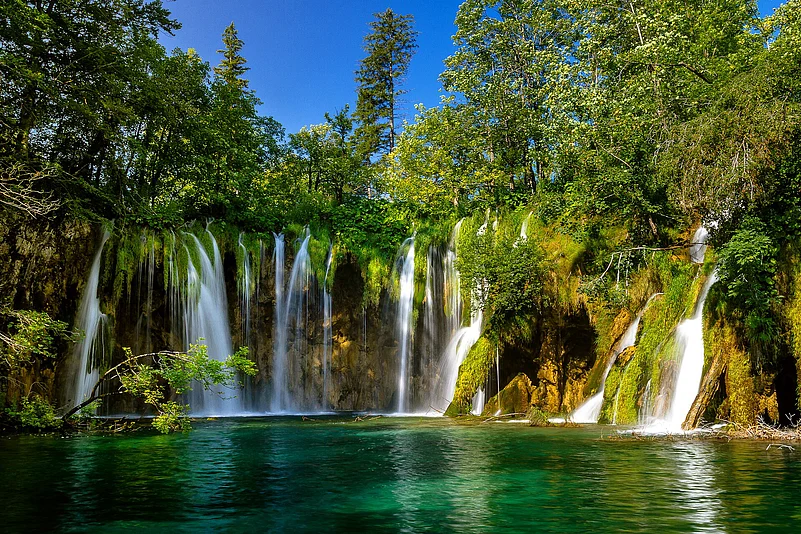

Plitvice Lakes National Park is Croatia’s largest, oldest and most visited national park, recognised as a UNESCO World Heritage Site since 1979. Set in the mountainous Dinaric region, it is known for its chain of 16 terraced lakes linked by waterfalls. The water shifts in colour from emerald green to deep azure, a result of natural tufa formations that create ever-changing barriers between the lakes.
What to See and Do
The lakes are divided into the Upper Lakes, surrounded by dense forest, and the Lower Lakes, which sit within a dramatic limestone canyon. Wooden boardwalks wind across the water, making it easy to explore on foot, while electric boats cross the largest lake, Kozjak. There are several walking routes, typically covering 13 to 15 km in total, and the park has two main entrances serving different sections.
Visitor Tips
Book tickets in advance, especially in peak season. Most visitors spend between four and six hours here, though a full day allows for a more relaxed pace. There are hotels, campsites and guesthouses nearby for those wishing to stay close by.
Plan Your Visit
Best Time to Visit: Morning (around 7 AM) is recommended to avoid crowds. The park is open year-round, with spring and summer offering lush green, and autumn showcasing vibrant colours.
Location: Situated in the Dinarides in central Croatia.
Access: The park has two main entrances (Entrance 1 for Lower Lakes, Entrance 2 for Upper Lakes.
Krka National Park
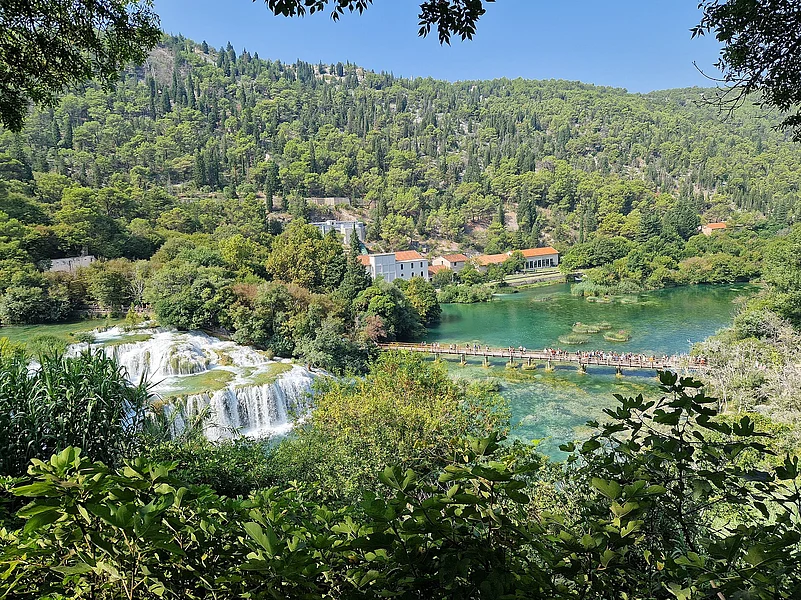
Krka National Park, established in 1985, is a 109-square-kilometre protected area in Dalmatia, centred around the Krka River. It is best known for its series of seven travertine waterfalls and a more accessible feel than Plitvice. The highlight is Skradinski Buk, a wide and dramatic cascade, alongside scenic spots such as Visovac Island and Roški Slap.
What to See and Do
Most people head straight for Skradinski Buk, a broad series of waterfalls spread over 400 m. It’s the busiest spot, but also the most impressive. Roški Slap is quieter and more spread out, while Visovac Island, sitting in the middle of the river, adds something different with its old monastery. There are also walking paths, boat trips and a few historical sites, including the remains of a Roman camp at Burnum.
Visitor Tips
Get there early, it gets crowded by mid-morning. If you want to take a boat trip or explore further, set aside most of the day. If you’re staying nearby, Skradin is a convenient base.
Plan Your Visit
Best Time to Visit: Spring and early summer are best for waterfalls, while autumn is quieter.
Location: In Dalmatia, along the Krka River, within easy reach of Split and Zadar.
Access: The two most common entry points are Skradin and Lozovac, with boats running from Skradin into the park.
Mljet National Park
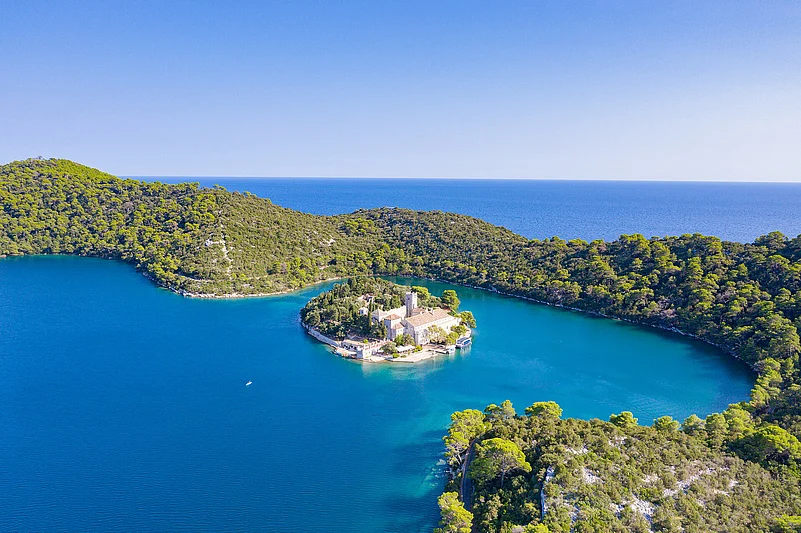
Mljet National Park is located in Mljet, one of Croatia’s greenest islands. Established in 1960, it is the oldest marine protected area in the Mediterranean. The park covers the island’s northwest corner, dominated by lush forests and two saltwater lakes—Veliko (Large) and Malo (Small) Jezero. A highlight is the 12th-century Benedictine monastery on St. Mary’s Island in the middle of Veliko Jezero.
What to See and Do
The calm lakes are perfect for swimming, kayaking or canoeing, and the small St. Mary’s Island offers both history and a tiny café. Over 90 per cent of the park is forested, with well-marked trails for hiking and cycling. A popular hike leads to Montokuc, the island’s highest point, with sweeping views over the lakes and coastline. The park is also home to varied flora, deep sea-filled bays, and a large colony of reef-forming coral near the “Little Bridge.”
Visitor Tips
Mljet can be reached by ferry or via car ferries from Prapratno to Sobra. Tickets include access to the lakes and the boat ride to St. Mary’s Island. For a relaxed visit, rent a bicycle to get around. Bring your own essentials.
Plan Your Visit
Best Time to Visit: Late spring offers fewer crowds, while May to October is peak season.
Location: Northwest corner of the island of Mljet, southern Dalmatia.
Access: Ferries to Polače or Pomena; car ferries from Prapratno to Sobra.
Paklenica National Park
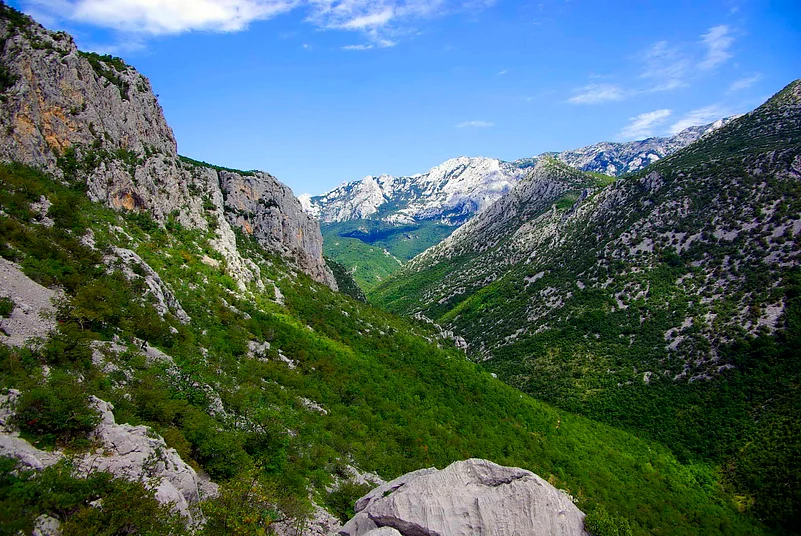
Paklenica National Park sits on the southern edge of the Velebit Mountains near Starigrad. It’s famous for its two limestone canyons, Velika and Mala Paklenica, and is a hotspot for hiking and rock climbing. The trails, cliffs, and forests here make it one of Croatia’s most dramatic nature spots.
What to See and Do
Most visitors come for the trails and climbing. You can hike up to Vaganski Vrh or Sveto Brdo, the two highest peaks of the Velebit mountain range in Croatia, often hiked together.
Rock climbers will find over 500 routes, with Velika Paklenica’s 400 m cliffs as the main draw. Manita Peć Cave is worth a quick stop, and there are old water mills and abandoned villages to poke around if you like history.
Visitor Tips
Spring and autumn are the nicest times to visit—summer can be very hot, and winter brings strong winds. Plan for at least a few hours, but you could easily spend a full day of hiking or climbing. Tickets are needed, and there’s a mountain hut and forest lodge if you need a break. Dogs are allowed on a leash. Bring water and snacks, because facilities are limited in the park.
Plan Your Visit
Best Time to Visit: Spring or autumn for milder weather.
Location: Southern Velebit, near Starigrad-Paklenica, close to Zadar.
Access: Park entrances are easy to reach by car from nearby towns; trails start directly from them.
Kornati National Park
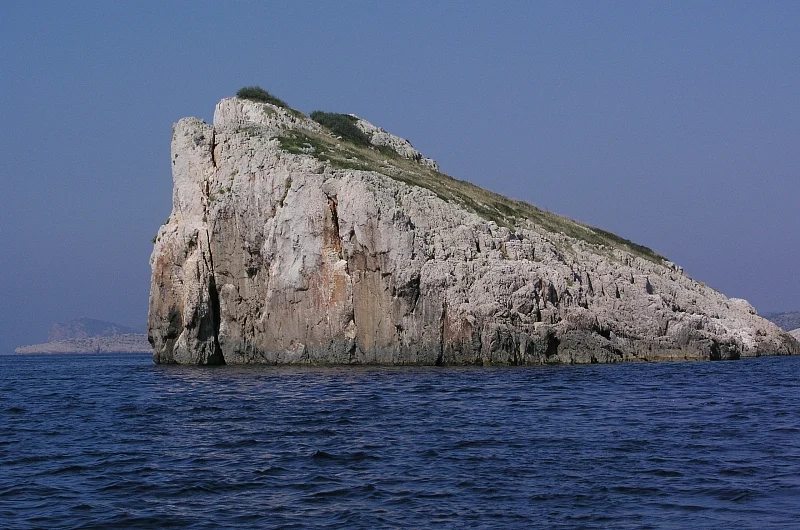
Kornati is made up of 89 mostly uninhabited islands in the central Adriatic. It’s a wild, rocky place with sharp cliffs, little vegetation, and crystal-clear waters. The islands feel almost lunar, and the only way to really see them is by boat. It’s perfect if you like sailing, diving, or just staring at dramatic sea views.
What to See and Do
Most people get around the islands by boat. You can drop anchor in spots like Lavsa or Mana, take a quick swim, or snorkel along the underwater cliffs. Some of the rocky hills are worth scrambling up for a view, even though there aren’t proper trails. The cliffs, known locally as “crowns,” are really something to see. A few islands have small places to eat, usually serving fresh fish and olive oil—perfect for a simple lunch after a day on the water.
Visitor Tips
You can only get here by sea—private boats or organised tours from Murter and Zadar are your options. Tickets are required, and there’s no camping outside the few designated spots. Bring everything you need for the day, including water and sunscreen, because facilities are scarce.
Plan Your Visit
Best Time: Late spring to early autumn for calm seas.
Location: Central Adriatic, Šibenik-Knin County. About three-quarters of the park is water.
Access: Only by boat, either with a tour or your own yacht.
FAQs
When is the best time to visit?
Early morning (around 7–8 AM) or late afternoon is ideal to avoid crowds and the midday heat. Spring and early summer show waterfalls at their fullest, while autumn offers beautiful colours and fewer visitors.
Do I need to book tickets in advance?
Yes. Buy tickets online to secure your entry and skip long queues, especially in July and August. Online tickets are often cheaper and may be limited by time slot.
What should I wear and bring?
Comfortable, sturdy hiking shoes are essential as paths can be long, rocky, or slippery. Bring water, sunscreen, a hat, and a light raincoat or poncho just in case.
Can I swim in the lakes and rivers?
Swimming is allowed at some places, such as Krka National Park, but it’s strictly forbidden in others, like Plitvice Lakes. Always follow park rules for safety and conservation.
Are there any other rules I should know?
Don’t pick plants, touch animals, or use drones. Stick to marked trails and respect local guidelines.
How can I avoid the busiest times?
Arrive early, or stay overnight in nearby villages to be first at the park gates. Using local shuttles can also help you move around efficiently.