Stone walls cut across western Croatia, stretching from the coastal hills to the islands and inland countryside. Built using dry-stone techniques—carefully stacking limestone without any mortar—these formations have shaped the land for thousands of years.
Over time, craftsmen built villages out of raw limestone—forming houses, paths, and terraces that blended straight into the land. Now only a few are left who still know how to do it, keeping the tradition alive as it slowly disappears.
The Stone Villages
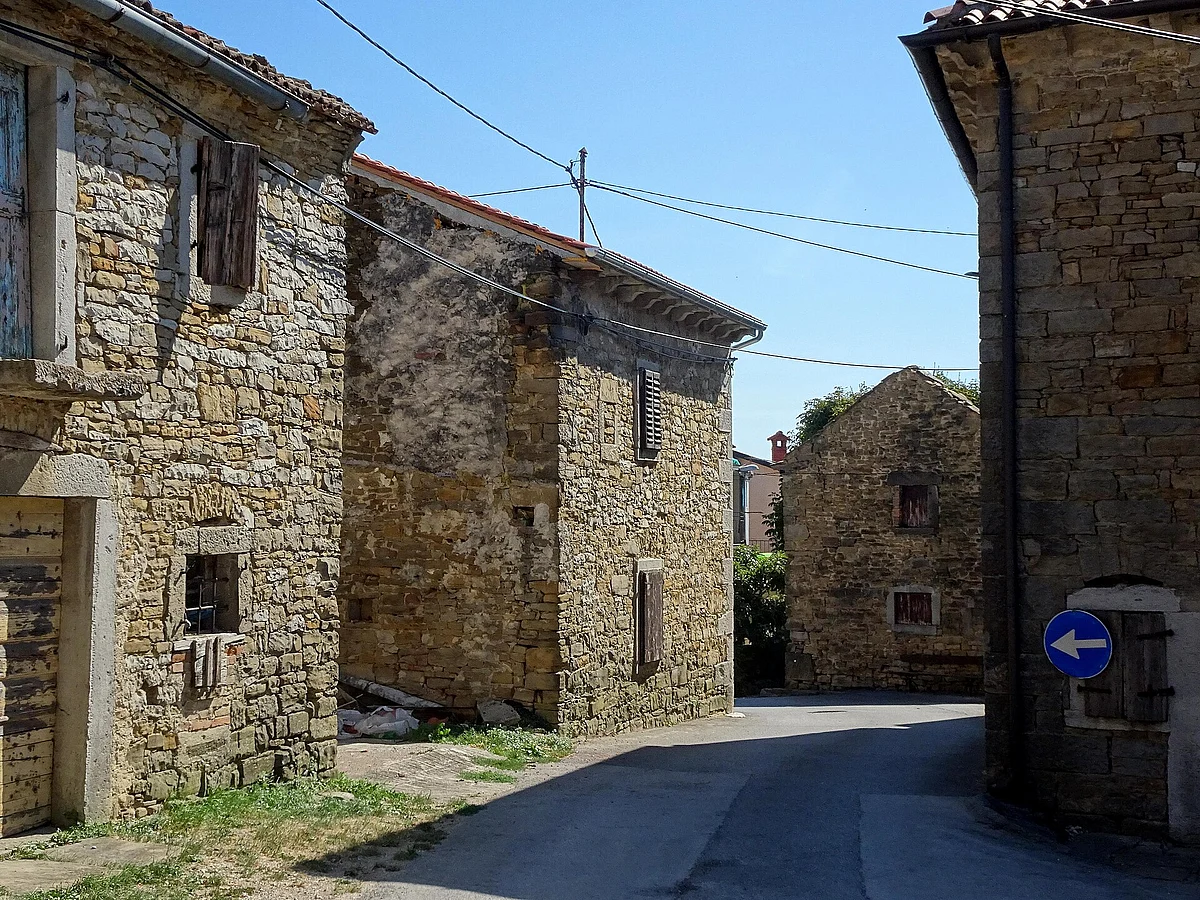
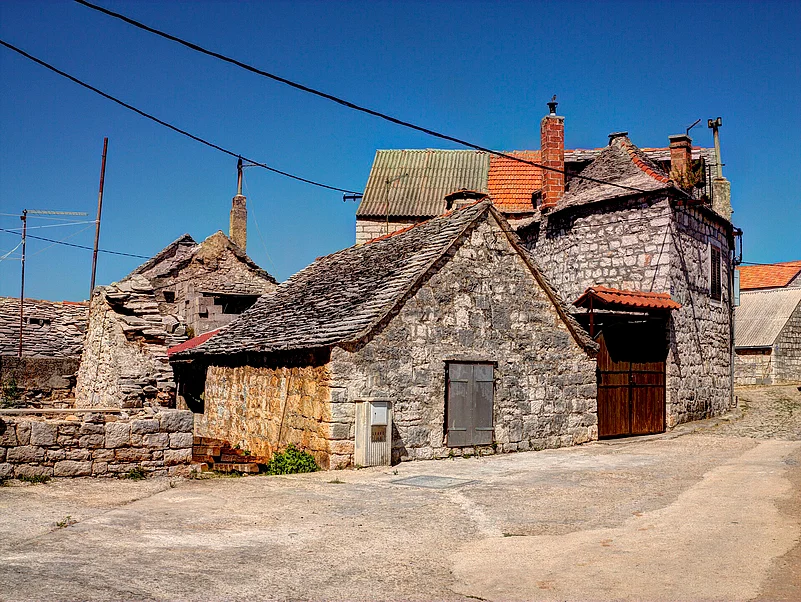
In Istria and Dalmatia, many rural settlements were built using local limestone with almost no mortar. Thick stone houses keep interiors cool in summer and warm in winter and dry-stone walls divide fields and villages. Entire landscapes are shaped by stone-built agriculture and architecture. In Istria, you also find iconic kažuni—small dry-stone shelters for farmers and shepherds that date back to prehistoric times. In Dalmatia, similar traditions include island houses and stone-built hamlets that developed from ancient Roman and medieval settlement patterns.
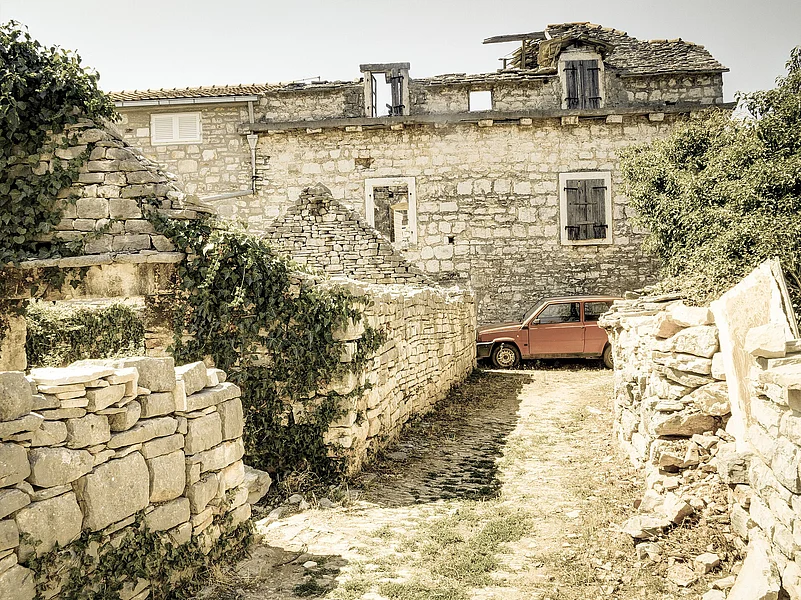

Built without mortar, dry-stone structures take shape as walls, field terraces, small shelters, and boundary enclosures—a building method that has been used around the Adriatic for a very long time. The solid limestone houses were built to cope with heat, wind, and sea climate, often gathered tightly together in compact village clusters.
The Last Keepers
A loose network of people are still involved in preserving traditional stone-building knowledge in rural Croatia. A small number of stonemasons continue to practice dry-stone construction, learning through hands-on experience and oral tradition passed down over generations. As this knowledge becomes rarer, so too do the craftsmen who can fully carry it out.
You can still see traces of this work in places like the Istrian countryside around the Istrian Peninsula, where field walls and kažuni are actively maintained, or in parts of the Dalmatian hinterland and islands of the Dalmatian Coast, where older stone villages are still being repaired by hand. In these areas, restoration sites and rural settlements sometimes reveal stonemasons at work, rebuilding walls stone by stone using the same traditional methods.
Preservation And Revival Efforts
Alongside them are restoration teams and conservation groups that repair abandoned stone houses, keeping the region’s architectural identity intact while supporting cultural heritage and tourism. Some of this work also ties into wider heritage efforts, including recognition of dry-stone walling by UNESCO as intangible cultural heritage.
There are also individuals who buy and restore old stone homes, turning them into small eco-stays or rural retreats, and giving new purpose to buildings that would otherwise fall into ruin.
A Vanishing Craft In The Landscape
Travelling through rural Croatia, you notice how fragile this stone world has become. Many villages have slowly emptied as younger people move to cities, leaving behind homes, terraces, and field walls that need constant care. Modern materials have taken over much of everyday building because they are faster and cheaper, while traditional stonework—slow, precise, and physical—has fewer people learning it.
For visitors, though, that sense of decline is part of the experience. The dry-stone villages, terraced hillsides, and winding field walls don’t feel staged—they feel lived-in, but fading at the edges.
The remaining craftsmen matter because they keep this landscape intact in the way it was originally built. Working only with local stone and hand techniques, they preserve the look and rhythm of Mediterranean rural life—terraces, enclosures, and clustered stone settlements. In doing so, they also carry forward a rare craft.
FAQs
What are Croatia’s stone villages?
They are rural settlements, especially in regions like Istria and Dalmatia, built largely from local limestone using traditional dry-stone techniques without mortar.
Where can I see traditional stone villages in Croatia?
You can still find them across the Istrian Peninsula and along the Dalmatian Coast, especially in rural inland areas, islands, and older coastal settlements.
Why is this tradition disappearing?
Fewer young people are staying in rural villages, modern construction is cheaper and faster, and fewer apprentices are learning traditional dry-stone skills.
Is dry-stone building still practiced today?
Yes, but on a smaller scale. It survives mainly through restoration work, heritage projects, and maintenance of old rural landscapes.
Are these stone techniques recognised globally?
Yes. Dry-stone walling is recognised by UNESCO as part of the world’s intangible cultural heritage.