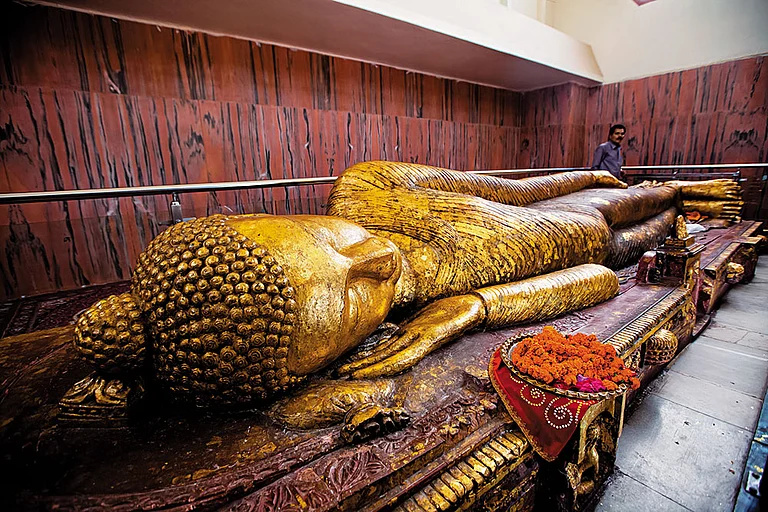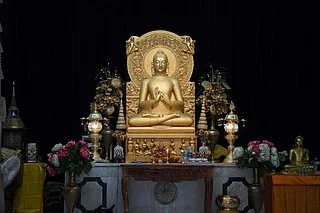


Buddha Purnima 2026 falls on Friday, May 1. It marks the 2,588th anniversary of Siddhartha Gautama’s birth, enlightenment, and parinirvana. Buddha Purnima will attract pilgrims and travellers to the core sites of Buddhist history in India. Here is a look at these destinations, which offer a cadence of prayer, ritual, and stillness, shaping a journey that is as much inward as it is geographical.
Bodhgaya, Bihar
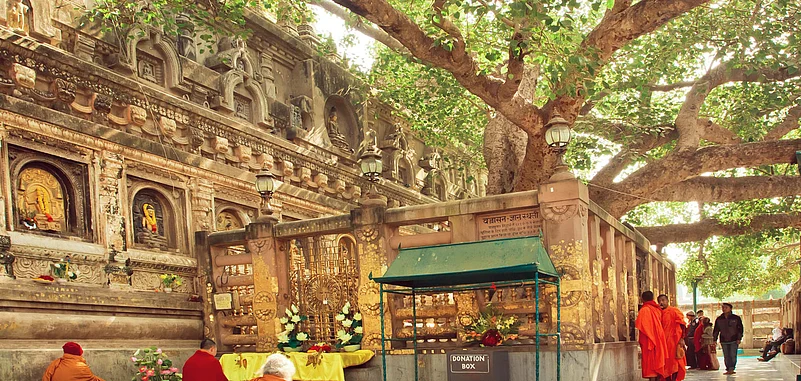

Bodh Gaya in Bihar is believed to be the city where the Buddha attained enlightenment while meditating beneath a Bodhi Tree. The place later came to be known as Bodh Gaya, and the tree—now said to be in its fourth or fifth generation—became known worldwide as the Bodhi Tree. The full-moon day on which Shakyamuni is believed to have attained enlightenment is now observed as Buddha Purnima. The Mahabodhi Temple complex here has been designated a UNESCO World Heritage Site.
What To See And Experience
The Mahabodhi Temple Complex, including its towering spire, the sacred Bodhi Tree, and the Vajrasana (Diamond Throne), marks the enlightenment site
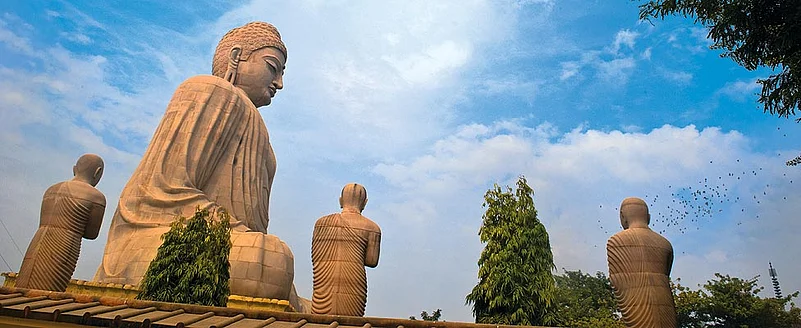
Key spiritual landmarks such as the 80-foot Buddha statue, Animesh Lochana Chaitya, Ratnaghara, plus nearby Sujata Kuti and the Dungeshwari Cave Temples
A wider cultural landscape shaped by international monasteries and temples, each reflecting different Buddhist traditions
Buddha Purnima in Bodh Gaya
Buddha Purnima brings Bodh Gaya to life as pilgrims and monks gather to mark the Buddha’s enlightenment. Around the Bodhi Tree, rituals and observances continue through the day, extending the sense of devotion across the town. You can witness processions such as the Dhamma Yatra, along with offerings of lamps, flowers, and robes throughout the day. Temples host ceremonies that continue into the night across the town.
Practical Info
Bodhgaya sits in southern Bihar within the Gaya region, a compact pilgrimage town built around its central temple complex
The most direct access is via Gaya, which is connected by rail and has a small airport with flights from major Indian cities
Road links from Patna and nearby heritage sites make it easy to include Bodhgaya in a wider circuit of Buddhist destinations
Accommodation ranges from monastic guesthouses to simple hotels, with demand peaking sharply around Buddha Purnima and other key Buddhist festivals.
For more information, check out our guide to Bodh Gaya here.
Sarnath, Uttar Pradesh
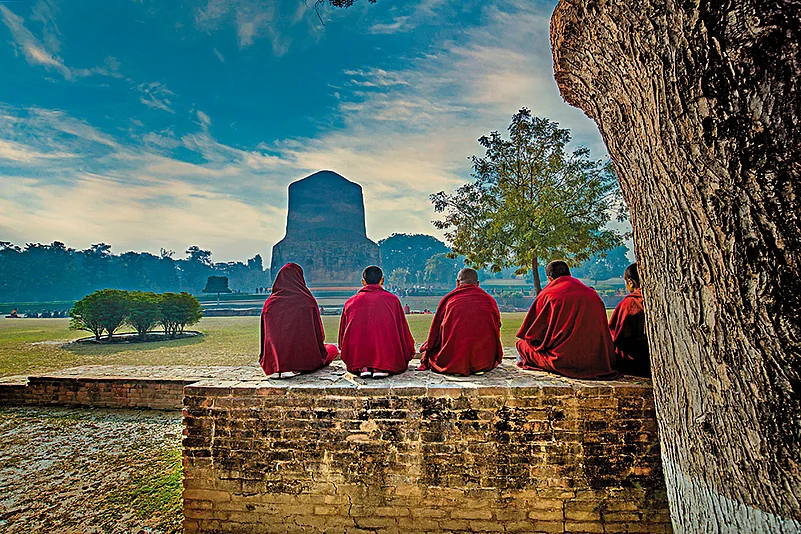
Sarnath sits just outside Varanasi and is closely tied to the Buddha’s first sermon after enlightenment. It is also where his first group of disciples came together, forming what is known as the early Sangha. For pilgrims, it feels quieter than Bodh Gaya, but its importance in Buddhist history is just as central, especially during Buddha Purnima.
What To See And Experience
Dhamek Stupa, marking the spot linked to the Buddha’s first sermon
Chaukhandi Stupa, an early structure connected to his first followers
Ashokan Pillar and Sarnath Archaeological Museum, including the Lion Capital
Mulagandhakuti Vihara, known for its painted interiors and golden Buddha image
International monasteries built by Buddhist communities from Thailand, Japan, China, and others
Buddha Purnima in Sarnath
At Sarnath, Buddha Purnima unfolds around the Dhamek Stupa, where most of the day’s observances are centred. Pilgrims gather for chanting, lamp lighting, and offerings of flowers and incense. Relics are taken out in processions between key monuments, while monasteries run meditation sessions and prayer gatherings throughout the day. Even at its busiest, the site holds a quiet, orderly devotional mood.
Practical Info
Sarnath is around 10 kilometres from Varanasi and is easily reached by road in under half an hour
Varanasi is the main base for visitors, with the nearest airport and railway station offering strong national and international links
The site is compact and walkable, with all key monuments clustered around the main stupa area
Buddha Purnima brings higher visitor numbers, but access and movement within the site remain organised and steady
Dharamshala, Himachal Pradesh
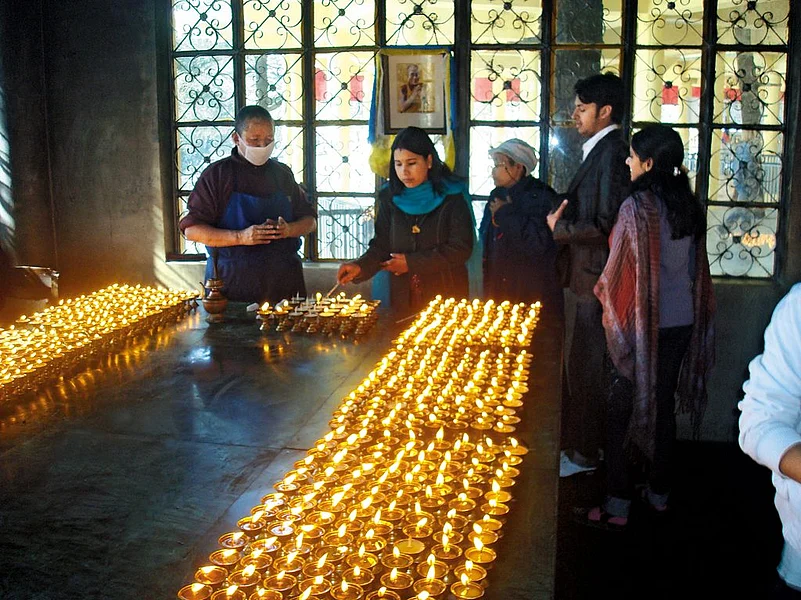
Dharamshala, often called “Little Lhasa”, is closely associated with Tibetan Buddhism and is home to the Dalai Lama. Set against the backdrop of the Dhauladhar range, it draws visitors seeking time for reflection, study, and quiet observation of monastic life. Much of its spiritual activity is centred in McLeod Ganj, where temples and monasteries sit within walking distance of each other.
What To See And Experience
Tsuglagkhang Complex, which includes the Dalai Lama’s residence, Tsuglagkhang Temple, and Namgyal Monastery
Namgyal Monastery, a major centre of Tibetan Buddhist study and ritual practice with resident monks and daily chanting
Library of Tibetan Works and Archives, housing rare manuscripts and serving as an important centre for Tibetan studies
McLeod Ganj monasteries and gompas, including Dip Tse-Chok Ling and Nechung Monastery
Prayer wheels, flags, and mountain trails that shape the everyday spiritual landscape
Buddha Purnima in Dharamshala
Buddha Purnima centres activity around the Tsuglagkhang Complex, where monks and visitors gather for special prayers and meditation. Chanting fills the monastery courtyards, while teachings and public observances take place throughout the day. Prayer flags move in the wind above McLeod Ganj, and the surrounding monasteries continue their routines of study and ritual. The setting feels quiet, with the mountains shaping the pace of the day.
Practical Info
Dharamshala is located in Kangra district, Himachal Pradesh, with McLeod Ganj serving as the main tourist and pilgrimage base
The nearest airport is Kangra Airport, with road access from major North Indian cities, including Delhi and Chandigarh
The town is spread across hillside terrain, so local travel is mainly on foot or by short taxi rides
Buddha Purnima is a calm but meaningful time to visit, with monasteries open for prayer, meditation, and observation of rituals throughout the day
For more information, check out our guide to Dharamshala here.
FAQs
What is Buddha Purnima?
Buddha Purnima, also known as Vesak, is a major Buddhist festival marking the birth, enlightenment, and Parinirvana of Gautama Buddha.
Why is it called a “triple blessed” day?
It is believed that all three key events in the Buddha’s life—birth, enlightenment in Bodhgaya, and passing into Nirvana at Kushinagar—occurred on the same full moon day.
When is Buddha Purnima celebrated?
It falls on the full moon day of the Vaisakha month, usually in April or May.
How is it observed?
Devotees mark the day with prayers, meditation, charity, and offerings at temples and monasteries, often accompanied by chanting and rituals.
Is there any special food associated with the festival?
Yes, kheer (sweet rice porridge) is commonly prepared and shared as part of the celebrations.