In 2019, I travelled to Coorg with a group of friends. One of them suggested we stay in a homestay instead of a hotel. The rest of us dismissed the idea, as staying in somebody else’s home lacked the predictability we associated with hotels. Seven years later, I found myself doing the exact opposite. I now choose homestays not because they are cheaper, but because they offer something hotels rarely can: conversations with hosts, local food, and the feeling of belonging to a place. Over the past decade, homestays have shifted from a niche option to one of India’s fastest-growing travel segments, with the market projected to nearly triple as travellers increasingly seek local, experience-led stays over standardised hospitality.
Spare Rooms, Shared Lives
When Ishita Khanna, founder and director of social enterprise Spiti Ecosphere, first began working with communities in Spiti, Himachal Pradesh, in the early 2000s, the idea of a homestay was still unfamiliar. Through Ecosphere, Khanna helped set up community-run homestays in Demul, a remote village in the Spiti Valley with around 50 households. “Very little money was actually staying within the local community,” she said.
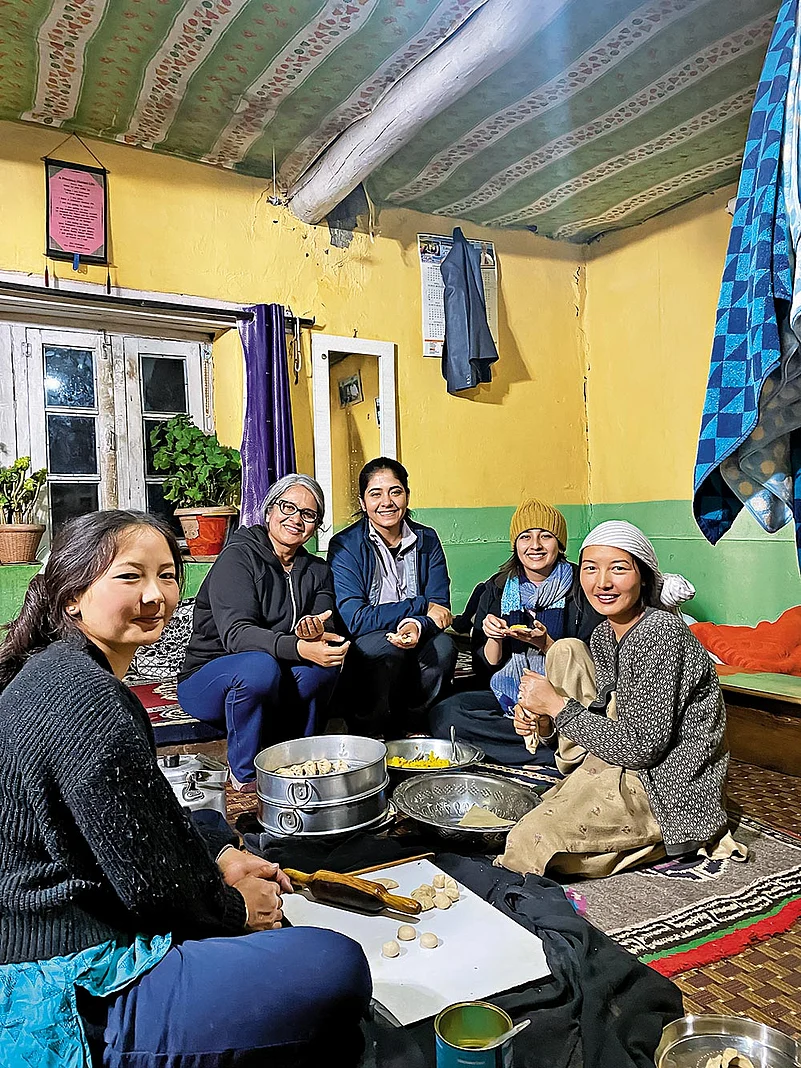
Families in Demul opened spare rooms in their traditional homes to travellers. The village adopted a rotational model, distributing guests equally among households so that tourism income reached everyone. More than 20 years on, Demul still uses the same system, directing much of the income to local households, particularly women hosting guests.
“Anybody with a spare room can start a homestay,” Khanna said. “You don’t need huge investments to become part of the tourism industry.” Ecosphere also spent years training families in hospitality, hygiene and managing traveller expectations. “People are not choosing homestays only because they are budget options,” she said. “Now, it has become more about experience.”

The Experience Economy
The shift towards experience-led travel is visible across the country. Near Nainital in Uttarakhand, Aditi Pokhriyal and Anil Cherukupalli started Fagunia Farmstay in a remote Kumaoni hamlet. What began as an attempt to build a slower, more sustainable life in the mountains gradually evolved into a homestay. “We realised we should share our life and ideas with like-minded travellers,” they said.
Located nearly three kilometres off the main road, Fagunia initially seemed an unlikely tourism venture. Over time, repeat visitors and local employment changed perceptions, encouraging two residents to open homestays of their own and helping villagers view tourism as a sustainable source of income alongside agriculture. Over the years, they have also watched travellers arrive with hotel-shaped expectations and leave with a very different understanding of hospitality. One of their earliest guests now volunteers at the couple’s rural learning centre for local children. “A genuine homestay is not a business built around rooms, but a home built around relationships,” they said.
Homestays remind us that some of the most lasting journeys begin not in hotel lobbies, but around somebody else’s dining table
Hospitality At Home
A similar distinction appears often in conversations with homestay owners. In Salawas village near Jodhpur, Rajasthan, Chhotaram Prajapat began hosting travellers in 2009 after two foreign visitors buying handwoven durries asked if they could stay with his family. At the time, he had never heard the word “homestay.”
The visitors eventually convinced him to host travellers regularly and helped him list his home online. What started with a spare room has now grown into a homestay with traditional mud huts. Yet he insists the essence of hosting has remained unchanged. “In hotels, you expect service. In homestays, you expect experience,” he said.
In a country where travel has long revolved around itineraries and sightseeing, homestays offer something quieter and far more personal. They blur the line between guest and host, allowing travellers to experience places not as spectators, but as temporary participants in everyday life. Perhaps that is why homestays continue to resonate so deeply today. They remind us that some of the most lasting journeys begin not in hotel lobbies, but around somebody else’s dining table.
Looking for more such exciting and meaningful stories? Grab our latest issue on Amazon.