Do you recall that feeling when you walk into a hotel and the whole aura changes? You might think it's the lighting, or the flowers at reception, or the music playing low somewhere you can't quite locate. But chances are it's none of that. It's the scent—the one thing nobody points out, the one thing that decides, before you've even checked in, how the next few days are going to feel.
You don't remember the colour of the lobby walls. You probably couldn't describe the bedspread if your life depended on it. But walk past a stranger wearing a particular note of amber, or catch jasmine on a humid evening months later, and you're back in that corridor, slippers on, jet-lagged, strangely content. That's just how smell works. It doesn't file itself away neatly like everything else; it goes straight for memory, no detour. Hotels have clocked this, and the better ones no longer treat fragrance as something you spray near the entrance and forget about. It's becoming part of how a stay is actually built, as deliberate as a room's layout.
Building A Scent From The Ground Up
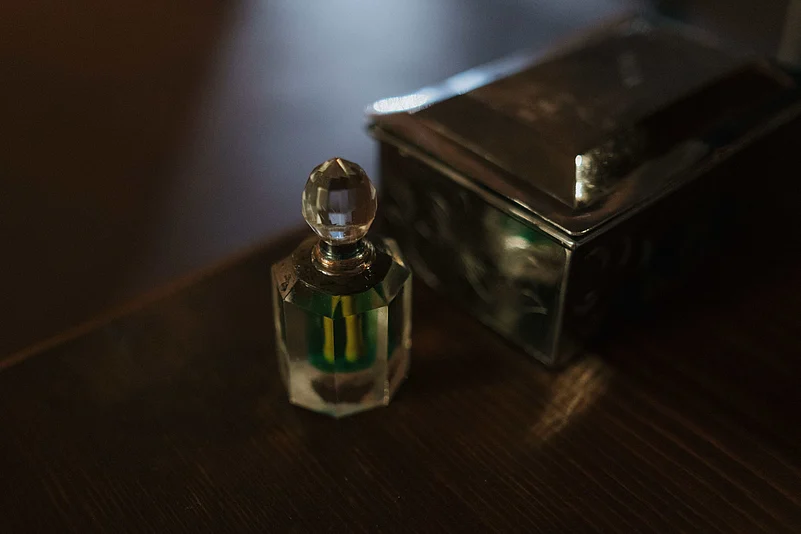

At The Leela, this idea has a name: Tishya, the brand's signature fragrance, built around lotus and Neelakurinji, the flower that blooms only once every twelve years. It wasn't conceived as background ambience but as an extension of identity, developed to capture the brand's own sense of Indian heritage and luxury, layered carefully enough to feel elegant without overwhelming a guest the moment they walk in.
Keeping that scent identical from one property to the next, including at the newer Leela Gandhinagar, takes more discipline than guests probably imagine, a fixed composition, controlled sourcing, and constant quality checks with fragrance house Kimirica Hunter International, so that the note that greets you in one city is the same one waiting in another.
The bigger shift is in how the brand talks about why this matters. Scent in hospitality isn't really about a pleasant smell at check-in—it's about engineering recall. A thoughtfully curated fragrance enhances a space's ambience and, over time, becomes something guests associate specifically with their stay, strengthening memory and loyalty in a way that's almost involuntary.
When One Scent Doesn't Fit Every City
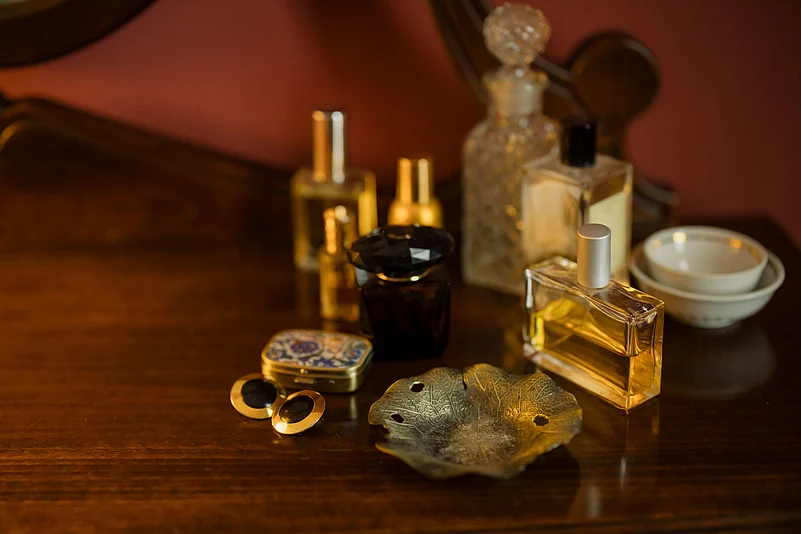
The Peninsula Hotels takes the opposite philosophy—and arrives at a similar emotional destination. Rather than one signature scent travelling across twelve hotels, each property has its own, designed by a local fragrance curator native to that city. "Fragrance shapes first impressions and reinforces a feeling of familiarity that guests come to associate with the brand," explains Karine Wong, assistant director, communications at The Peninsula Hotels.
In Hong Kong, whose name literally translates to "fragrant harbour", curator Angel Cheung built the hotel's scent around native agarwood, layered with jasmine and warm amber, a quiet nod to the city's old incense-trading history and the hotel's own legacy as its oldest. In Paris, Céline Barel, who grew up in Grasse, the perfume capital of the world, leans into rose damascena and labdanum resin. New York gets something cooler and more contemporary from Mackenzie Reilly—golden quince, peony, musk—while in Bangkok, self-taught curator Prin Lomros distills the Chao Phraya River at sunset into mango, lotus, orchid and a breath of mint. London's note, designed by Timothy Han, a former assistant to John Galliano, is drier and more tailored: ozone, bergamot, pine, teak, built to recall the romance of old-world travel.
It's a meticulous kind of storytelling, mostly delivered through something as ordinary as bathroom amenities. "Guests encounter the fragrance most intimately through their bathroom amenities," Wong says, describing how shampoo, shower gel and body milk turn an everyday routine into something that quietly ties a guest to the destination, well past checkout.
What makes a scent actually memorable, in her view, isn't intensity. "A truly memorable hotel scent is distinctive yet subtle, specific enough to be recognisable, understated enough never to impose," she says. The aim isn't for a guest to immediately place a hotel by its smell; it's something slower and less conscious. "Guests may not remember a single universal note, but they will remember how a Peninsula hotel in a particular city felt, with fragrance playing a quiet but lasting role in that memory."
Taking The Hotel Home With You
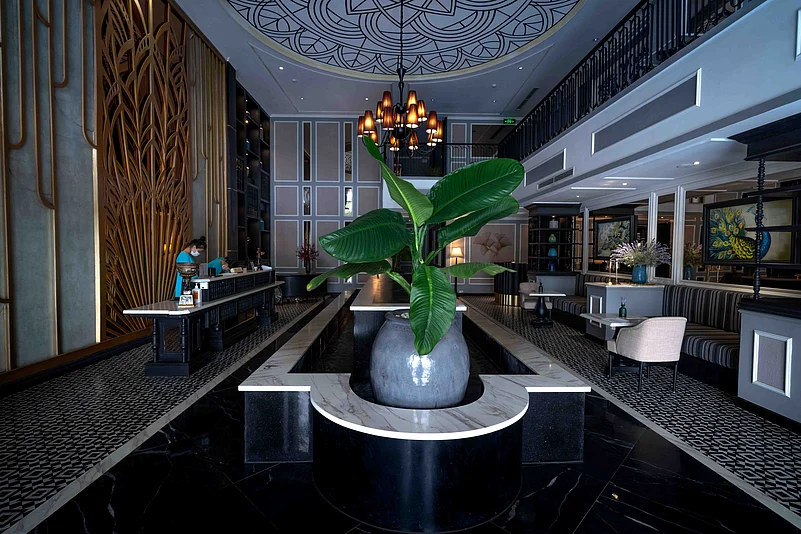
There's a reason hotel gift shops increasingly stock candles, room mists and travel-sized diffusers next to the postcards. Guests have started actively taking the scent, not just the souvenir, home with them. At The Leela, this has meant expanding Tishya beyond the standard amenity line, with lobby fragrances, car diffusers, fragrance mists, bath salts and candles all in the pipeline, alongside plans to retail the existing range. It reflects something larger: a shift toward what's being called experiential luxury, where a hotel stay doesn't end at checkout but continues, in smaller doses, in someone's living room.
The Peninsula sees the same instinct, but frames it slightly differently. Taking the amenities home isn't just about liking the smell—it's "taking home the feeling of a particular city," Wong says, adding that the recyclable aluminium packaging makes the gesture feel as considered as the scent itself.
A Traveller's Take
Hemant Mediratta, founder and CEO of One Rep Global, who tracks guest-experience trends across the luxury hospitality industry, has noticed this in his own travels long before it became an industry talking point. "Some of my strongest travel memories are actually tied to scent rather than sight," he says. "You may not always remember the exact details of a room or a lobby, but you do remember how a place made you feel, and scent plays a big role in that."
He describes the unmistakable mix of pine, sea air, and wild herbs that seems to define the Croatian island of Lošinj, set against the far more restrained fragrance at De L'Europe Amsterdam, adding a layer of sophistication without drawing attention to itself. In alpine destinations like Courchevel, he's noticed the scent profile shift entirely, warmer, deeper notes that arrive the moment you step in from the cold, folding naturally into those après-ski evenings. Even retail spaces have caught on: Galeries Lafayette in Paris, he points out, uses scent to shape how shoppers move through the building itself.
"I've often found myself, like many travellers, trying to recreate that feeling back home, whether it's through candles, diffusers, or even just certain fragrance notes," he says. "It's never exactly the same, but it brings back a sense of the place."
The Invisible Souvenir

What both Tishya's single, evolving signature and The Peninsula's twelve distinct city scents are really chasing is the same thing: a way to make a hotel stay outlast the stay itself. Mediratta says—fragrance "lingers with the guest, almost subconsciously, long after they've checked out." No photograph does quite that. The bed gets made by someone else, the towels get changed, and the view eventually fades from memory. But catch that one note again, months later, somewhere completely unrelated, and for a second, you're back in that lobby, shoulders dropping an inch, exactly where you left off.
FAQs
1. What is a signature hotel scent?
A signature hotel scent is a custom fragrance developed to reflect a hotel's identity and create a consistent, memorable guest experience.
2. Why do luxury hotels use signature fragrances?
They help shape first impressions, strengthen brand recognition, create emotional connections and improve guest recall.
3. Which hotels have signature scents?
Many luxury brands, including The Leela and The Peninsula Hotels, have developed distinctive fragrances as part of their hospitality experience.
4. Can guests buy hotel fragrances?
Yes. Many hotels now offer candles, diffusers, room sprays and other scented products so guests can recreate the experience at home.
5. How does scent influence travel memories?
The brain closely links smell with memory and emotion, making fragrance one of the strongest triggers for recalling places and experiences.