

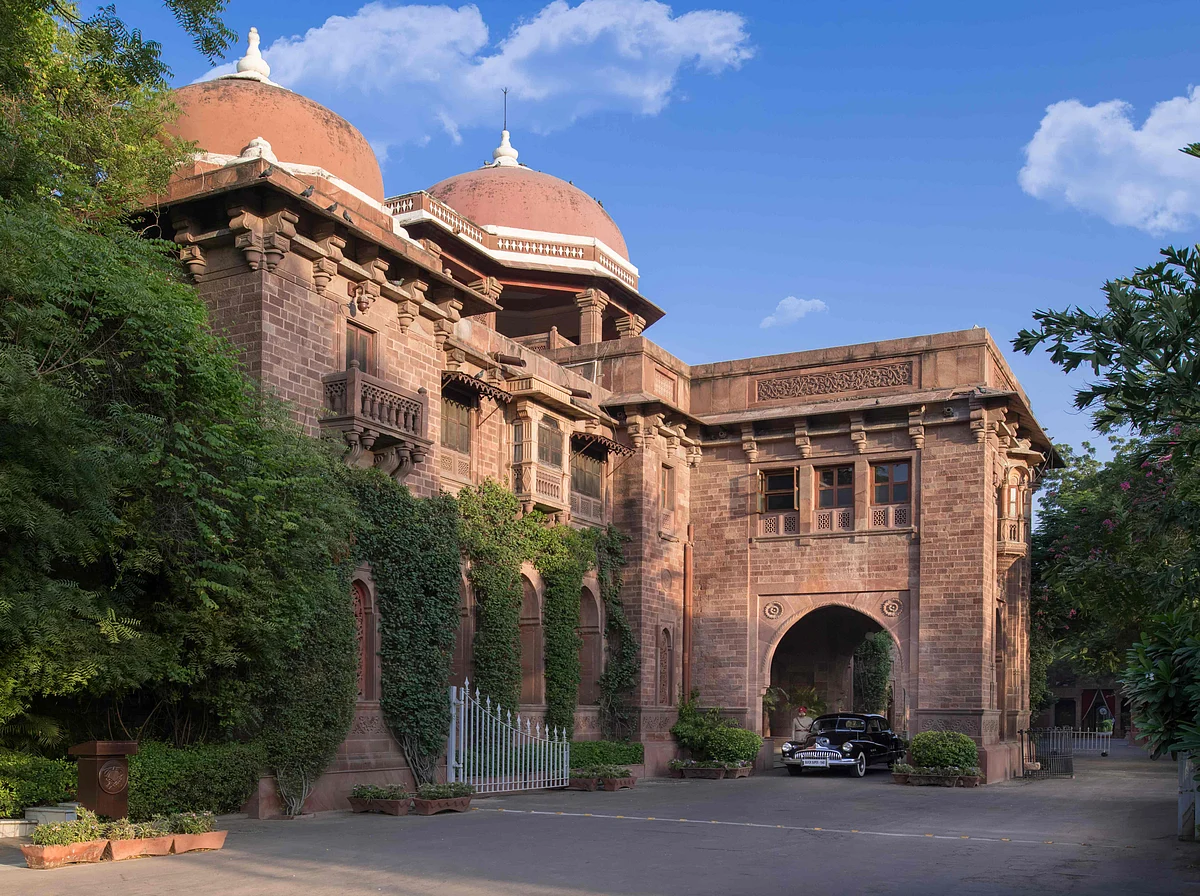
At Ajit Bhawan Palace, I found myself experiencing a glimpse into what life inside a royal residence might once have felt like in Jodhpur. Rajasthan, after all, is dotted with palaces that gleam with chandeliers, marble corridors, and centuries of grandeur. Ajit Bhawan, however, feels different—quieter and more intimate.
Built in the 1920s as the residence of Maharaja Ajit Singh of Jodhpur, Ajit Bhawan later became India’s first heritage hotel, opening its doors to travellers who wanted to experience royal living without the barriers of a palace gate. Today, the property houses 65 rooms that combine old-world charm with contemporary comfort, tucked into the leafy heart of Jodhpur and just a 15-minute drive from the formidable Mehrangarh Fort. That fort was my first stop in the city. But the moment I returned to the palace, eager to see my room, the stay began to reveal its character.
Rooms Fit For Movie Scenes
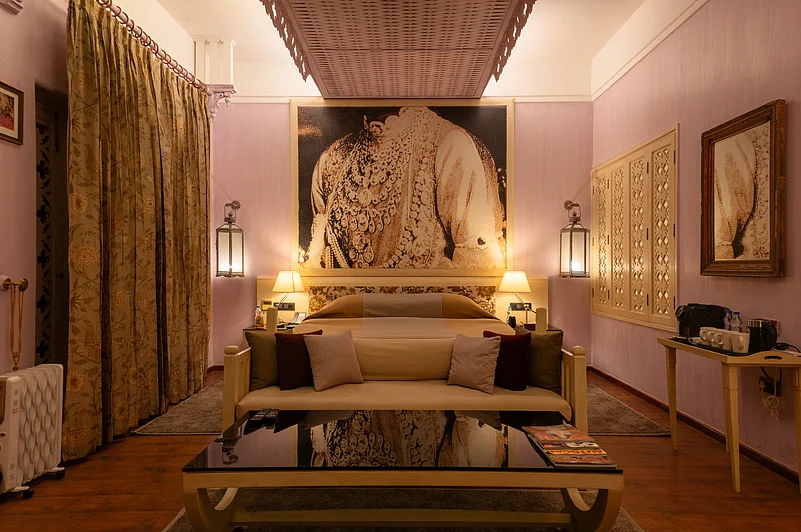

Growing up, I was obsessed with Disney movies. Palaces in those stories were always filled with velvet drapes, glowing chandeliers, and rooms washed in dreamy shades of pink and gold. It felt like pure fantasy—something that existed only on screen.
Until I stepped into my room at Ajit Bhawan.
The door swung open, guided by Magan from the front office, who was introducing me to the space. I paused mid-step.
Jodhpur is famed as the Blue City, but inside the room the colour seemed to take on an entirely new life. Soft blue accents flowed across the walls and furnishings, echoing the city beyond the palace walls. Gold detailing shimmered in the light, lending the room an almost cinematic quality—as though I had wandered into the set of Aladdin. It felt surreal.
Outside, February had draped Jodhpur in its most pleasant weather—warm but gentle, with the kind of stillness that makes a place feel unhurried. Inside the palace, that calm translated into an equally relaxed atmosphere. The property leans towards an old-money kind of luxury, not flashy, but subtle.
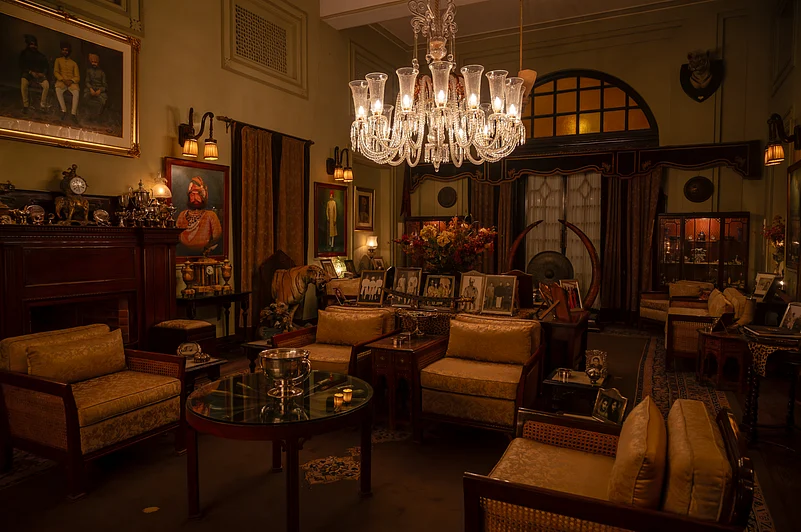
Later, during a property tour, I discovered another intriguing detail about Ajit Bhawan: no two rooms are quite the same. Even within the same Ajit Suite category, every space carries its own personality. One suite celebrates the desert with motifs of deer and sandy hues. Another is designed as a bridal suite, with romantic textures and ornate detailing. The Presidential Suite extends from the royal residence—one of the spaces that still forms part of the extended royal household.
By the time the tour ended, I realised that this place doesn't make anyone feel like a visitor. For a moment, it felt as though I had become a temporary member of the palace household.
Wandering Through The Blue City
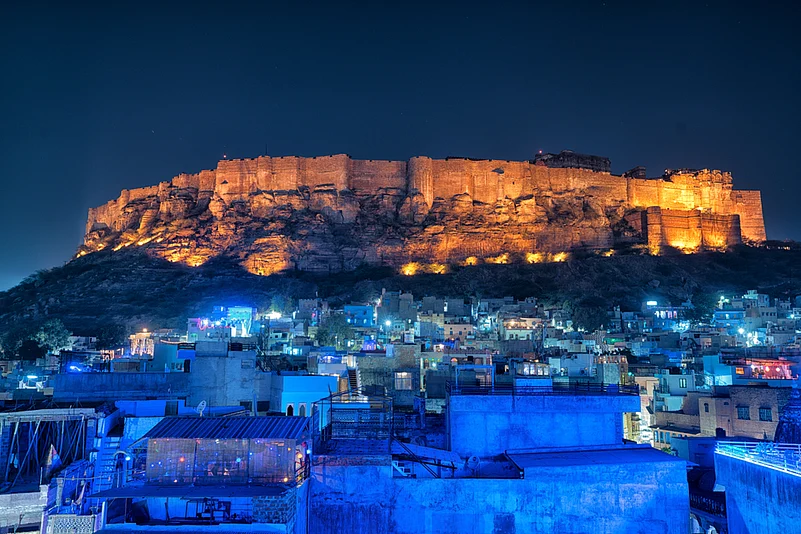
The next morning, Jodhpur revealed a completely different side.
We set out on a walk through the old Blue City, where the narrow lanes unfold like chapters of a living history book. The first thing I noticed were the handprints etched into stone near the entrance—silent reminders of women who had once performed sati or jauhar, marking moments of immense tragedy and sacrifice in Rajasthan’s past.
From there, the city slowly opened up. The lanes twisted through clusters of houses painted in striking shades of indigo, each one carrying its own nameplate and character. Walls glowed with layers of colour, some freshly coated with acrylic paint while others faded beautifully under the desert sun.
Life moved through these streets with an easy rhythm. Women walked gracefully past us balancing metal pots on their heads, headed towards neighbourhood temples tucked into unexpected corners. The temples themselves were dedicated to deities I had never heard of before—a reminder of how vast and layered India’s spiritual traditions truly are.
Eventually we found ourselves at one of Jodhpur’s most famous sweet shops. The city has long been known for its confectionery traditions, and stepping inside felt like entering a world where sugar, ghee, and nostalgia collide. Later, we stopped for a cup of tea at a local stall before heading back to the palace. By then, the afternoon sun had warmed the city just enough to make the cool palace interiors feel even more welcoming.
A Culinary Journey Across India
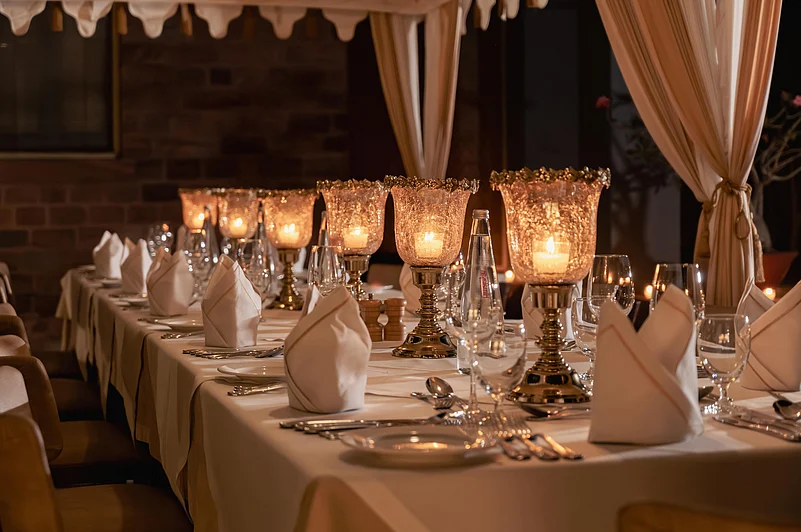
Dinner that evening unfolded as a curated tasting experience. At Ajit Bhawan, meals are treated as carefully designed culinary journeys, and the chef’s tasting menu moved through flavours from different regions of India.
The first course arrived as a delicate coconut malai and avocado-wasabi mousse paired with pickled mango gel. Next came a refined interpretation of Telangana’s pachi pulusu, accompanied by broccoli and almond textures and a jeerawan yogurt crostini topped with roast chicken.
One of the most memorable dishes followed: a poached pear infused with Kashmiri noon chai, served alongside salt-frosted walnuts and apricot vinaigrette. The gentle salinity of the pink tea enhanced the fruit’s sweetness, creating an unusual balance of flavours.
After a refreshing pause of gud nimbu pani (jaggery-lemonade), the main course appeared: Kerala-style roast lamb chops glazed with kali mirch and pomegranate, served with Provençal porridge and bhuna asparagus.
Dessert was perhaps the most memorable course. “Chiramisu”—a chai-infused reinterpretation of tiramisu—replaced espresso with strong masala chai, layering sponge cake with cardamom, ginger, and clove. A final serving of bajra custard phirni with berry compote closed the meal on a nostalgic note.
Feasts Of The Royal Kitchens
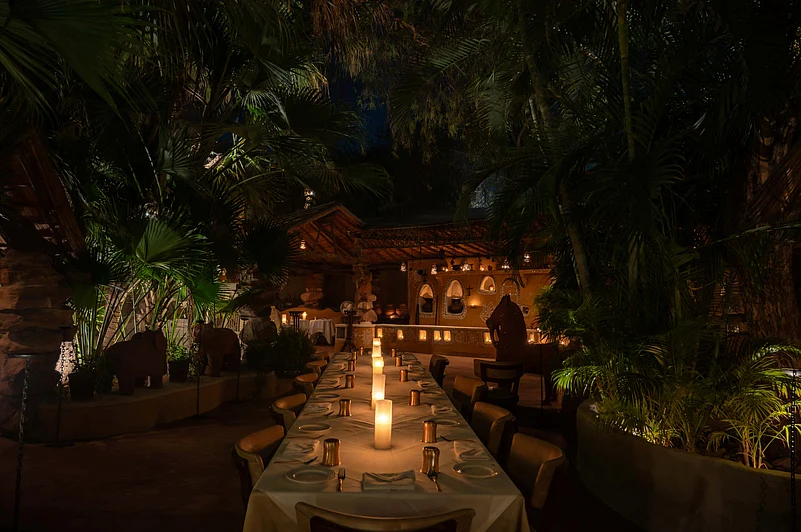
One of the most distinctive experiences of the stay took place the following evening—an immersive dinner showcasing lost recipes from the royal kitchens of Marwar.
The day leading up to it was spent exploring. We visited Bishnoi villages outside the city, stepping into the homes of farmers who spoke about traditions slowly fading with modern life. At another stop, artisans demonstrated the intricate craft of handwoven carpets. Later that evening, we gathered for hi-tea at the Gol Kamra, the royal family’s drawing room.
For dinner, I wore a red saree—because if there was ever a moment to lean into the royal fantasy, this was it.
We were hosted at Dhani within the palace complex, a setting that felt less like a restaurant and more like stepping into an old Marwar banquet. The menu traced centuries of culinary tradition.
There was Khad Maans—a fiery Rajput hunting dish believed to date back to the era of Rao Jodha, prepared with whole red chillies, garlic, curd, and ghee to preserve the natural flavour of the meat. What made it even more fascinating was the cooking method: the dish was buried in the ground and slow-cooked over coal.
Sikari Murghi, another hunting-era preparation from the time of Rao Maldeo, reflected the practicality of warrior kitchens where limited ingredients produced deeply satisfying meals. Maans Ka Soweeta, slow-cooked mutton in a thick gravy, spoke of the refinement that entered royal kitchens between the 16th and 18th centuries.
Alongside these were historic dishes like Bajre Ki Raab, a centuries-old millet drink desert communities relied on for nourishment and cooling relief, and Panchkutiyu Saag, made with five seasonal leaves. Chandaliya Ki Subzi, once loved by Maharaja Ajit Singh, celebrated ingredients that grew naturally in local fields.
The meal concluded with Mand, a saffron-scented layered rice dish, followed by Jodhpur’s famed Makhaniya Lassi and the delicate sweet Doodh Pheni.
Leaving With A Sense Of The Past

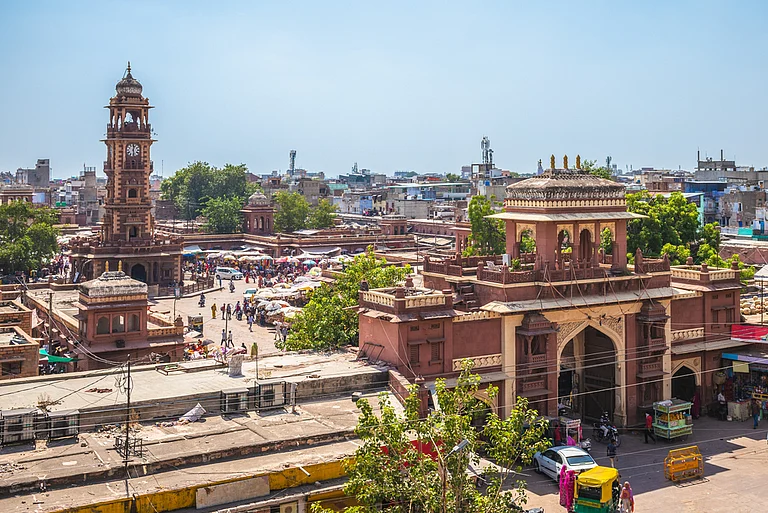
The next morning slipped by quickly. Before leaving, I made a quick visit to the bustling Clock Tower market, where the city’s everyday life unfolds amid spice stalls, textile shops, and vendors selling Rajasthan’s famous embroidered juttis. Naturally, I couldn’t leave without buying four pairs. As I walked back through the palace gates one last time, I kept thinking about how the trip had pulled me closer to the past.
While preserving history, Ajit Bhawan allows you to live inside it, even if for a little while. Between the blue streets of Jodhpur, the stories of its people, and the forgotten recipes revived from royal kitchens, the experience becomes something deeper than a luxurious stay. For a few days, you’re not just visiting a palace. You’re living in history.
FAQs
1. What is Ajit Bhawan Palace in Jodhpur known for?
Ajit Bhawan Palace is known as India’s first heritage hotel, originally built in the 1920s as the residence of Maharaja Ajit Singh of Jodhpur.
2. Where is Ajit Bhawan Palace located in Jodhpur?
The palace is located in the heart of Jodhpur, about a 15-minute drive from the historic Mehrangarh Fort.
3. What kind of rooms does Ajit Bhawan Palace offer?
Ajit Bhawan features 65 rooms and suites, each designed differently with a blend of traditional Rajasthani décor and modern comforts.
4. What experiences can guests enjoy at Ajit Bhawan Palace?
Guests can explore heritage walks in the Blue City, enjoy curated tasting menus, and experience traditional Marwar cuisine from royal kitchens.
5. What traditional dishes are served at Ajit Bhawan’s royal dining experience?
Signature dishes include Khad Maans, Sikari Murghi, Bajre Ki Raab, Panchkutiyu Saag, Mand rice, Makhaniya Lassi, and Doodh Pheni.