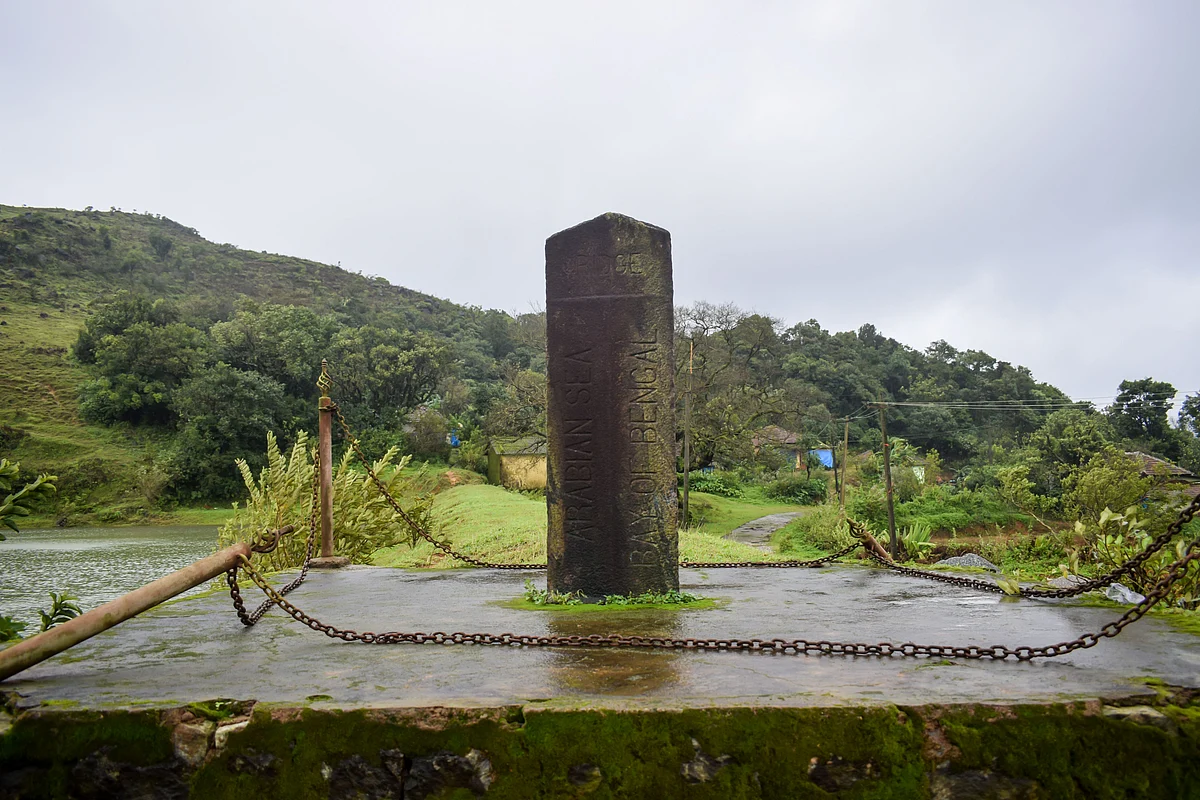
Bisle Ghat’s view point offers a 360 degree panoramic view of the Western Ghats. But before that comes a small, albeit unique stop. Not a waterfall, or a monument. By the roadside in the Mankanahalli village is a weathered stone slab on a low concrete platform. The words “Bay of Bengal” and “Arabian Sea” are written on either side.
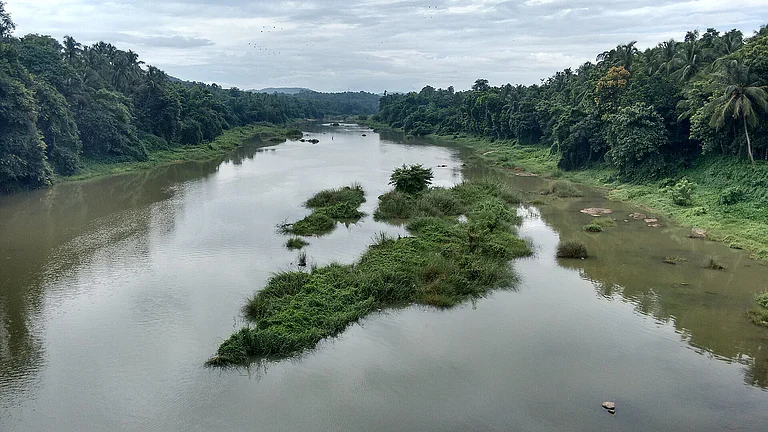
Initially it might come off as an odd marker on the road. But this stone is said to sort rainwater into the two seas on either side. A raindrop falling on one side of the ridge begins its journey west through the Kumaradhara and Netravati rivers to the Arabian Sea. One falling on the opposite slope joins the Hemavati, then the Cauvery, before draining into the Bay of Bengal.
Where The Ghats Decide
The misty roads and dense forest of the Bisle Ghat dominate the imagination of someone visiting the area. The Stone Ridge offers a different way to experience the same destination. This is the crest of the Western Ghats, and one of India’s great natural watersheds. The mountains, while framing the scenery, also decide where rivers begin and which sea receives the rain.
The drive from Sakleshpur to Bisle Ghat is adorned with coffee plantations, as the road meanders around the hills. During rains, clouds touch the hillsides, creating a dreamy atmosphere. The ridge stone appears almost unexpectedly on this journey. There are no ticket counters or elaborate signboards.
The History And The Surroundings
The stone is widely believed to have been installed during the British colonial period, when topographic surveys were increasingly becoming common. Ridge points are not uncommon in the hilly regions of the Western Ghats, each determining a river's flow either east or west from that point. Another such point is at Kalasa in Mudigere, where the water flows separately into the towns of Sringeri and Mudigere.
Once you have visited the marker, you can continue your journey towards the Bisle View Point, where the three mountain ranges- the Pushpagiri, Kumara Parvatha and Dodda Betta ranges unfold in succession. The surrounding Bisle Reserve Forest is part of one of the world’s recognised biodiversity hotspots and is perfect for some wildlife spotting.
FAQs
Q1. What is the Bisle Ghat watershed stone?
The Bisle Ghat watershed stone is a roadside marker near Mankanahalli village in Karnataka that indicates the natural ridge where rainwater flows in two different directions. Water falling on one side eventually reaches the Arabian Sea, while water on the other side drains into the Bay of Bengal.
Q2. Where is the stone that divides India's rainwater located?
The watershed stone is located near Mankanahalli village on the road between Sakleshpur and Bisle Ghat in Hassan district, Karnataka. It is a short stop before reaching the popular Bisle View Point.
Q3. How does the rainwater split between the Arabian Sea and the Bay of Bengal?
The stone sits on a natural watershed along the crest of the Western Ghats. Rain falling on the western slope flows through the Kumaradhara and Netravati rivers into the Arabian Sea, while rain on the eastern slope joins the Hemavati and Cauvery river systems before emptying into the Bay of Bengal.
Q4. What else can visitors see near the watershed stone?
After visiting the watershed marker, travellers can continue to Bisle View Point for panoramic views of the Pushpagiri, Kumara Parvatha and Dodda Betta mountain ranges. The surrounding Bisle Reserve Forest is also known for its rich biodiversity and opportunities for wildlife spotting.
Q5. When is the best time to visit Bisle Ghat?
The monsoon season (June to September) offers mist-covered hills, lush forests and dramatic scenery, making it one of the most picturesque times to visit. Those looking for clearer views of the Western Ghats may prefer visiting after the monsoon, between October and February.