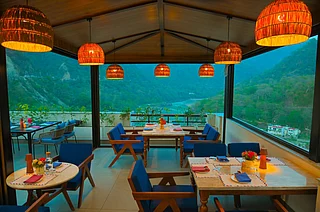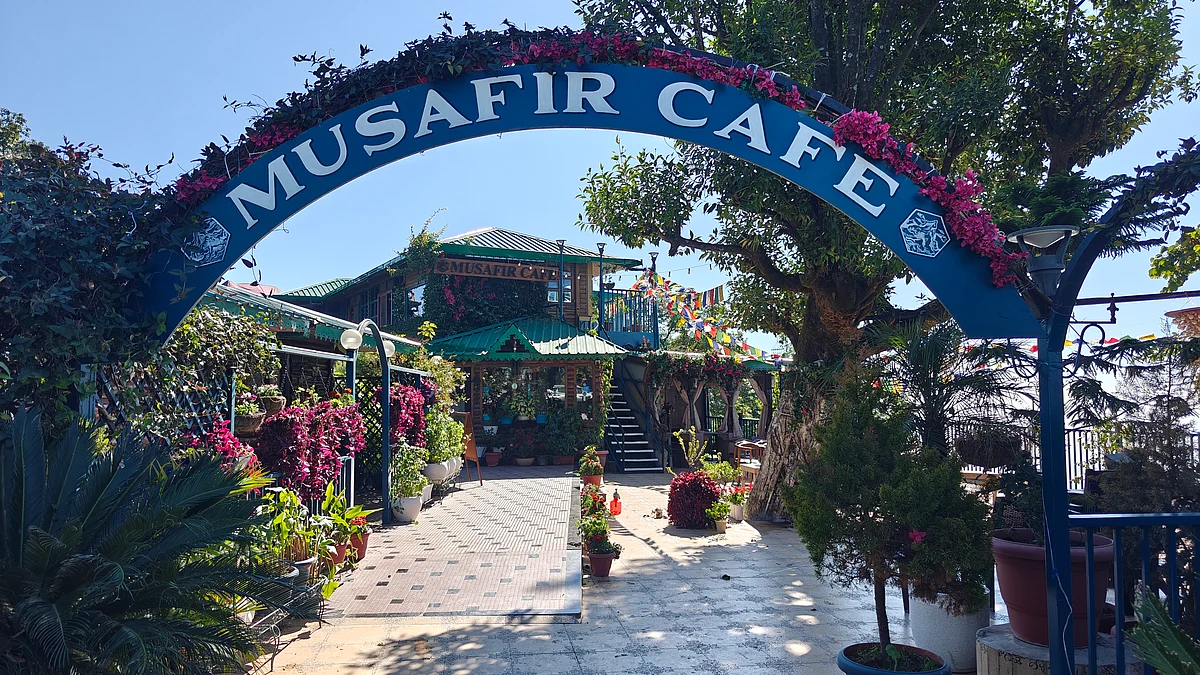
Most people who have fallen in love with the story of "Musafir Cafe" have also fallen hard for the location of the café itself. There might not be a Musafir Cafe in real life, but its setting certainly exists in Mussoorie's quieter Jharipani neighbourhood. The Jhairipani Castle has suddenly found thousands of travellers coming to see the famed Netflix cafe.
Film-induced tourism is not new, especially for an audience obsessing over “The Odyssey’s” film locations and planning their next trip to follow the Greek hero’s footsteps. Yet the story of Jharipani Castle does not end at being another aesthetic cafe in the hills. It was not built for a spectacle, or being a five-star hotel. It is a restored heritage home whose appeal lies in its age, its imperfection and the feeling that many lives have been lived within the same walls. It has evolved with time, being in sync with the gentle beauty of the rolling hills around.
More Than A Filming Location
The popularity of the Jharipani Castle says as much about changing travel preferences as it does about the success of “Musafir Cafe.” For years, luxury travel in India has largely celebrated certain hierarchical standards of excellence like lavish suites, big spas, and increasingly elaborate amenities. But today’s traveller, particularly the younger generation, is seeking something less tangible; places with meaningful stories.
Built in 1932 during the British era, Jharipani Castle later became the summer retreat of the Maharaja of Patiala before gradually falling into neglect. When the Bahri family acquired the estate in 2003, they chose not to replace it with a contemporary hotel but to restore what already existed. The result is not a museum frozen in time, nor a heritage hotel polished beyond recognition. Instead, a home where the original architecture, mountain views and warm hospitality coexist. The history in its very walls becomes a part of the emotional landscape of the series as well, when Chander finds Sudha’s scribbling on the wall, eight years after their parting.
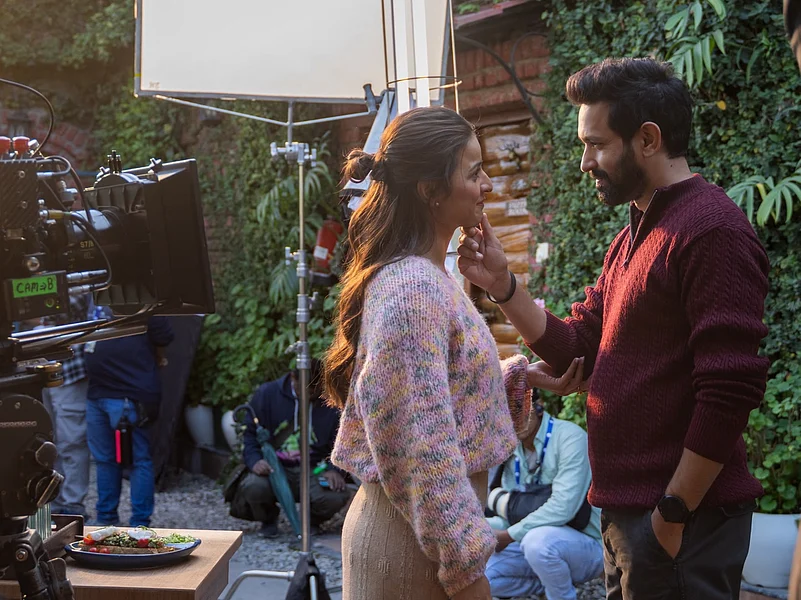

"When our family acquired Jharipani Castle, we didn't see a crumbling estate; we saw a living narrative," the Bahri family told Outlook Traveller. They were drawn not only to its history but to the details that would have disappeared with demolition; the Jack Arch roofs, deep red floors and two-foot-thick stone walls held together by a traditional lime-and-lentil mortar that predates cement construction in the hills. Practical considerations also played a role. Rebuilding an entirely new property demanded far greater capital than they possessed at the time. Having left behind the fast life of Delhi, preserving what they describe as "the soul of the estate" became non-negotiable.
That philosophy now defines the guest experience. Rather than promising standardised luxury, the family believes heritage hospitality offers something modern hotels often cannot, an emotional connection. As Uncle Mark’s dialogue from “Musafir Cafe” puts it, "Yeh humaara ghar hai. Yahan aapko hotel jaise conveniences toh nahi milenge... lekin khoob saari kahaniyan zaroor milengi." (This is our home. You will not get hotel-like conveniences here, but what you will get are loads of stories.)
The Return Of Living Heritage
After its era of being the Patiala House, the Jharipani Castle fell into disuse, until the 2003 takeover. Post that it was a careful decision as to how much restoration was enough. The stone-facade, wooden architecture, and some of the older furniture was retained, and what began as Uttarakhand's first Swiss tent resort in 2005 eventually evolved into the heritage property it is today.
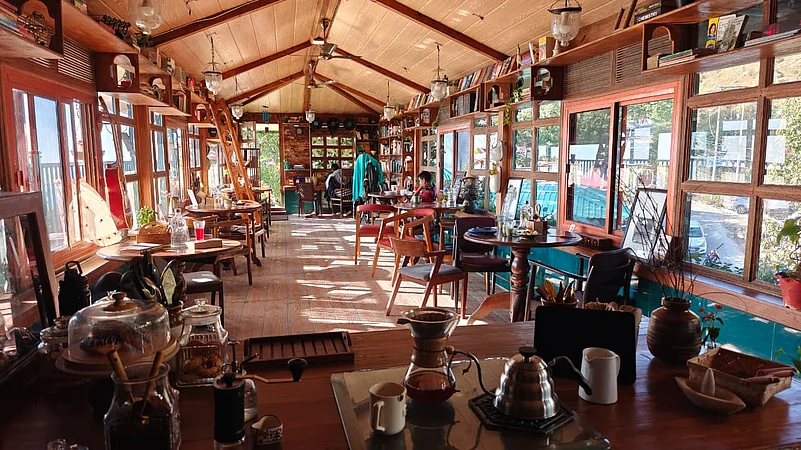
That journey places Jharipani Castle within a larger shift happening across India's hospitality landscape. Heritage properties are being restored rather than replaced, as travellers show a growing appetite for destinations with a strong sense of place. According to Skyscanner's India Culture Travel Index released this year, 67 per cent of Indian travellers now plan holidays around heritage, local culture, and food rather than simply sightseeing, signalling a broader move towards culturally rooted experiences.
Like many urban Indians who dream of leaving the city behind, the Bahris exchanged Delhi's pace for mountain life. They are quick, however, to temper the romance with reality. "The dream is very real, but so is the daily grit it takes to sustain it." Mountain life, they explained, is not simply about leisurely cups of tea overlooking misty valleys. Restoring and maintaining a heritage estate through harsh winters and monsoon rains demands patience, resilience, and an acceptance that "nature runs the show here, not your calendar."
When Fiction Finds A Home
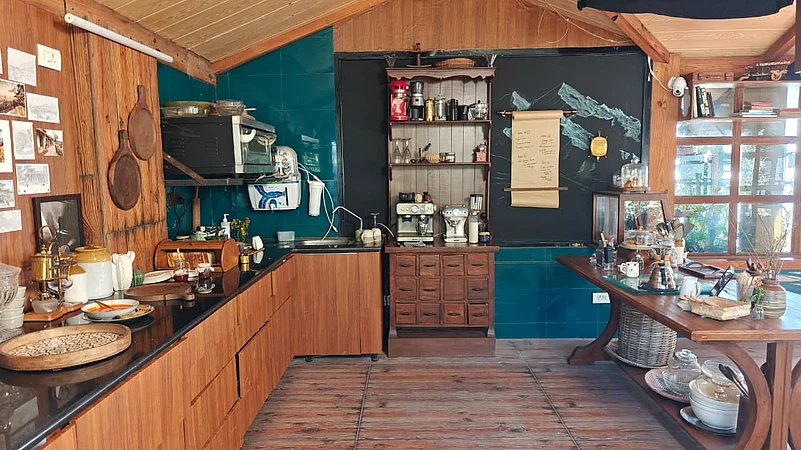
By the time Musafir Cafe arrived on Netflix, the Jharipani Castle had already spent two decades building its identity. The production transformed part of the estate into the fictional café, while using the property's gardens, staircases, terraces, mountain-view rooms and pathways as recurring locations throughout the series. The cast and crew lived on-site during filming in November 2025, taking advantage of a location that could offer colonial architecture, wooden cottages, and expansive Himalayan views without moving production equipment far.
The Bahris say they never worried that the property's identity would be eclipsed by its on-screen fame. Producer and writer Sharanya Rajgopal and director Ruchir Arun had specifically chosen the castle because of its character, meaning very little structural alteration was necessary. Instead, the art department layered temporary additions onto the existing architecture, a reading gazebo, custom-built library shelves, colourful prayer flags and Preeti's Corner with its Promise Wall.
For the family, the series did not replace the castle's identity but expanded it. Guests may arrive searching for Musafir Cafe, they say, but leave having discovered Jharipani Castle itself. "The on-screen persona didn't replace our soul, it opened the door for a new generation." Borrowing the language of the series, they added, "Musafir Cafe became the Preeti to our Chander."
Beyond The Screen
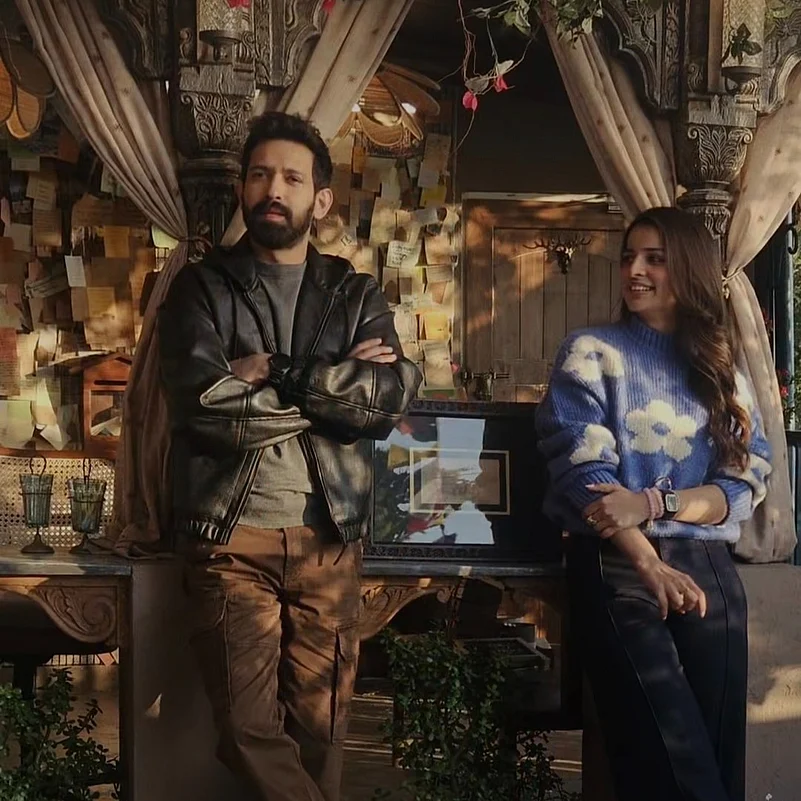
Perhaps no moment captures that transformation better than one evening during filming. Vikrant Massey and Mahima Makwana had just arrived from their city schedules when they stepped onto the castle's valley-facing terrace at dusk. The timing coincided with Mussoorie's famous winter line, when the horizon glows in bands of yellow, orange and mauve, a rare atmospheric phenomenon visible only in a handful of places worldwide.
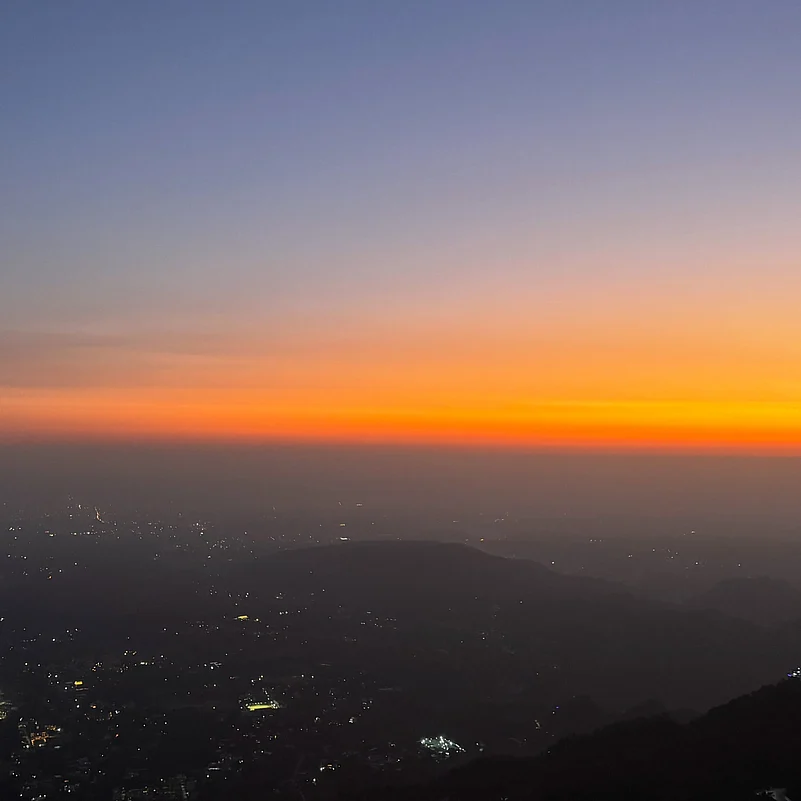
The family remembers the actors falling completely silent as the colours spread across the valley. For the Bahris, it was a reminder that Jharipani's greatest luxury has never been its architecture alone. "Watching two acclaimed actors drop their professional guard and simply take in the wonder of our mountain home was surreal. It reminded us that no matter who you are or where you come from, the magic of Jharipani has a way of slowing you down and leaving you speechless."
That may explain why Jharipani Castle finds relevance today. Visitors might first come looking for a Netflix location, but what they encounter is a home that has survived changing eras without surrendering its identity. In an age when authenticity is also curated, Jharipani Castle suggests that places live through stories and the innumerable lives lived under the same roof.
(With inputs from Mr and Mrs Bahri, and Vikram, host at Jharipani Castle)
FAQs
1. Where was Musafir Cafe filmed?
Much of Netflix's Musafir Cafe was filmed at Jharipani Castle, a restored heritage estate in Mussoorie's Jharipani neighbourhood. The property was transformed into the fictional Musafir Cafe for the series.
2. Is Musafir Cafe a real cafe?
No. Musafir Cafe is a fictional café created for the Netflix series. The filming location, however, is the real-life Jharipani Castle, which welcomes guests as a heritage stay.
3. What is special about Jharipani Castle?
Built in 1932, Jharipani Castle is a restored colonial-era home that once served as the summer retreat of the Maharaja of Patiala. Rather than being modernised into a luxury hotel, it has retained much of its original architecture, offering guests an immersive heritage experience.
4. Why is Jharipani Castle becoming so popular?
While the Netflix series has introduced the property to a wider audience, travellers are increasingly drawn to Jharipani Castle for its history, architecture and storytelling, reflecting the growing popularity of living heritage tourism in India.
5. What is living heritage tourism?
Living heritage tourism focuses on experiencing historic buildings and cultural spaces that continue to function as homes, hotels or community spaces. Instead of preserved museums, these places allow travellers to engage with history as a lived and evolving experience.