

A 2,800-year-old story has been brought back to life by Christopher Nolan. No points for guessing it is "The Odyssey." You might be a mythology geek comparing the film and the book to tea, or this might be your first encounter with Homer’s epic, which tells the tale of Odysseus’ return to Ithaca after the Trojan War. Or you might have read the story in school and wondered if Troy is real.
Hisarlik, in present-day northwestern Turkey, is widely claimed to be the original site of Troy, as Heinrich Schliemann excavated the site. The film, shot across six different countries, incorporates much of the dramatic landscape and the raging seas that Homer describes in his poetry.
Here are some of the places where the film was shot that you can actually travel to get the feel of the film.
Greece
In the Peloponnese region of Greece, a real-world cavern was used to stage Odysseus’ encounter with the one-eyed Cyclops monster. Located in the region's foothills, this cave has a vaulted ceiling 95 feet high. Then there is a prehistoric grotto above the Voidokilia Beach in Pylos, famous for its semicircular shape and turquoise waters. Other locations include Almyrolaka Beach, the medieval Venetian-built Methoni Castle, and the monolithic Acrocorinth, all of which feature in different parts of the film.

Italy
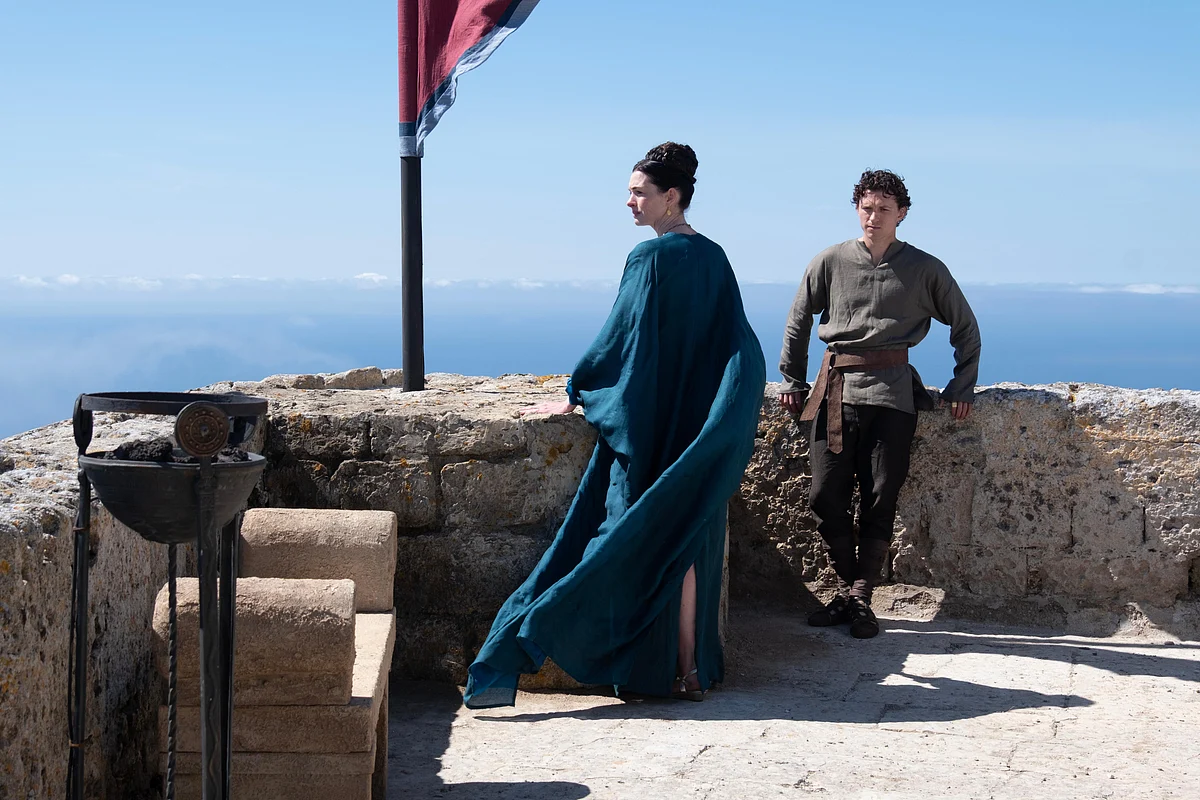
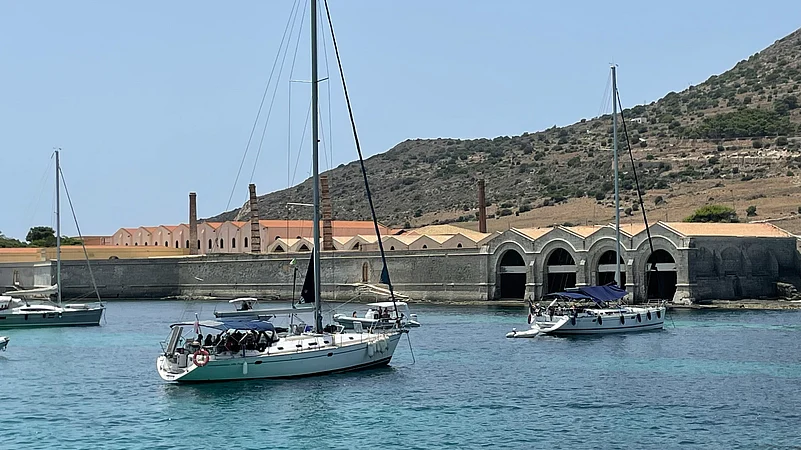
Ithaca, the kingdom of Penelope, Telemachus, and the returning Odysseus, is depicted on the island of Favignana, off the coast of Sicily. Here, the 15th-century Castello di Santa Caterina, located atop a rugged hill 1,030 feet above the Mediterranean Sea, was used as their home. This castle does not have a road leading up to it, so the cast and crew had to hike up each day of the multi-week shoot, along with helicopters that transported the equipment. The dramatic sea scenes were shot across the Aeolian Islands, which are a volcanic archipelago off the northern coast of Sicily. The islands of Lipari, Vulcano, and Basiluzzo are also shown in the film, with Lipari being the place where Odysseus rested as a guest of King Aeolus, the keeper of the winds in the original poem.
Scotland
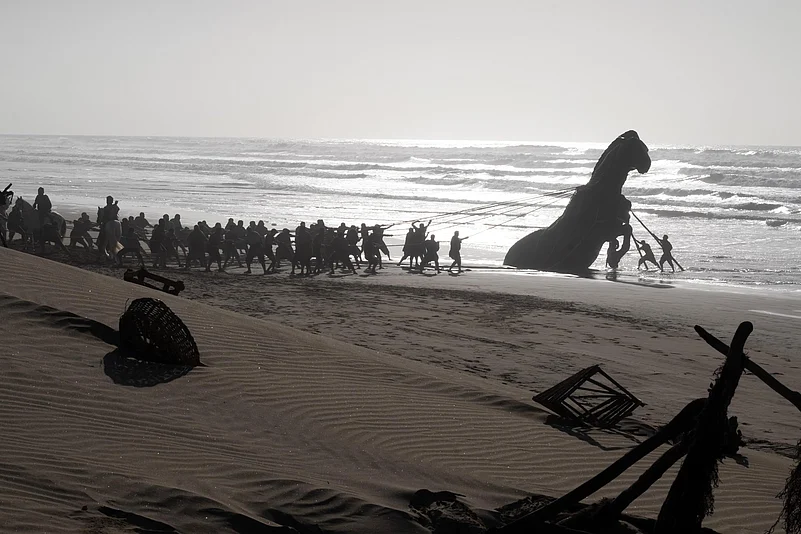
The Moray Firth coast of Scotland features in the film. The ruins of Findlater Castle serve as a windswept backdrop, in contrast to some of the Mediterranean settings. Additionally, the woodlands of Culbin Forest were used to stage an epic battle between the warriors and giants, and the historic coastal village of Burghead featured in some scenes as well.
Iceland
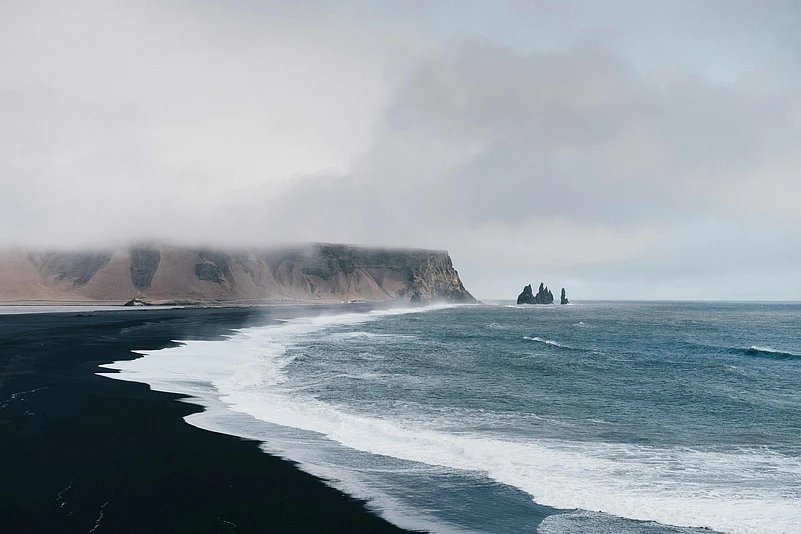
Odysseus does not only journey across the Mediterranean Sea but also to the underworld to consult the blind Theban prophet, Tiresias. To shoot for Nolan’s film, however, he goes to the top of the world, Iceland, which is used to set up the remote scene. Other filming locations include the black sands and caves of Hjörleifshöfði mountain, the Snæfellsnes peninsula, the Markarfljót River, and the harbor of Landeyjahöfn. Iceland has also earlier featured in Nolan’s "Batman Begins" and "Interstellar."
Morocco
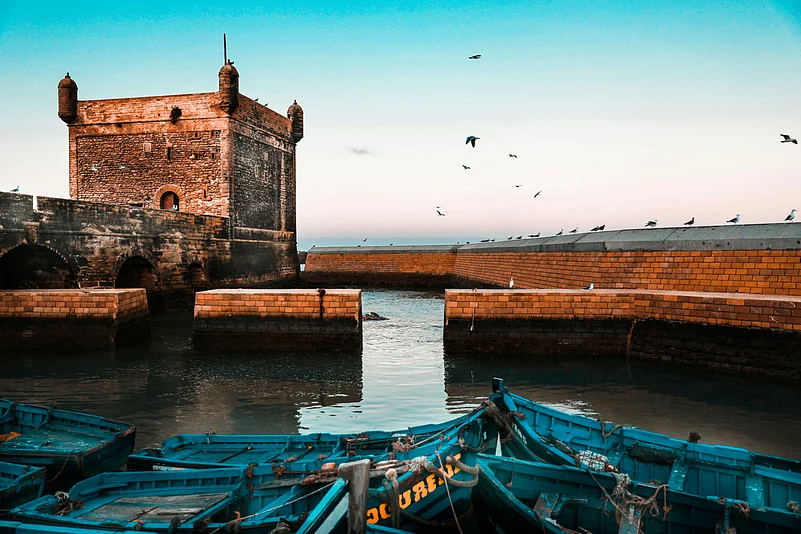
The beaches of Essaouira on the Atlantic Coast were used for the scene in which the Trojan Horse was discovered. The ancient city of Troy was recreated at the UNESCO World Heritage site of Aït Benhaddou with a massive 360-degree set. Additional filming locations involved Marrakech, Essaouira, and the coastal city of Dakhla. Morocco is another favorite for films depicting historic architecture and features in previous blockbusters like The Mummy, Gladiator, and Lawrence of Arabia.
FAQs
1. Where was Christopher Nolan's The Odyssey filmed?
The film was shot across several countries, including Greece, Italy, Scotland, Iceland and Morocco, using dramatic natural landscapes and historic sites.
2. Was The Odyssey filmed in Greece?
Yes. Several scenes were filmed in Greece, including locations around Pylos, Voidokilia Beach, Methoni Castle, Almyrolaka Beach and Acrocorinth.
3. Which Italian locations appear in The Odyssey?
The film features Favignana Island off Sicily as Ithaca, along with the Aeolian Islands, including Lipari, Vulcano and Basiluzzo.
4. Why was Morocco chosen as a filming location for The Odyssey?
Morocco's historic architecture and desert landscapes helped recreate ancient Troy. Filming took place at Aït Benhaddou, Essaouira, Marrakech and Dakhla.
5. Can travellers visit the filming locations from The Odyssey?
Yes. Most of the filming locations, including Greek archaeological sites, Sicily's islands, Scotland's castles, Iceland's volcanic landscapes and Morocco's historic towns, are open to visitors, though some may have seasonal access restrictions.