

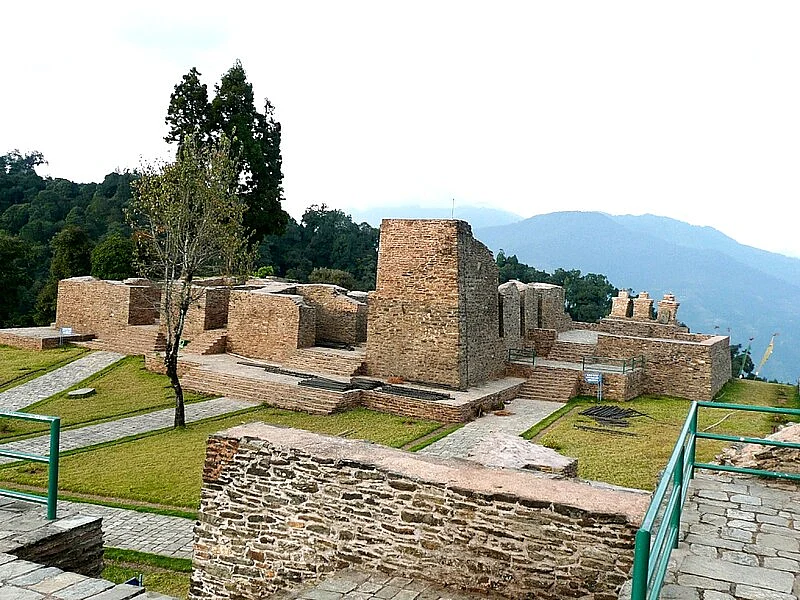
The first thing you notice about Rabdentse is the silence. A short walk through a forest of chestnut trees leads to weathered stone walls, crumbling palace foundations and moss-covered pathways that seem to melt into the landscape. Then the trees part, revealing sweeping views of the Kanchenjunga range—a reminder that this quiet hilltop was once the seat of a powerful Himalayan kingdom. It is easy to understand why Rabdentse, tucked away near Pelling in West Sikkim, is often called the "Machu Picchu of India."
The comparison has little to do with architecture and everything to do with atmosphere. Like the famed Incan citadel, Rabdentse is an abandoned capital where nature has reclaimed history with remarkable grace. Forests have wrapped themselves around ancient ruins, mountain mists drift across stone courtyards, and every weathered wall seems to hold echoes of a kingdom that shaped Sikkim long before Gangtok became its capital. Today, protected as a Monument of National Importance by the Archaeological Survey of India (ASI), Rabdentse remains one of the country's most compelling yet under-the-radar heritage sites.
The Rise Of A Himalayan Capital
Rabdentse's story begins in the 17th century, when the Namgyal dynasty was consolidating its rule over the Kingdom of Sikkim. Around 1670, the second Chogyal, Tensung Namgyal, shifted the capital from Yuksom to Rabdentse, establishing a new political and administrative centre perched dramatically on a ridge overlooking deep valleys.
The location was far from accidental. Elevated terrain provided a natural defensive advantage while also commanding panoramic views of the surrounding mountains. Within its fortified boundaries stood the royal palace, ceremonial courtyards, administrative buildings and religious spaces that reflected the close relationship between governance and Buddhism in the kingdom.
For nearly a century and a half, Rabdentse flourished. Kings governed from its stone throne, royal ceremonies unfolded within its courtyards, and important political decisions shaped the destiny of the Himalayan kingdom from this secluded ridge.
A Kingdom Forced To Move On
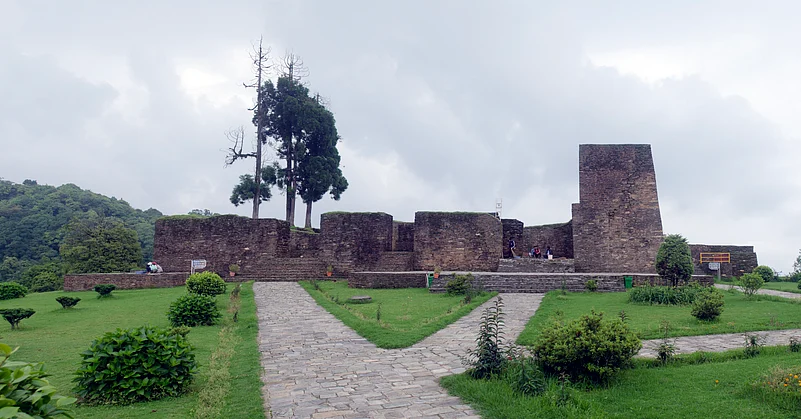

Like many mountain kingdoms, Sikkim's history was marked by shifting borders and regional conflicts. By the late eighteenth century, repeated invasions by the expanding Gurkha forces from Nepal dramatically altered the kingdom's fortunes. Rabdentse came under attack and was eventually destroyed, forcing the royal family to abandon the capital.
The monarchy later shifted its seat to Tumlong in North Sikkim, partly because Rabdentse's location close to the western frontier was considered vulnerable to future invasions. Unlike many historic capitals that rose again after conflict, Rabdentse was never rebuilt.
Instead, the forest quietly reclaimed what remained. Palace walls crumbled, roots wound their way through stone foundations, and centuries of rain and mist transformed the once-bustling capital into the evocative ruins visitors see today. Rather than diminishing the site, nature has become one of its defining features, lending Rabdentse an atmosphere that feels almost suspended in time.
Walking Through History
Reaching Rabdentse is part of the experience. From the entrance, an easy 15-to 20-minute walk winds through a peaceful forest lined with towering chestnut trees. Along the trail, visitors pass a small water body and remnants of the old defensive walls before emerging into the archaeological complex.
One of the first landmarks is Namphogang, an elevated stone platform crowned by three white chortens that remain among the site's most striking features. This ceremonial space was once the centre of royal life, where the Chogyals and their courtiers conducted state affairs, pronounced judgments and oversaw important ceremonies against the spectacular backdrop of the Himalayas.
Just beside it sits the king's stone throne, remarkably well preserved despite centuries of exposure to the elements. Though modest in appearance, it is perhaps the most powerful reminder that this quiet hilltop once governed an entire kingdom.
As visitors continue through the complex, the outlines of the former royal palace begin to emerge. Excavations by the ASI have revealed the foundations of the king's private chambers, guard rooms, assembly halls, the royal kitchen and expansive courtyards. Although the buildings themselves no longer stand, the layout offers a fascinating glimpse into the organisation of royal life several centuries ago.
Towards the northern section lies Dab Lhagang, an open quadrangle that served as the royal family's private prayer space. Unlike the southern religious precinct, where ordinary subjects gathered and sought audiences with the king, this sacred enclosure remained exclusive to the royal household.
One of the more curious features within the complex is a seven-foot-long white marble slab that continues to be revered by local communities. According to local tradition, it was carried to the hilltop by a single individual. Many also believe it marks the location of the ancient Risum Gompa monastery, adding another layer of spiritual significance to the site.
Where Nature & History Meet
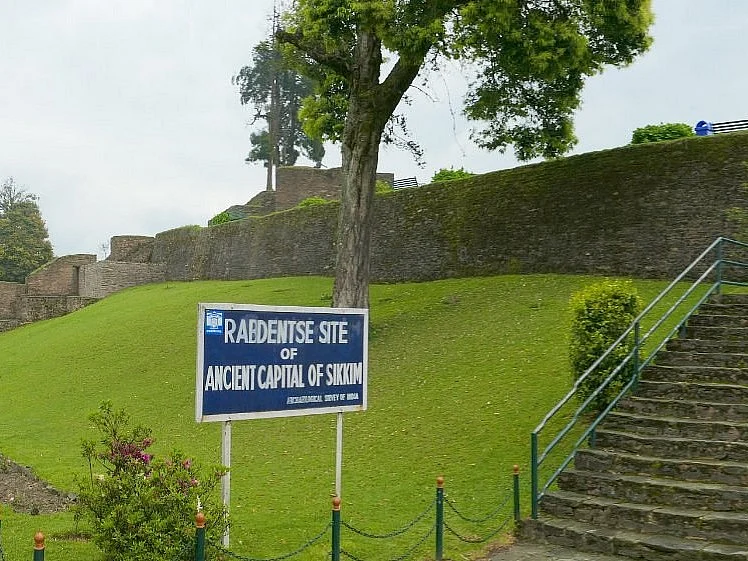
What makes Rabdentse especially memorable is how seamlessly archaeology blends into the landscape. Unlike many heritage sites where ruins are separated from their surroundings, here the forest is part of the monument itself.
Moss carpets ancient pathways, wild vegetation grows through palace walls, and birdsong replaces the sounds of a once-thriving royal city. The ruins seem to belong to the mountains as much as to history.
Adding to this natural charm is the Sidkeong Tulku Bird Park, located within the archaeological complex and named after Sikkim's tenth Chogyal, Sidkeong Tulku Namgyal. The park is home to around 200 bird species native to the Eastern Himalayas, making it a favourite among birdwatchers. Visitors may spot owls, pheasants, eagles, bulbuls, babblers, and flycatchers from its elevated viewing platforms.
And then there is Kanchenjunga. On clear days, the world's third-highest mountain rises beyond the ruins in all its snow-covered splendour. Few archaeological sites in India can claim such an extraordinary natural backdrop, and fewer still feel as peaceful.
Planning Your Visit
Rabdentse is located about two kilometres from Pelling, one of West Sikkim's most popular hill destinations. The ruins are easily reached by road, followed by the short forest walk that has become an integral part of the experience.
Travellers can fly into Pakyong Airport, around 135 kilometres away, though Bagdogra Airport in neighbouring West Bengal offers more frequent flight connections. The nearest major railhead is New Jalpaiguri (NJP), approximately 145 kilometres away. From both Bagdogra and NJP, taxis and shared vehicles make the five-to-six-hour journey to Pelling.
The best months to visit are between March and May, when rhododendrons brighten the hillsides, and October to December, when post-monsoon skies often provide spectacular views of Kanchenjunga. While the monsoon months cloak the landscape in lush greenery, they also make forest trails slippery. Winter, meanwhile, offers quieter surroundings and crisp mountain mornings.
A trip to Rabdentse is easily combined with several of West Sikkim's best-known attractions. The nearby Pemayangtse Monastery, one of the oldest and most revered monasteries in the state, offers a deeper understanding of Sikkim's Buddhist heritage. The Singshore Bridge, counted among Asia's highest suspension bridges, delivers dramatic valley views, while the sacred Khecheopalri Lake continues to draw pilgrims and nature lovers alike. Together, these sites paint a richer picture of the region's history, spirituality and extraordinary landscapes.
A Quiet Window Into Sikkim's Past
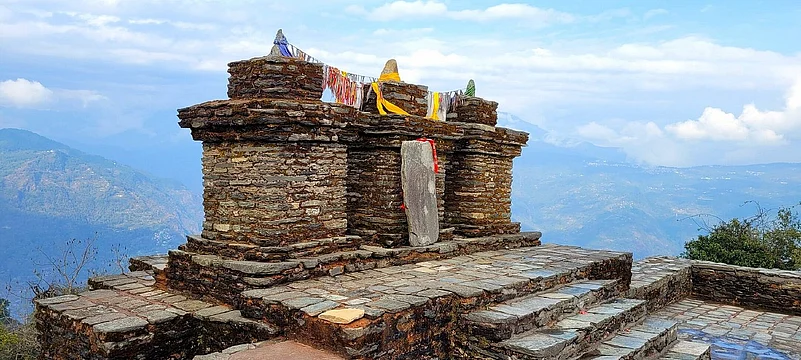
Rabdentse doesn't impress through grand palaces or imposing fortifications. Its appeal lies in what remains unsaid. The broken walls, weathered courtyards and silent stone pathways invite visitors to imagine the lives that once unfolded here—of kings holding court, monks offering prayers and a kingdom navigating the shifting politics of the Himalayas.
Perhaps that is what makes the comparison with Machu Picchu so enduring. Both are places where history lingers not in perfectly preserved buildings but in the relationship between landscape and memory. At Rabdentse, the mountains have become custodians of the past, guarding the remnants of a forgotten capital that still has remarkable stories to tell. For travellers looking to experience a different side of Sikkim—one rooted in history as much as in natural beauty—this quiet hilltop remains one of the state's most rewarding discoveries.
FAQs
Q1. Why is Rabdentse called the 'Machu Picchu of India'?
Rabdentse is often compared to Machu Picchu because its ancient ruins are nestled amid forests with spectacular mountain views, creating a similarly atmospheric setting.
Q2. Where is Rabdentse located?
Rabdentse is located near Pelling in West Sikkim, about 2 km from the town.
Q3. What is the historical significance of Rabdentse?
Rabdentse served as the second capital of the former Kingdom of Sikkim from the 17th century until it was abandoned after Gurkha invasions.
Q4. What can visitors see at the Rabdentse ruins?
Visitors can explore palace ruins, the king's stone throne, chortens, prayer areas, archaeological remains and enjoy views of Kanchenjunga.
Q5. When is the best time to visit Rabdentse?
The best time to visit is from March to May and October to December, when the weather is pleasant and mountain views are at their best.