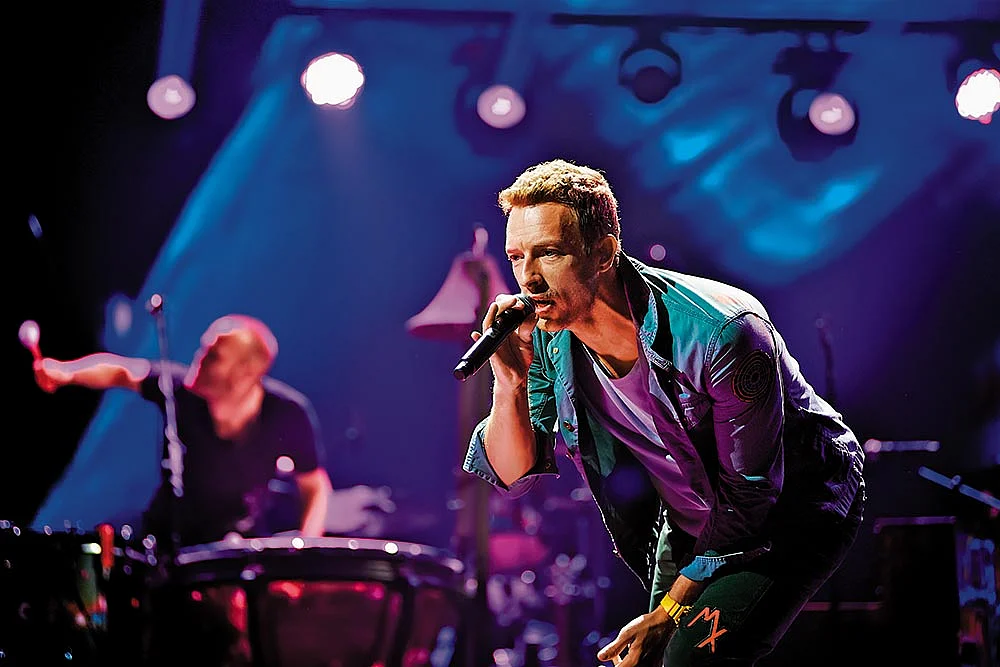
I was number 999,999+ in the queue. I know this because BookMyShow told me so, with the kind of cheerful precision that only software can deploy while delivering genuinely bad news. It was a Sunday morning in September 2024, and I had decided this was the moment to buy Coldplay tickets, like the rest of the country.
I did not get the tickets, obviously. Neither, it seemed, did most of India. BookMyShow crashed with all tickets selling out within 30 minutes. Resellers materialised within minutes, offering the same tickets for the price of a modest holiday. I found myself thinking—when did this happen? When did a concert become something you needed a strategy for?
The answer is that it didn't happen suddenly at all. India has been quietly building one of the most extraordinary festival economies in the world, and most of us were too busy being inside it to notice.


The Major Shift In Tourism
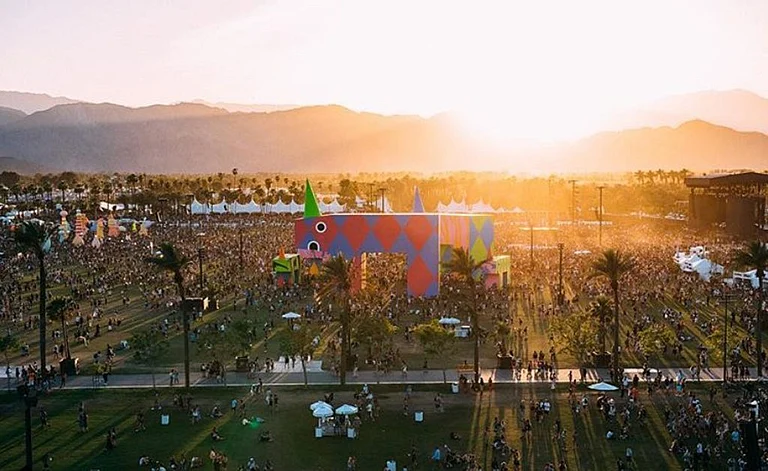
Think about how you travelled five years ago. Or ten. A long weekend meant a hill station or a beach. Festivals were things you attended if you happened to be in the right place at the right time. Now the Ziro Festival of Music sells out its limited 10,000 spots months in advance, with people booking flights to Arunachal Pradesh, before they have sorted their accommodation. The Jaipur Literature Festival turns the Pink City into a carnival every January, with every hotel, from five-star to budget, fully booked for the same five days. And Hornbill in Nagaland has people planning December trips a year out.
Indians have started travelling to festivals rather than stumbling into them, and that small change in preposition has built an economy so large it is difficult to hold in your head all at once.
“India’s festival economy didn’t emerge overnight—it has institutional roots,” said Mugdha Sinha, IAS, Managing Director, ITDC. She added, “What truly defines a successful festival economy is not just footfall, but movement, who is travelling, from where, and why. Institutionalisation happens when that movement becomes consistent.”
According to a 2025 RedSeer report, major Indian festivals together trigger approximately Rs 4.65 lakh crore in annual spending, with close to 40 per cent of the country's yearly retail sales concentrated in festival periods. This is not a seasonal blip, and nowhere is that more viscerally true than in the festivals that have anchored India's calendar for centuries.
The Gods & The GDP
When we talk of Durga Puja, it does not begin on Shashti. It begins with the faint scent of shiuli in the air, a small white flower with an orange stem that, to every Bengali, smells like homecoming.
But only now do I understand the scale of what unfolds alongside that emotion. A British Council study estimated the Durga Puja economy at over Rs 32,000 crore in 2019, which is about 2.6 per cent of West Bengal's GDP. By 2023, that figure had climbed to nearly Rs 50,000 crore. In just five days, over 14 lakh people travel to Kolkata. Kumartuli alone houses around 150 idol-making studios, employing thousands of artisans whose year turns on these few months.
What truly defines a successful festival economy is not just footfall, but movement, who is travelling, from where, and why
Further west, Ganesh Chaturthi tells a similar story. In 2024, the Confederation of All India Traders estimated that the festival generated over Rs 25,000 crore in business across Maharashtra, Karnataka, Gujarat, Andhra Pradesh, and beyond.
Not all festivals, however, are meant to scale indefinitely. Down South, in the sacred groves of North Kerala, theyyam unfolds in a way that resists easy translation into numbers. William Dalrymple, Scottish historian, bestselling author, and curator who wrote about theyyam in his book "Nine Lives," said, “What makes theyyam extraordinary is the contrast it embodies. People who would not ordinarily allow someone like Hari Das, a theyyam performer, into their homes will queue up to touch his feet when he is in performance.”
On the economic transformation that theyyam brings to its performers, he said, “Sadly, it doesn't make a huge difference to their economic performance. The remuneration varies depending on the patron, but it doesn't make them rich. The reason they do it is a sense of honour.”

The Literary City
Head west to Jaipur every January, and you encounter a different kind of festival economy—one that was, in a sense, invented from scratch. The Jaipur Literature Festival draws 4,00,000 people over five days. It is the world's largest free literary festival.
“The president of the Jaipur Hotel Association told me that JLF is the only time in the year when every category of accommodation, from luxury hotels to small B&Bs, is fully booked,” said Sanjoy Roy, Producer at Teamwork Arts, who has spent two decades building India’s festival circuit. “A festival creates a ripple effect far beyond its immediate venue. What is amazing about India is that storytelling and music are part of our bloodstream. It’s one of the few countries in the world where classical and traditional arts continue to succeed without subsidy.”

The Tribes & The Valley
In Nagaland, the Hornbill Festival was created by the state government in 2000 to bring all 17 tribes together on a single platform.
Theja Meru, Chairman of the Task Force for Music and Arts, Government of Nagaland, was there at the very first edition. “No one could have anticipated that it would grow into such an iconic celebration,” he said. By its 25th edition in 2024, Hornbill created more than 7,000 jobs during the festival period alone.
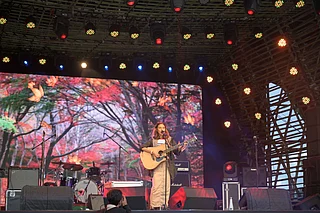
Further into the northeast, in the pine-draped Apatani valley of Ziro in Arunachal Pradesh, Bobby Hano co-founded a music festival with Anup Kutty in 2012 with 150 people and what he calls “some utopian ideas.” Fourteen years later, it draws 10,000 people annually—a number that has been held firmly in place by choice. "Ziro was never designed to optimise ticket sales," Hano said. "It was designed around an ecosystem." Homestays across the valley operate at near full occupancy every September. Local vendors, artisans, bamboo craftsmen, and farmers all participate. "What matters even more than the numbers is ownership. This isn't tourism happening to the community. It's value being created with the community."
Then there is the other end of the spectrum. In late 2024, Diljit Dosanjh's Dil-Luminati India Tour—13 cities, 14 performances, 3,20,000 tickets sold in under five minutes, generated a total economic impact of Rs 943 crore, according to an EY study, with 49 per cent of attendees travelling from Tier 2 and Tier 3 cities.

What We're Actually Talking About
India's festival economy is not new. What is new is that we have started paying attention to it—measuring, mapping, arguing, and crashing ticketing platforms, trying to access it.
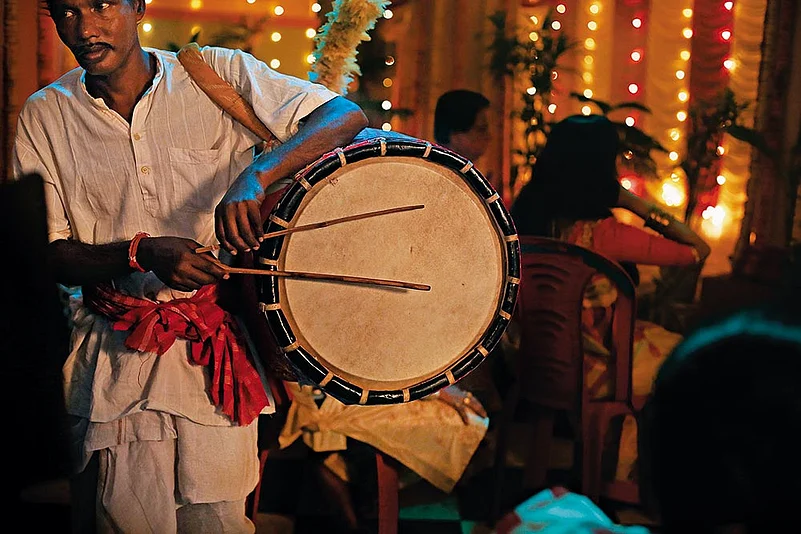
The shiuli flowers that signal Durga Puja in West Bengal have been signalling something economically significant for centuries. The dhaaki from Murshidabad travels 300 km each year to perform for just five days, because those few days earn more than the rest of the year’s 51 weeks combined.
What has changed is scale and speed and the arrival of a new kind of traveller: one who plans a trip around a festival.
Looking for more such exciting and meaningful stories? Grab our latest issue on Amazon.