

Every monsoon, I find myself caught in a dilemma.
As a naturalist, I spend much of my time encouraging people to step outdoors—to walk through forests, discover birds, butterflies, and dragonflies, marvel at bioluminescent fungi, photograph tiny wildflowers blooming on lateritic plateaus, or simply stand in the rain and experience the Western Ghats as it comes alive. There is immense joy in watching someone discover the wonders of nature for the very first time.
Yet, I also witness the unintended consequences of that growing love for nature. The same places that inspire awe are slowly buckling under the weight of our admiration.
One of my earliest encounters with this paradox came during the rise of bioluminescent trails in Goa. What began as a quiet opportunity to introduce people to one of nature's most magical spectacles quickly became a social media phenomenon. Soon, hundreds of people were descending on fragile forest patches at night. Torches flashed incessantly. The forest floor was trampled, and conversations grew louder while the forest grew quieter.
The irony wasn't lost on me. People had come to experience nature, yet their very presence was diminishing the experience—for themselves, for others, and quite possibly for the organisms they had travelled to see.

Not props for engagement
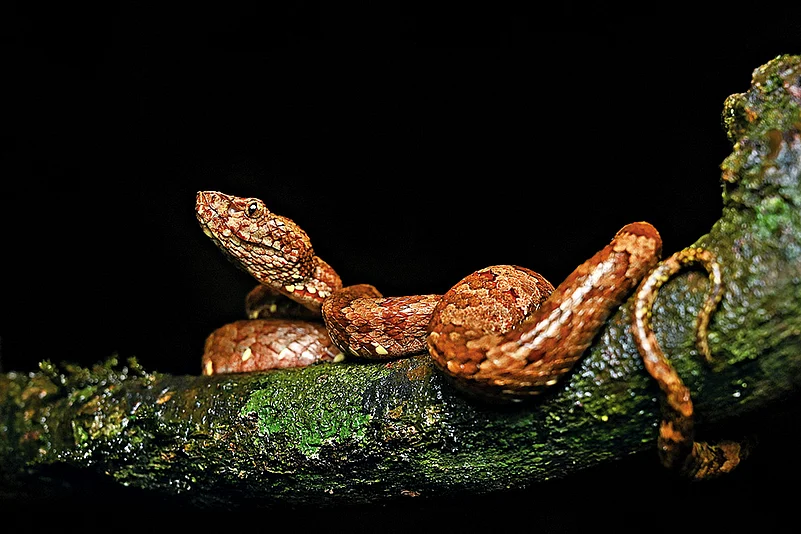
The most troubling change I have observed, however, is our growing tendency to treat wildlife as props for entertainment.
Over the years, I have seen snakes handled by well-meaning people to capture a beautiful image or create engaging social media content. Every monsoon, videos circulate of people holding vine snakes or lifting harmless species for photographs. The photograph seems to be more important than the animal itself. The justification is almost always the same: "We know how to handle them." But the question is not whether we can. It is whether we should. Every unnecessary interaction adds stress to an animal already navigating breeding, feeding, and survival during a season critical to its life cycle. Wildlife photography and nature tourism should be about observing wild creatures behaving naturally—not about creating opportunities for close encounters.
There is no better example of a seasonal wildlife-centric tourism model than in Amboli, Maharashtra. A haven for reptiles and amphibians, the densities are so high that there has not been a single trail in the last ten years, where we haven’t seen a snake. With such high densities and some range-restricted critically endangered species, the responsibility is higher.
The naturalists operating there have an understanding with the Forest Department. No trails are conducted without a local, trained and certified naturalist accompanying the wildlife enthusiasts. A self-imposed restriction on the time spent in the field adds another layer of responsible behaviour; no trails go beyond 9.30 pm. This is with the clear understanding that some of the sought-after frog species begin breeding late at night.
No handling is allowed by the guests or the naturalist, unless a rescue is necessary. Some guests do complain, but the rules apply to all. If any naturalist is seen breaking the rules, he is taken to task internally. A certain fee also goes to the local panchayat, thus ensuring their stake in the activity. All this has evolved since the early days, when it was free for all without any restrictions, until the realisation dawned that it would not be sustainable in the long run. Operating responsibly also makes business sense.
The monsoons also transform waterfalls into some of the busiest tourist destinations in the Western Ghats. Riparian patches and waterfall surroundings are among the most promising places to observe wildlife, but the experience is not always pleasant. Plastic bottles and snack wrappers begin to appear along trails. Liquor bottles, some broken, are strewn around water bodies. Disposable plates, glasses, and food waste are common sights. The waterfall is still beautiful; it hasn't changed. We have.
The irony is that very few of these visitors intentionally set out to harm nature. Most genuinely love being outdoors. They travel because they seek beauty, peace, and connection. But somewhere between viral reels and weekend itineraries, we have begun measuring success by how many people visit a place rather than by how well that place survives the attention. This is the traveller's dilemma.
The goals of nature travel
As someone who conducts nature experiences, I wrestle with this constantly. Should I promote a newly discovered dragonfly habitat? Should I reveal the location of a pristine plateau covered in endemic flowers? Should I organise another walk at a site that is already receiving increasing attention?
The most meaningful journeys are not always about reaching undiscovered places. Sometimes, protecting fragile landscapes means keeping them quiet, travelling responsibly, and ensuring that every destination remains intact for those who come after us. That could mean carrying back someone else's litter. Choosing a smaller guided group over a crowded event. Keeping a respectful distance from wildlife. Accepting that some experiences are meant to be observed quietly rather than photographed endlessly. Or recognising that not every beautiful location needs to become the next trending destination.
From a tour operator’s perspective, a responsible operator must take a step back and ask, "Why am I doing this? What is my objective?" For me, the bottom line is not the money. It is obviously a driver, but the bottom line is conservation, education and awareness. If the people who walk with me return better educated and with greater respect for the land and its people, I will consider it a job well done.
The Western Ghats have survived millions of monsoons. Whether they continue to inspire future generations depends not only on government policies or protected areas but on the choices each of us, operators and tourists alike, makes when we step onto a forest trail.
After all, the true measure of responsible travel is not how deeply a destination touches us. It is how lightly we touch the destination.
Looking for more such exciting and meaningful stories? Grab our latest issue on Amazon.