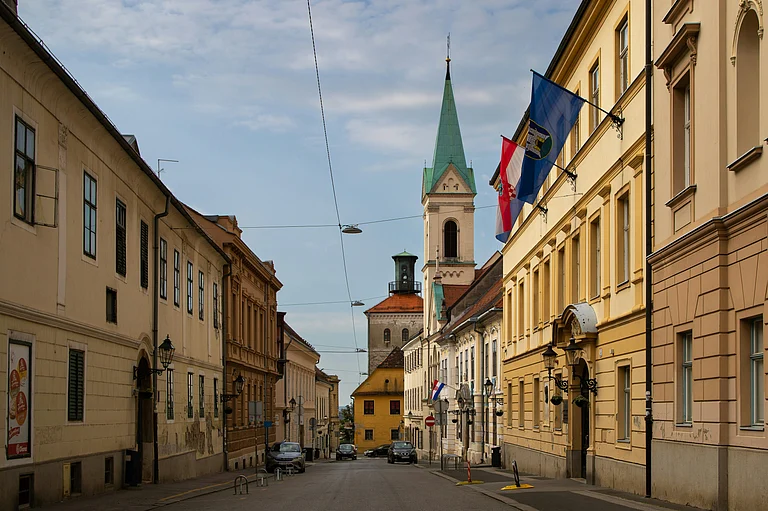
Croatian markets, known locally as plac, pazar or tržnica, are lively open-air hubs where fresh produce, local delicacies and everyday social life come together. Typically operating from early morning until around 2 PM, they are a fixture in town and city centres across the country. Stalls brim with seasonal fruit and vegetables, olive oil, cheese and flowers, while many larger markets also feature handicrafts and textiles, often housed in older, purpose-built halls with a sense of history about them.
Dolac Market, Zagreb
The Market
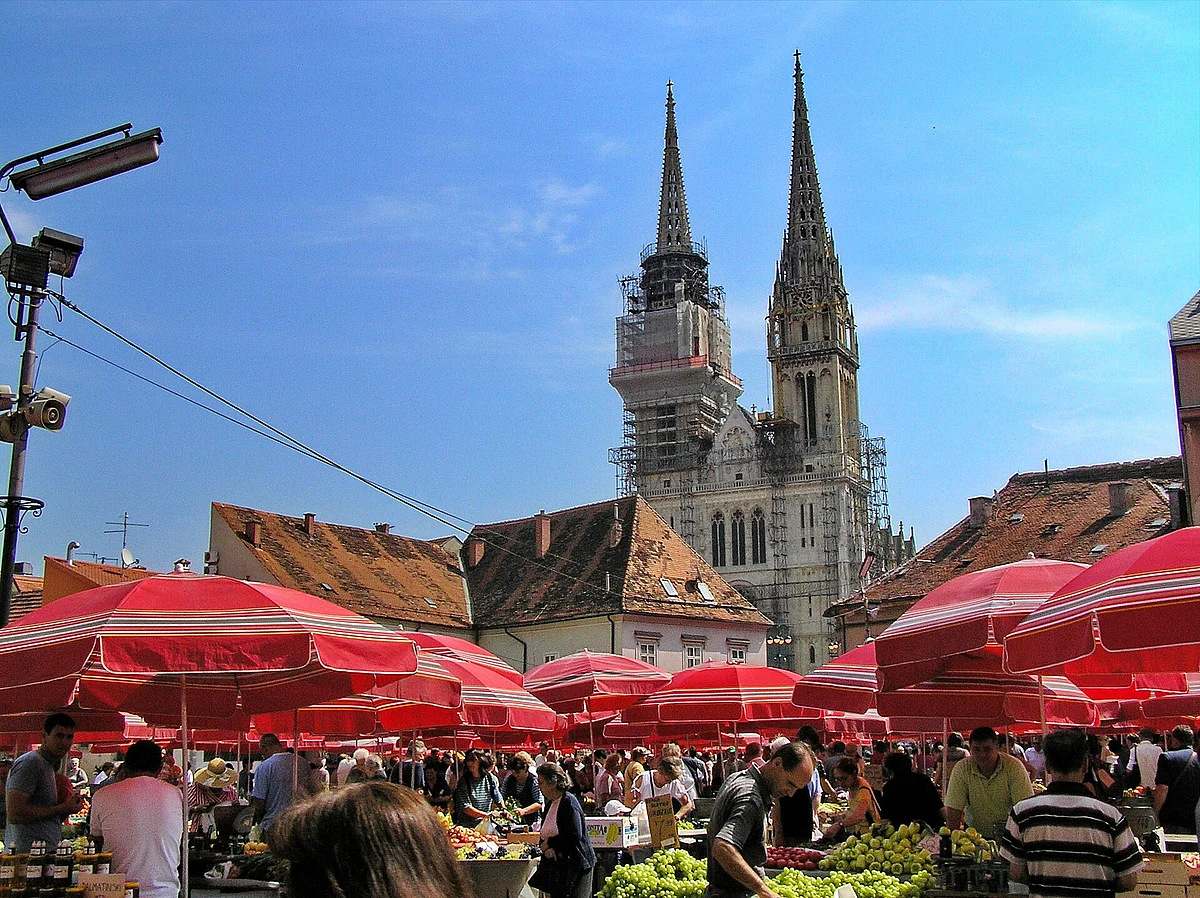
Dolac Market is Zagreb’s central market, set just above Ban Jelačić Square between Kaptol and Gradec. Established in the 1930s, it has long been the city’s main trading point for fresh food and remains a daily fixture for locals. The upper open-air section is instantly recognisable for its red Šestine umbrellas (Šestinski kišobran), which line the stalls and give the market its signature look, with the cathedral rising just behind.
What You Can Buy
Stalls are filled with seasonal fruit and vegetables from nearby farms, alongside cheese, honey, and olive oil produced across Croatia. Flowers line the stairways leading up to the market, adding bursts of colour. Below ground, the covered hall focuses on meat and fish, with butchers and fishmongers offering fresh Adriatic catch and traditional cuts. You’ll also find small-batch truffles, dried goods and lavender products.
What To Know
Best visited early in the morning when produce is freshest, and the market is busiest.
Location: Above Ban Jelačić Square, central Zagreb
Best time: Early morning (finishes around 2 pm)
Don’t miss: The upper square for photos with the cathedral backdrop
Nearby sights: Zagreb Cathedral, Stone Gate, St Mark’s Church
Tip: Go early to avoid crowds and see full stall displays
Pazar Market, Split

The Market
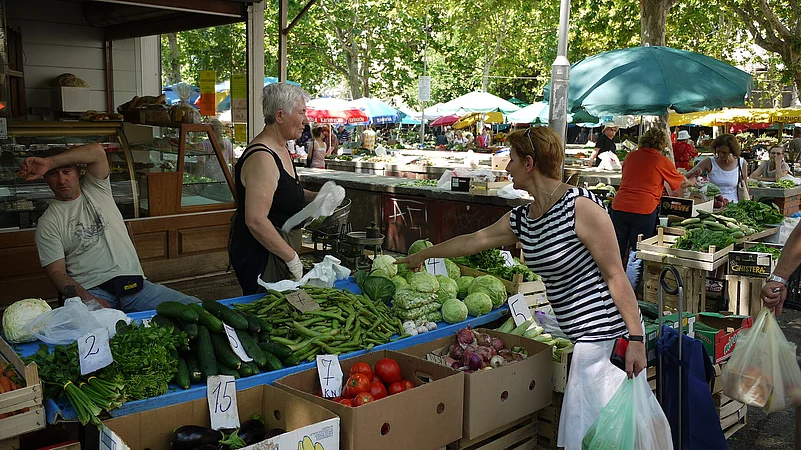
Pazar Market, often called the Green Market, sits along the eastern walls of Diocletian’s Palace in Split. It has long served as the city’s main daily market and remains closely tied to local life. Open from early morning until around 2 PM, it draws farmers, fishers and small producers into the heart of the old town. The setting alone—stalls pressed against ancient stone walls—gives it a distinctly Split atmosphere, lively, informal and full of movement.
What You Can Buy
Stalls are packed with seasonal Dalmatian produce, from figs, cherries and tomatoes to other fruit and vegetables grown in nearby fields. Alongside this are regional staples such as Pag cheese, local honey, and cured meats like pršut. Lavender products, herbs and essential oils are widely sold, reflecting the region’s strong aromatic traditions. Flower stalls add splashes of colour throughout the year, and the overall mix of produce, scents and voices makes it one of the most atmospheric shopping experiences in the city.
What To Know
Location: Eastern edge of Diocletian’s Palace, near the Church of St Dominic
Opening hours: Early morning to around 2 PM.
Best time to visit: Early morning for the widest choice and freshest produce
Good to combine with: The nearby fish market (Ribarnica) and a walk along the Riva promenade
Tip: Go early, then head to the waterfront for coffee and fresh fruit afterwards
Gundulićeva Poljana Market, Dubrovnik
The Market
Gundulićeva Poljana Market sits in the heart of Dubrovnik’s Old Town, on a historic square beneath the statue of Ivan Gundulić. It opens in the early morning and runs until early afternoon, bringing together small producers from the surrounding Konavle region. The setting is particularly striking, framed by baroque architecture and close to the famous Jesuit Stairs, a recognisable filming location from "Game of Thrones". It is one of the city’s most atmospheric spots for a morning wander.
What You Can Buy
The market is best known for produce brought in from the nearby Konavle region, with stalls offering seasonal fruit and vegetables picked at peak freshness. Alongside this are local specialities such as candied orange peel (arancini), jars of honey and small bottles of grappa made in surrounding villages. Dried lavender is a constant presence, often sold with lavender oils, soaps and other simple, handmade goods that reflect the region’s rural traditions. While a few artisan items appear, it is very much a food-led market rooted in everyday local produce.
What To Know
Location: Gundulićeva Poljana, Dubrovnik Old Town
Opening hours: Early morning to early afternoon
Best time to visit: First thing in the morning before cruise crowds arrive
Highlights: Square setting beneath Jesuit Stairs and close to key Old Town landmarks
Good to combine with: A coffee in one of the surrounding cafés and a walk through the Old Town streets
Hrelić Flea Market (Jakuševec), Zagreb
The Market
Hrelić Flea Market, officially known as Jakuševec, is Zagreb’s largest open-air market and one of its most characterful. Located in Novi Zagreb near the Sava River, it operates mainly on Sundays and spills across a vast, rough-and-ready site filled with rows of stalls and improvised stands. This is not a polished shopping space, but a working market that draws locals in search of bargains, second-hand goods and the unexpected. It has a reputation for selling almost anything, often summed up locally as “from needles to locomotives”.
What You Can Buy
Hrelić is less a curated market and more a sprawl of whatever people no longer need. Stalls range from neatly laid-out second-hand clothes and worn-in boots to tables stacked with tools, kitchenware and household bits with unclear histories. Elsewhere, you’ll come across old books, vinyl records and furniture that has clearly lived a few lives already. Scattered among it all are fragments of the past—Yugoslav-era badges, military medals, faded posters and the occasional object that is harder to categorise than it is to resist picking up. Prices are low, and haggling is expected rather than exceptional.
What To Know
Location: Novi Zagreb, near the Sava River (Jakuševec area)
Opening hours: Sundays (main day, early morning to around midday); Wednesdays are smaller
Best time to visit: Early morning for the best finds
Getting there: Tram or bus from central Zagreb, or taxi/Uber for convenience
Food & drink: Simple local food stalls serving dishes like čevapčići and kotlovina are widely available
Gruž Market, Dubrovnik
The Market
Gruž Market is located down by the harbour near the port and bus station. It runs early in the day and is busiest before mid-morning, when locals come to do their daily shopping. Stalls are set out each morning as deliveries arrive, giving it a practical, working feel that reflects everyday life in the city rather than the tourist flow of the Old Town.
What You Can Buy
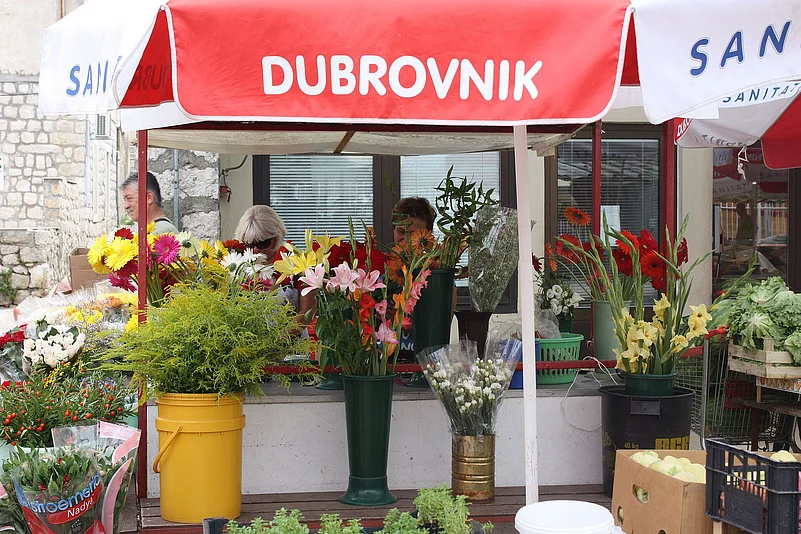
The stalls are filled with produce from the surrounding region, particularly the Neretva Delta and Konavle, with seasonal fruit such as tangerines, figs, cherries and citrus arriving in the early hours. Vegetables are often locally grown and still carrying the mark of the field. There is also a strong focus on everyday staples—wheels of cheese, jars of honey and bottles of olive oil sold directly by producers. Fish and seafood are a key part of the market, especially on Fridays, while morning flower sellers add colour to the waterfront setting. Dried lavender and simple homemade goods round out the selection.
What To Know
Location: Obala Stjepana Radića 21, Gruž, near Dubrovnik port
Opening hours: Early morning to late morning
Why go: More affordable and less tourist-focused than Old Town markets
Getting there: Easy access by local bus from Dubrovnik centre
Tip: Arrive early for the best selection; prices are generally fixed, though small reductions may appear later in the day
FAQs
What kind of food will I find at Croatian markets?
Most markets are built around seasonal, local produce. Expect fresh fruit and vegetables, along with regional specialities such as honey, olive oil, lavender products, truffles, prosciutto and Pag cheese. Many also have dedicated fish (ribarnica) and meat (mesnica) sections.
Are Croatian markets just for food?
No. While food is central, some markets go far beyond that. Places like Zagreb’s Jakuševec flea market sell everything from second-hand clothes and antiques to books, tools and unusual curiosities.
Which markets are the most famous?
Dolac Market is the best-known in Zagreb, with its red umbrellas and central location, while Pazar Market is a key daily market in Split beside Diocletian’s Palace. Each city has its own version of a lively central market space.
Why are markets important in Croatia?
They act as social hubs as much as shopping spots. Locals meet, chat and shop—especially in the mornings and on Saturdays—often combining a visit with a coffee at nearby cafés.
What should I know before visiting?
Bring cash, as cards are rarely accepted. Early morning is best for full stalls and the freshest produce. Later in the morning, some vendors may reduce prices as they begin to pack up.
What’s the general atmosphere like?
Busy, informal and very local. Markets are often noisy and crowded, but that’s part of the appeal—they reflect everyday life rather than a curated tourist experience.