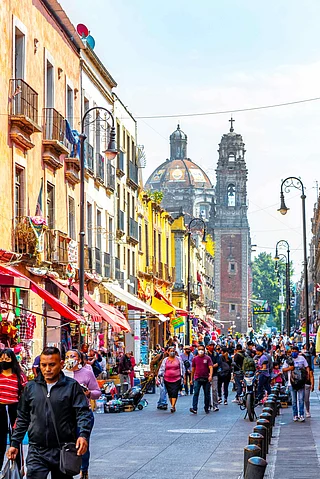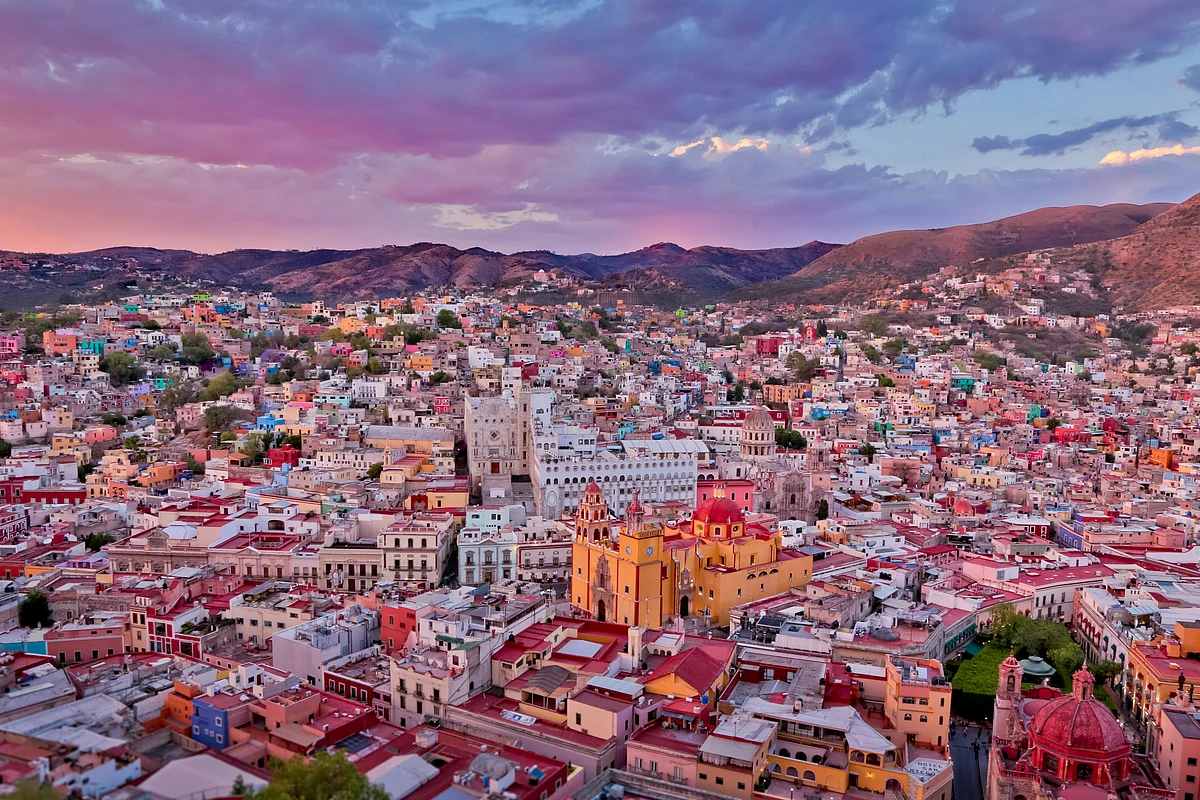
Brightly painted houses on steep hillsides in ochre, terracotta, saffron and cobalt define the popular image of this central Mexican city. However long before it became a tourist hotspot, Guanajuato was one of the wealthiest urban centres in the Spanish Empire. The reason being it having some of the richest silver deposits in the world. A UNESCO World Heritage Site since 1988, this city now stands out for its plazas, colonial architecture, and thriving art scene.
The City Built On Silver
The story begins in the mid-sixteenth century, when Spanish prospectors discovered rich veins of silver in the hills of what was then known as Guanaxhuato, derived from a Purépecha word often interpreted as "place of frogs." Four fortified settlements were established to protect the mines, which have gradually merged into the city. This city shows a remarkable adaptation to its peculiar geography, unlike other colonial cities in Latin America following orderly grid plans. It follows the natural contours of the valley rather than geometric lines, creating a maze-like urban landscape.
With the expansion of the settlement, bridges, tunnels, and a sophisticated drainage system were built to combat the seasonal floods. Many of today's underground roads are built in the place of former river channels and flood-control tunnels. By the eighteenth century, it became the world's leading centre for silver extraction. The wealth generated by its mines financed its churches, theatres and public buildings, many of which remain among Mexico's finest examples of Baroque and Neoclassical architecture, like the churches of La Compañía and San Cayetano de La Valenciana. Beyond monuments the mining heritage of the city can also be witnessed through its shafts, such as the Boca del Inferno, descending nearly 600 m.
This story of prosperity also comes with the story of imperial expansion that transformed existing Indigenous communities, while introducing new political, religious and economic structures. Over time, indigenous traditions, Spanish influences and religious institutions became intertwined, shaping a cultural landscape that remains visible in the city's festivals, architecture and everyday life.

More Than A Mining Town
Although the presence of silver first placed the city on the world map, Guanajuato is much more than that. During the Mexican War of Independence, the city played a pivotal role, with the Alhóndiga de Granaditas becoming the site of one of the rebellion's earliest battles in 1810. The story goes that the miner El Pípila carried a large stone on his back as a shield while setting fire to the granary's wooden doors, allowing insurgent forces to storm the building. Today, a monumental statue of El Pípila overlooks Guanajuato from a nearby hill, offering one of the city's finest viewpoints alongside a reminder of its past.
This city is also the birthplace of the muralist Diego Rivera, an acclaimed painter, whose childhood home is now a museum dedicated to his life and works. Every autumn, the city transforms during the Festival Internacional Cervantino. Established in 1972, it has grown into Mexico's foremost arts festival and one of Latin America's largest cultural events, bringing together musicians, actors, dancers and performers from around the world.
One of the city’s most iconic experiences is the callejoneada, a musical procession through Guanajuato's narrow alleys led by estudiantinas, or groups of student musicians dressed in traditional costume. Storytelling, folklore and music blend in these musical evening walks, transforming the city’s open-air stage, a living celebration of Guanajuato culture.
What To See In Guanajuato
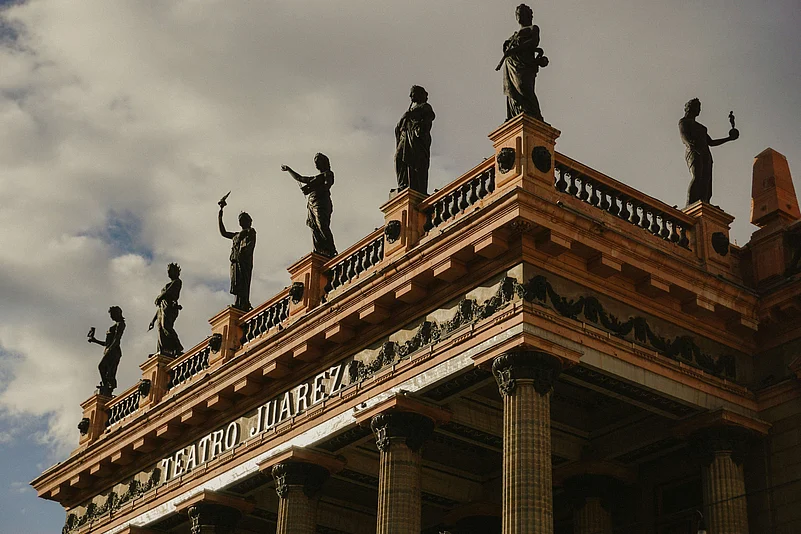
The best way to explore Guanajuato is on foot. The Teatro Juárez, with its neoclassical façade and lavish interiors, remains one of the city's architectural highlights, while the Jardín de la Unión continues to be its social heart. Nearby, Plaza de la Paz is framed by stately colonial buildings that reflect the city's prosperous mining era.
A short walk away is the Hidalgo Market offering a glimpse into contemporary local life. Housed inside an impressive iron-and-glass building originally intended to serve as a railway station, the market brings together regional produce, handicrafts and traditional street food, making it as much a community gathering place as a tourist attraction.
To truly understand Guanajuato, however, you should explore its historic mining district. The Valenciana mining complex shows the scale of the industry that transformed the city into an economic powerhouse. Visitors can explore restored sections of Guanajuato's historic mining network before visiting the nearby Church of San Cayetano de La Valenciana, whose gilded interiors were also financed by mining fortunes.
The city also has some unusual attractions. The narrow Callejón del Beso, or Alley of the Kiss, is associated with a romantic legend that promises good fortune to couples who kiss beneath its closely facing balconies. At the opposite end of the spectrum lies the Museo de las Momias, Museum of the Mummies, where naturally preserved bodies, mummified by the area's dry, mineral-rich conditions, offer an eerie window into the city’s erstwhile residents.
For all its grand architecture and celebrated viewpoints, Guanajuato is best understood by first looking below the surface to understand the history of mining and colonial rule, which has fundamentally shaped its present. Visit this Mexican city to wander among its architecture, loiter in its plazas, or join the musical evening walk, as you unpack multiple layers of its compelling landscape.
FAQs
1. Why is Guanajuato famous?
Guanajuato is famous for its colourful hillside houses, rich silver-mining history, underground road network, colonial architecture, the romantic Alley of the Kiss, the Museum of the Mummies and the annual Festival Internacional Cervantino.
2. Is Guanajuato a UNESCO World Heritage Site?
Yes. The Historic Town of Guanajuato and Adjacent Mines were inscribed as a UNESCO World Heritage Site in 1988 for their outstanding mining heritage, distinctive urban layout and well-preserved colonial architecture.
3. What are the best things to do in Guanajuato?
Top experiences include visiting the Teatro Juárez, Jardín de la Unión, Plaza de la Paz, Hidalgo Market, the Valenciana Mine and Church of San Cayetano, the Alley of the Kiss, the Museum of the Mummies, and joining a traditional callejoneada musical procession.
4. What is the best time to visit Guanajuato?
The best time to visit is from October to April, when temperatures are pleasant. October is especially popular because of the Festival Internacional Cervantino, Mexico's premier international arts festival.
5. How many days do you need in Guanajuato?
Two to three days are ideal for exploring Guanajuato's historic centre, museums, plazas, mining district, viewpoints, underground tunnels and nearby attractions at a comfortable pace.