


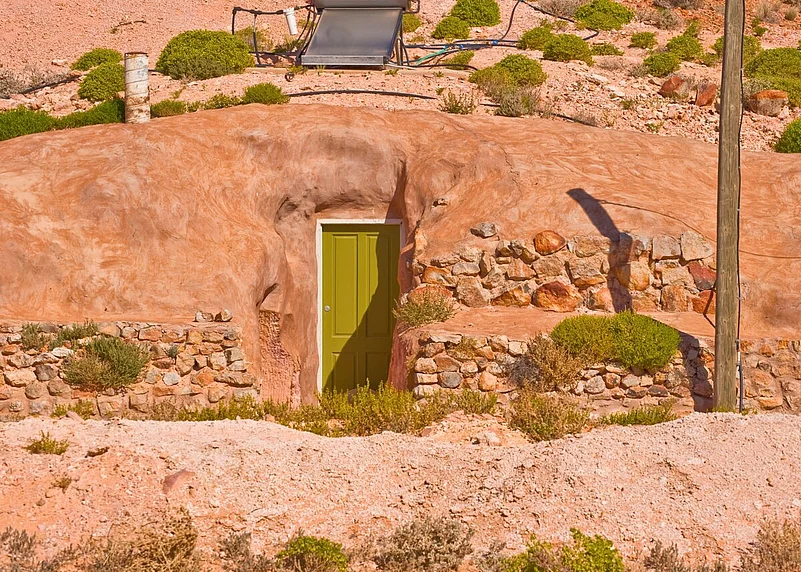
In the parched interior of Coober Pedy, life takes an unusual turn beneath the surface. Known as the world’s opal capital, this remote settlement has, since its founding in 1915, yielded the vast majority of the planet’s precious opals. Yet it is not only the gemstones that draw attention, but the way people have adapted to the land itself. With summer temperatures often climbing beyond 50 degrees Celsius, many residents have carved out homes—known locally as dugouts—directly into the earth, where the air remains cool and steady. These subterranean spaces extend beyond private dwellings to include churches, hotels, and cafés, giving the town a quietly industrious rhythm below ground. Above, the landscape appears stark and almost lunar, a quality that has seen it stand in for distant worlds on film.
A Chance Find Beneath The Dust

The story of Coober Pedy begins, rather improbably, with a teenager and a patch of empty desert. In 1915, Willie Hutchison was out searching for water when he came across pieces of opal scattered across the ground. That small discovery was enough to draw others in. Before long, prospectors—mostly white settlers—arrived, hoping to pull something valuable from a landscape that seemed to offer very little at first glance.
At first, people tried to manage above ground, but the heat made that hard to keep up. Shade was scarce, and the makeshift camps didn’t offer much relief. Some miners started ducking into old shafts during the worst of the day, just to get out of the sun. It wasn’t a grand plan—more of a practical fix. Bit by bit, those spaces were cleared out and used for longer stretches, until staying underground simply made more sense.
The name came a few years later. In 1920, it was called Coober Pedy, from an Aboriginal phrase often translated as “white man in a hole”. It’s a plain description, but it fits. The town didn’t grow in a neat or steady way after that. People drifted in when opal finds were good and left when they weren’t. Even so, enough stayed for it to take hold, built around the same idea that had shaped it from the start—life was simply easier below ground.
Things To See And Do
Coober Pedy doesn’t ask you to follow a typical travel routine—it nudges you underground, into its mines, and out across a landscape that barely looks like Earth. What you see, where you stay, and even where you eat all feel shaped by the same idea: working with the desert rather than against it.
The dugouts themselves are the main attraction. These carved sandstone homes stay at a steady, cool temperature year-round, offering a glimpse into how locals have adapted to the climate.
Step inside the Umoona Opal Mine and Museum to get a sense of the town’s mining past, and how opals are still found today.
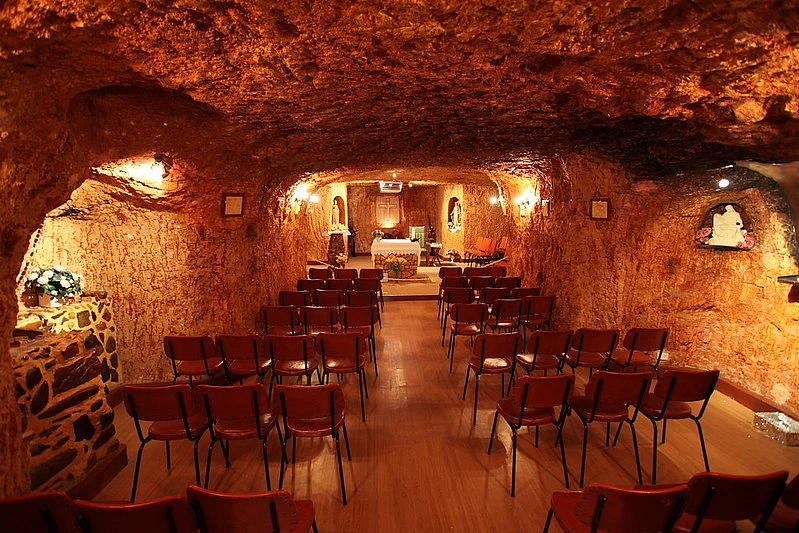
The underground churches are worth seeking out, especially the Serbian Orthodox Church, known for its carved interiors, and the St Peter and Paul Catholic Church with its softly lit stained glass.
For something more unusual, there’s a golf course with no grass—just stretches of desert and patches of artificial turf.
Just outside town, the Kanku-Breakaways Conservation Park offers a striking spread of mesas and colour-shifting hills.
Film enthusiasts might recognise the nearby Moon Plain, used in films like Mad Max Beyond Thunderdome and Pitch Black, thanks to its stark, otherworldly look.
Where To Stay And Eat
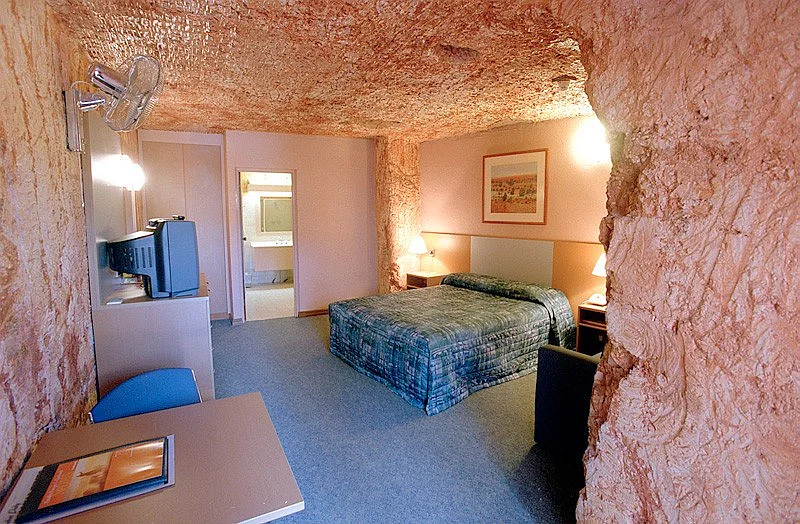
If you’re coming this far, it’s worth trying a dugout stay rather than a standard room. The Desert Cave Hotel is the obvious choice—partly because it’s right in town, partly because it leans into the whole underground idea without making a fuss about it. The rooms are cut straight into the rock, and once you’re inside, the temperature barely shifts.
There are also smaller, family-run places where you’re essentially staying in someone’s extended dugout. They’re less polished, but that’s part of it—you get a better sense of how people actually live here, not just how it’s presented to visitors.
Eating out in Coober Pedy isn’t really about chasing standout cuisine—it’s more about the setting. A few underground cafés and dining rooms are tucked into the hillsides, and stepping into one after being out in the glare feels like relief more than anything else.
Menus tend to be straightforward, but the experience sticks with you: low, carved ceilings, quiet interiors, and that constant, cool air. You’ll also notice that many places sell opals alongside food or nearby, which says a lot about how closely everything here still ties back to mining.
Practical Notes
When to go: The most forgiving months are between April and October. Summer can be punishing, with temperatures regularly soaring beyond what most visitors are used to, so timing makes a real difference to how the place feels.
Clothing: Layers are essential rather than optional. Light, breathable fabrics like cotton or linen work during the day, but evenings call for something warmer—a fleece, jumper or jacket. It’s not unusual to need both in the same day.
Footwear: Sturdy shoes are worth it. The ground is uneven, dusty, and often covered in loose rock or red dirt. Trainers or walking shoes tend to be more useful than anything delicate.
Sun protection: The sun is relentless. A wide-brimmed hat, high-SPF sunscreen and sunglasses are standard kit, not extras. A face covering or fly net can also come in handy when the insects appear.
What to carry: A reusable water bottle is important—hydration isn’t something to forget about here. Cash or a travel card in Australian dollars is useful too, as smaller local places don’t always rely on cards.
What to look out for: Opals are the obvious souvenir, and you’ll see them everywhere, from small polished stones to larger pieces in shop windows. Aboriginal art and locally made crafts also feature in a few stores, often tied closely to the region’s landscape and history.
Getting There And Getting Around
Coober Pedy sits deep in South Australia’s interior, roughly 850 kilometres north of Adelaide along the Stuart Highway. Reaching it is straightforward in theory, though the long distances make the journey feel like part of the experience itself.
By air: Regional flights run from Adelaide, usually several times a week, landing at a small outback airport just outside town. Charter flights are also available for more flexible travel.
By bus: Greyhound Australia operates services linking Coober Pedy with Adelaide and Alice Springs, though the trips are long and mostly defined by open highway and desert views.
By car: Driving is the most direct option, with the sealed Stuart Highway making the route manageable from either Adelaide (around 8–10 hours) or Alice Springs (roughly 6–8 hours). It’s a long, uninterrupted stretch of road, with very little in between.
By rail: The Ghan passes through the region, stopping at Manguri, about 40 kilometres away. From there, travellers continue into town by road transfer.
Once in Coober Pedy, getting around is fairly simple. Most places are close together, and visitors tend to move between sites by car, as distances can be deceptive in the open desert landscape.
FAQs
Why do people live underground in Coober Pedy?
Mainly to escape extreme desert heat, which can make surface living uncomfortable for much of the year.
What is Coober Pedy famous for?
It’s known as the opal capital of the world and produces a large share of global opals.
Can tourists stay underground?
Yes, several hotels and dugouts offer underground accommodation with naturally cool interiors.
What is the best time to visit?
Between April and October, when temperatures are milder and easier to handle.
How do you get around the town?
Most visitors use cars, as attractions are spread out across the desert landscape.


