

In the heart of Bhowali’s congested market street in Uttarakhand, North India, where narrow roads wind between concrete facades, a once-forgotten structure now rises quietly but purposefully. This dharamshala—originally built by Jasuli Buri Shaukyani, a 19th-century resident of Dantu village in the Upper Darma Patti of Dharchula—was one of several shelters she commissioned for the Shauka traders of her time. These were not ordinary structures; they were lifelines in an unforgiving Himalayan terrain, offering rest and refuge to a community that spent its life moving across mountains, negotiating weather, altitude, and the politics of trade.
From Shelter To Living Archive

Decades later, amid neglect and urban encroachment, one such dharamshala has been carefully restored and reimagined—not as a passive monument, but as a local community museum, a living archive of the Rung people, a minority trans-Himalayan community to which Jasuli Devi herself belonged. More than a single restoration effort, this project serves as a modular prototype—a scalable, adaptable model for the future restoration of similar abandoned dharamshalas across Uttarakhand. While this one in Bhowali has been reimagined as a museum, others can be explored for use as community libraries, cultural centres, or locally run homestays. The larger vision is to create a network of culturally rooted, economically viable interventions that work both as preservation and livelihood, tapping into the potential of cultural tourism while anchoring development in heritage.
Architectural Intervention And Spatial Continuity
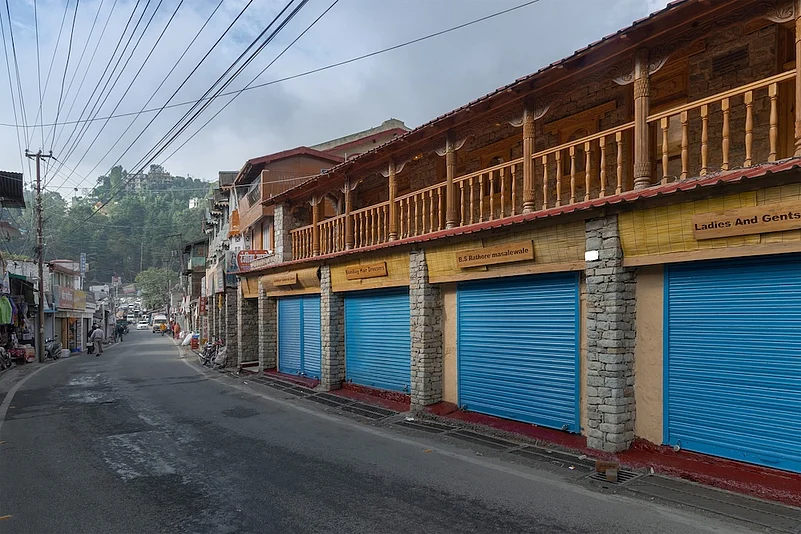
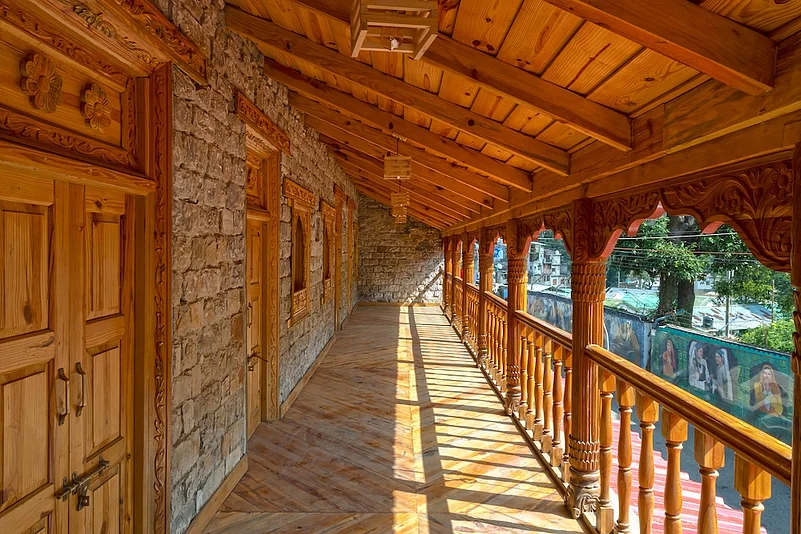
The structure, perched above active shops and tucked into a dense urban grain, once had an upper level that lay in disuse, its roof and floors caving in. The architectural intervention aims to preserve its spirit while repurposing its utility. The rooms on the upper floor were connected through newly created doorways, allowing the museum to flow gently from one chamber to the next. A skylight introduced above now bathes the space in natural light, softly illuminating the intricate carvings and the displays within. This museum is an assemblage of memories—a spatial vessel that documents and presents everyday objects, tools, textiles, and heirlooms associated with the migratory lives of the Rung community. Each item holds a quiet but powerful cultural significance, speaking of craft traditions, trade practices, spiritual beliefs, and lived landscapes. In doing so, the museum becomes a tactile narrative, offering local visitors a renewed sense of pride and outsiders a rare window into a resilient way of life.
Craft, Conservation, And Continuity
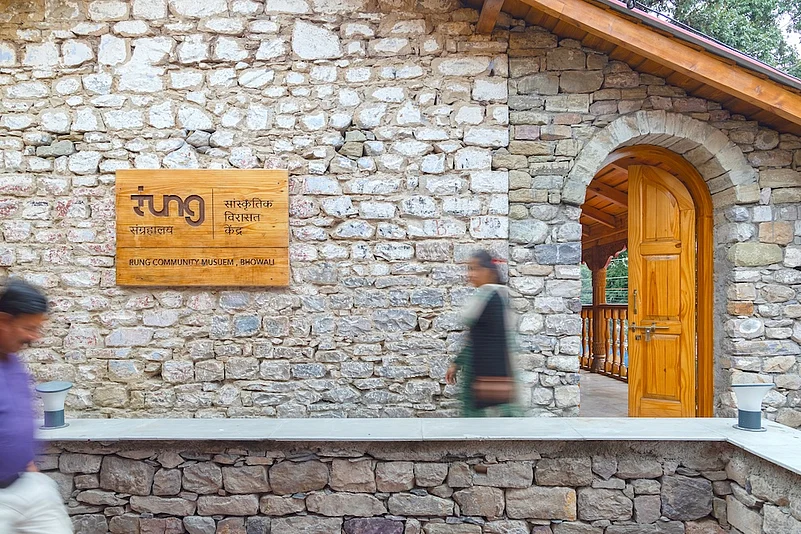
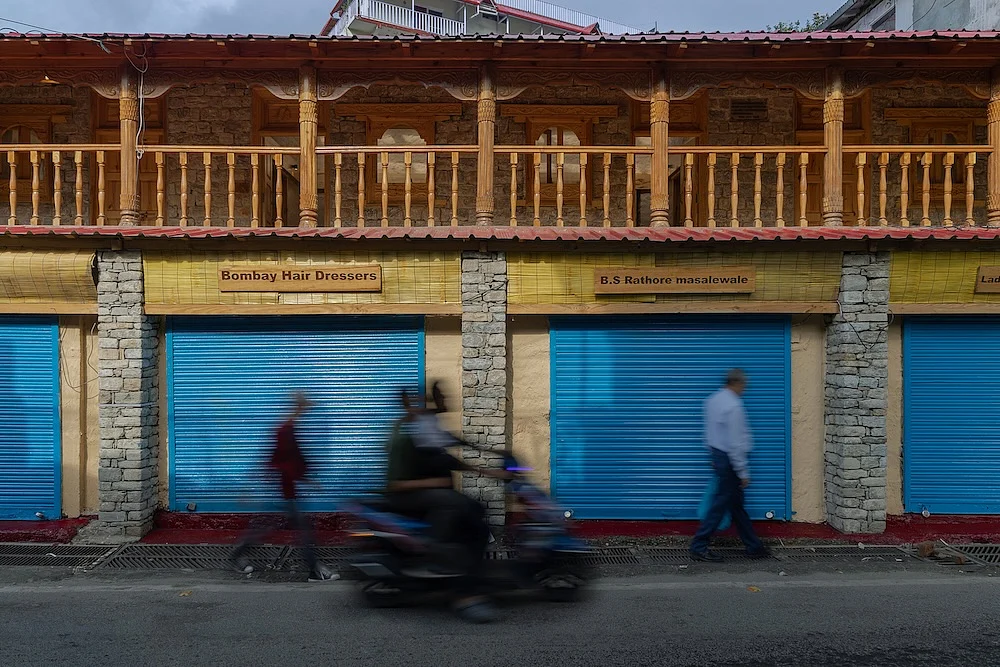
Crucially, the design uses the traditional craft of Likhai, a wood-carving technique native to Uttarakhand. Local artisans were invited to carve the doors, columns, railings, brackets, and windows with intricate detail, reasserting cultural identity through continuity and local engagement. Wooden floors evoke a warmth rooted in the past, while the exterior façade was treated with a heritage retrofit using mud plasters, wooden signage, and traditional chajjas—elements that stitch the building back into its historical fabric. This project is not an isolated gesture but an initiative to restore structures that once served a travelling culture and now lie unused or encroached upon. Through such interventions, architecture becomes both a carrier of memory and a catalyst for future livelihoods. The restored dharamshala now stands with quiet dignity, its regional aesthetic—wooden railings and carved columns—framed by the bustle of the street. It is a reminder that conservation need not be nostalgic. It can be functional, active, and profoundly relevant, and that sometimes building anew is not as powerful as reinhabiting what once was, by breathing life back into stone, wood, and story.