


Nitesh Tiwari's "Ramayana: Rise of A Legend" brings one of India's most enduring epics to the big screen, with Ranbir Kapoor playing Lord Rama, Sai Pallavi as Sita Ma, and Yash portraying Ravana. The first instalment of a planned two-part adaptation, the mythological drama also features Sunny Deol, Ravi Dubey, and Vivek Oberoi in important roles. Based on Valmiki's ancient Sanskrit epic, the film follows Lord Rama's early life, his marriage to Sita Ma, the couple's 14-year exile, and the events leading to her abduction by Ravana. With its November 2026 release, the film revisits a story that has shaped India's religious traditions, literature, art, and performing arts for centuries.
While the film recreates the kingdoms, forests, and battlefields of the Ramayana through elaborate production design, the epic's geographical and cultural legacy can still be experienced across several destinations in Asia. From the temples of Ayodhya and the forested landscapes of Chitrakoot to the sites associated with Ravana's Lanka in Sri Lanka, these places offer travellers an opportunity to explore the story beyond the cinema screen.
Where Was "Ramayana: Rise Of A Legend" Filmed?


Although the story moves between Ayodhya, the Dandaka Forest, and Lanka, "Ramayana: Rise of A Legend" was reportedly filmed entirely in India, with Mumbai serving as its principal production base. The shoot took place largely at Film City in Goregaon East, where the production team constructed extensive sets representing Ayodhya, palace interiors, and other important settings from the epic. The surrounding wooded areas were also reportedly used to depict the Dandaka Forest. Filming began in April 2024, following initial delays involving costumes and production design, and wrapped up in early July 2025. The film was reportedly shot under the working title "God Power."
6 Places To Visit To Experience The Ramayana
While "Ramayana: Rise of A Legend" brings the epic to life through cinema, several destinations across India, Nepal, and Sri Lanka remain closely associated with its characters and events. Many of these places are important pilgrimage centres, while others preserve the story through local traditions, temples, and cultural landmarks. Here are six destinations to add to your travel itinerary.
Ayodhya, Uttar Pradesh
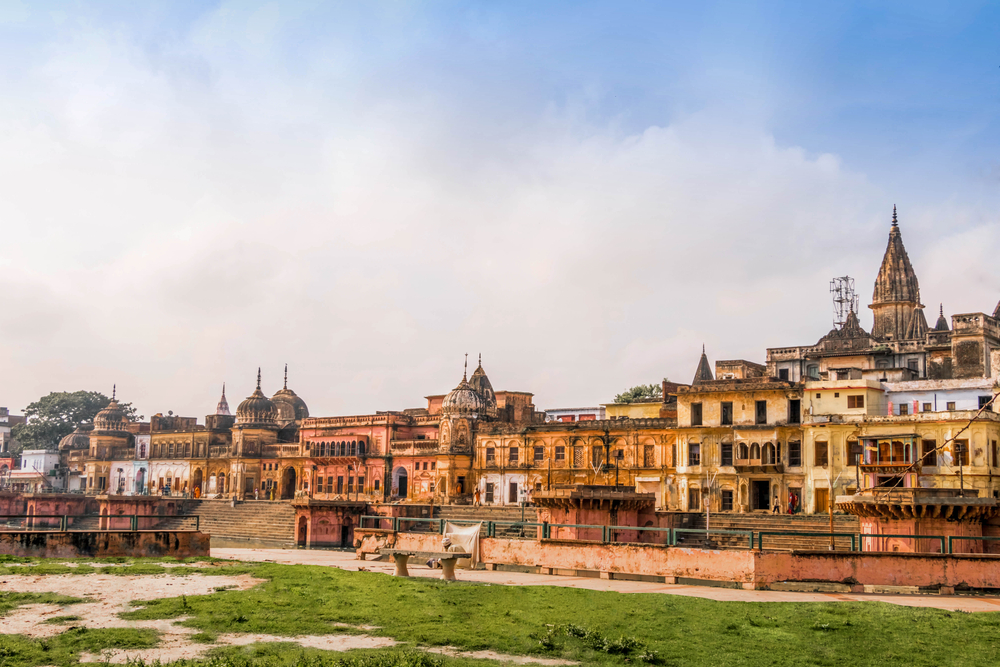
Ayodhya is traditionally regarded as the birthplace of Lord Rama and the kingdom where he spent his early years before being sent into exile. It is also where the Ramayana's story reaches its conclusion, with Lord Rama returning after 14 years away from his kingdom. Today, the Uttar Pradesh city remains one of Hinduism's most important pilgrimage destinations.
Visitors can begin at Ram Mandir, built at the site traditionally revered as Lord Rama's birthplace. Another important stop is Hanuman Garhi, a hilltop temple dedicated to Lord Hanuman. According to local tradition, Hanuman remained in Ayodhya to guard the kingdom after Lord Rama's return. The temple can be reached by climbing 76 steps.
The Sarayu River is another important part of the city's religious landscape. Its ghats attract devotees throughout the year, particularly during Diwali, when Ayodhya celebrates Lord Rama and Sita Ma's return with elaborate festivities and thousands of illuminated earthen lamps.
Janakpur, Nepal

The next important chapter of the Ramayana takes travellers to Mithila, the kingdom of King Janaka, where Lord Rama meets Sita Ma. Traditionally associated with present-day Janakpur in Nepal, the ancient kingdom is where the couple's marriage takes place.
According to the epic, King Janaka organises Sita Ma's swayamvara, declaring that whoever can lift and string the enormous bow of Lord Shiva will win her hand in marriage. While the other suitors fail, Lord Rama successfully lifts the bow, breaking it in the process and demonstrating his extraordinary strength.
The marriage is commemorated in Janakpur through the annual Vivah Panchami festival, when religious processions and ceremonial celebrations recreate the divine wedding. One of the city's most important landmarks is Janaki Mandir, a temple dedicated to Sita Ma. Its white façades, domes, and ornate architectural details make it a prominent pilgrimage site.
Visitors can also explore Vivah Mandap, a temple complex traditionally associated with the wedding of Lord Rama and Sita Ma. Together, these sites offer an opportunity to understand how the epic continues to shape religious traditions in Nepal.
Chitrakoot, Uttar Pradesh, And Madhya Pradesh
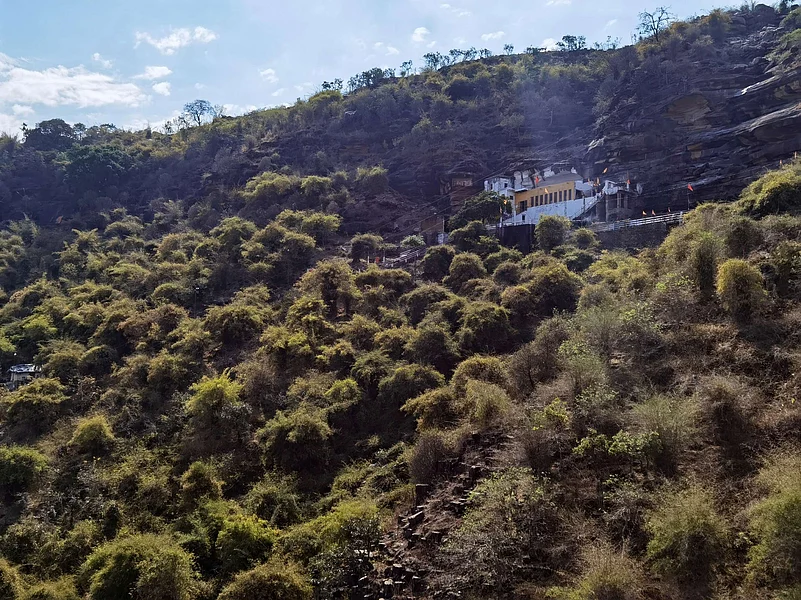
After leaving Ayodhya, Lord Rama, Sita Ma, and Lakshmana travel through forested landscapes during the 14-year exile. Chitrakoot, situated across the present-day Uttar Pradesh and Madhya Pradesh border, is traditionally associated with the early years of their stay in the forest.
One of the most significant episodes associated with the destination involves Bharata, Lord Rama's younger brother, who travels from Ayodhya to persuade him to return and reclaim the throne. Lord Rama refuses, remaining committed to completing his exile. Bharata then takes his brother's sandals back to Ayodhya and places them on the throne as a symbol of his rightful rule.
Visitors can explore Bharat Milap Temple, traditionally associated with the brothers' reunion. Another important pilgrimage site is Kamadgiri Hill, which is believed to have been the residence of Lord Rama, Sita Ma, and Lakshmana during their stay. Devotees undertake a circumambulation of the hill, following a route dotted with temples and shrines.
The Mandakini River and Ram Ghat are also important stops, offering visitors an opportunity to experience Chitrakoot's religious and natural landscapes.
Hampi, Karnataka
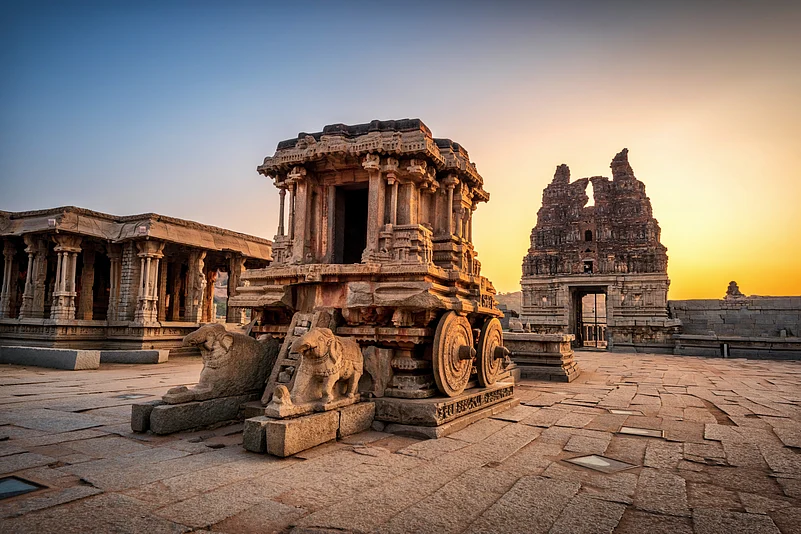
With its enormous granite boulders, rocky hills, and the Tungabhadra River flowing through the landscape, Hampi is traditionally associated with Kishkindha, the kingdom of the vanaras who become Lord Rama's allies during his search for Sita Ma.
According to the Ramayana, this is where Lord Rama meets Hanuman, who introduces him to Sugriva, the exiled ruler of Kishkindha. Lord Rama helps Sugriva regain his kingdom from his brother Vali, and in return, Sugriva pledges his army to support the search for Sita Ma. Hanuman eventually travels to Lanka, where he discovers her whereabouts.
Across the Tungabhadra River from Hampi is Anjanadri Hill, traditionally believed to be the birthplace of Lord Hanuman. Visitors can climb the steps to reach its hilltop temple and enjoy views of the surrounding rocky terrain.
Beyond its Ramayana associations, Hampi is also known for its UNESCO-listed ruins, which were once part of the Vijayanagara Empire. Travellers can explore Virupaksha Temple, the Vittala Temple complex and its famous stone chariot, along with the remains of the Royal Enclosure.
Rameswaram, Tamil Nadu

An island off the southeastern coast of Tamil Nadu, Rameswaram is closely associated with one of the Ramayana's most significant episodes: the journey to Lanka to rescue Sita Ma from Ravana.
According to the epic, Lord Rama's army constructs a bridge across the sea to reach Ravana's kingdom. Traditionally associated with Ram Setu, also known as Adam's Bridge, the chain of limestone shoals extends between Pamban Island in India and Mannar Island in Sri Lanka.
Rameswaram is also home to Ramanathaswamy Temple, one of Hinduism's most important pilgrimage sites and a significant destination in the Char Dham circuit. According to religious tradition, Lord Rama worshipped Lord Shiva here in connection with his victory over Ravana.
A visit to Dhanushkodi, situated at the southeastern tip of the island, offers views across the waters towards Sri Lanka. The coastal settlement, known for its beaches and remains of structures damaged during the 1964 cyclone, is also associated with the legendary crossing.
Nuwara Eliya And Gurulupotha, Sri Lanka

The Ramayana's geographical story extends into present-day Sri Lanka, traditionally identified with Ravana's kingdom of Lanka. Several locations across the island are associated with Sita Ma's captivity and Lord Hanuman's search for her. Together, they form part of what is commonly known as Sri Lanka's Ramayana Trail.
One such destination is Sita Kotuwa, near Gurulupotha in the island's central region. According to local tradition, Sita Ma was initially held captive here in a palace associated with Ravana's wife, Mandodari. Although the palace no longer exists, the site is surrounded by forested landscapes, streams, and waterfalls.
Another important stop is Seetha Amman Temple in Nuwara Eliya, which is traditionally associated with Ashoka Vatika, the garden where Ravana is believed to have kept Sita Ma. The temple is dedicated to Sita Ma, and nearby rock formations are associated with local accounts of Lord Hanuman's visit.
Beyond its Ramayana connections, Nuwara Eliya is known for its rolling tea plantations, waterfalls, and cool-climate landscapes. Travellers can explore the region's tea estates and colonial-era architecture while visiting the sites associated with the epic.
FAQs
1. Which places in India are associated with the Ramayana?
Ayodhya, Chitrakoot, Hampi, and Rameswaram are among the major Indian destinations traditionally associated with the Ramayana.
2. Where was Lord Rama born?
Lord Rama is traditionally believed to have been born in Ayodhya, Uttar Pradesh, where Ram Mandir stands at the site revered as his birthplace.
3. Where did Lord Rama marry Sita Ma?
According to the Ramayana, Lord Rama married Sita Ma in Mithila, traditionally associated with present-day Janakpur in Nepal.
4. Which places in Sri Lanka are associated with the Ramayana?
Sita Kotuwa near Gurulupotha and Seetha Amman Temple in Nuwara Eliya are among the locations associated with Sita Ma's captivity.
5. What is the best time to visit the Ramayana Trail?
October to March is generally suitable for visiting many destinations across India. For Sri Lanka, the ideal travel period varies by region, so itineraries should account for local monsoon seasons.


