

Waiting at Raipur’s Swami Vivekananda Airport, I was noting down the most memorable moments from my travels. Invariably, the first note was about the tragic lovers Jhitku and Mitki. I wanted to remember their story, narrated to me by Vishnu-ji of Kondagaon, a town on the way from Raipur to Jagdalpur.
If we had stuck to our original plan, we would have driven directly to our destination. But the Indravati River had flooded, reaching the National Highway and forcing a road closure, so we stopped midway. The drive was through incessant rain, the greenest sal forests, and the hills of the Chotanagpur Plateau.
On my way, I had picked up a local newspaper, the front page of which was entirely devoted to reportage on the flood: rescue operations in the worst-affected villages, where we later saw entire floors of buildings under water; how the flooding had affected certain crops; and how the recent heavy rainfall and dam water discharge had made the situation worse.
As I turned the page, I found coverage of Bastar Dussehra, another subject of fascination for me. What made this celebration unique was that it lasted for 75 days and included a host of events connected to folk beliefs, tribal traditions, and rituals surrounding royalty, caste, class and politics. What’s more, there was also an article on tourism in Bastar and the rising visitor numbers in the post-Naxalite era.
I was there to experience it all.
The Legend of Jhitku And Mitki


First, let me tell you the story I started with. It goes that Mitki used to live in Pendravan village, about 50–60 km from Kondagaon. She grew up with her seven brothers, who were quite possessive about her. Therefore, when she met Jhitku, from a neighbouring village, at a mela and fell in love, her brothers demanded that he could marry Mitki only if he agreed to be a ghar jamai and live in their village.
Jhitku agreed, and the couple moved to Pendravan when a famine struck the village, drying up its only pond. A tantrik was consulted, who suggested that a person from outside the village must be sacrificed to lift the curse. This led everyone to nominate Jhitku. After he was killed and offered as a sacrifice, water returned to the village pond, and the curse was lifted.
Mitki, meanwhile, unaware of the turn of events, started frantically looking for Jhitku. After a lot of searching, she found him near the pond, smeared in mud. Unable to bear the pain of seeing the love of her life like that, she too gave up her life beside him. However, the story does not end there.

Over time, local people started worshipping them, and local artisans began making idols of the couple. Their names, “Jhitku-Mitki”, came to be used for shops, organisations and, more recently, a film. Vishnu-ji had three temples in his house, one of which was dedicated to these beloved lovers of the region.
The Hands Behind Bastar’s Dokra
My meeting with Vishnu-ji was part of my tour of the artisan villages around Kondagaon. Entire villages were dedicated to different stages of making dokra figurines, which were exported worldwide. From making wax moulds and filling them with metal to drying, sculpting the mud, and finally baking the pieces, watching the entire process unfold right in front of my eyes made the labour apparent—something often hidden behind the glamour of shops selling the finished products.

For these villages, the art and skill of making dokra sculptures gave them an identity and a livelihood. But, as with any other traditional craft practice in the country, there were stories of outmigration, which, for some families, endangered the passing on of the skill to the next generation.
After the art, we learnt a little more about the artists as our next stop took us to the tribal museum. It explained the various tribes that inhabited Chhattisgarh and the subtle differences in their dressing styles, jewellery, architecture and building materials. As I walked around, I thought to myself how easy it was to use “tribal” as an overarching term for people with such a wealth of diversity.

Following The Sound Of Water
If the morning had begun with an understanding of the people and culture of the region, the afternoon turned into a search for waterfalls, big and small. The beauty of travelling towards the end of the monsoon is that waterfalls emerge where there was nothing a month earlier, while existing ones swell to their fullest.
A drive further north led us to Keshkal Ghat, whose winding roads are easy to mistake for those in the Himalayas. Unlike thunder, the sound of a waterfall can be heard long before you are actually in front of it. It is a kind of maddening call that echoes through the forest and beckons you to look deeper. We responded, and the first waterfall along our route was Kuyemari Waterfall. Its distinctive staircase-like structure made it even louder, and its tallest section plunged almost 100 feet.

The rains had made the hike from the main road quite tricky, with the rain-bathed forest shining in the sun as a persistent distraction. The monsoon swell had made getting close to the waterfall difficult, but looking at its foaming white waters framed by lush foliage was nothing less than a blessing for my weary city-dweller’s eyes.
A View From Tatamari
After seeing a few more seasonal waterfalls, we made our way up to one of the highest places in the region, Tatamari. “Mari” meant an elevated, flat plateau, and this place offered stunning views of the region’s topography. Perhaps there is no word in the English dictionary that can adequately convey how green the hills were, their gradients varying with the vegetation as the sun played with their colours.
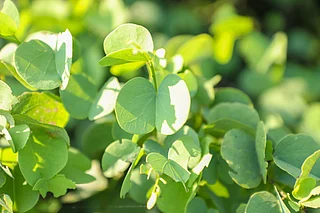
The viewpoint came with a restaurant serving a local meal. On the menu that day was a regional favourite, saigoda, often referred to as Chhattisgarh’s vegetarian fish curry. Yes, when I was first served it, I was confused too. What was this dish doing in a meal I had been told was purely vegetarian? Asking Kalai-didi, who was busy making lentil paste in the kitchen, I discovered that saigoda was made by layering and rolling kochai ke patte (colocasia or taro leaves) with spiced lentil paste. It was then cooked in a rich, tangy gravy, and the finished dish looked like a cut piece of rohu, as my Bengali brain imagined it. Someone at another table said, “This is like sushi!"

The rest of the afternoon was spent staring at the view over a cup of coffee. By evening, we had set out for Jagdalpur. We took a longer route through village roads as the highway closure continued, but I was glad we made it to our destination at last, with Bastar Dussehra still underway.
The Many Days Of Bastar Dussehra
A 75-day celebration does not mean that festivities take place every day for two and a half months. The events are spread out and held on different days according to their religious and historical significance. Danteshwari Temple is one of the focal points, and as we crossed it on our way to the hotel, we could see a small gathering and a few lights around it.
Bastar’s religious landscape extends well beyond the festival. As Om Prakash Soni, Assistant Professor of History, explains, “Bastar is a sacred abode of Shiva and Shakti. While the principal shrine of Goddess Manikya Devi (Danteshwari) is located in Dantewada, there are hundreds of Shiva shrines located in the villages across the region.” He also pointed to events such as Bastar Dussehra and the Mandai fairs as expressions of the region’s distinctive tribal cultural heritage.

After quickly freshening up, I met Vishal Senger, a photographer from the city who had been documenting the different rituals associated with Dussehra for some years. His photographs were displayed in an exhibition space. As I walked through the gallery, he explained some of the prominent rituals, including the theft of the festival’s main chariot and a council meeting with the king and the chief minister, where problems were solved on the spot rather than met with the familiar diplomatic response: “We will look into it.” Many rituals were sacred; others had developed over the years in response to the evolving needs and social conditions of the people.
Also along the way was the Central Library of Jagdalpur, specifically created for competitive exam preparation and equipped with computers and a wide range of books. As a reader, it is always reassuring to see a library at the centre of a city.

Chitrakote In All Its Glory
The final morning was reserved for perhaps the region's best-known landmark: Chitrakote Waterfalls. We headed out early in the morning. Our driver, Jeetu-ji, told us that he had heard from his friends that a few days earlier, the water level had risen so much that it was difficult to make out the waterfall.

If you have heard of the concept of the sublime, you would know that it is a form of appreciation for nature that takes its dangerous beauty into account. One can only admire a treacherous storm from the safety of one’s home. Chitrakote Waterfalls presented such a scene. I was in awe of the furious volume of water, which had submerged its banks and miles of land around it. But I was most in awe of the two trees standing right at the centre, withstanding the immense force of the water against their bark every second, yet still standing tall and green.
You could either be like those trees or be washed away, obliterated into nothingness if you happened to be in the way of the river. The wind carried a fine mist from the falls, and I enjoyed its cool touch against my skin. There was also a walking trail along the river that led farther down, its winding path offering different angles from which to view the mighty falls.

Bastar’s Changing Story
That was the crescendo of the journey. On our way back, Jeetu-ji told me how new places were being discovered or opened up. When I asked him what he meant, I began to recognise a thread running through his answer and the other conversations I had over the three days. Bastar, once known only for Naxalism to the wider world, was now developing a new identity, based on its natural wonders, indigenous traditions and a tourism model that places people before profit.
Our stop at Pandum Cafe was a case in point, as all the employees were either former Naxals or had been affected by the movement. Working at the cafe gave them a new identity and showed how the decline of a former system did not necessarily mean an end; it could also mark a new beginning.

This evolving identity is central to how the Chhattisgarh Tourism Board hopes visitors will approach the region. “Bastar is not merely a destination; it is a remarkable confluence of nature, indigenous traditions, art and living culture,” says Saumil Ranjan Chaubey, Managing Director, Chhattisgarh Tourism Board. “Our endeavour is for visitors to not just see Bastar, but to experience it, understand it, and carry back a deep respect for its unique cultural identity.”
We could finally take the highway as the water levels had receded. But the scale of the flood made it difficult to understand where the river began or ended. Then it was time for another winding journey through Keshkal Ghat. Kondagaon passed by, its air still carrying whispers of Jhitku-Mitki. Finally, the dazzling city of Raipur came into view, and the airport lay just outside it.
As I completed the check-in, I settled down near the designated gate and took out my notebook and a pen. Thus began the recollection.
FAQs
1. What is the best time to visit Bastar?
The monsoon and post-monsoon months offer lush forests and spectacular waterfalls, including Chitrakote and Kuyemari. Travellers should check local weather and road conditions before visiting, as heavy rainfall can cause flooding and closures.
2. What is Bastar Dussehra, and how is it different from other Dussehra celebrations?
Bastar Dussehra is a distinctive 75-day festival in Chhattisgarh centred on Goddess Danteshwari and local traditions. Unlike celebrations focused on the victory of Rama over Ravana, it features a series of rituals, community gatherings and events rooted in the region's cultural heritage.
3. What are the must-visit places in Bastar?
Chitrakote Waterfalls, Kuyemari Waterfall, Keshkal Ghat, Tatamari viewpoint, Jagdalpur and the artisan villages around Kondagaon offer a mix of natural landscapes, local culture and traditional crafts.
4. What is Bastar famous for besides its waterfalls?
Bastar is known for its indigenous cultural traditions, Dokra metal craft, traditional festivals, village artisans and distinctive regional cuisine. The legend of Jhitku and Mitki is also an important part of local folklore.
5. What local food should travellers try in Bastar?
Travellers can try saigoda, a regional preparation made with colocasia leaves layered with spiced lentil paste and served in a tangy gravy. Traditional foods made with locally available ingredients offer another way to explore Bastar's culinary heritage.