


Sponsored Content
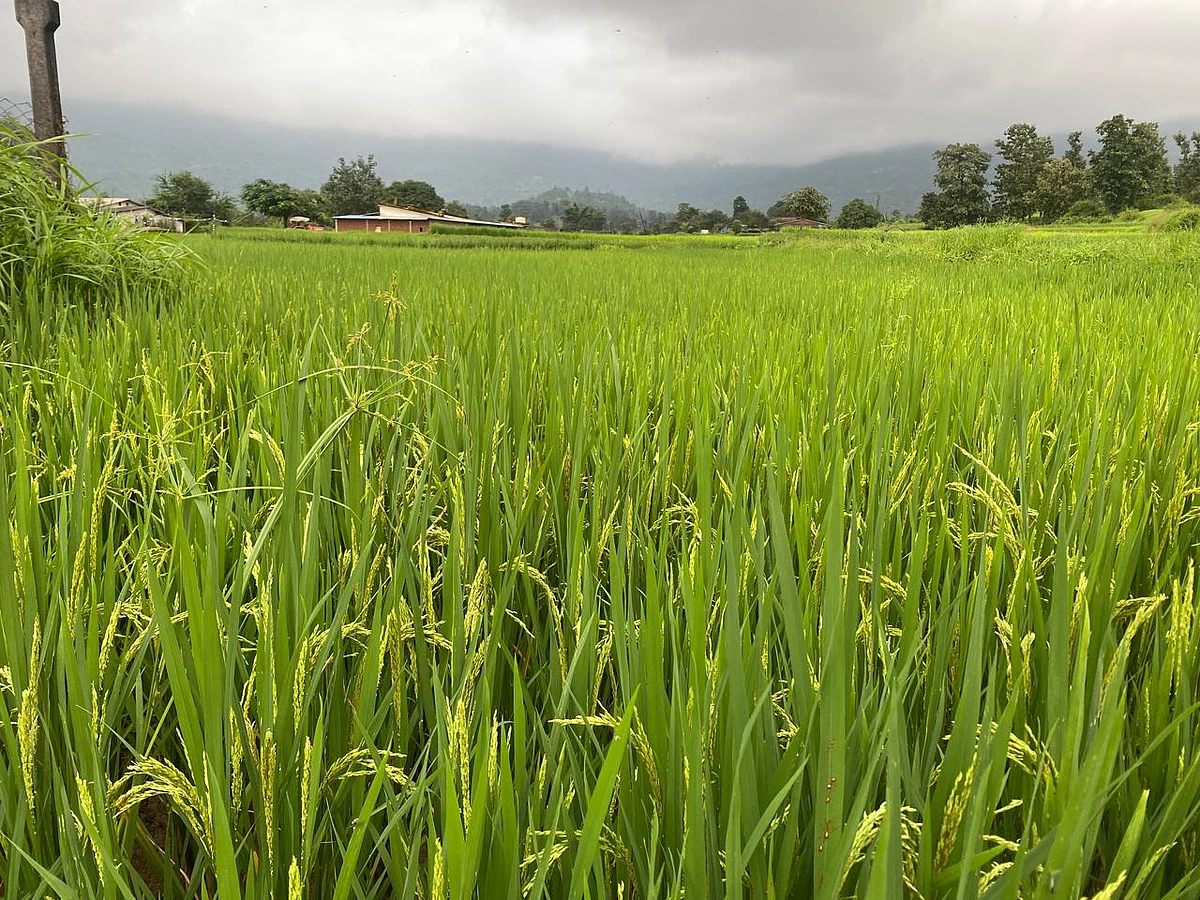
Just a few hours north of Mumbai, beyond the impatient honk of highways and the creeping sprawl of suburbia, lies Walvanda—a village where time appears to have softened its pace. Here, paddy fields ripple in shades of green, bamboo groves sway with the wind, and walls speak. Not in words, but in symbols—circles, triangles, and lines that together form Warli art, one of India’s most ancient and evocative visual languages. Walvanda is not merely a place to see Warli art; it is a place to understand it, within the rhythms of everyday life and a community quietly redefining tourism on its own terms.
A Village That Paints
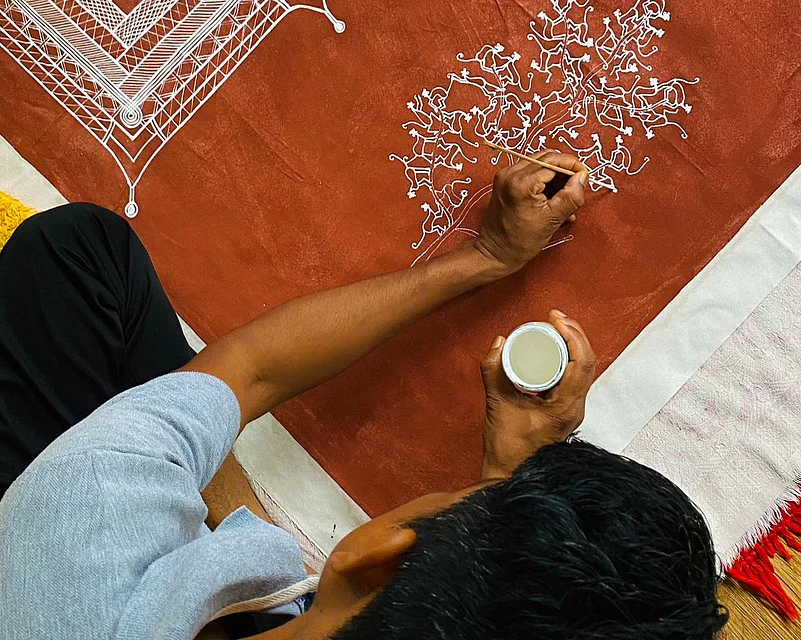

Warli art is often encountered today on hotel walls, coffee mugs, city buses, or curated gallery spaces. But its true essence is rooted in villages like Walvanda, home to the Warli tribe of Maharashtra. Traditionally painted on mud walls using white pigment made from rice paste, gum, and water, Warli paintings were never meant as decoration. They were ritual, memory, and communication—created during weddings, harvests, and births to invoke blessings and document life.
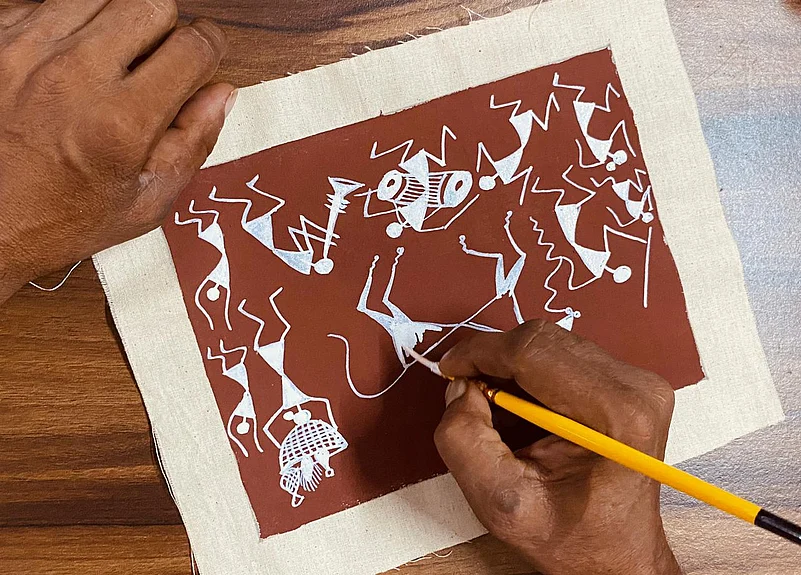
The visual language is deceptively simple. Human figures are formed by two triangles joined at the tip, animals by lines and curves, and trees by repeating patterns. The circle represents the sun and moon, the triangle echoes mountains and forests, and the square symbolises sacred land. Together, these motifs narrate scenes of farming, dancing, worship, and community gatherings, often arranged in circular compositions that reflect the Warli belief in the cyclical nature of life.
In Walvanda, you can still see Warli paintings on the walls of homes, both old mud and newer brick, coexisting with modern materials. Even though people are using acrylics and canvas now, the theme of the paintings are still rooted in lived experience. What’s special about Walvanda is not just the presence of Warli art, but where it comes from and the inspiration behind it—the fields, the rituals and traditions, and the people who teach it to each other from one generation to the next, often without a written script.
Lives Behind The Lines
Visiting Walvanda means entering a community where art, agriculture and ecology are inseparable from one another. Farming is still a big thing there, mainly rice. Rice is highly important in meals and in Warli art. Bamboo is also key. They grow it to make baskets, fishing traps, roofs, and covers for the rainy season. They don't waste much. Most of what they use is made there, based on their needs and what they know about the land.
The Warli way of life is simple and smart. They know about medicinal plants, how to build houses that last, and how the seasons work. They use this in their daily lives. Their houses, made of sticks, mud, and tiles, stay cool without air conditioning, even with new concrete buildings around. It shows that what they consider "getting better" is maintaining balance.
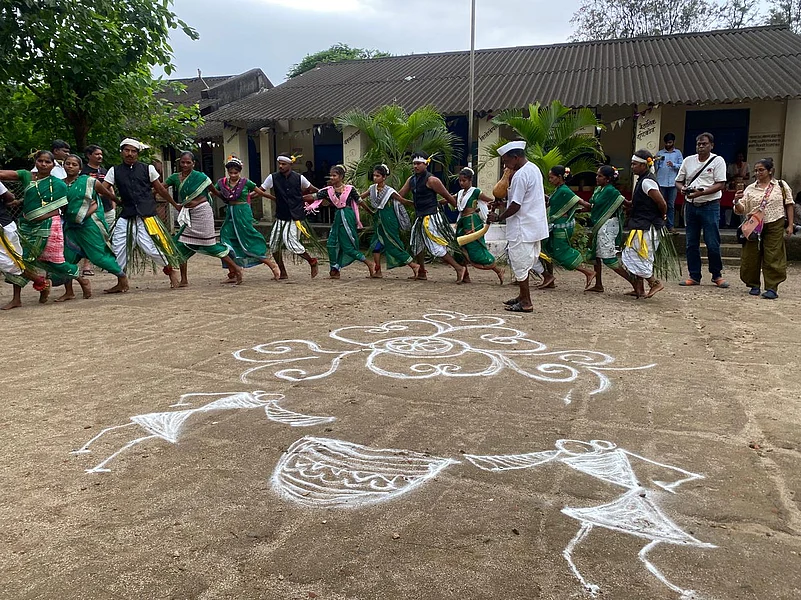
Community tourism has emerged as a means of sustaining this balance. Through initiatives led by organisations like Grassroutes, Walvanda has opened its doors to travellers seeking meaningful engagement rather than spectacle. Visitors are welcomed not as consumers, but as guests of the village—sharing meals, observing farming practices, learning Warli painting from local artisans, and participating in cultural expressions like the tarpa dance, performed to the haunting notes of a wind instrument unique to the Warli. Importantly, this model ensures that tourism benefits are shared across households, reducing the need for migration to cities and helping preserve traditions. It is tourism that listens before it looks, and learns before it takes.
Art As Continuum
The global popularity of Warli art owes much to artists like Jivya Soma Mashe, who in the 1970s brought the form onto paper and canvas, introducing it to the wider world. While this recognition has ensured survival and visibility, it has also raised difficult questions within the community. What was once a sacred ritual has, in many cases, become a commercial product—replicated widely, often without credit or compensation to its originators.
In Walvanda, this tension is palpable. Older generations recall a time when only married women painted Warli murals as part of a ceremonial practice. Today, both men and women create art for visitors and markets, adapting motifs to contemporary themes—bicycles, buildings, even computers—while maintaining the core philosophy of simplicity and storytelling.
Yet, seeing Warli art emerge organically from its source changes how one perceives it forever. Here, it is not a trend or an aesthetic, but a living continuum—an unwritten archive of beliefs, livelihoods, and collective memory. The circular dances painted on walls mirror real gatherings in village squares; the harvest scenes reflect fields just beyond the doorstep.
Walvanda offers something increasingly rare: the chance to encounter an art form not as an isolated object, but as an extension of place and people. It invites travellers to slow down, observe closely, and recognise that heritage survives best when it is lived, not merely displayed.
In a world eager to consume culture, Walvanda quietly suggests another way—to visit with respect, to leave with understanding, and to allow the lines on a wall to lead back to the land they come from.


