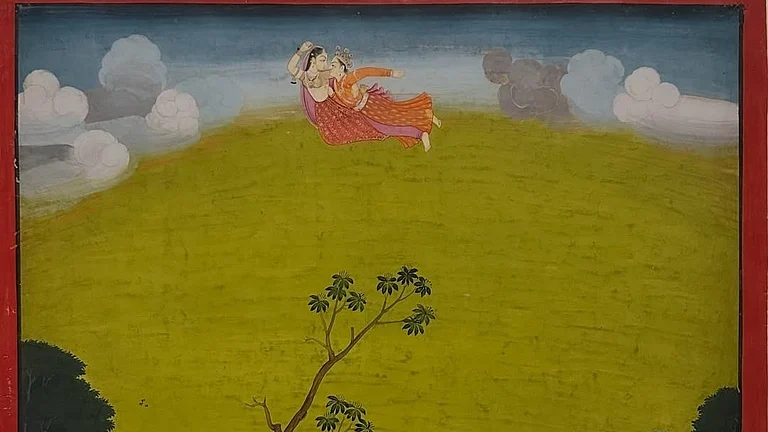
In the 19th century, a vast living hedge cut across the Indian subcontinent. Stretching for nearly 4,000 kilometres, the Inland Customs Line was created by the East India Company and later expanded under the British Raj to control the movement of salt. More than half of it was made up of plants. At its height, almost 14,000 workers were employed to patrol it.
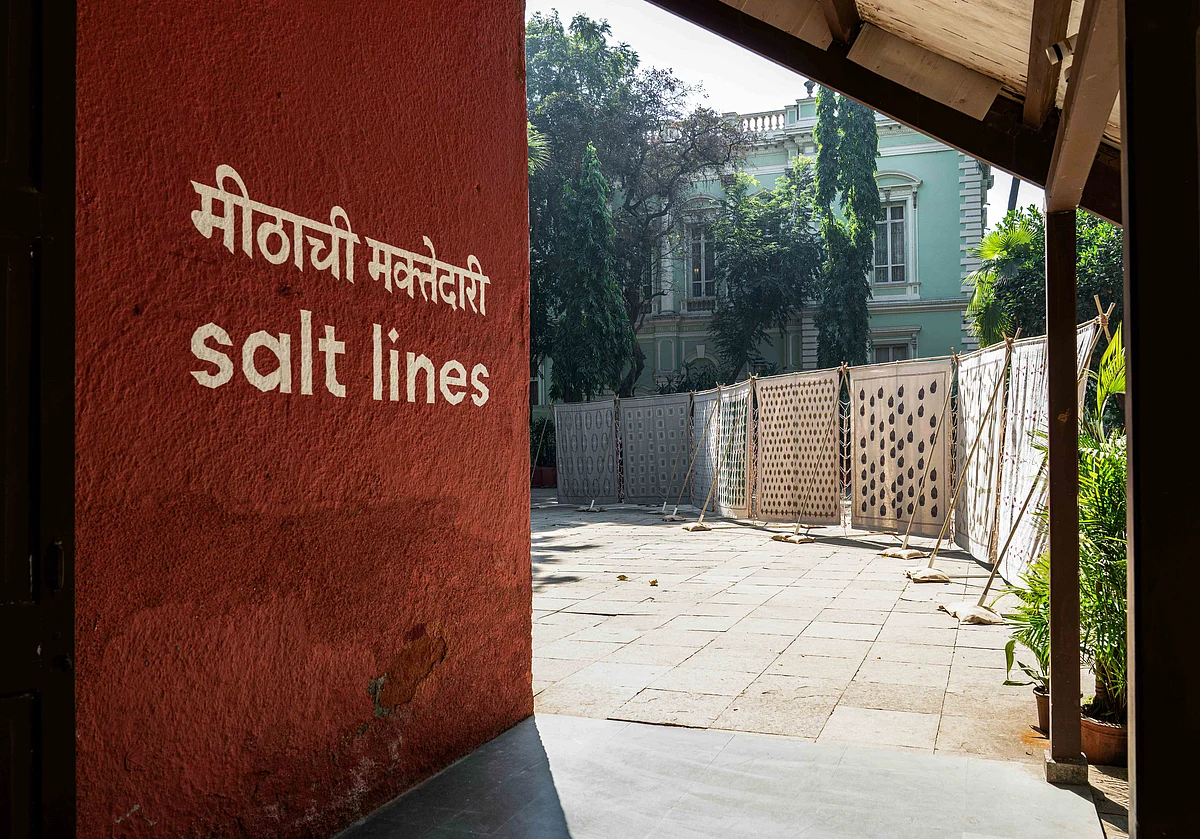
Today, little remains of this enormous colonial barrier in public memory. Salt Lines, an exhibition by artist duo Hylozoic/Desires, brings this forgotten history back into view. Following its presentation at Mumbai’s Dr Bhau Daji Lad Museum, the exhibition is on view at Jaipur Centre for Art (JCA), within the City Palace complex, from July 3 to August 9, 2026.
For JCA co-founder Noelle Kadar, the exhibition’s journey to Jaipur began with the artists themselves. Himali Singh Soin and David Soin Tappeser had been spending time around Sambhar Lake while researching and creating the work, bringing them into conversations with JCA.
What caught Kadar’s attention was the sheer scale of what the artists had uncovered. “A 4,000-kilometre barrier, over half of it comprised of a living hedge,” she said. The history had survived in fragments, but the physical landscape had largely reclaimed it. Hylozoic/Desires approach that history through both research and artistic interpretation, leaving room for imagination alongside archival evidence. For Kadar, that combination is central to the kind of practice JCA wants to present.
A Border Built Around Salt
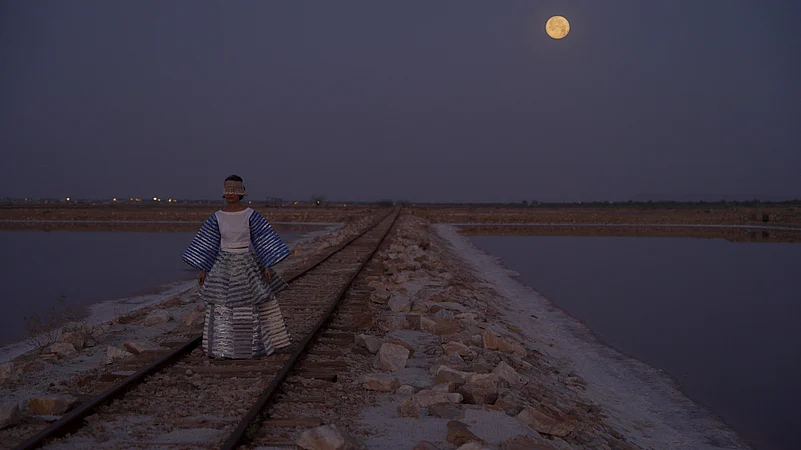

The Inland Customs Line was more than a physical boundary. It was part of the British colonial administration’s attempt to control one of the subcontinent’s most valuable resources. Salt was heavily taxed, and the barrier helped prevent its movement between territories.
Its connection to Jaipur is particularly significant. In 1879, the British took control of Sambhar Lake, one of the region’s richest sources of salt. The move brought salt production directly under colonial control and eventually made the Customs Line unnecessary.
For Kadar, that history gives Salt Lines a connection to Jaipur that goes beyond geography. The story is tied to the region’s own experience of colonial pressure and to the wider history of resource extraction.
“Salt was one of the most heavily controlled resources under British rule,” Kadar said. Sambhar Lake was among the richest sources of salt in the subcontinent, making its control an important part of the British administration’s larger strategy. The takeover also marked the end of the Inland Customs Line.
The exhibition, therefore, is not simply looking back at an unusual colonial structure. It examines how control over a natural resource can shape landscapes, economies and communities. For Jaipur, that history is particularly close to home.
When History Meets Art
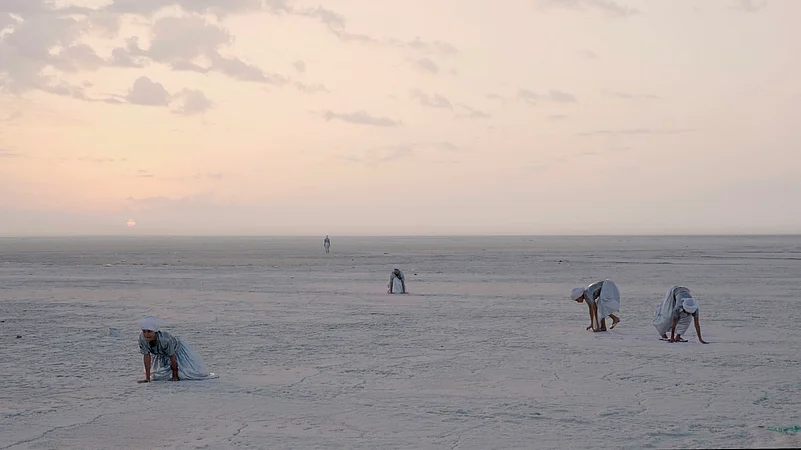
Much of Salt Lines exists between historical documentation and artistic interpretation. Archival research provides the foundation, while film, installation and speculative storytelling allow the artists to explore what official records cannot fully capture.
One of the central works is "The Hedge of Halomancy", a 20-minute film featuring Mayalee, a fictional courtesan whose story unfolds against the world created by the Customs Line. The hedge itself becomes more than a physical structure. It is also a way of thinking about resistance, resilience and impermanence.
That distinction between history and art is important to Kadar. “History tells you what happened,” she said. But art allows audiences to engage with that information differently, leaving more room for interpretation and personal response.
In Salt Lines, the artists work with what the historical record preserves and then imagine beyond it. The result is not a conventional retelling of colonial history. Instead, the exhibition asks visitors to consider memory itself, and what gets lost when a landscape changes.
Jaipur Adds Another Layer
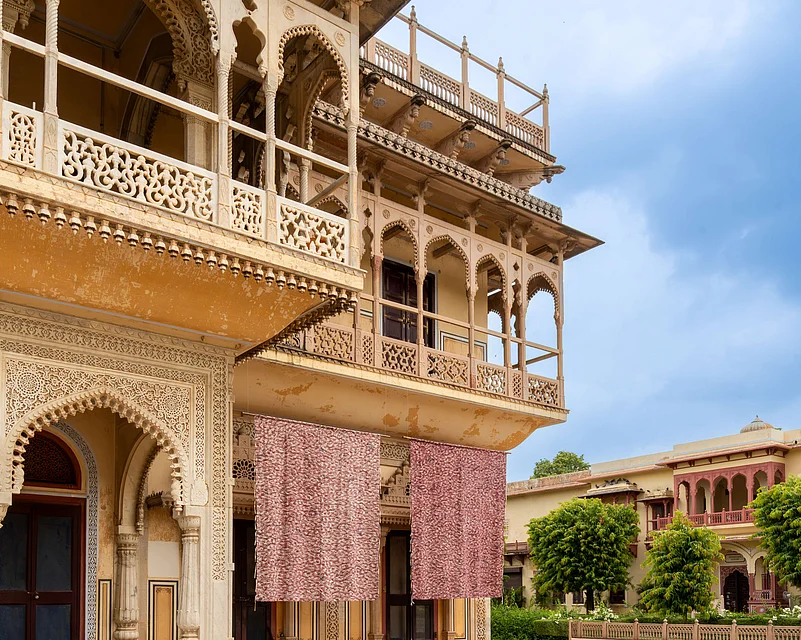
The City Palace is not simply a backdrop for Salt Lines. The exhibition arrives at a site directly connected to the history it explores.
Sambhar Lake was once among Jaipur’s most significant possessions. Its takeover by the British had consequences for the region’s relationship with salt, land and resources. Bringing the exhibition into the former seat of the Jaipur royal court creates a conversation between the history being examined and the place in which it is being presented.
“This is part of Rajasthan’s history,” Kadar said. The connection is what makes Jaipur different from the exhibition’s earlier presentation in Mumbai. While Mumbai gave the work its first audience, she believes Jaipur offers something more specific: “Jaipur gives it its history.”
That approach also reflects JCA’s larger role within the City Palace complex. Founded in 2024 by HH Maharaja Sawai Padmanabh Singh and Noelle Kadar, the centre places contemporary art within a historic setting, using the two to illuminate each other.
Kadar sees JCA as a complement to the permanent collection and the wider palace complex. Its programming brings contemporary ideas into a space already associated with Jaipur’s history and heritage.
For visitors, this means Salt Lines can be approached as both an art exhibition and a different way of understanding the city. As Kadar put it, its presentation as an artwork rather than simply a history lesson allows audiences to encounter the story “in a way that is personal and tender.”
A Different Side Of Jaipur
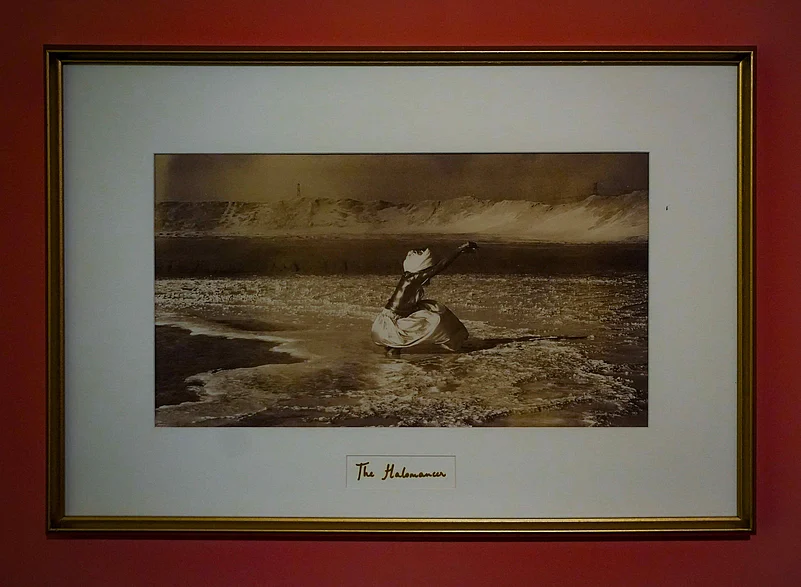
Salt Lines is part of JCA’s wider summer programme and runs alongside the second edition of its free Artists’ Cinema programme from July 3 to August 9. The decision to launch a major exhibition in July is deliberate.
Jaipur’s summer is usually treated as a period when visitor numbers dip. JCA is looking at it differently, building a cultural calendar that gives travellers a reason to visit beyond the winter season.
“We want people to come in a quiet month and find something worth the trip,” Kadar said. The centre is also developing an artist residency programme, which she sees as another way of keeping the city’s creative life active throughout the year. Having artists live and work in Jaipur can influence not only what visitors see, but how the city itself engages with contemporary art.
The summer programme also changes the pace of a visit to JCA. "The Hedge of Halomancy" is being shown as part of the exhibition’s film component, while the central area of the gallery becomes a theatre for the late afternoon and evening screenings.
Kadar sees this as part of a broader effort to make Jaipur a year-round cultural destination. “Our summer programming reflects the season and the pace of the city,” she said. In the warmer months, she believes there is value in creating spaces where audiences can slow down and spend more time with a work.
Looking Beyond The Monuments
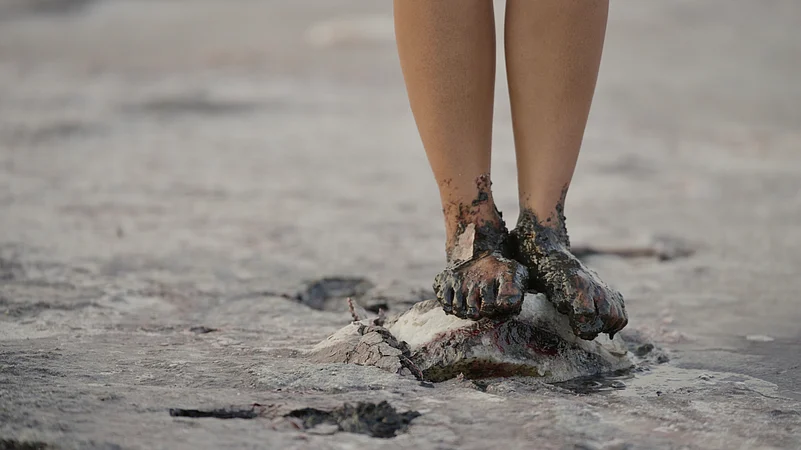
At its heart, Salt Lines asks what happens when a forgotten piece of history is brought back into the landscape where it once mattered. Its themes extend beyond the colonial period, touching on resource control, ecology, borders and the ways governments shape access to land and natural resources.
“Borders built around control of a resource... still echo in current conversations,” Kadar said. Water, land, and law continue to be shaped by systems of ownership and control, giving the exhibition a contemporary relevance beyond its historical subject.
The artists did not necessarily set out to make a work about the present. Instead, their research into the Inland Customs Line has produced a story that connects past and present almost organically.
For visitors, the exhibition offers another way to read Jaipur. The city’s forts, palaces and historic streets remain central to its identity, but contemporary art can add another layer to that history. At JCA, the two are deliberately placed in conversation. “History contextualises the contemporary world,” Kadar said.
And perhaps that is the most interesting reason to visit Salt Lines. It is not only about a vanished hedge or an overlooked chapter of colonial history. It is about how landscapes retain traces of what happened to them, how some histories disappear from view, and how art can bring them back into the conversation.
FAQs
1. What is Salt Lines?
Salt Lines is an exhibition by artist duo Hylozoic/Desires exploring the forgotten Inland Customs Line and colonial salt control.
2. What was the Great Hedge of India?
It was a 4,000-kilometre colonial barrier, with around 2,500 kilometres made up of a living hedge, used to control salt movement.
3. Where is Salt Lines being held?
The exhibition is being presented at Jaipur Centre for Art within the City Palace complex.
4. When is Salt Lines on view?
Salt Lines is on view from July 3 to August 9, 2026.
5. Why is Jaipur significant to the exhibition?
The British takeover of Sambhar Lake from Jaipur and Jodhpur in 1879 was closely linked to the eventual end of the Inland Customs Line.