Delhi has never been short of neighbourhoods with a following. Yet Humayunpur, the unassuming urban village tucked into Safdarjung Enclave, has mostly been known to those who already know where to look. That changed this week, when Time Out placed it at No. 16 on its list of the 40 Coolest Neighbourhoods in the World for 2026. The ranking puts Humayunpur alongside neighbourhoods in Seoul, Lisbon, Tokyo, Rome, Bangkok, and Mumbai, with its food culture and Northeast Indian community at the centre of the recognition.
From Urban Village To Delhi’s Asian Food Hub
Humayunpur’s story is closely tied to migration. The area was largely farmland until it was sold off in the 1960s. Over the following four decades, workers and students from Nagaland, Manipur, Assam, and other parts of Northeast India moved into the neighbourhood. That community gradually shaped Humayunpur’s restaurants, shops, and everyday culture.
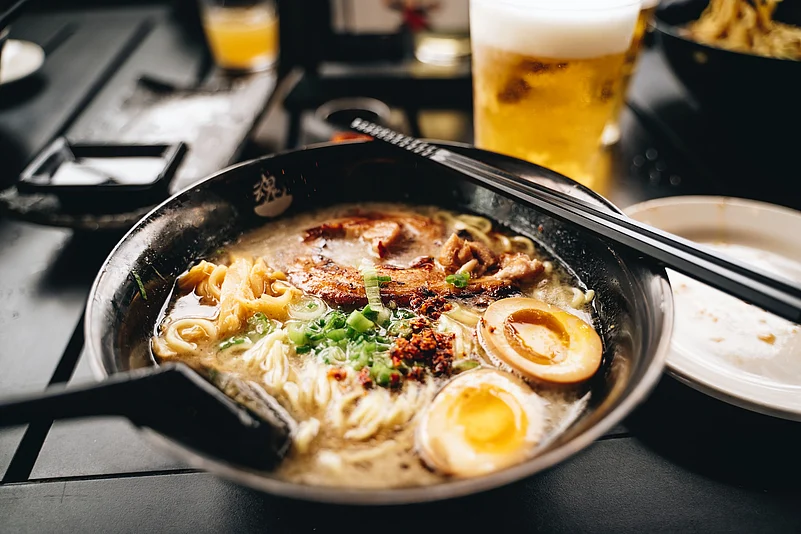
Today, the lanes have more than 50 eateries and kitchens, and the culinary range stretches well beyond the usual Delhi restaurant circuit. Visitors can eat Naga and Manipuri thalis, Mizo food, Tibetan momo, thukpa and laphing, alongside Korean ramen, kimbap, bibimbap, and seafood-focused Asian dishes. The neighbourhood’s grocery stores also stock Asian ingredients and Northeast Indian products that can be difficult to find elsewhere in the city.
The food scene is still evolving. Time Out’s recent coverage of Humayunpur includes restaurants such as Rude Chef, which draws on contemporary Southeast Asian cooking and Manipuri flavours, Vietnamese kitchen Tuoi Moi Eats, and Green Neko, a Hawaiian-Japanese restaurant serving ramen and poke bowls.
And then there are the businesses that make Humayunpur feel like a neighbourhood rather than simply a dining destination. Its narrow lanes are lined with skincare shops, K-pop merchandise, streetwear, thrift stores, tattoo studios, photo booths, and karaoke venues. You can arrive looking for dinner and end up browsing stationery, picking through a thrift rack, or settling in for a karaoke session.
What Makes Humayunpur ‘Cool’ Enough For The List?
Time Out nominated neighbourhoods that were shaping urban life in their respective cities. A panel then assessed them across several criteria, including food and drink, nightlife, culture, unique local businesses, liveability, and community.
Humayunpur happens to tick several of those boxes at once.
Its biggest draw is clearly the food, but the neighbourhood’s identity comes from the community behind it. The concentration of Northeast Indian residents has helped create a distinct culinary and cultural ecosystem, while the newer Korean, Japanese, Vietnamese, and other Asian businesses have expanded its appeal.

Time Out’s suggested day in Humayunpur begins with desserts and boba at Habitat, followed by skincare and BT21 stationery at KOJA. From there, visitors can head to Rude Chef for a Naga or Manipuri thali, browse Kathy’s Kawaii Store and thrift shops, then try thukpa and laphing. The evening can continue with kimbap at Teyy’s, bibimbap and soju at Kori’s and a private karaoke session.
Which Other Neighbourhoods Made The 2026 List?
Humayunpur is one of two Indian neighbourhoods on the list. Mumbai’s Bandra West appears at No. 23. The list itself spans 40 neighbourhoods across 26 countries and territories, ranging from historic city districts and seaside communities to former industrial areas and emerging cultural hubs.
The complete 2026 list is as follows:
1. Jongno 3-ga, Seoul, South Korea
2. L’Ocean District, Rabat, Morocco
3. Neos Kosmos, Athens, Greece
4. Chinatown, Los Angeles, USA
5. Govanhill, Glasgow, UK
6. Kitakagaya, Osaka, Japan
7. Chapinero Alto, Bogotá, Colombia
8. Koenji, Tokyo, Japan
9. Downtown, St Catharines, Canada
10. Esquilino, Rome, Italy
11. Russafa, Valencia, Spain
12. Tân Định, Ho Chi Minh City, Vietnam
13. São Bento, Lisbon, Portugal
14. Talat Noi, Bangkok, Thailand
15. Slakthusområdet, Stockholm, Sweden
16. Humayunpur, Delhi, India
17. Laranjeiras, Rio de Janeiro, Brazil
18. West Town, Chicago, USA
19. Rákóczi tér, Budapest, Hungary
20. Jalan Besar, Singapore
21. Crooswijk, Rotterdam, Netherlands
22. Chacagiales, Buenos Aires, Argentina
23. Bandra West, Mumbai, India
24. Cathedral Quarter, Belfast, UK
25. República, São Paulo, Brazil
26. Changning, Shanghai, China
27. Oost, Amsterdam, Netherlands
28. Financial District, New York, USA
29. New Farm, Brisbane, Australia
30. Quartier d’Aligre, Paris, France
31. Kalk Bay, Cape Town, South Africa
32. North Hobart, Hobart, Australia
33. Newington Green, London, UK
34. Yulin, Chengdu, China
35. Mount Pleasant, Vancouver, Canada
36. Centro Histórico, Lima, Peru
37. Boavista, Porto, Portugal
38. Starstreet Precinct, Hong Kong
39. South Melbourne, Melbourne, Australia
40. Distillery District, Lexington, USA

At No. 1 is Jongno 3-ga in Seoul, where historic streets are seeing a new wave of late-night food stalls, craft workshops, jewellery studios, and bars. Other highlights include L’Ocean District in Rabat, Neos Kosmos in Athens, Chinatown in Los Angeles, and Govanhill in Glasgow.
The common thread is less about polished landmarks and more about neighbourhood life: good places to eat and drink, independent businesses, cultural activity, communities that shape the character of an area and enough everyday energy to make a visitor want to linger. On those terms, Humayunpur’s appearance on the list makes sense. Its appeal has been growing from the ground up, one restaurant, shop, student, resident, and late-night food stop at a time.
FAQs
1. Why is Humayunpur one of the world’s coolest neighbourhoods?
Humayunpur was ranked No. 16 by Time Out for its diverse food scene, strong Northeast Indian community, independent businesses, nightlife and neighbourhood character.
2. What is Humayunpur famous for?
Humayunpur is known for its concentration of Northeast Indian and Asian restaurants, including Naga, Manipuri, Mizo, Tibetan, Korean and Vietnamese food.
3. What can you do in Humayunpur?
Visitors can explore restaurants, Korean and Asian grocery stores, K-pop and stationery shops, thrift stores, tattoo studios, photo booths, karaoke venues and independent cafés.
4. When is the best time to visit Humayunpur?
October to March is best for visiting Humayunpur, when Delhi’s weather is more comfortable for exploring its lanes on foot.
5. Which Indian neighbourhoods are on Time Out’s 2026 coolest neighbourhoods list?
Two Indian neighbourhoods feature on the 2026 list: Humayunpur in Delhi at No. 16 and Bandra West in Mumbai at No. 23.