

I had always heard about Jim Corbett for what everyone knows it for—the safari, tiger sightings, and the bragging rights of spotting a tiger before the vehicle in front of you. But somewhere between a five-and-a-half-hour drive from Delhi, a pitstop for chai on an empty stretch of highway, and arriving at Taj Corbett Resort & Spa just as the resonant sound of a Ransingh—a traditional S-shaped wind instrument from the Kumaon hills—cut through the morning air in greeting, I began to understand that Corbett had been quietly holding much more than most of us had bothered to notice.
I entered the lobby and was welcomed with a tika on my forehead, a small pressed dot of vermillion between my eyebrows, the kind of mark that in Kumaon signals auspiciousness, a blessing before you've even begun. Before I had even seen my room, I knew this place wasn't going to be just about the jungle.
A Place That Stays Low
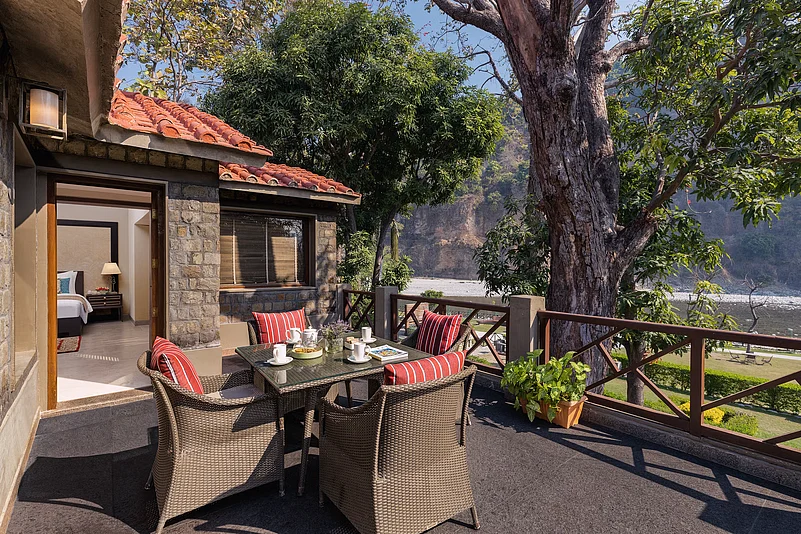

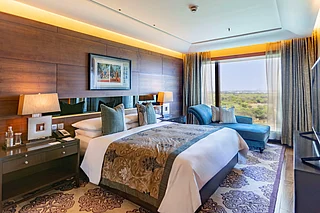
Taj Corbett sits along the Kosi River, framed by Sal forests that have defined this region's ecology for centuries. The first thing I noticed was how little the property tried to compete with its surroundings. There are no grand gestures fighting for attention against the treeline. The design stays low, horizontal, porous—and the forest and river remain visible, audible and present. My room had wide windows that opened towards the river, and an outside sit-out where, if you stayed still long enough, a barking deer might cross the far edge of the lawn without so much as a glance in your direction. Or you can spot a leopard on the other side of the riverbank.
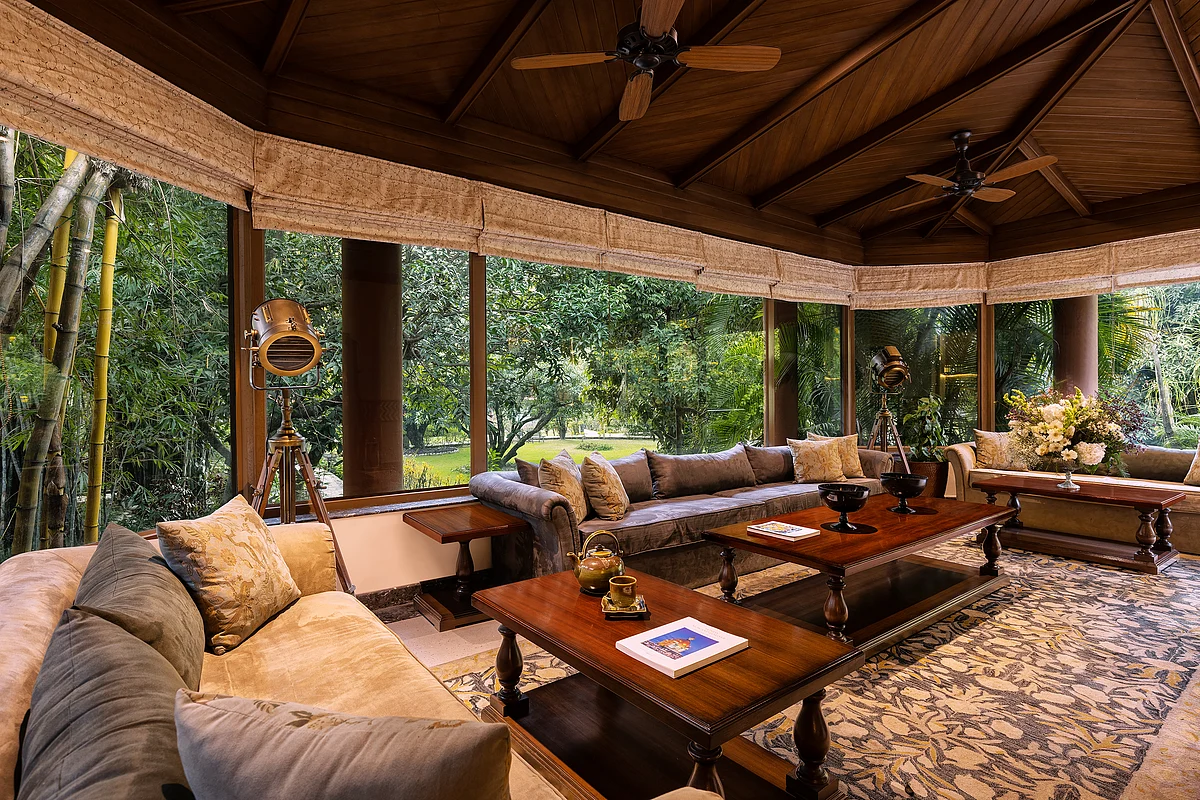
The interiors are simple and comfortable—nothing excessive, nothing that pulls your attention away from what's outside. Even inside, the sound of the Kosi remains part of the experience, soft enough to disappear into the background, but present enough to shape the atmosphere of the stay.
With 75 rooms and suites, the place is well-sized but doesn’t feel crowded, with the surrounding forest remaining not just a view, but an integral part of the experience.
Following Jim Corbett's Footsteps
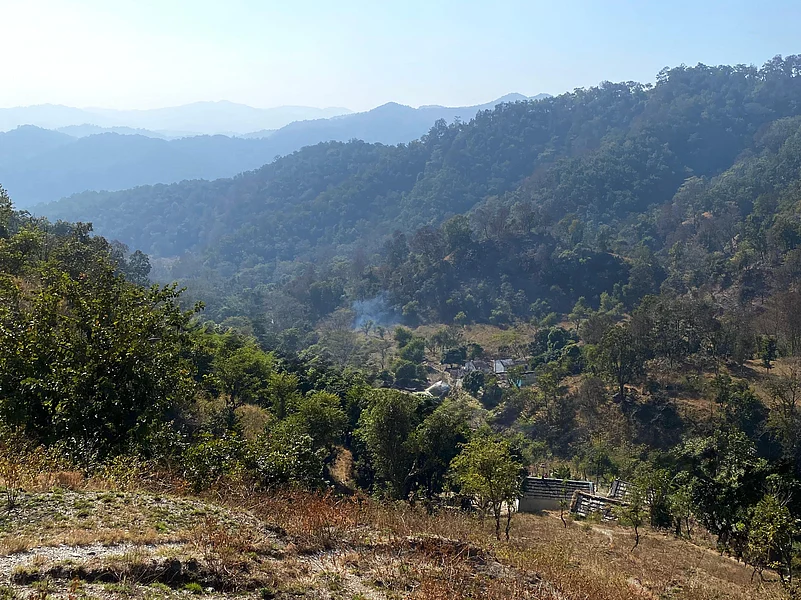
Of all the experiences offered at the resort, the Man-Eater of Mohan trek offers perhaps the clearest sense of Corbett beyond the safari circuit. We set out in the early morning, when the forest still held its night coolness and the light filtered through the Sal canopy in long, dusty beams. The trail follows the same path that Jim Corbett once walked in pursuit of the Mohan man-eater, a tiger responsible for dozens of human deaths across the Kumaon hills in the early 20th century. This wasn't a leisurely nature walk. It was nearly three to four hours of moving through terrain that hasn't changed much since Corbett himself passed through it.
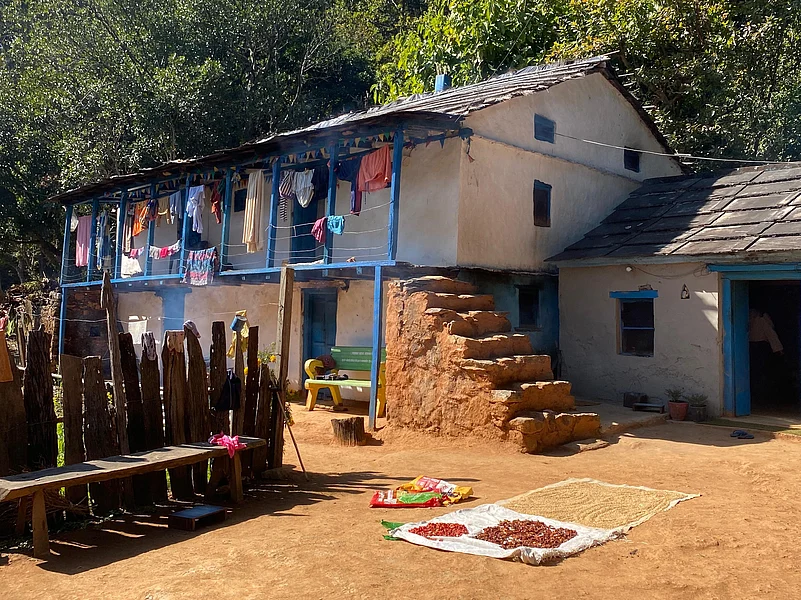
What stayed with me wasn't the trail; it was the people we met along the way. Locals stopped to chat, asked where we had come from, and spoke almost casually about the tigers they sometimes spotted near their homes or crossing roads after dark. For them, it was not unusual. It was simply part of living here.
One family invited us in for tea without hesitation. We sat with them for a while, talking, laughing and playing with the village dogs before continuing uphill. That kind of warmth is increasingly rare to come by. When we finally reached the top, the hotel had packed sandwiches and juice for us. We sat there, eating, looking out at the hills rolling away in every direction. Nobody said much. We didn't need to.
What The River Holds
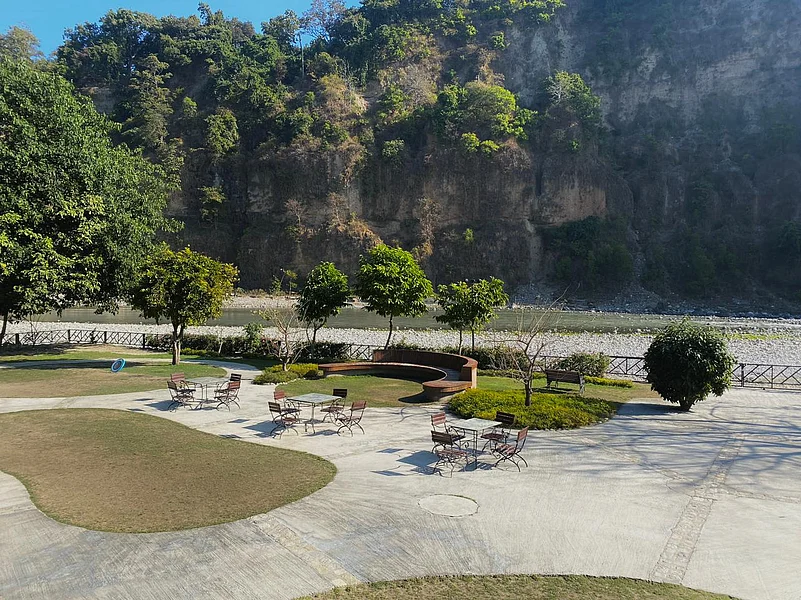
The Kosi is not ornamental. It is not the kind of river that exists to be photographed from a terrace. It is a working river—one that has shaped settlements, sustained agriculture, and defined the rhythm of Kumaon life for generations. People here don't describe Kosi the way travellers do. They describe it the way you describe something that keeps you alive. Each evening, Taj Corbett holds a Kosi Aarti on the river's banks—a ritual of gratitude that I could experience first-hand. Watching it as the light drops and the water turns gold, you understand that this place has always known how to mark the difference between what is precious and what is merely pretty.
Eating What The Land Remembers
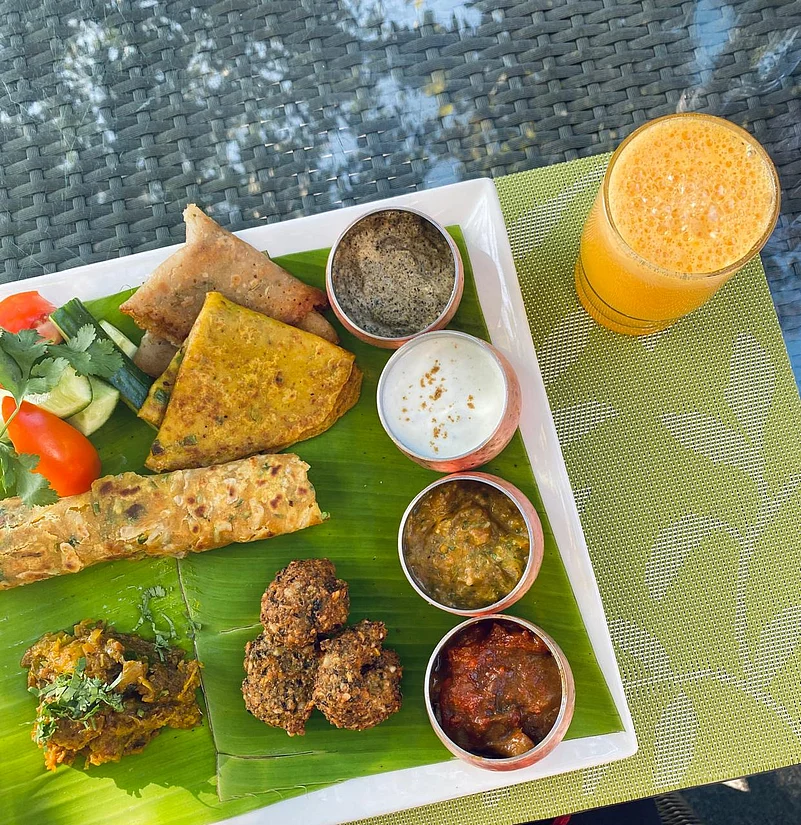
Kumaoni food is slowly disappearing from everyday homes, which makes the kitchen at Taj Corbett feel especially rooted in its surroundings. From bhatt ki daal—made with local black soybeans and slow-cooked to an earthy richness—to aloo ke gutke, where potatoes are tempered with mustard seeds and regional spices, the menu reflects a cuisine shaped by the hills.
Then there is phanu, a traditional lentil preparation that demands patience both in its making and in the way its flavours unfold. Even dessert remains tied to the landscape. Jhangora kheer, made from barnyard millet long associated with the region, offers a gentle finish to the meal and a reminder that here, food is as much about geography as it is about flavour.
About 70 per cent of the kitchen staff are from Uttarakhand, including a woman from the village who prepares local Kumaoni breakfast each morning. She is not formally trained as a chef, but carries generations of knowledge in her hands. There is also a gentleman whose sole responsibility is making tea for guests. Somehow, that small detail says more about the resort’s relationship with local culture than any menu ever could.
Into The Forest, Eventually
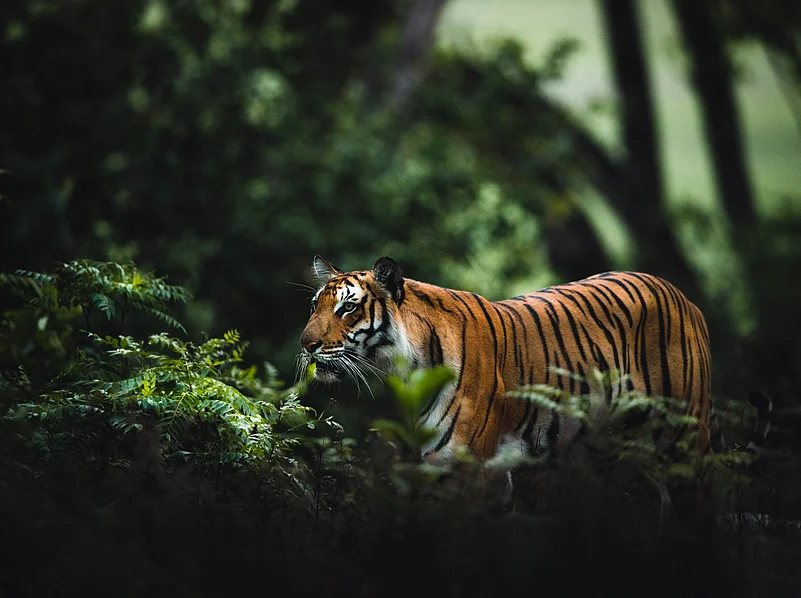
By the time I finally went on the safari, I had already begun to see Corbett from a new lens. Entering the forest in the early morning, the air felt noticeably cooler beneath the canopy, carrying that clean, damp freshness that only seems to exist in places where the day has not fully arrived. The jeep moved slowly along the designated tracks.
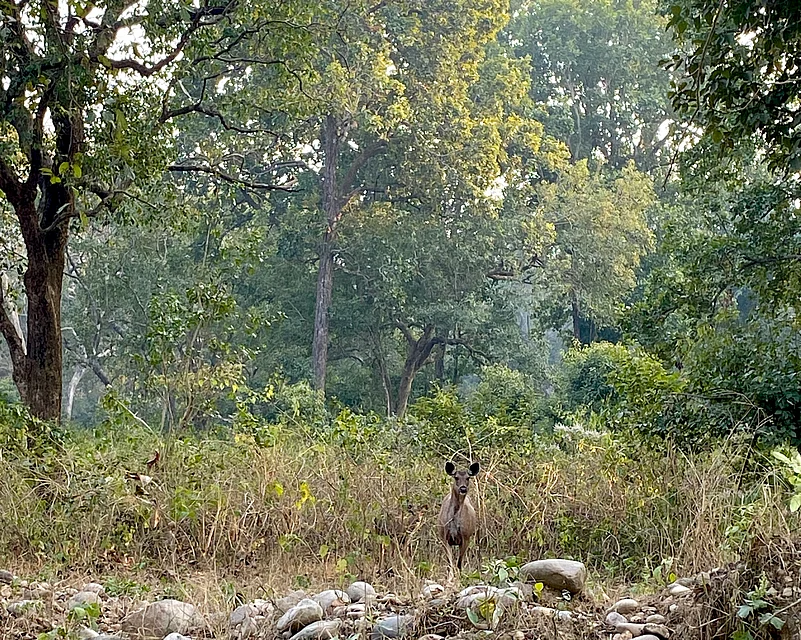
We spotted all three of Corbett’s familiar deer—a sambar standing alert in the distance, spotted deer moving lightly through the grass, and a barking deer disappearing into the undergrowth almost as quickly as I noticed it. Above us, the forest was just as alive. Bird calls seemed to come from every direction, some sharp and sudden, others softer and layered into the stillness, while our naturalist pointed out species I would otherwise have missed entirely among the branches.
Then came the kind of moment that makes you instinctively sit a little straighter. Pressed into the dust on the trail ahead was a pugmark, fresh enough to still be holding its shape. Not far after, a deer’s warning call rang through the trees, and for a few seconds the entire forest seemed to pause with us. We waited, listening, aware that something could be moving just beyond sight.
I never saw the tiger itself. But after the trek, the river, the food, and those hours we spent listening to the forest, I realised the experience had already given me more than a sighting could. Sometimes in Corbett, presence is enough.
Luxury With A Lighter Footprint
What also became clear during my stay was that Taj Corbett is trying to approach luxury differently through Paathya, IHCL’s long-term sustainability framework. Rather than treating sustainability as a side note, the programme quietly shapes how the property functions. Solar energy now supports a significant portion of the resort’s power needs, wastewater is recycled for landscaping, and single-use plastic has been steadily removed from daily operations. Electric buggies move guests across the grounds, while local produce and handmade materials are increasingly woven into the guest experience. Beyond the property itself, Paathya also extends into the surrounding community through support for Kumaoni artisans, local farmers and cultural preservation initiatives that give disappearing traditions a place within contemporary hospitality. In a landscape as sensitive as Corbett, where forest and human life have always existed in close proximity, that effort feels less like a trend and more like a necessary way forward.
The Weight Of Quiet
What becomes clear after a few days in Corbett is that life here has always moved to its own rhythm. The sal forests remain unchanged by the steady flow of visitors, the Kosi continues to shape the landscape as it always has, and villages like Koonkhet, on the edge of the park, still follow routines that long predate tourism in the region.
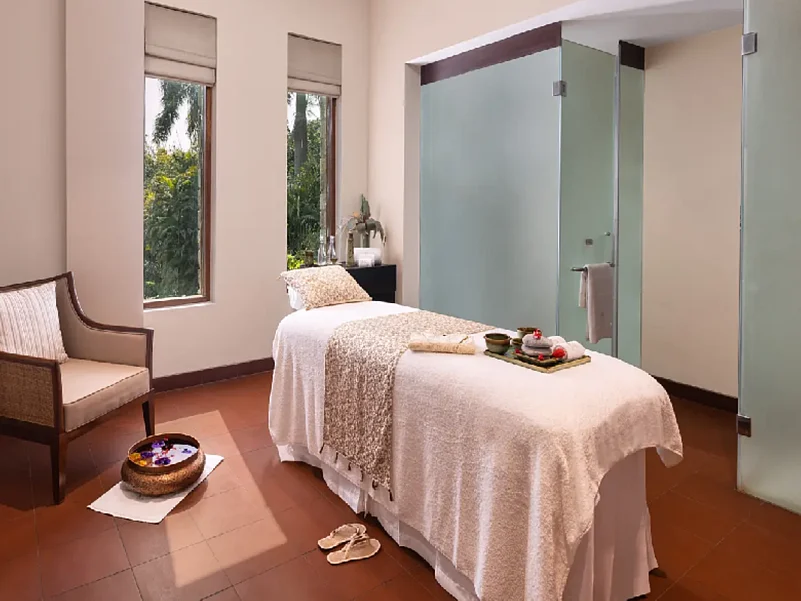
That is where Taj Corbett feels most considered. The experiences here are built around the landscape rather than separate from it. Mornings can begin with yoga by the river, where the sound of the water replaces the usual studio playlist. Guided village walks offer a closer look at communities that have spent generations living alongside the forest. At the J Wellness Circle, therapies draw from Indian healing traditions that feel in step with the slower pace of the surroundings. None of it feels disconnected from where you are, which perhaps is what stays with you most.
General Manager Nivedan Kukreti, who grew up in this region and returned to it, put it simply, "They should only take back the peace and quiet that Corbett offers. When people come here, they just lose themselves in the ambience."
I understood exactly what he meant.
Corbett doesn't begin and end with a safari gate. It lives in rivers that keep flowing, in food that remembers where it came from, in a forest that holds the memory of a man who once walked it with nothing but attention and respect. Sometimes, the most meaningful way to experience a place is not by chasing what it's famous for—but by staying long enough to understand what remains.
The Information
Getting There
Jim Corbett National Park is one of the more accessible wildlife destinations in North India, making it an easy long weekend from Delhi.
By Road:
Taj Corbett Resort & Spa in Dhikuli is around a five-and-a-half-hour drive from Delhi, depending on traffic, via Hapur, Moradabad and Ramnagar. The final stretch into Corbett becomes noticeably greener as the plains begin giving way to the forests of Kumaon.
By Rail:
The nearest railhead is Ramnagar Railway Station, approximately 12 km from the resort, with direct trains from Delhi, including the Ranikhet Express and Corbett Park Link Express. Private transfers can be arranged from the station.
By Air:
The closest airport is Pantnagar Airport, around 85 km away, though most travellers still prefer driving from Delhi for convenience.
Best Time To Visit
Corbett changes dramatically with the seasons, and each offers a different side of the landscape.
November to February:
Cool mornings, clear skies and comfortable temperatures make this the most pleasant time for safaris and outdoor activities.
March to June:
Warmer days increase the chances of wildlife sightings near water sources, particularly elephants and deer.
July to September:
The monsoon transforms the region into deep green, with mist over the river and fuller forests. Some safari zones remain closed during this period, but the landscape feels especially beautiful.
Nearby Attractions
Garjiya Devi Temple
Located just 1.5 km from the resort, this revered temple sits dramatically on a large rock in the middle of the Kosi River and remains one of the region’s most visited spiritual sites.
Corbett Museum, Kaladhungi
Around 35 km away, the former home of Jim Corbett offers insight into the life of the hunter-turned-conservationist whose name became inseparable from the region.
Koonkhet Village
One of the oldest villages near the park boundary, Koonkhet offers a glimpse into how local communities continue to live alongside the forest.
Corbett Waterfall
A short drive from Ramnagar, this quiet cascade surrounded by teak forest makes for a peaceful afternoon excursion.
What To Experience At Taj Corbett
Man-Eater of Mohan Trek
One of the most immersive experiences at the resort, this guided three-to-four-hour trek follows the route Jim Corbett once took while tracking the infamous Mohan man-eater through the forested hills.
Kosi Aarti
Held each evening on the riverbank, the ritual offers a more intimate understanding of the Kosi’s role in local life.
Stargazing with Starscapes
After dark, guided stargazing sessions by Starscapes offer a different way to experience Corbett, with telescopes set up under clear night skies that reveal constellations often missed in the city.
Kumaoni Dining
Traditional dishes such as bhatt ki daal, aloo ke gutke, phanu and jhangora kheer offer a deeper connection to the region through its food.
Nature Walks & Birding
The surrounding forests are rich in birdlife, with hornbills, kingfishers, barbets and eagles frequently spotted around the property.
J Wellness Circle
Spa treatments inspired by Indian wellness traditions provide a quieter way to experience the slower pace of the landscape.
FAQs
1. What makes Corbett worth visiting beyond the safari?
Corbett offers river rituals, village walks, Kumaoni cuisine, forest treks and a deeper connection to the landscape beyond wildlife sightings.
2. What is the Man-Eater of Mohan trek?
It is a guided forest trail that follows the route Jim Corbett once took while tracking the legendary Mohan man-eater.
3. When is the best time to visit Corbett?
November to February offers pleasant weather, while summer improves wildlife sightings near water sources.
4. How far is Taj Corbett from Delhi?
Taj Corbett Resort & Spa is approximately a five to six-hour drive from Delhi.
5. Can you enjoy Corbett without seeing a tiger?
Yes, many visitors find the forests, river, food and local culture just as rewarding as the safari itself.