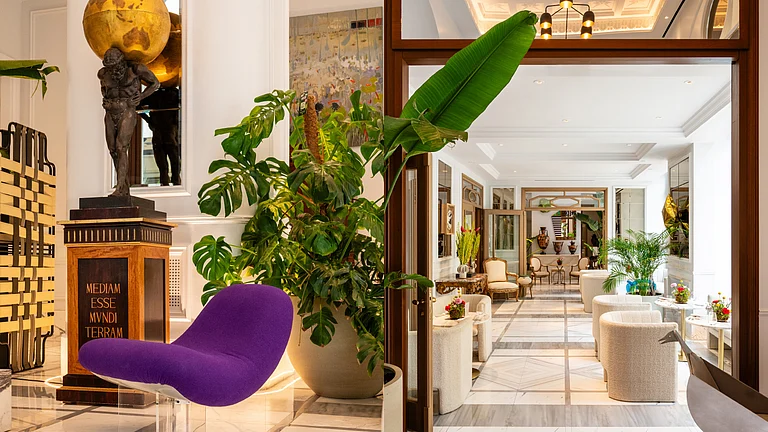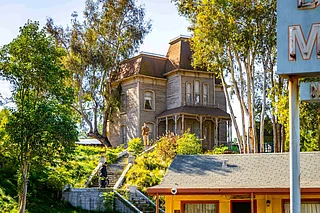


Art hotels place creativity at the centre of the stay. They blend hospitality with design and culture. From palace stays to boutique retreats and mountain resorts, art appears across rooms, corridors, and shared spaces.
The Imperial, New Delhi
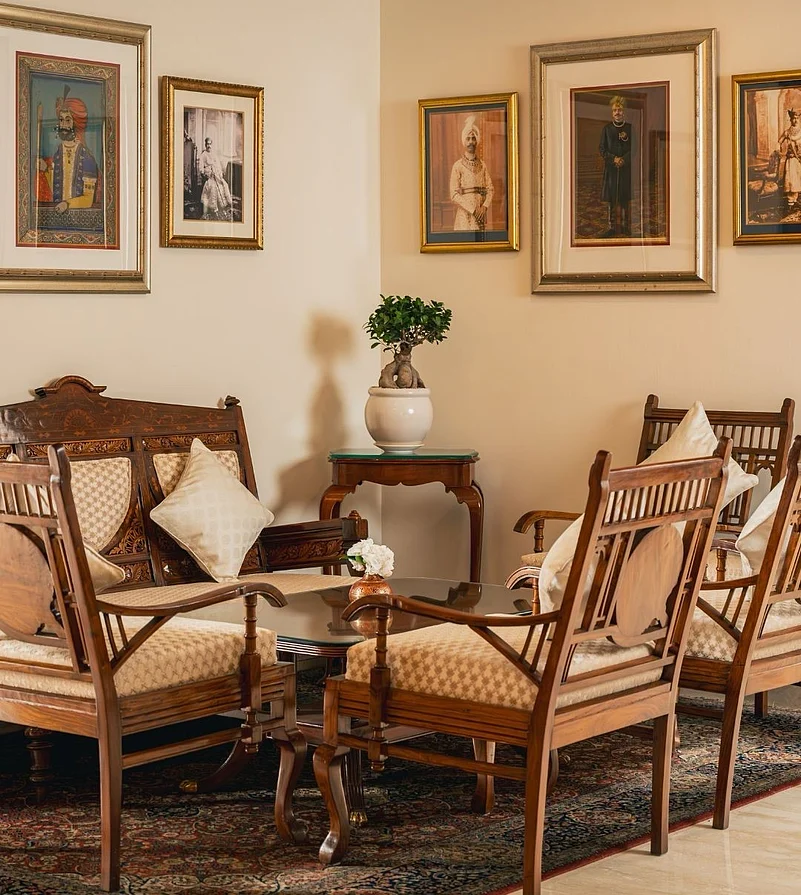

Located on Janpath, The Imperial, New Delhi (established in 1936) is one of India’s most celebrated heritage hotels. Often described as a “living museum,” it blends Victorian, Art Deco, and Lutyens-style architecture with luxury hospitality in the heart of the capital.
The Art Experience
The hotel houses a significant collection of 17th–19th century colonial, Mughal, and Sikh-era art. Paintings, lithographs, and historical maps appear throughout the property. Corridors function as curated gallery spaces. Art becomes part of the guest’s daily movement through the hotel.
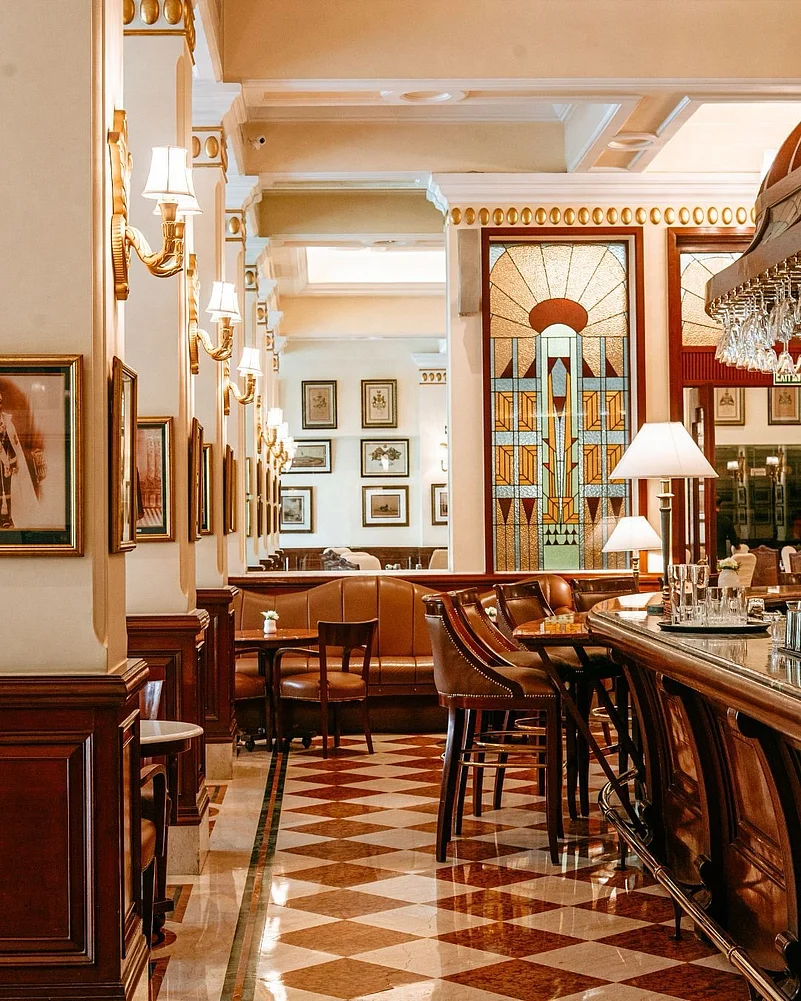
A highlight is The Spice Route restaurant, where hand-painted murals by Kerala temple artists and antique decor create a fully immersive artistic dining space.
The Hotel
The Space: Designed by F.B. Blomfield, The Imperial reflects classic colonial proportions with high ceilings, marble corridors, and leafy courtyards that give it a calm, grand feel in the middle of the city.
Stay & Wellness: Rooms and suites balance old-world character with modern comfort. The spa and garden spaces add a quieter, more relaxed layer to the experience.
Dining & Legacy: From its well-known restaurants to its long history of hosting leaders and dignitaries, The Imperial is as much a cultural landmark as it is a luxury hotel.
The Malabar House, Kochi
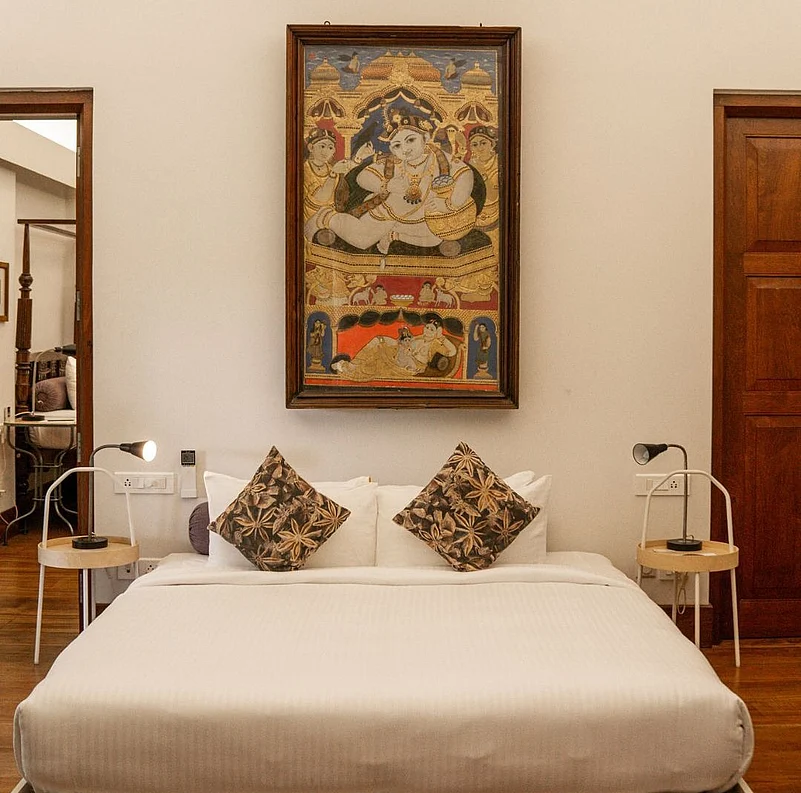
Set in Fort Kochi, The Malabar House is a boutique heritage hotel inside an 18th-century colonial building. It combines old architecture with contemporary art and design in a compact, intimate setting.
The Art Experience
Each of the 17 rooms is individually designed, with different colours, textures, and artworks. No two spaces feel the same. The interiors draw from Kerala’s history as a meeting point between East and West, reflected in its materials and visual style.
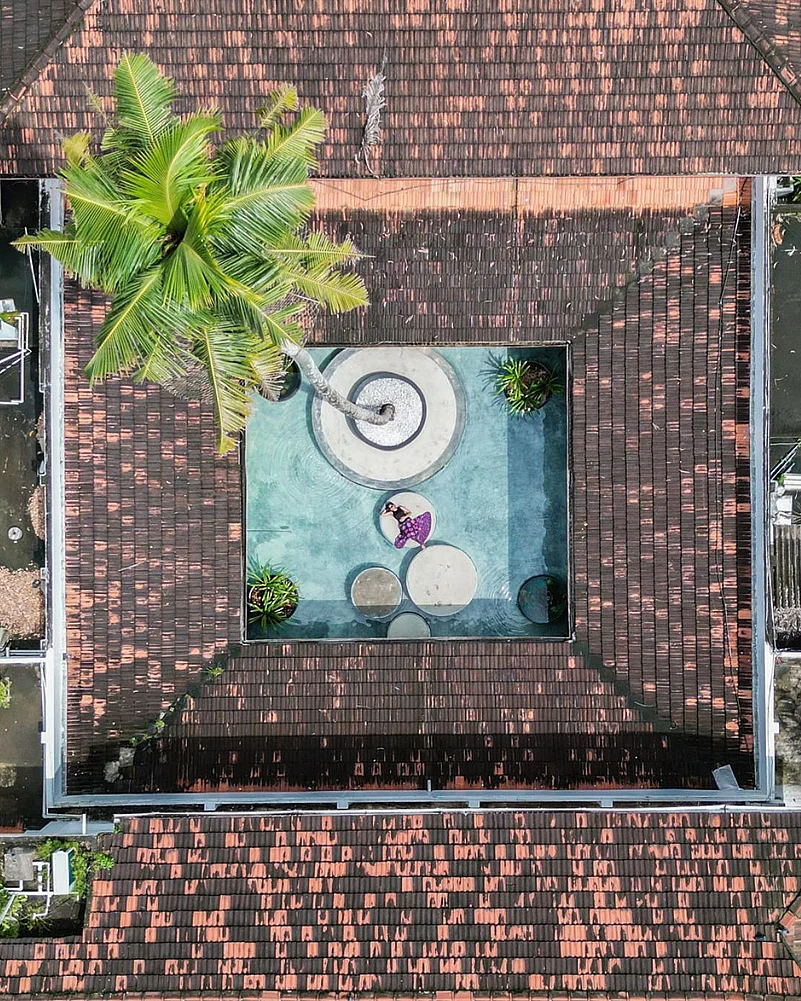
Courtyards and public areas often host classical music and dance performances, bringing local art forms into everyday hotel life.
The Hotel
The Space: Originally dating back to 1755, the building retains its colonial character while being reimagined with contemporary interiors, bespoke furniture, and locally inspired design details.
The Stay: Rooms and suites are individually styled, combining modern comfort with curated artistic elements. The scale of the property keeps the experience intimate and residential.
Dining & Cultural Life: The Malabar Junction restaurant serves South Indian and Mediterranean-inspired cuisine in a courtyard setting. The wine lounge and regular cultural performances add to the hotel’s art-driven atmosphere.
Tree of Life Eila Art Hotel, Manali
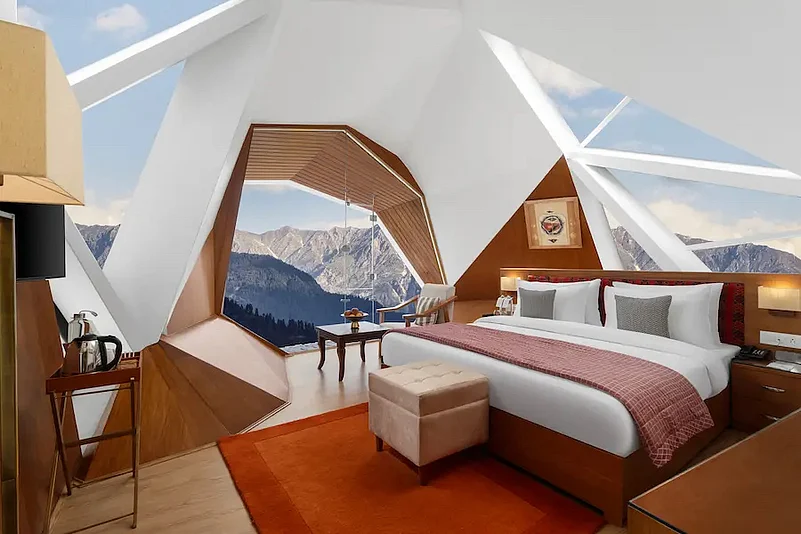
Perched on a ridge in Naggar near Manali, The Tree of Life Eila Art Hotel sits at around 2,000 m above sea level. Surrounded by deodar forests, it is a small boutique stay designed as a cocoon-like retreat shaped by art and nature.
The Art Experience
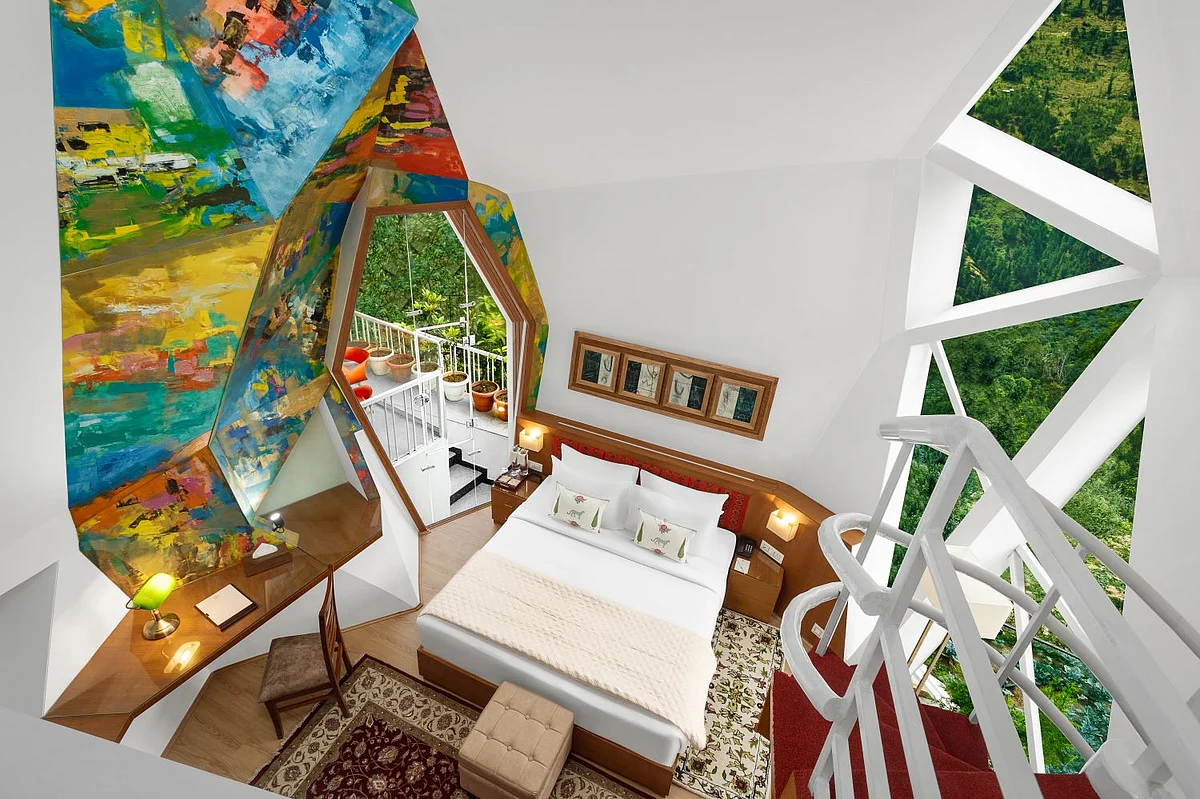
The property is filled with paintings, sculptures, and installations placed throughout indoor and outdoor spaces. A long 80-foot wall displays work inspired by the local valley and its craft traditions. The amphitheatre, with 75 seats, is used for performances and small gatherings.
The Hotel
The Space: The hotel sits on a forested ridge in Naggar, about 2,000 m above sea level. It is built around existing deodar trees, with structures placed to follow the natural slope rather than change it. Views open out toward the Beas River valley and the Dhauladhar range.
The Stay: There are 11 rooms in total, including Skyscape dome rooms and Superior Rooms. Each space is designed with a light footprint, using natural materials and large openings to bring in light and landscape. Some rooms include small comforts like espresso machines and curated interiors that feel closer to a gallery than a standard hotel room.
The Art, Culture & Shared Spaces: The in-house gallery and amphitheatre are part of the layout rather than separate features, placed along paths and open areas.
Dining & Experiences: Dhaam restaurant serves regional Himachali cuisine, with private meadow breakfasts arranged outdoors. A spa, sauna, yoga deck, and outdoor Jacuzzi sit within the landscape. Dome rooms also allow for stargazing at night, with minimal light interruption from the property.
ITC Maurya, New Delhi
Located in Chanakyapuri, New Delhi, ITC Maurya is a landmark luxury hotel known for its strong link to Indian art and heritage. It is often described as a “living museum” because of how art is placed throughout its public spaces.
The Art Experience
ITC Maurya holds a large collection of 20th-century Indian art across its public spaces. Works by Krishen Khanna, MF Husain, and A Ramachandran appear in the lobby, corridors, and main gathering areas. The Mauryan influence runs through both the art and the design of the hotel.
Krishen Khanna’s The Great Procession fills the lobby dome. MF Husain’s glass panels sit along the entrance spaces. A. Ramachandran’s work depicts Ashoka’s shift after the Kalinga war. These pieces sit within the architecture rather than being separate displays.
The Hotel
The Space: In Chanakyapuri, New Delhi, the hotel draws from Mauryan-era forms. Stone surfaces, curved lines, and stupa-like structures appear in different parts of the building.
The Stay: Rooms are large and formal in feel. The design stays simple, with muted materials and a consistent finish across the hotel.
Dining & Atmosphere: Restaurants are spread through the hotel, from Indian fine dining to global cuisine. Art sits in the surrounding spaces too, in lounges and corridors, not just in display areas.
Taj Falaknuma Palace, Hyderabad
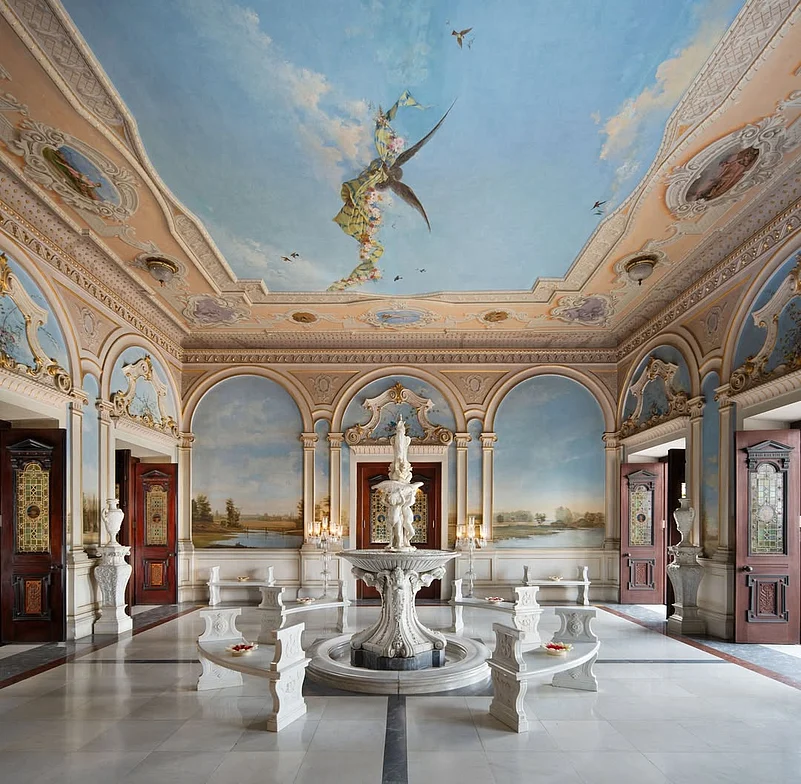
Perched above Hyderabad, Taj Falaknuma Palace sits on a 32-acre estate. Built in 1893, it has been restored as a heritage hotel inside a former Nizam residence.
The Art Experience
The palace carries Nizam-era objects across its rooms and halls, including manuscripts, jade pieces, paintings, and historic furnishings. Frescoed ceilings, carved walnut wood, and Venetian chandeliers appear throughout the interiors, often in the same spaces as the guest areas rather than separate displays.
Spaces are designed to reflect the lifestyle of the former royal household, with art and objects placed as part of the rooms rather than separate displays.
The Hotel
The Space: The palace blends Italian and Tudor-style architecture. Inside the grounds, gardens follow different design styles, including Mughal, Japanese, and Rajasthani influences.
The Stay: Rooms are large and decorative, with antique furniture, stained glass, and restored palace detailing. Each space carries traces of the original Nizam-era design.
Dining & Experiences: The dining hall features a long banquet table known for its scale. The hotel also offers carriage-style arrivals, evening Qawwali performances, and curated heritage walks through the property.
Taj Mahal, New Delhi
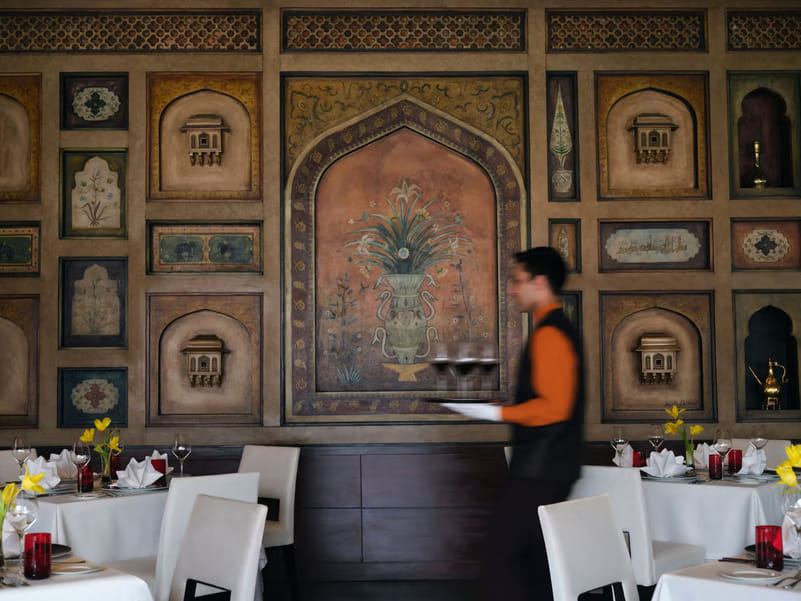
Opened in 1978 on Mansingh Road in the heart of Lutyens’ Delhi, Taj Mahal, New Delhi has long remained one of the capital’s most enduring addresses for heads of state, diplomats and discerning travellers. Set within the city’s diplomatic and cultural district, its art collection was conceived as an integral part of the hotel from the outset. Early curators travelled across India to commission and acquire works by leading modern Indian artists, establishing a living collection that unfolds through its interiors.
The Art Experience
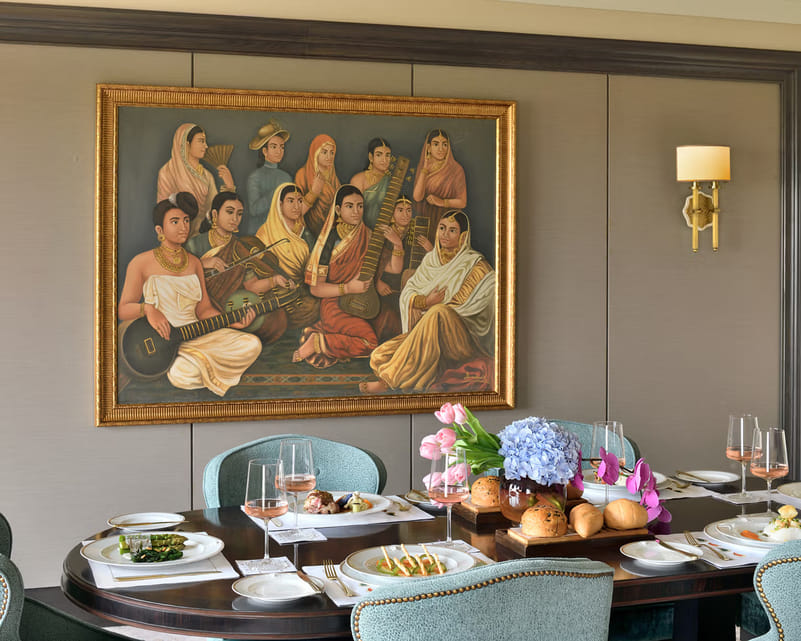
The hotel’s collection is rooted in one of the most significant periods of corporate art patronage in independent India. It spans more than 30 prominent Indian artists, including MF Husain, Manu Parekh, Jamini Roy and Ram Kumar, alongside distinctive works by RK Laxman and KS Kulkarni. Rather than being confined to galleries, the works are embedded within the hotel’s everyday spaces: a Jamini Roy in the Club Lounge, an Anjolie Ela Menon fresco anchoring a restaurant, and R. K. Laxman caricatures lining corridors at The Chambers.
Select Signature Suites extend this narrative further. The Maharaja Suite, Raisina Suite and Rambagh Suite each weave art, design and historical reference into a cohesive environment. The RK Laxman Suite is the most intimate expression of this idea, lined with the artist’s original sketches, bringing his observational humour into a lived-in, residential setting.
The Hotel
The Space: The architecture reflects a restrained modernist luxury shaped by Lutyens’ Delhi, softened with Indian artistic detailing. Marble, wood and textile accents create a formal yet layered atmosphere, where artworks and interiors are conceived together rather than separately.
The Stay: Rooms and suites are designed with understated elegance, incorporating custom furnishings and selected artworks that continue the hotel’s wider collection narrative. Many spaces carry subtle references to Indian artistic traditions, extending the sense of continuity between public and private areas.
Dining & Experiences: At Varq, contemporary Indian fine dining is framed by an Anjolie Ela Menon fresco inspired by Emperor Jehangir’s picture walls, around which the restaurant’s visual identity is built. House of Ming layers myth and narrative through its signature “Princess of Ming” installation, a brass chain curtain portrait at the entrance. At The Chambers, RK Laxman’s caricatures line the corridors, depicting figures such as Mother Teresa, JRD Tata, Rabindranath Tagore and Ravi Shankar, while meeting rooms feature A. Salui’s watercolours of Delhi’s monuments. From the Stefano Ricci conference room, views stretch towards India Gate, Rajpath, Rashtrapati Bhavan and Parliament House, anchoring the experience firmly in the city’s political and cultural geography.
FAQs
What is an art hotel?
An art hotel is a hotel where art is part of the experience. Paintings, sculptures, and design details are placed throughout the property, shaping the look and feel of the stay.
How are they different from regular hotels?
Regular hotels often follow a standard design. Art hotels vary from property to property. Rooms, interiors, and layouts are often individually designed, sometimes in collaboration with artists..
Can the art be purchased?
In some hotels, yes. Art is displayed in partnership with galleries or artists, and selected pieces may be available for sale.
Are art hotels family-friendly?
Some are, some are not. Smaller boutique properties tend to suit couples or solo travellers, while larger ones may offer family rooms or suites.
Do art hotels offer special experiences?
Many include curated activities such as gallery spaces, exhibitions, artist-led events, or design-focused tours within the property.